
 Save
Save
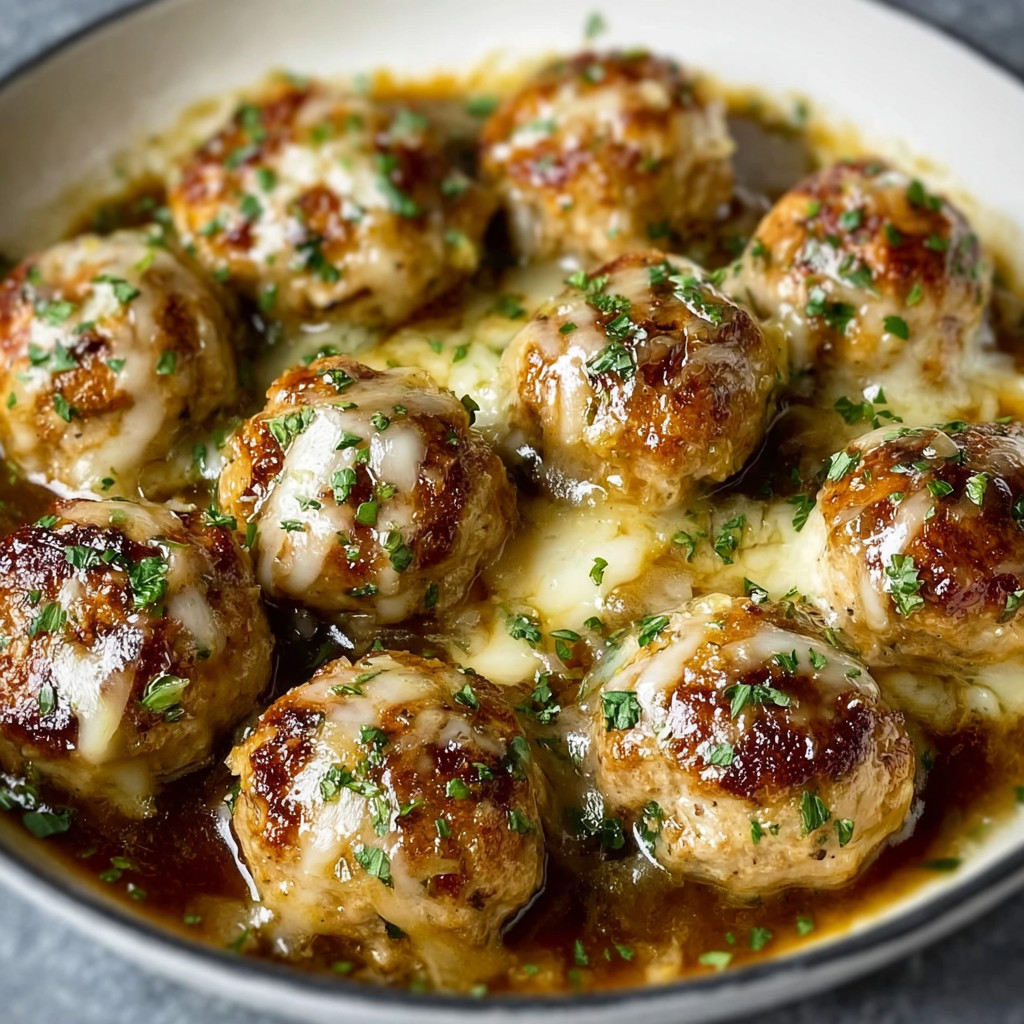
These French Onion Meatballs bring together two classic comfort food favorites into one delicious and satisfying dish. Ground beef meatballs are tender and juicy, flavored with Parmesan and parsley, then baked to a golden finish. They are smothered in a deeply savory sauce made from slowly caramelized onions, balsamic vinegar, beef broth, and thyme. The whole dish is topped with melted Gruyère cheese that adds a nutty, creamy gratinéed layer. This recipe is perfect for cozy weeknight dinners or special gatherings when you want something impressive yet easy to prepare.
The first time I tried this recipe I was hosting a dinner party and wanted something that felt special but not intimidating. Everyone loved it so much that it quickly became a staple in my meal rotation.
Ingredients
- Ground beef: Look for 80/20 for the best balance of juiciness and flavor
- Breadcrumbs: Regular fine breadcrumbs help keep the meatballs tender and bind the mixture
- Parmesan cheese: Adds a salty savory depth that complements the beef
- Fresh parsley: Brightens the overall flavor choose Italian flat leaf for a robust taste
- Egg: Acts as a binder for the meatballs
- Garlic and onion powder: Provide background savory notes without chunks
- Gruyère cheese: Melted on top for a nutty, creamy finish
- Balsamic vinegar: Adds tang and enhances the natural sweetness of the caramelized onions
Step-by-Step Instructions
- Mix The Meatball Base:
- Combine the ground beef, breadcrumbs, Parmesan, parsley, egg, minced garlic, onion powder, salt, and pepper in a large bowl. Use your hands to gently mix everything together. Be careful not to overmix as this can make the meatballs tough. Stop once the ingredients are evenly combined but the mixture still feels light.
- Shape Uniform Meatballs:
- Use a cookie scoop or tablespoon to portion out equal-sized meatballs about 1.5 inches in diameter. Roll them gently between your palms to form smooth rounds. Uniform size ensures even cooking and a professional appearance on the plate.
- Bake Meatballs Properly:
- Arrange the meatballs spaced apart on a parchment-lined baking sheet. Bake in a preheated 400°F (200°C) oven for 20 minutes. This high heat browns the exterior, seals in juices, and fully cooks the meatballs. The internal temperature should reach 165°F (74°C).
- Master Onion Caramelization:
- Heat olive oil and butter in a skillet over medium heat. Add the thinly sliced onions and cook slowly for 15 to 20 minutes, stirring occasionally but not constantly. This gentle cooking develops complex sweetness and a rich golden brown color which forms the base of the sauce.
- Create Savory Sauce:
- Once the onions are deeply caramelized, deglaze the pan with balsamic vinegar, scraping up the browned bits. Add beef broth and thyme, then bring to a simmer for 5 more minutes. This builds a rich, flavorful sauce that complements the beef perfectly.
- Final Assembly And Bake:
- Lower the oven temperature to 350°F (175°C). Transfer the baked meatballs to a baking dish with sides. Pour the onion sauce over so the meatballs are partially submerged. Evenly top with shredded Gruyère cheese. Bake for 10 to 15 minutes until the cheese is melted and bubbling.
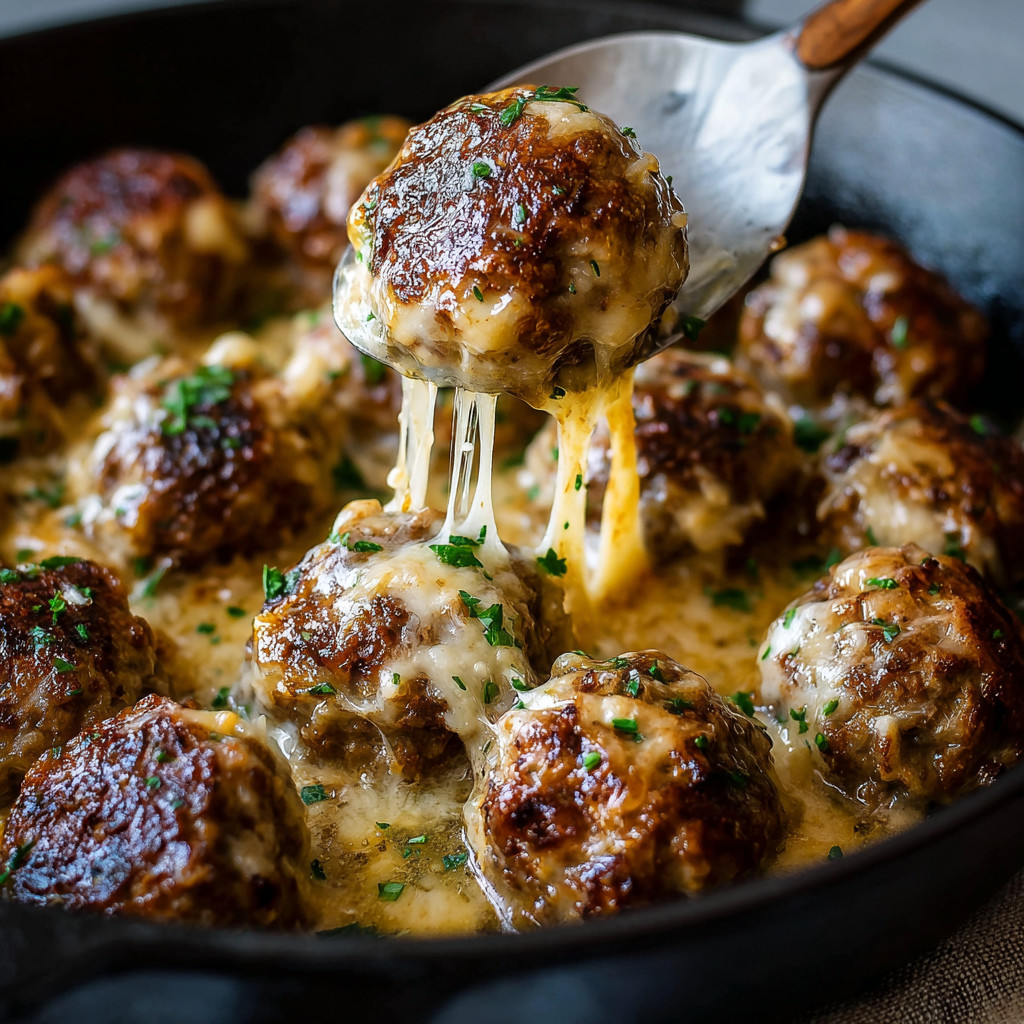
One time I rushed the onion caramelization and ended up with bitter burnt edges instead of sweet, deeply golden onions. That taught me patience truly is key to unlocking this sauce's magic. The flavor from the caramelized onions is by far my favorite part and what makes this dish unforgettable.
Storage Tips
Store leftover meatballs and sauce separately in airtight containers in the refrigerator for up to two days. Reheat gently on the stove or in the oven to keep meatballs tender. These meatballs also freeze well before the final bake. Freeze shaped meatballs on a sheet tray then transfer to a bag. Thaw overnight before adding sauce and cheese and finishing in the oven.
Ingredient Substitutions
If you need to go gluten-free swap regular breadcrumbs for gluten-free breadcrumbs or crushed gluten-free crackers Be sure your beef broth is gluten-free if using store-bought cheese options such as provolone, Swiss, or mozzarella can be used instead of Gruyère though the flavor will differ slightly
Serving Suggestions
Serve these meatballs with a crisp green salad dressed lightly with vinaigrette to cut through the richness For a more filling meal offer buttered egg noodles, mashed potatoes, or crusty bread to soak up the luscious sauce A medium-bodied red wine like Merlot or Syrah complements the savory depth of this dish well
Cultural Context
French onion soup inspires the flavors here with slow-cooked onions, broth, and melted cheese providing that classic taste but in meatball form This recipe bridges French bistro tradition with approachable home cooking, making it a perfect fusion for everyday meals
Recipe FAQs
- → Can I prepare the meatballs ahead of time?
Yes, the meatballs can be mixed and formed up to 24 hours in advance and refrigerated uncooked. They also reheat well after being baked and cooled, retaining moisture when warmed with the sauce and cheese.
- → What sides pair well with these meatballs?
Butter noodles, mashed potatoes, crusty bread, or a crisp green salad dressed with vinaigrette complement the rich flavors and balance the dish nicely.
- → Can Gruyère cheese be substituted?
Gruyère imparts a unique nutty melt, but provolone, Swiss, or mozzarella can be used as alternatives, each offering a different flavor depth while melting well.
- → How can I tell when the meatballs are cooked through?
The meatballs should be evenly browned outside, firm to the touch, and reach an internal temperature of 160°F (71°C) to ensure doneness without dryness.
- → Is it possible to adapt this for gluten-free diets?
Absolutely; replace regular breadcrumbs with gluten-free versions and ensure the broth is gluten-free. This maintains texture and flavor without gluten.
- → Can this dish be cooked in a slow cooker?
Yes, brown the meatballs first, then combine with caramelized onions, broth, and seasonings in a slow cooker on low for 3-4 hours. Add cheese near the end for a melted topping.