
 Save
Save
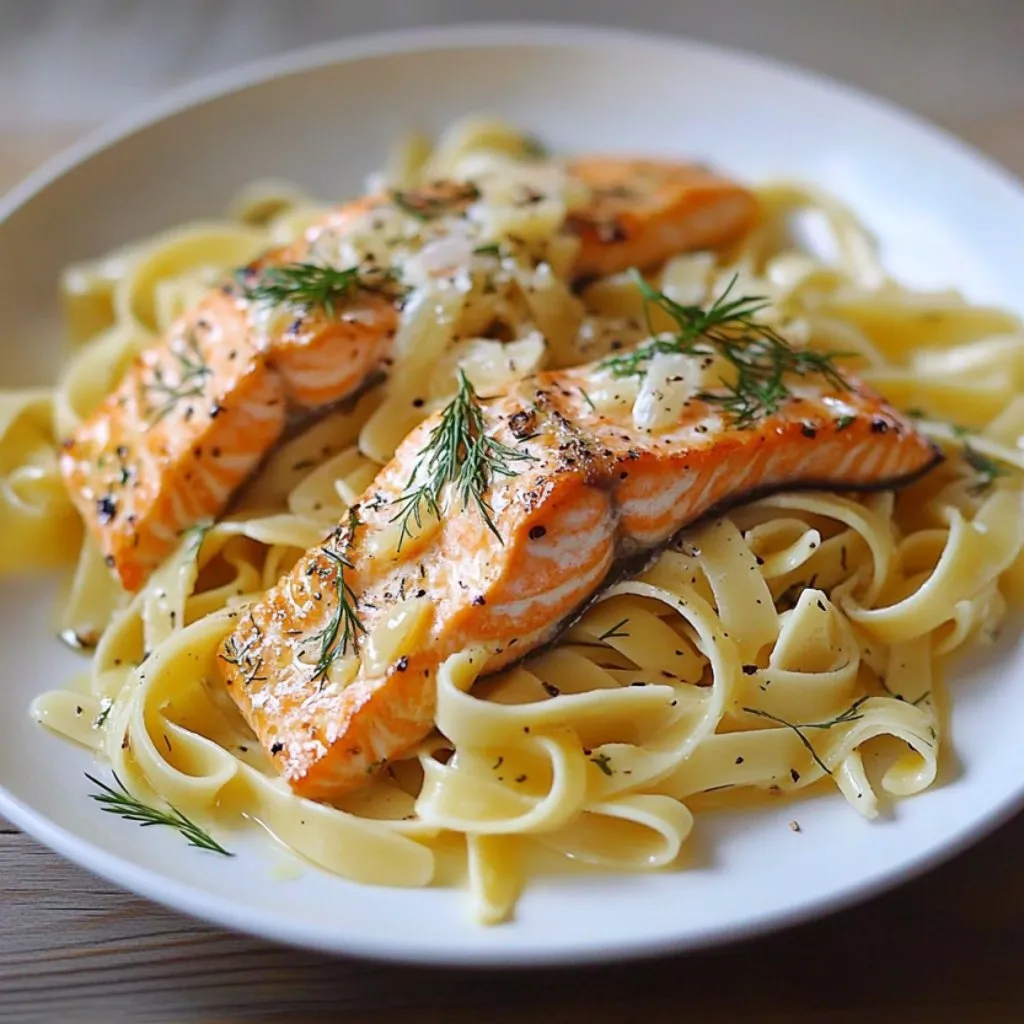
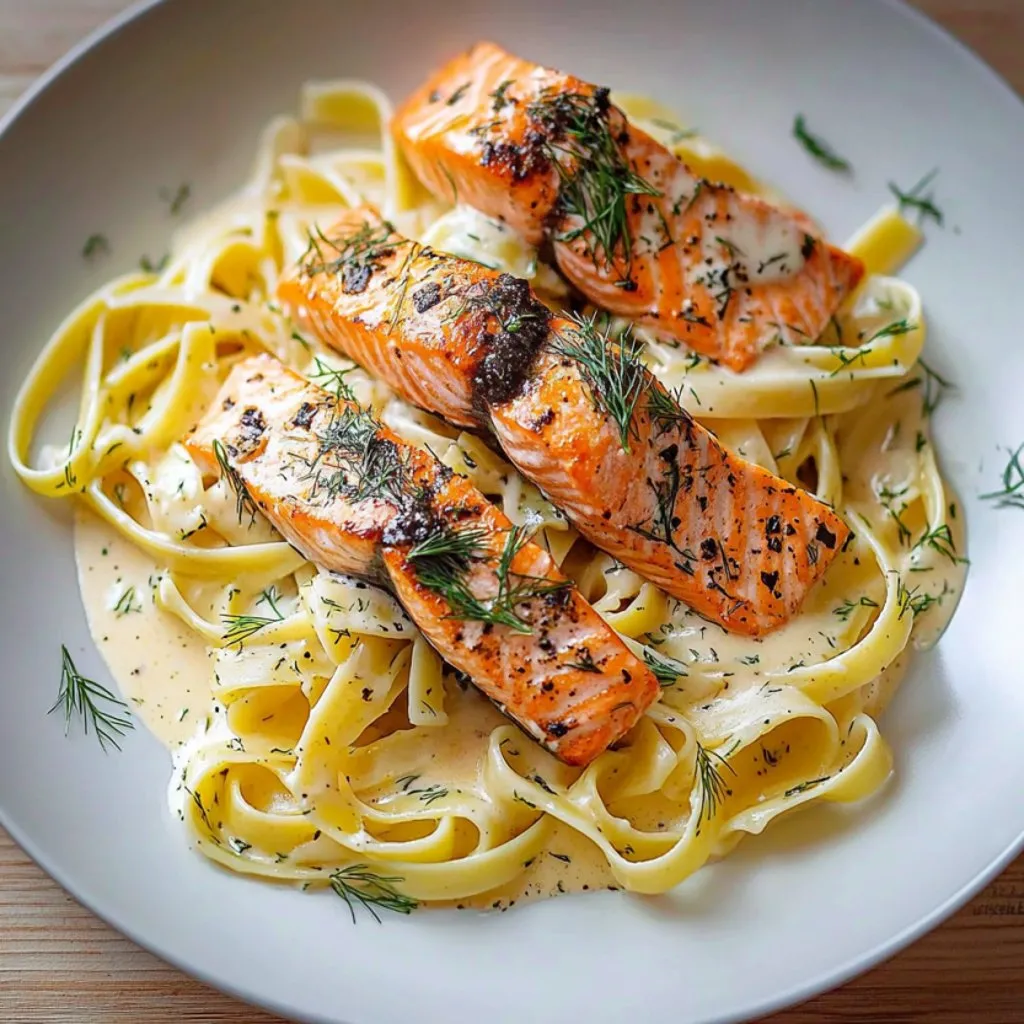
This creamy lemon-dill salmon pasta combines bright citrus flavors with tender salmon and rich pasta for a dish that feels both fresh and indulgent. It’s a perfect weeknight dinner when you want something impressive but not overly complicated to prepare.
I first made this recipe on a quiet weekend and now it’s one of my go-to meals when I want something special but fuss-free. The bright lemon and fresh dill bring a lightness that balances the richness of the salmon and cream.
Ingredients
- Salmon: Two center-cut fresh salmon fillets skin removed and patted dry for the best sear and texture
- All-purpose flour: for dredging which helps develop a golden crust on the salmon
- Olive oil and unsalted butter: for searing these create a flavorful base and prevent sticking
- Garlic: minced to infuse the sauce with savory warmth
- Chicken broth or dry white wine: to deglaze the pan and add depth to the sauce select the broth or wine based on your taste preference for added complexity
- Heavy cream: for richness and to create a velvety sauce that coats the pasta beautifully
- Fresh lemon juice: freshly squeezed for bright and vibrant acidity
- Chopped fresh dill: which infuses the sauce with a delicate herbal note
- Pasta: such as fettuccine or linguine which holds the sauce well
- Salt and freshly ground black pepper: to season perfectly
- Optional fresh parsley or grated parmesan: for garnish adding freshness or saltiness at the end
Step-by-Step Instructions
- Sear the Salmon:
- Pat the salmon dry and season well with salt and pepper. Lightly dredge in flour shaking off the excess to avoid clumps. Heat olive oil and butter in a skillet over medium-high heat. When hot add salmon and sear for 2 minutes without moving to build a crispy crust. Flip and cook another 2 minutes until cooked through. Remove and set aside.
- Prepare the Sauce:
- Pour chicken broth or white wine into the same hot pan scraping the browned bits from the bottom to capture all the flavor. Stir in minced garlic and cook just 30 seconds until fragrant but not browned.
- Add Cream and Lemon:
- Lower the heat and stir in heavy cream and fresh lemon juice. Return the salmon to the pan breaking it into bite-sized pieces so the sauce coats everything well. Stir in chopped dill and simmer gently for 2 to 3 minutes until sauce thickens slightly.
- Combine Pasta and Sauce:
- Drain the pasta reserving about one cup of the cooking water. Add pasta to the sauce and toss gently to coat. Use reserved pasta water a little at a time to loosen the sauce and adjust texture as needed. Serve immediately garnished with parsley or parmesan if desired.
Storage Tips
Store leftover salmon pasta in an airtight container in the refrigerator for up to two days. Reheat gently on the stove or in the microwave adding a splash of cream or broth to bring back creaminess without drying out the salmon.
Ingredient Substitutions
If fresh dill is not available, dried dill can be used but add it earlier in the cooking process to allow flavor release. Substitute chicken broth with vegetable broth to keep it pescatarian. For a lighter version swap heavy cream with half and half though the sauce will be less thick and rich.
Serving Suggestions
Serve with a crisp green salad dressed with lemon vinaigrette to complement the citrus notes. A side of garlic bread or toasted baguette works wonderfully to soak up the luscious sauce. Pair this dish with a chilled glass of Sauvignon Blanc to enhance the fresh, herbal flavors.
Recipe FAQs
- → How can I ensure the salmon has a crispy crust?
Make sure to pat the salmon dry before seasoning and dredging in flour. Sear it over medium-high heat without moving the fillet for a couple of minutes per side to form a golden crust.
- → What type of pasta works best with this dish?
Long, flat pasta like fettuccine or linguine hold the creamy lemon-dill sauce well and balance the rich textures superbly.
- → Can I substitute chicken broth with something else?
Dry white wine is a great alternative, adding depth and acidity that enhances the lemon and dill flavors in the sauce.
- → Why is reserving pasta water important?
The starchy pasta water helps loosen the sauce and allows it to cling smoothly to the pasta, improving texture and flavor balance.
- → How do I prevent the sauce from separating?
Simmer the sauce gently on low heat after adding cream, stirring frequently, and avoid boiling to keep it smooth and velvety.