 Save
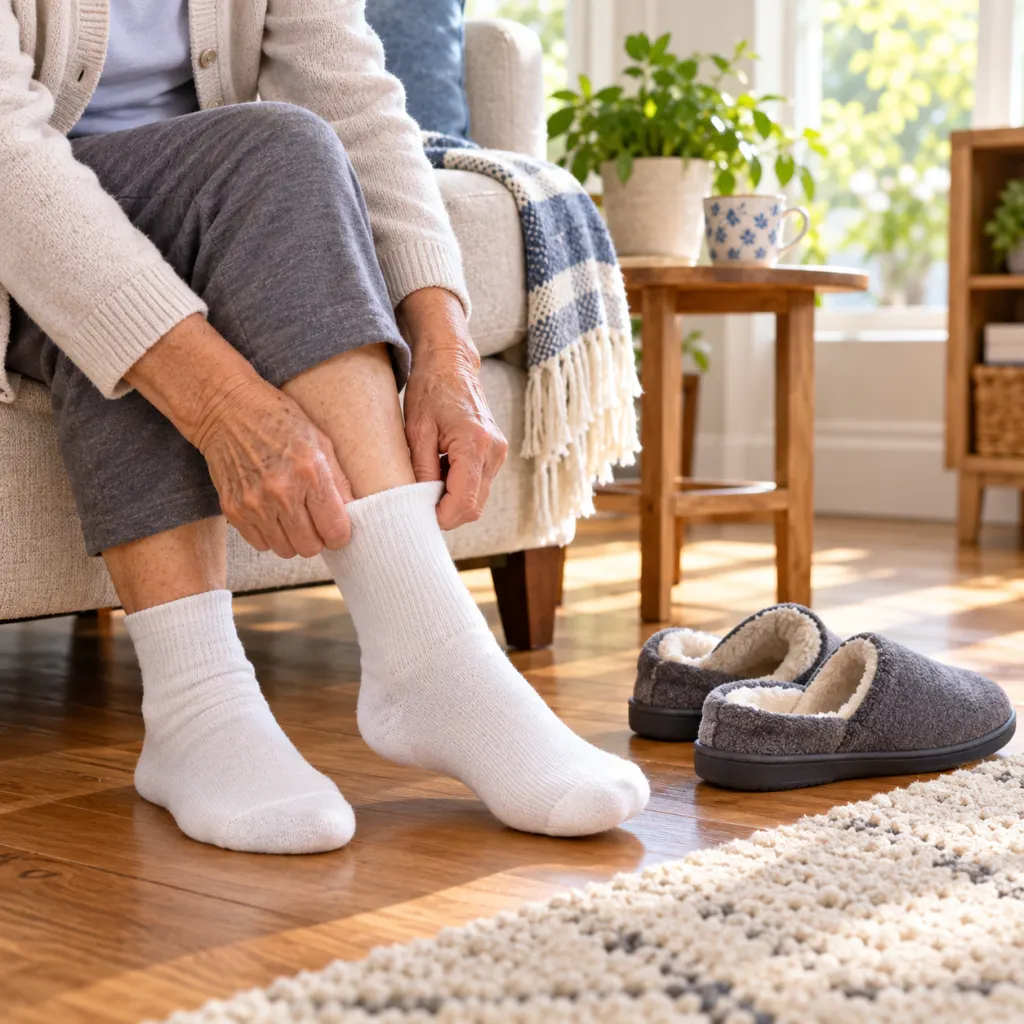
Socks at home can be a smart habit for many seniors, but the details matter. Clean, dry, properly fitted socks help keep feet warm, reduce friction, and create a simple daily cue to look for skin changes. They are not a complete safety solution on their own: the National Institute on Aging specifically warns older adults not to walk on stairs or floors in plain socks or smooth-soled footwear, and recommends nonskid, supportive footwear instead source. Think of socks as foot protection and comfort, then add grip or supportive slippers when walking.
The Short Answer: Socks Help, But Only the Right Kind
For older adults, feet are not just a comfort issue. They are part of balance, mobility, skin care, and daily independence. A good sock can add a soft layer between the skin and the floor or slipper, keep toes from getting cold during quiet activities, absorb or wick moisture, and make it easier to notice daily changes when socks come off. That matters because many foot problems start small: a rough seam, a damp sock, a blister, or a pressure spot that is easy to miss.
The catch is that a sock can also become a hazard if it slides on tile, bunches inside a shoe, squeezes the calf, traps moisture, or hides a sore that needs attention. The most useful advice is not simply "wear socks." It is: wear clean, dry, comfortable socks that match the activity. For sitting, resting, or sleeping, warmth and comfort may be the priority. For walking across polished floors, grip and stable footwear become more important.
Warm Feet Can Support Comfort and Rest
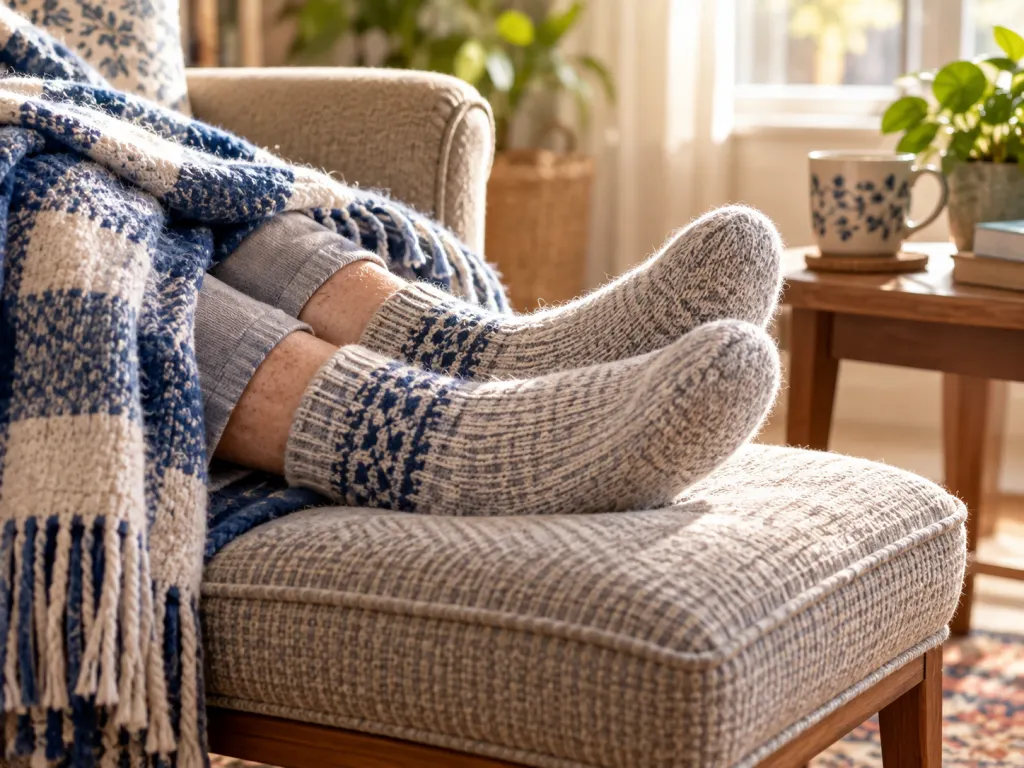
Cold feet are common and can be ordinary, especially in a cool home, but frequent or persistent cold feet can also be related to circulation, nerve, hormonal, or other medical issues. Cleveland Clinic notes that cold feet may happen when feet are cooler than the rest of the body and that warm socks are one at-home way to help with comfort; it also advises medical evaluation when cold feet are frequent or do not improve with simple measures source. For a senior watching television, reading, or sitting after dinner, socks can make the room feel more comfortable without raising the thermostat for the whole house.
There is also some research on foot warming and sleep, though it should be read carefully. A small study of six young men found that wearing bed socks in a cool environment was associated with shorter sleep-onset time, longer total sleep time, and fewer awakenings compared with no socks source. That study was not a broad senior trial, so it should not be stretched into a promise. A separate review of skin temperature and sleep-onset latency reported that older adults may respond differently to foot-warming strategies than younger adults, and that effects can be reduced in age-related insomnia source. The practical takeaway is modest: warm feet may help some people feel ready for sleep, but socks are a comfort tool, not a guaranteed sleep fix.
Socks Create a Protective Layer for Fragile Feet
As people age, skin can become drier, more fragile, and slower to recover from irritation. Socks add a low-tech barrier against rubbing from slippers, bedding, and shoes. That is especially useful when the sock is smooth inside, fits without wrinkles, and is changed daily. For people who use lotion on dry heels, a breathable bedtime sock can also help keep lotion from rubbing directly onto bedding, as long as the feet are not left damp between the toes.
Foot protection becomes more important when a person has diabetes or reduced feeling in the feet. The CDC advises people with diabetes to check their feet every day, avoid going barefoot even indoors, and wear shoes and socks or slippers to help avoid injury source. MedlinePlus similarly recommends clean, dry socks or non-binding hosiery every day, warns that holes can create pressure, and notes that moisture-wicking socks can help keep feet drier source. Seniors without diabetes can still borrow the same basic logic: protect the skin, keep socks dry, and look at the feet regularly.
The Safety Catch: Plain Socks Can Slip
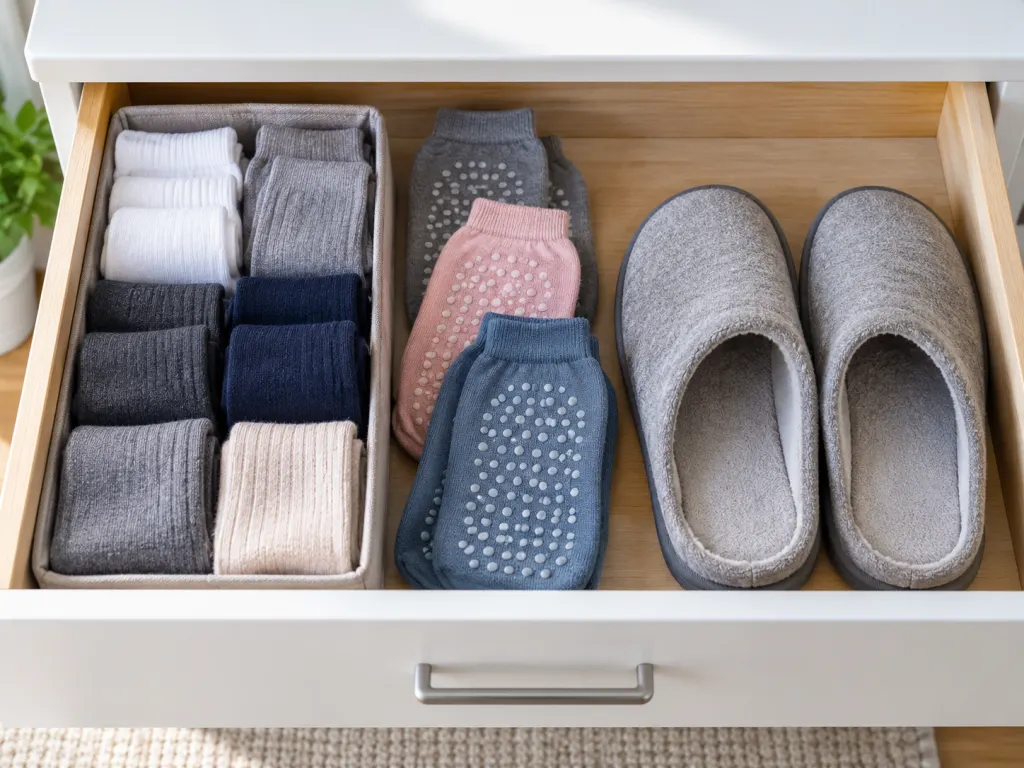
The biggest reason to be specific about socks is fall risk. The National Institute on Aging reports that more than one in four people age 65 or older fall each year, and it lists unsafe footwear and foot problems as factors that can increase fall risk source. A sock with no grip on a smooth floor can be slippery, especially on stairs, polished wood, tile, or a recently cleaned surface. That is why seniors should not treat thin dress socks as walking footwear.
A practical home rule is simple: socks are fine for warmth, but walking needs traction. When moving around the home, safer options often include:
- Grippy socks with nonskid soles for short indoor movement on level floors.
- Supportive slippers with backs, stable soles, and enough room for the toes.
- Low-heeled, rubber-soled indoor shoes for people who need more support.
- Fresh socks after bathing, sweating, or stepping in water.
- No loose cuffs, tight elastic marks, holes, thick seams, or fabric that bunches under the toes.
Fit, Fabric, and Features Matter More Than Thickness
The best sock for a senior is not automatically the thickest sock in the drawer. Very thick socks can make shoes tight, and tight footwear can create rubbing or pressure. Very loose socks can twist, bunch, or slide down. The safest everyday choice is usually soft, breathable, and shaped enough to stay in place without leaving deep marks on the skin. Cotton can feel familiar, merino wool can be warm without as much bulk, and synthetic moisture-wicking fibers can be useful for feet that sweat. The right fabric depends on the person, the season, and how much time they spend walking.
Seams deserve special attention. A seam that feels barely noticeable to one person can irritate a senior with delicate skin or reduced sensation. Turn socks inside out before washing if lint builds up, discard socks with holes, and check that grippy dots or tread are still attached after repeated laundering. Compression socks are a separate category: they can be useful for some people, but the pressure level and fit should be chosen with professional guidance, especially when there is swelling, circulation concern, or a history of vascular problems.
When Socks Should Prompt a Foot Check
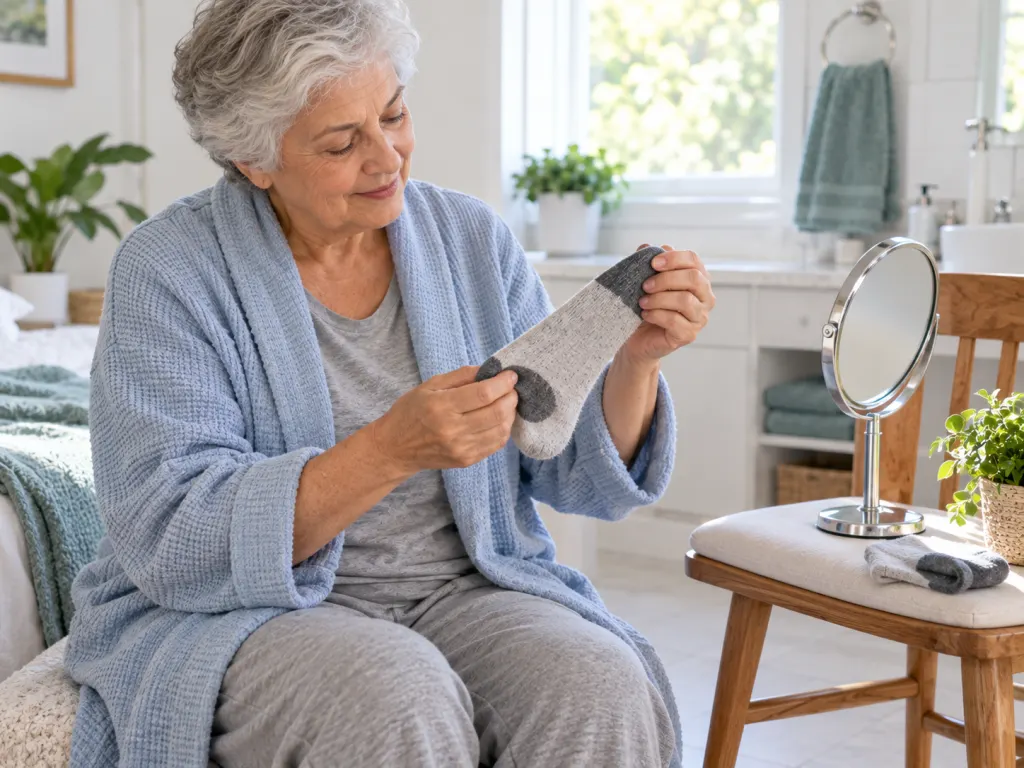
The moment socks come off is a useful built-in inspection time. Look at the heels, soles, between the toes, toenails, and any place that rubbed against a shoe or slipper. CDC guidance for diabetes highlights daily checks for cuts, redness, swelling, sores, blisters, corns, calluses, or other skin and nail changes source. Even when a senior does not have diabetes, the same habit can catch small issues early. If bending is difficult, a hand mirror, phone camera, caregiver, or podiatry visit can help.
Some signs should not be ignored: a new sore, increasing warmth or swelling, color changes, drainage, numbness, tingling, severe or persistent foot pain, or feet that stay unusually cold despite warm socks. MedlinePlus advises contacting a provider promptly about foot changes such as redness, swelling, sores, cracks, tingling, burning, or pain in people with diabetes source. The broader principle is that socks should protect feet, not cover up a problem that needs care.
A Simple Sock Routine for Home
A good routine is easy to remember. Put on clean socks after washing and thoroughly drying the feet. Choose a pair that fits the activity: soft socks for resting, grippy socks or supportive slippers for walking, warmer socks for cool rooms, and moisture-wicking socks when feet sweat. Change socks daily, and sooner if they become damp. At bedtime, use socks if they improve comfort, but avoid overheating, tight cuffs, or anything that feels restrictive. Avoid heating pads or hot water bottles on feet when sensation is reduced; Cleveland Clinic notes that thick socks can be a safer warming option for cold feet than heat sources that may burn skin before the person notices source.
Bottom Line
Seniors should wear socks at home when socks make the feet warmer, drier, and better protected, but socks should be chosen with the same care as shoes. The safest pair is clean, dry, smooth inside, roomy enough for circulation, snug enough not to bunch, and paired with traction when walking. For many older adults, that means socks plus supportive slippers or grippy soles, not plain socks on slippery floors. The habit is small, but it touches several daily priorities at once: comfort, skin protection, home safety, and routine foot awareness.
Wrap-Up
Wearing socks at home is a sensible habit for many seniors because it can support warmth, comfort, and basic foot protection. The safest approach is not bare feet and not slippery dress socks; it is clean, dry, well-fitting socks, with grippy soles or supportive slippers for walking. People with diabetes, reduced foot sensation, frequent cold feet, swelling, sores, or recent falls should treat sock choice as part of their wider foot-care and home-safety plan and discuss personal concerns with a qualified clinician.
Frequently Asked Questions
- → Should seniors wear socks all day at home?
They can, as long as the socks stay clean, dry, comfortable, and safe for the activity. Socks should be changed daily and sooner if they become damp. For walking on smooth floors, grippy socks or supportive slippers are safer than plain socks.
- → Are thick socks better for older adults?
Not always. Thick socks can be warm, but they can also make shoes tight or create pressure. A better test is fit: the sock should not bunch, squeeze, leave deep marks, rub at the seams, or make footwear feel cramped.
- → Is it safe for seniors to sleep in socks?
For many people, yes, if the socks are loose, breathable, clean, and not too warm. Some research suggests foot warming may help certain people feel more ready for sleep, but results vary. Anyone with circulation concerns, reduced sensation, or persistent cold feet should ask a qualified clinician for personal advice.
- → What kind of socks are safest on tile or wood floors?
Plain socks can slide on smooth surfaces. For walking, choose socks with intact nonskid grips or wear supportive slippers or indoor shoes with rubber soles. Stairs, bathrooms, and freshly cleaned floors deserve extra caution.
- → When should a senior ask a clinician about foot symptoms?
A senior should seek professional guidance for new sores, cracks, swelling, redness, color changes, numbness, tingling, severe or ongoing foot pain, or feet that stay unusually cold. People with diabetes or reduced feeling in their feet should be especially careful about daily checks.
References
This content was developed and refined using reliable sources.
- https://www.nia.nih.gov/health/falls-and-falls-prevention/falls-and-fractures-older-adults-causes-and-prevention
- https://www.cdc.gov/diabetes/diabetes-complications/diabetes-and-your-feet.html
- https://www.medlineplus.gov/ency/patientinstructions/000081.htm
- https://pubmed.ncbi.nlm.nih.gov/29699592
- https://pubmed.ncbi.nlm.nih.gov/17070562
- https://my.clevelandclinic.org/health/diseases/23045-cold-feet