 Save
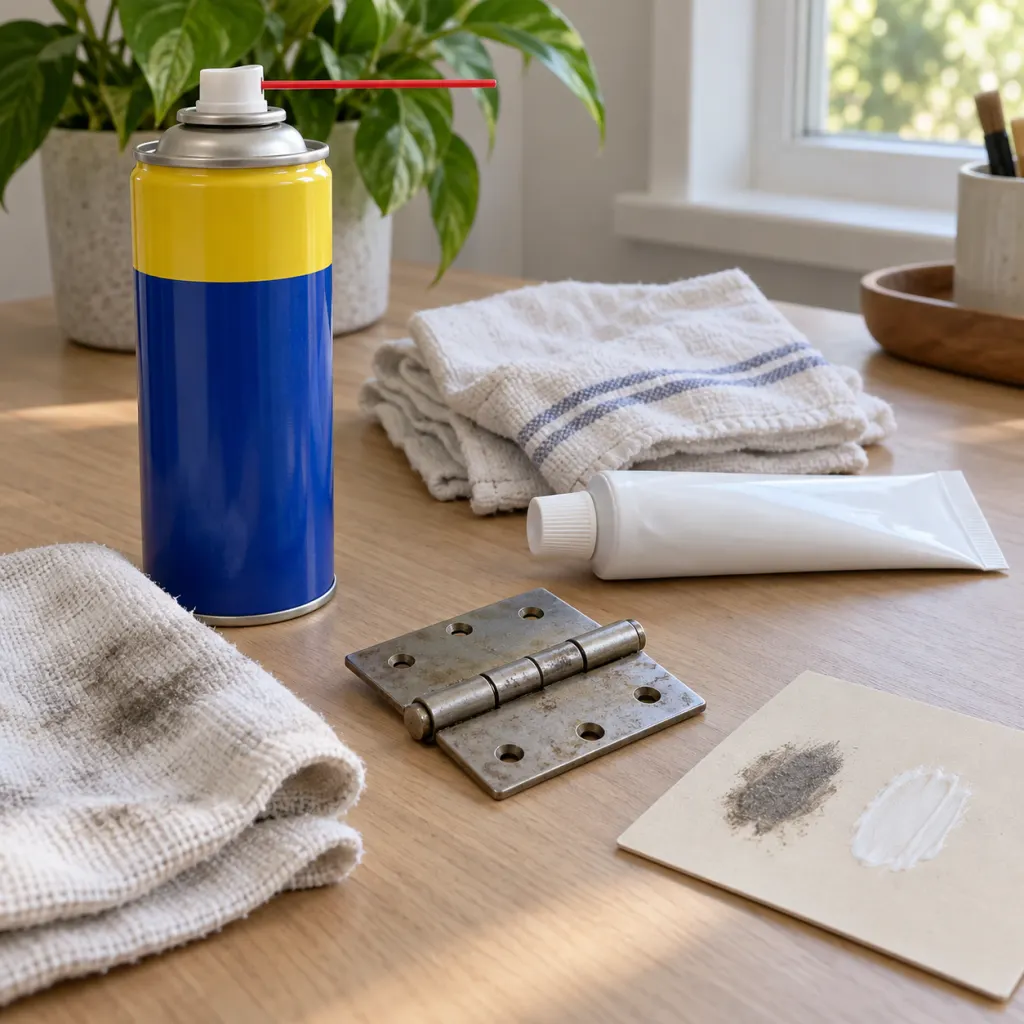
The direct answer: mixing WD-40 with toothpaste is not a proven way to make money, and it is not a universally safe or smart cleaner. At most, the idea combines a mildly abrasive paste with a lubricant or solvent-like household product, which might change the look of some dirty metal surfaces for a short time. That does not mean the mixture restores value, repairs damage, or works across tools, hardware, painted finishes, plastics, electronics, jewelry, or anything used for food. The safer response is to separate the two claims: first, ask whether the cleaning method is suitable for the surface; second, ask whether any resale promise is backed by real costs, proof, and demand. EPA guidance says household products that emit volatile organic compounds should be used with ventilation and according to label directions, and it also cautions people not to mix household care products unless the label directs it EPA.
Why this viral claim deserves a slower read
The claim has two moving parts. One is a cleaning claim: that a toothpaste-and-lubricant paste can brighten, polish, loosen grime, or improve small metal items. The other is an income claim: that those results can turn discarded objects into money. The first part is surface chemistry and abrasion. The second part is marketplace reality. A surface can look better under a camera light and still have little resale value, hidden damage, missing parts, safety issues, or a finish that has been made worse by the test.
There is also a basic evidence problem. A short video can show the easiest example, skip failures, and leave out the product label, surface material, dwell time, cleanup method, and whether the item stayed clean after a day or two. A good household decision needs more than an impressive wipe. It needs a surface-by-surface check, a small hidden test area, and a reason to believe the finished item is actually worth the time, materials, listing effort, shipping, fees, and any buyer complaints.
A practical way to evaluate the claim is to ask these questions before mixing anything:
- What is the surface: bare steel, chrome, stainless steel, painted metal, plastic, rubber, glass, ceramic, or something else?
- Does either product label say it is suitable for that surface?
- Could residue make the item slippery, attract dust, stain nearby fabric, or interfere with later paint or repair?
- Is the item a tool or part where function matters more than shine?
- Would a normal cleaner, mild soap, water, a dedicated polish, or mechanical rust removal be more predictable?
- If resale is the goal, what would the cleaned item realistically sell for after costs?
What toothpaste contributes, and what it does not prove
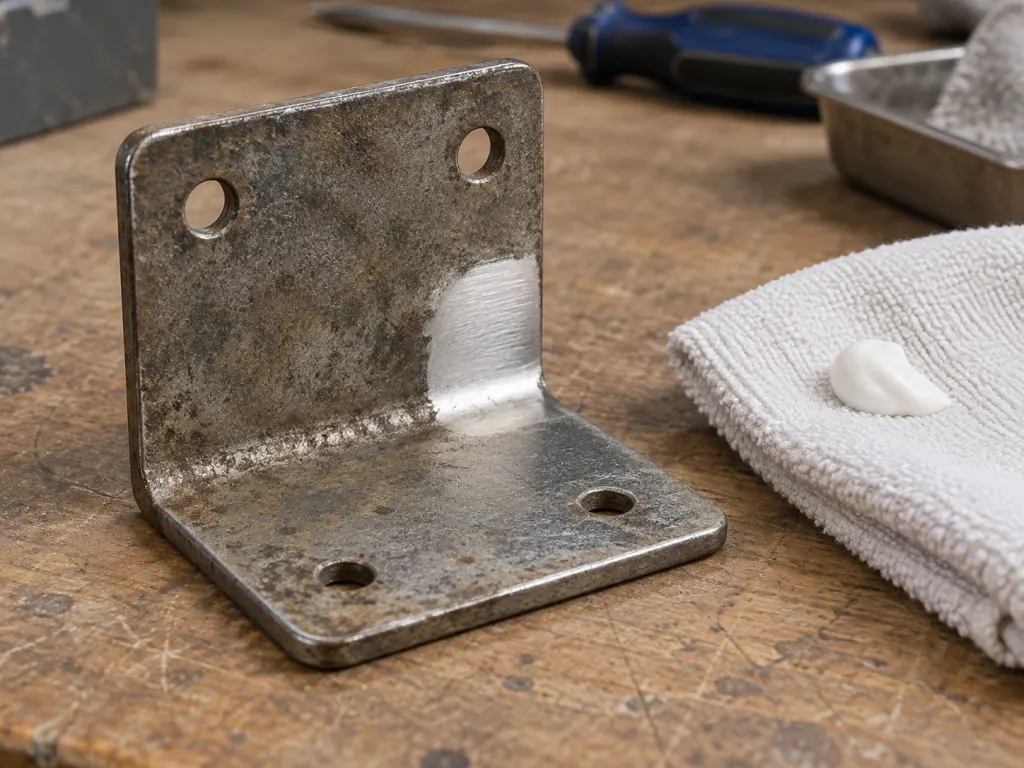
Toothpaste is designed for teeth, not for restoring hardware. Many toothpastes include abrasive particles because mechanical cleaning helps remove material from a tooth surface during brushing. A dental review on toothpaste and mouthwash formulation describes abrasives as polishing or grinding substances and notes that the degree of abrasivity depends on hardness, particle shape, concentration, and other properties PMC. That helps explain why toothpaste can sometimes act like a very mild polishing paste on nonporous surfaces.
That same fact is also a warning. Abrasion is not selective. It can remove dull film, but it can also haze plastic, change a glossy finish, push residue into seams, or make a plated surface look uneven. A paste that is gentle in one context may be too abrasive in another, especially when pressure, repeated rubbing, or a brush is added. Toothpaste also contains ingredients chosen for oral use, texture, taste, and rinseability, not for preventing corrosion on tools or preserving resale value.
What WD-40-style aerosol products add to the situation
WD-40 is commonly discussed as a water-displacing lubricant and loosener, but the household safety question is broader than one brand. Aerosol sprays, automotive products, solvents, degreasers, and some stored fuels are among the product categories EPA lists as sources of volatile organic compounds in indoor air EPA. EPA’s reduction steps include increasing ventilation, meeting label precautions, using household products according to manufacturer directions, keeping them away from children and pets, and not mixing household care products unless directed on the label.
That matters because a lubricant or penetrating spray may loosen grime, leave an oily film, or temporarily darken a surface in a way that looks like restoration. It may also leave residue that needs a different cleaner to remove. On hinges, locks, tools, and bare metal, that residue may be expected. On painted objects, porous stone, unfinished wood, kitchen surfaces, phone cases, appliance controls, or parts that people grip, it may be a nuisance. A shine that depends on oily residue is not the same thing as repaired metal.
Why mixing products changes the risk calculation
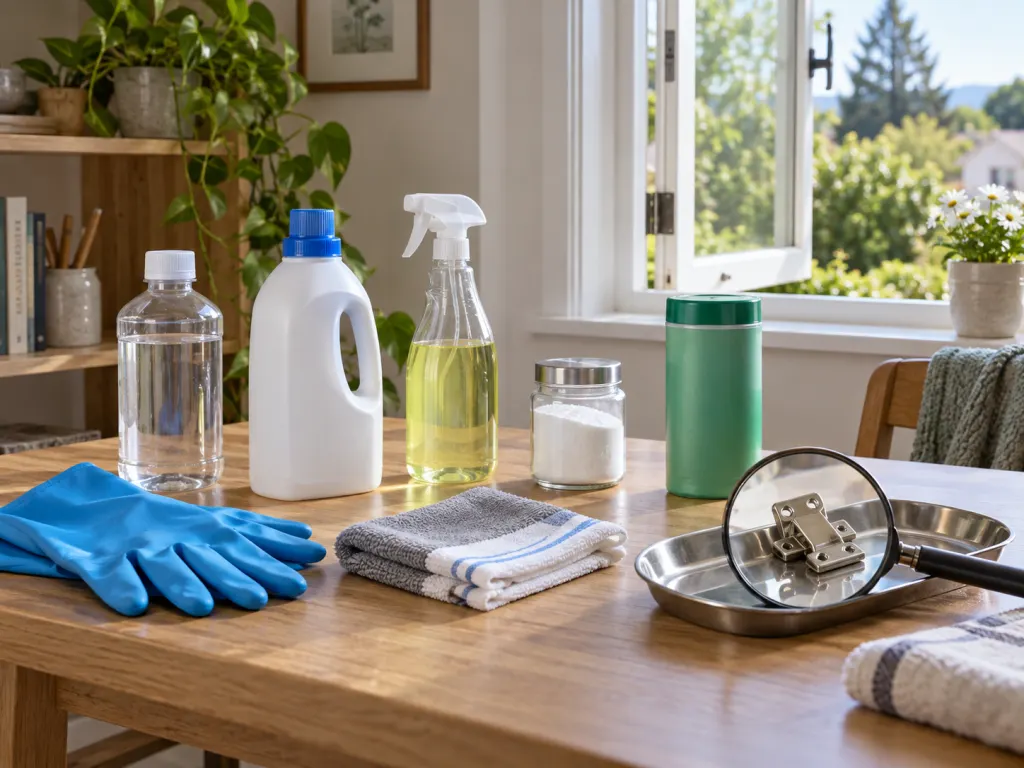
Mixing two ordinary household products can feel harmless because each one is familiar. The problem is that labels are written for intended use, not for homemade blends. The U.S. Consumer Product Safety Commission explains that hazardous household products may require cautionary labeling to help people store and use them safely and to provide first-aid information when needed CPSC. CPSC also notes that labels for hazardous products can include signal words, principal hazards, precautionary measures, handling and storage instructions, and child-safety language.
OSHA’s hazard communication pictogram guide is aimed at workplace chemical labels, but it is still useful for understanding label logic. The flame pictogram is associated with flammables, while the exclamation mark can identify hazards such as skin and eye irritation, harmful acute toxicity, narcotic effects, or respiratory tract irritation OSHA. A viral cleaning clip usually does not show the caution language, the surface limitations, or the cleanup instructions. The label is a better starting point than the clip.
Where the mixture might appear to work
The most plausible success case is a low-value, non-food, non-electrical metal item with surface grime, light oxidation, or old oily dirt. In that narrow setting, rubbing with a mildly abrasive paste plus a solvent-like residue may remove visible dirt and leave the surface looking darker or glossier. A hinge, wrench, or small bracket might look better in a photo after this treatment. That is not the same as removing structural rust, rebuilding plating, correcting pitting, or making a used item mechanically sound.
Even when the look improves, the result should be judged after the residue is removed and the item dries. If it only looks good while oily, a buyer may notice later. If the abrasive has dulled a plated finish, the item may lose value. If paste remains inside a lock, screw head, hinge barrel, or tool joint, it may attract grit. The sensible test is not “did it shine for the camera?” but “is the item cleaner, safer to handle, and honestly described after cleanup?”
Where the mixture is a poor fit
This mixture is a poor fit for anything absorbent, delicate, electrically powered, heat-producing, food-contact, medical, collectible, or hard to rinse. Do not use it on electronics, appliance switches, cookware interiors, cutting boards, children’s items, eyewear lenses, soft plastics, leather, upholstery, painted antiques, coin collections, jewelry stones, or surfaces where a lubricant film would be unwanted. For items with value, reversibility matters. A professional conservator or product-specific guidance is a better path than a viral hack.
It is also a poor fit when the real issue is damage rather than dirt. Red rust, flaking metal, seized mechanisms, missing fasteners, cracked handles, stripped threads, and worn electrical parts are not solved by polish. A cleaner may reveal the problem more clearly, but it cannot turn an unsafe or broken item into a sound one. The more important the object’s function is, the more you should prioritize inspection and proper repair over surface shine.

The money claim needs proof, not just a shine
Turning old goods into income is possible in general, but it depends on sourcing, condition, demand, accurate listings, safe packaging, fees, time, and reputation. The toothpaste-and-lubricant claim skips those costs. A rusty tool bought for almost nothing may still sell for almost nothing after you spend time cleaning it. A rare or high-quality item may be worth cleaning carefully, but that is because of the item, not because of a secret mixture.
The Federal Trade Commission’s business opportunity guidance says that when sellers make earnings claims, they must have written materials that back up what they say, and they must avoid misleading people about what buyers earned or might earn FTC. A social post about household ingredients may not be selling a formal business opportunity, but the consumer lesson is the same: income claims deserve substantiation. Look for real purchase costs, selling prices, fees, time spent, return rates, and ordinary results, not only a best-case demonstration.
A safer way to test a household cleaning idea
If curiosity wins, keep the test small and boring. Choose a low-value item, work where there is fresh air, keep both original containers nearby, and read both labels first. Put a tiny amount on a hidden area rather than coating the whole object. Use a disposable cloth, not a brush, until you know the surface can tolerate rubbing. Wipe away residue thoroughly, then inspect the item later under normal light. If the surface becomes sticky, cloudy, scratched, stained, slippery, or uneven, stop. Dispose of used cloths according to the product label and local rules, especially if they are oily.
For many jobs, separating the tasks is cleaner. Use a mild cleaner to remove ordinary dirt. Use a dedicated metal polish when the surface calls for polishing. Use a penetrating oil or lubricant only where lubrication is needed, then remove excess. Use rust removers, abrasives, or mechanical methods only when the surface and item value justify them. EPA’s Safer Choice program also gives a useful consumer principle: products that earn the Safer Choice label are reviewed for every ingredient, product performance, packaging, pH, and volatile organic compounds EPA Safer Choice. A homemade blend does not come with that kind of product-level review.
How this compares with other viral ingredient claims
The pattern is familiar: two ordinary products are paired with a big promise, and the viewer is asked to trust a dramatic before-and-after. The better habit is to slow down and ask what each ingredient is designed to do, what evidence supports the result, and what could go wrong on the wrong surface. That same approach is useful for wellness-leaning posts such as How to Evaluate Viral Ingredient Health Claims, dental-adjacent claims such as Rice Flour and Tooth Whitening: What to Know, and household advice such as Why 40°C Should Not Be Your Default Laundry Setting.
None of this means every improvised cleaning idea is useless. It means the burden of proof sits with the claim. A reliable method should name the surface, the product type, the amount, the contact time, the cleanup step, and the limits. It should also be honest about when the right answer is replacement, repair, or a product made for that specific job.
Bottom line
The WD-40 and toothpaste mixture is best understood as an unverified household hack with narrow possible uses and real limitations. Toothpaste can abrade; aerosol lubricant products can loosen and leave residue; together they may make some dirty metal look temporarily better. That is not proof of restoration, safety, or profit. For anything valuable, delicate, food-related, electrical, or used by children, skip the experiment. For low-value hardware, test a hidden spot, ventilate, follow labels, remove residue, and be honest about the result. The strongest money-making advice here is not a mixture. It is careful buying, accurate condition assessment, and skepticism toward dramatic claims.
Wrap-Up
A toothpaste-and-WD-40-style mixture may brighten certain low-value metal items, but it is not a dependable restoration method or a proven income strategy. The safer approach is to read product labels, avoid mixing unless directed, ventilate, test only a hidden area, and separate cleaning, polishing, lubrication, and resale decisions. If profit is the goal, the item’s true condition and market demand matter far more than a viral shortcut.
Frequently Asked Questions
- → Can WD-40 and toothpaste remove rust?
They may improve the look of some light surface grime or oxidation on low-value metal, but that is not the same as removing deep rust, pitting, or structural damage. A dedicated rust method chosen for the exact metal is more predictable.
- → Is it safe to mix WD-40 and toothpaste?
Do not assume that familiar products are safe to mix. Read both labels, use fresh air, keep products away from children, and avoid mixing household care products unless the label directs it. For most surfaces, testing products separately is more sensible.
- → Will this trick help me resell old tools?
Only if the item already has demand and the cleaning is honest, careful, and reversible. Buyers care about brand, condition, function, completeness, shipping cost, and accurate photos. A temporary shine is not a business plan.
- → What surfaces should I avoid?
Avoid electronics, cookware interiors, appliance controls, children’s items, soft plastics, painted antiques, upholstery, leather, jewelry stones, eyewear lenses, and anything valuable or hard to rinse. Residue and abrasion can create new problems.
- → What is a better first step for dirty hardware?
Start with identification: metal type, finish, moving parts, and value. Then use mild cleaning for dirt, a suitable polish for polishing, and lubricant only where lubrication is needed. Test in a hidden spot before treating the visible surface.
References
This content was developed and refined using reliable sources.
- https://www.epa.gov/indoor-air-quality-iaq/volatile-organic-compounds-impact-indoor-air-quality
- https://www.cpsc.gov/FAQ/FHSA-Cautionary-Labeling
- https://obis.osha.gov/Publications/HazComm_QuickCard_Pictogram.html
- https://pmc.ncbi.nlm.nih.gov/articles/PMC7245492
- https://www.epa.gov/saferchoice/frequently-asked-questions-safer-choice
- https://www.ftc.gov/business-guidance/resources/selling-work-home-or-other-business-opportunity-revised-rule-may-apply-you-1