
 Save
Save
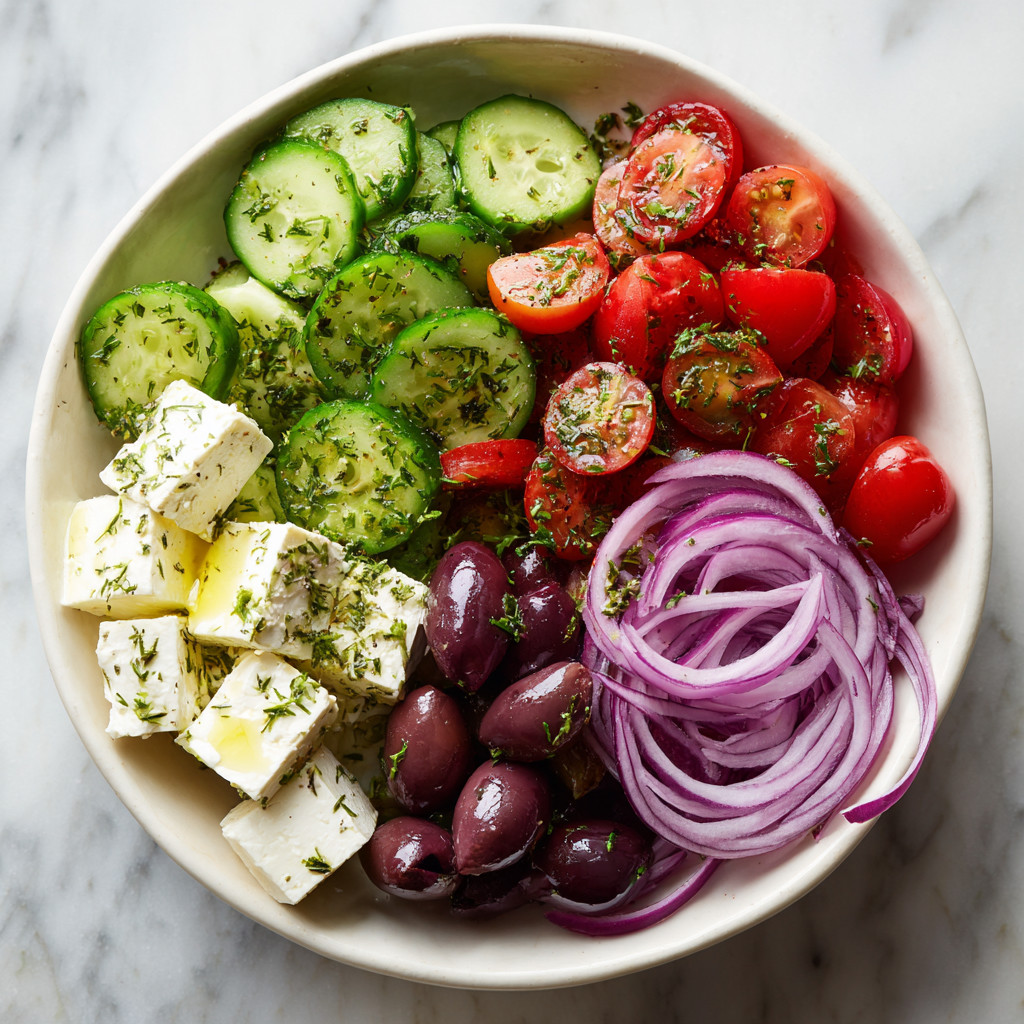
This Greek Salad, known as Horiatiki, offers a fresh and vibrant taste of the Mediterranean with its simple combination of ripe tomatoes, crisp cucumbers, briny Kalamata olives, and creamy feta cheese. It perfectly captures the rustic charm of Greek village cooking without any lettuce, delivering pure, satisfying flavor in just 15 minutes.
My first time making this salad was during a summer family gathering, and everyone loved how bright and refreshing it was. Now it’s a regular at our table when the weather warms up.
Ingredients
- Ripe medium tomatoes: essential for sweetness and juiciness, choose in-season for best taste
- Large cucumber: adds refreshing crunch, peel if waxed or use English cucumbers for thinner skin
- Small red onion: thinly sliced and soaked in cold water to mellow sharpness for balance
- Optional small bell pepper: brings subtle sweetness and extra color
- Block of Greek feta cheese: use a slab instead of crumbled to keep creamy texture and avoid dryness
- Kalamata olives: briny and fruity, whole or pitted for convenience
- Extra virgin olive oil: the dressing’s heart, opt for a good quality cold-pressed variety
- Dried oregano: a classic Greek herb that ties the flavors together
- Salt to taste: enhances natural flavors subtly
- Optional splash of red wine vinegar: adds a bright tang if desired
Step-by-Step Instructions
- Prepare the Vegetables:
- Cut the tomatoes into wedges that hold their shape and release juices slowly. Slice cucumber into thick half moons to keep a fresh crunch. Thinly slice the red onion and soak in cold water for five minutes to reduce the bite and preserve sweetness. If using bell pepper, slice thinly for mild crispness.
- Arrange the Salad:
- Gently place the tomatoes, cucumber, onion, and pepper in a large serving bowl or a rustic platter. The layering helps keep the salad visually appealing and maintains texture.
- Add the Olives:
- Scatter Kalamata olives evenly across the vegetables. Their salty richness adds depth and authentic Greek flavor with every bite.
- Top with Feta:
- Place thick slices or chunks of block feta on top rather than crumbling. This keeps the cheese moist, creamy, and visually striking as the centerpiece of the salad.
- Season:
- Sprinkle the dried oregano evenly over the salad for its distinctive aroma. Add a pinch of salt to enhance all the ingredients without overpowering them.
- Dress the Salad:
- Drizzle extra virgin olive oil liberally, which ties the flavors together and adds a fruity richness. Add a splash of red wine vinegar if you like a touch of acidity to brighten the dish.
- Rest and Serve:
- Allow the salad to sit at room temperature for five to ten minutes. This resting time lets the flavors meld while keeping the tomatoes from getting soggy. Serve as a side or a light meal.
I love the way the oregano’s earthiness complements the creamy feta and salty olives. One summer in Greece, a local chef shared this salad with us straight from his garden, and that freshness could not be beaten. It remains one of my favorite meals to recreate at home.
Storage Tips
If you need to store leftovers, keep the salad undressed in an airtight container in the fridge. Add the olive oil and seasonings right before serving to preserve the fresh textures and flavors. Feta and olives store well but tomatoes and cucumbers lose their crispness when refrigerated for too long. For best taste, enjoy within a day.
Ingredient Substitutions
- If Kalamata olives are unavailable, Castelvetrano or other briny olives can work but change the flavor slightly
- You can substitute red onion with shallots for a milder onion flavor
- If you cannot find Greek feta, Bulgarian feta or French feta in brine can be a decent alternative
- Red wine vinegar can be swapped with lemon juice for different acidity notes
Serving Suggestions
- Ideal alongside grilled lamb or chicken for a Mediterranean-inspired meal
- Pairs wonderfully with warm pita bread or crusty artisan bread to soak up the juices
- Add toasted pine nuts or fresh herbs like mint or parsley for extra texture and freshness
- Drizzle a little balsamic reduction for a sweeter contrast if you like variations
Cultural Context
Horiatiki or village salad is a staple in Greece, often served as a mezze or side dish with nearly every meal. It shows the Greek philosophy of simple, high-quality ingredients bringing joy to the table. Traditionally, lettuces are never used because they wilt quickly in the Mediterranean heat and distract from the robust, fresh flavors of the core vegetables and cheese.
Recipe FAQs
- → What type of cheese is used in a traditional Greek salad?
Traditional Greek salad features block feta cheese placed on top in thick slices, not crumbled, to maintain its creamy texture and authentic flavor.
- → Why are the red onions soaked in cold water?
Soaking thinly sliced red onions in cold water mellows their sharpness, making their flavor milder and more balanced in the salad.
- → Can bell pepper be omitted from the salad?
Yes, bell pepper is optional and can be added for sweetness and crunch but is not essential for the traditional flavor profile.
- → What dressing is typically used in this salad?
The salad is dressed simply with extra virgin olive oil, dried oregano, and salt, sometimes with a splash of red wine vinegar for brightness.
- → Is lettuce used in this Greek salad?
No, authentic Greek salad is free of lettuce and focuses on chunky, fresh vegetables and olives for a rustic texture.
- → How long should the salad rest before serving?
Allow the salad to rest for 5–10 minutes at room temperature so the flavors can meld and intensify naturally.