 Save
Adriano Celentano is back in public conversation because even a small new glimpse of him can revive decades of Italian music, cinema, television, and family memory. That does not, by itself, prove a new tour, album, interview, or television project. The more careful reading is that Celentano remains a rare cultural figure: a performer whose absence can be almost as newsworthy as his appearances, and whose old songs and screen moments keep finding new audiences.
For readers outside Italy, the attention can feel sudden. For Italian audiences, it fits a longer pattern. Celentano built a career around movement, timing, contradiction, and control of his own myth. He could be comic and solemn, popular and eccentric, intimate and theatrical. When his name trends again, the question is not only what he has just done. It is why the public still reacts as if a familiar voice has walked back into the room.
Why This Renewed Attention Feels Larger Than A Post
The phrase "returns to the spotlight" can be misleading if it suggests a fully documented entertainment comeback. A more reliable frame is renewed visibility. Celentano has been part of Italian public life for so long that a brief appearance, a social post, or a resurfaced performance can trigger a wave of recognition. The spotlight, in this case, is partly made by the audience: people sharing memories of records, films, variety shows, and family television nights.
That matters because Celentano's public identity was never built only on steady promotion. He often created impact through interruption: a look, a pause, a joke, a pointed silence, or a sudden change in tone. In an era when public figures are expected to be constantly available, his selective visibility feels almost old-fashioned. It also gives every appearance extra weight, because fans are not simply seeing a celebrity update. They are reconnecting with a long cultural timeline.

A Career Built Across Several Stages
Celentano is commonly remembered first as a singer, but that is only one part of the picture. His public career moved across rock and roll, pop song, film acting, directing, television variety, and commentary. A careful cultural profile should treat those pieces together. The Library of Congress describes its catalog as a way to locate books, recordings, films, and other materials across a vast collection, a useful reminder that long careers often survive through many kinds of records, not only headlines https://catalog.loc.gov/.
That broader record matters for Celentano because his reputation does not rest on one single hit. Songs such as "24.000 baci," "Azzurro," "Il ragazzo della via Gluck," and "Prisencolinensinainciusol" point to different sides of his appeal: youthful energy, melody, social observation, and playful language. His film work placed him inside another Italian tradition, where singers, comedians, and actors often crossed freely between stage, screen, and television.
What Made Celentano Different
One reason Celentano still draws attention is that he did not simply import a style and leave it untouched. His early image drew from the energy of rock and roll, but his success came from making that energy legible inside Italian popular culture. The nickname often associated with him, "Il Molleggiato," points to movement: springy, elastic, physically recognizable. It was branding before entertainers used that word casually, but it also described something audiences could see immediately.
His voice was equally distinctive. It could sound warm, rough, teasing, or declarative, depending on the song. He also understood the power of nonsense, rhythm, and suggestion. "Prisencolinensinainciusol" is often discussed because it plays with the sound of English without functioning as ordinary English. That kind of experiment helps explain why new audiences can encounter him through clips and still feel that something modern is happening, even when the recording is decades old.
How To Read Viral Celentano Claims Carefully
Viral entertainment posts often compress a long life into a dramatic hook. With Celentano, that can flatten the story. A vague caption may imply a revelation, a farewell, a comeback, or a family confession without offering enough evidence. Readers can still enjoy the moment, but the better habit is to ask what is actually documented.
- Is the item a new statement, an old clip, or a reposted image?
- Does it name a date, outlet, program, or official account?
- Does the claim involve a new professional plan, or only renewed fan attention?
- Are direct words clearly sourced, or are they presented as hearsay?
- Does the story confuse admiration from fans with confirmed news?
That approach does not make the story less interesting. It makes it more respectful. Celentano's career is already rich enough without inflated claims. The real story is that a performer who began in the age of records, cinema houses, and national television can still move through digital culture with remarkable ease.

The Film And Television Dimension
Celentano's screen persona helped turn him from a singer into a household figure. Italian entertainment has long allowed performers to cross categories, and he used that freedom well. In film, his comic timing and physical style could carry romantic comedy, musical energy, and social satire. On television, his pauses and provocations often became part of the event itself, as memorable as the formal program around him.
That explains why audiences often speak about him as a presence rather than only a discography. Some singers are remembered mainly through recordings. Celentano is remembered through gestures: the walk, the stare, the interruption, the timing of a punchline, the sudden seriousness after a joke. Those qualities translate well to short digital clips, which may be one reason his older work keeps resurfacing.
Why Absence Became Part Of The Image
Many entertainers remain visible by never leaving the public feed. Celentano's later public rhythm has been different. Distance became part of the fascination. When a figure who once dominated national screens becomes selective, audiences begin to read every reappearance as meaningful. Silence creates space for memory, speculation, and affection.
There is also a generational element. Older fans remember the first impact. Younger viewers may discover him through family stories, online clips, or references from musicians and filmmakers. In that setting, a new appearance does not start the conversation from zero. It reopens a shared archive. The audience supplies context from its own living rooms, record shelves, and remembered broadcasts.
A Public Figure Needs A Stable Record
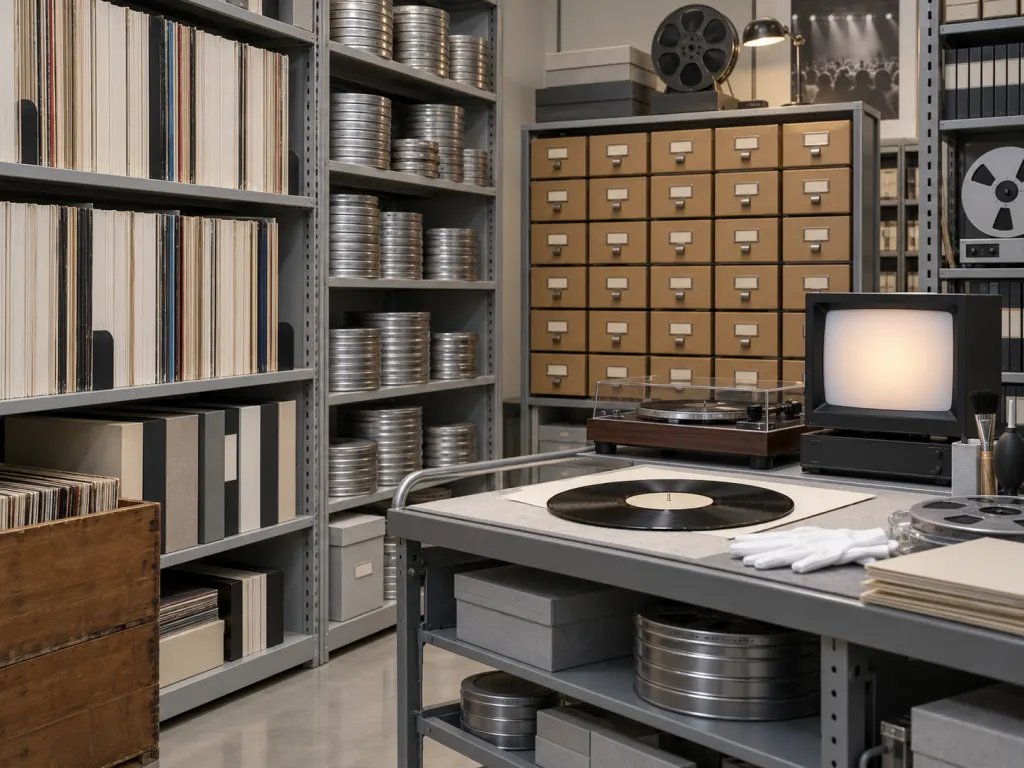
For any long-lived celebrity story, public databases and authority records help keep names, works, and identities straight. The Library of Congress explains that authority records establish standard forms of names and cross references for catalog use https://www.loc.gov/item/prn-02-114/. That kind of recordkeeping is not glamorous, but it is exactly what helps separate durable cultural history from noisy repetition.
Celentano is a good example of why that matters. A career spanning music, film, television, and public commentary can be misdescribed when people rely only on memory or viral summaries. Stable records help confirm that an artist belongs to more than one medium. They also give editors a practical way to check spellings, titles, dates, and relationships among works before turning a trending moment into an article.
What His Staying Power Says About Italian Pop Culture
Celentano's renewed attention also says something about Italian popular culture itself. Italy's postwar entertainment world gave unusual room to artists who blended song, comedy, cinema, and television. A performer could become not just a singer but a national character. Celentano took advantage of that ecosystem while also resisting easy classification.
His most durable work often sits between opposites. He could sound rebellious while remaining connected to traditional melody. He could mock show business while depending on its biggest stages. He could appear spontaneous while carefully shaping how little he revealed. That tension is part of the appeal. Fans are not only revisiting songs; they are revisiting a style of public performance that made contradiction feel charismatic.
What Readers Should Take From The Moment
The useful conclusion is balanced. Adriano Celentano has returned to attention, but attention is not the same as a verified comeback. Until there is a direct announcement from a reliable source, the safest language is renewed visibility, renewed affection, or renewed interest. Those phrases still leave room for the real feeling of the moment: many people are glad to hear from him, see him, or simply remember why he mattered.
That may be the most Celentano-like outcome of all. A small gesture becomes a public event. A joke becomes a headline. A memory becomes a conversation between generations. Whether or not a major new project follows, the response confirms that his place in Italian entertainment has not faded into a museum case. It remains active, argued over, replayed, and warmly recognized.
Wrap-Up
Adriano Celentano's latest wave of attention should be read with care. It reflects the continuing pull of a performer who shaped Italian music, film, and television, not necessarily a confirmed new professional chapter. The best response is to enjoy the rediscovery while checking dramatic claims against reliable records and direct evidence.
Frequently Asked Questions
- → Is Adriano Celentano making an official comeback?
This draft does not confirm an official comeback. The safer reading is that Celentano has received renewed public attention, while any claim about a tour, album, interview, or television project should be checked against direct reliable announcements.
- → Why does a small Celentano appearance attract so much attention?
Celentano is tied to several layers of Italian popular memory: songs, films, television appearances, family viewing habits, and a highly recognizable public style. When he appears after a quiet period, audiences often treat it as a cultural moment rather than a routine update.
- → What is Adriano Celentano best known for?
He is best known as an Italian singer and entertainer, but his public identity also includes acting, directing, television work, and a distinctive comic presence. His best-known songs and screen appearances show why he is remembered across more than one medium.
- → Why is he called Il Molleggiato?
The nickname points to his springy, elastic stage movement. It became a shorthand for a performance style that mixed rock-and-roll energy, comic timing, and a physical identity audiences could recognize quickly.
- → How should readers evaluate viral stories about older entertainers?
Look for dates, direct sources, official accounts, and specific claims. A resurfaced clip or affectionate fan reaction can be meaningful, but it should not be treated as proof of a new professional plan unless reliable evidence supports it.