 Save
The short answer: a viral honey, lemon, ginger, onion, and garlic mixture is not the main evidence-based way to address constipation. Authoritative health sources point first to fiber-rich foods, enough fluids, regular physical activity, and not delaying bathroom urges. Constipation generally means fewer than three bowel movements a week, hard or dry stools, difficult passage, or a feeling that not everything has passed, according to the National Institute of Diabetes and Digestive and Kidney Diseases: NIDDK definition and facts. The mixture can be discussed as a kitchen flavor blend, but the real foundation is the daily pattern around meals, water, movement, and symptoms.
Why the “Powerful Mixture” Claim Needs a Cooler Head
Kitchen mixtures become popular because they feel concrete. A jar of honey, lemon, ginger, onion, and garlic looks intentional, tastes intense, and fits the familiar idea that strong ingredients must have strong effects. But constipation is usually not about one dramatic ingredient. It is often about stool moving slowly through the colon, allowing more water to be absorbed so the stool becomes harder and more difficult to pass. Cleveland Clinic explains this slow movement and water absorption process in its constipation overview: Cleveland Clinic constipation overview.
That distinction matters because it changes the question. Instead of asking whether a single spoonful is “powerful,” ask what the blend contributes to the whole day. Does it add meaningful fiber? Usually not much, especially if strained. Does it reliably increase fluid intake? Only if it is mixed into a drink and the rest of the day supports hydration. Does it replace fruits, beans, whole grains, vegetables, and a regular bathroom routine? It should not. In a practical kitchen, the mixture can be a bold condiment-like preparation, but it is not the central tool.

What Constipation Actually Means
Constipation is not defined by the need to go every single day. Bowel patterns vary. The more useful signs are a change from your normal rhythm, hard or lumpy stool, straining, discomfort, or the sense that a bowel movement was incomplete. Mayo Clinic lists common constipation features such as fewer than three stools weekly, hard or dry stools, straining, and a feeling of blockage or incomplete passage: Mayo Clinic symptoms and causes.
For many people, occasional constipation follows a recognizable disruption: travel, a low-fiber stretch of meals, less movement than usual, a change in routine, or ignoring the urge to use the bathroom. For others, it can be frequent, persistent, or linked with prescriptions, supplements, or another health issue. Because the causes vary, a food mixture should not be framed as a universal answer. A more careful approach starts by noticing the pattern: when it began, what changed, what the stool is like, and whether there are warning signs.
The Basics With the Strongest Everyday Support
NIDDK’s nutrition guidance for constipation emphasizes enough fiber and plenty of liquids, noting that adults generally need about 22 to 34 grams of fiber per day depending on age and sex, and that liquids help fiber work better: NIDDK eating, diet, and nutrition. Fiber adds bulk and can help stool hold water, but a sudden jump may bring bloating or gas. That is why gradual changes are usually more comfortable than a dramatic overnight overhaul.
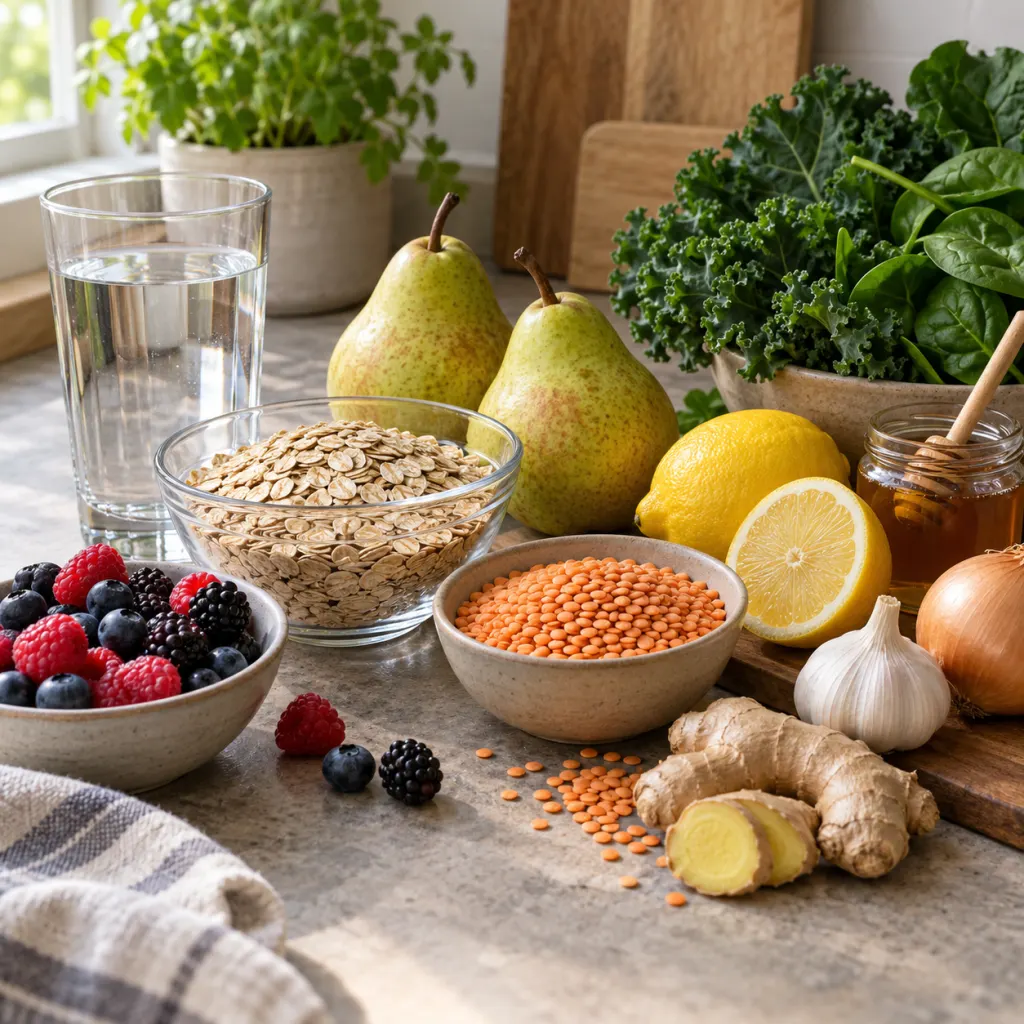
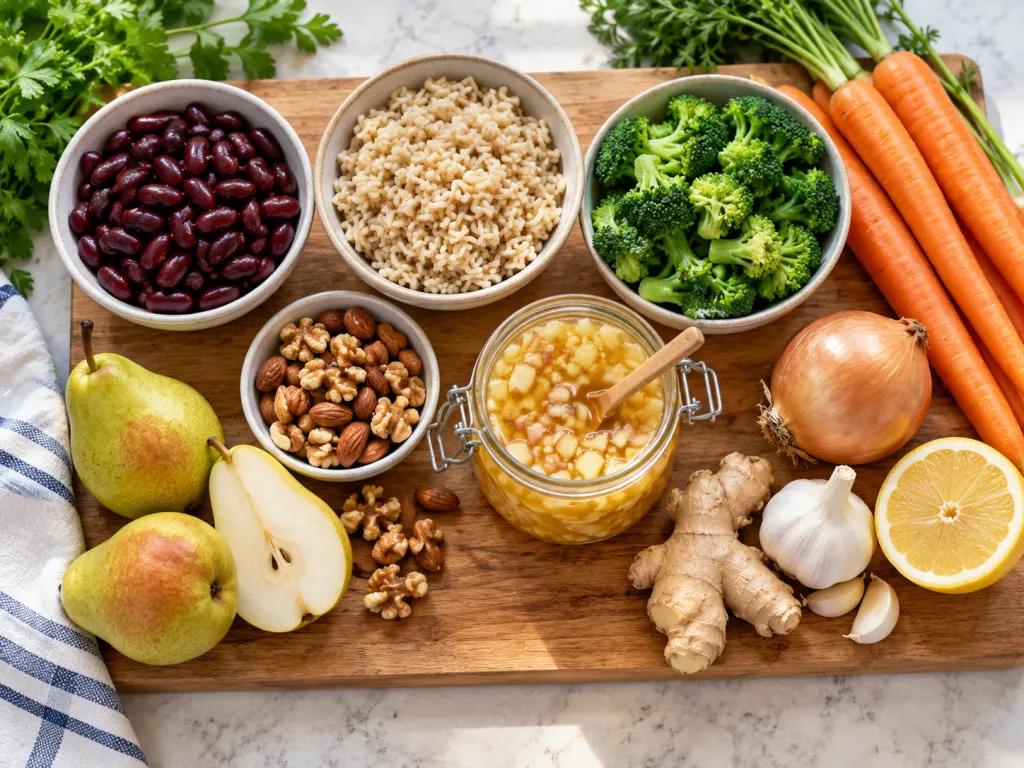
Useful fiber sources are ordinary foods, not exotic pantry projects. A practical constipation-supporting plate often includes several of these over the week:
- Oats, whole wheat bread, brown rice, barley, bran cereal, or other whole grains.
- Lentils, black beans, chickpeas, kidney beans, peas, and other legumes.
- Apples with skin, pears, berries, oranges, prunes, peaches, and similar fruits.
- Carrots, broccoli, green peas, leafy greens, squash, and potatoes with skin.
- Nuts and seeds when they fit the person’s usual eating pattern.
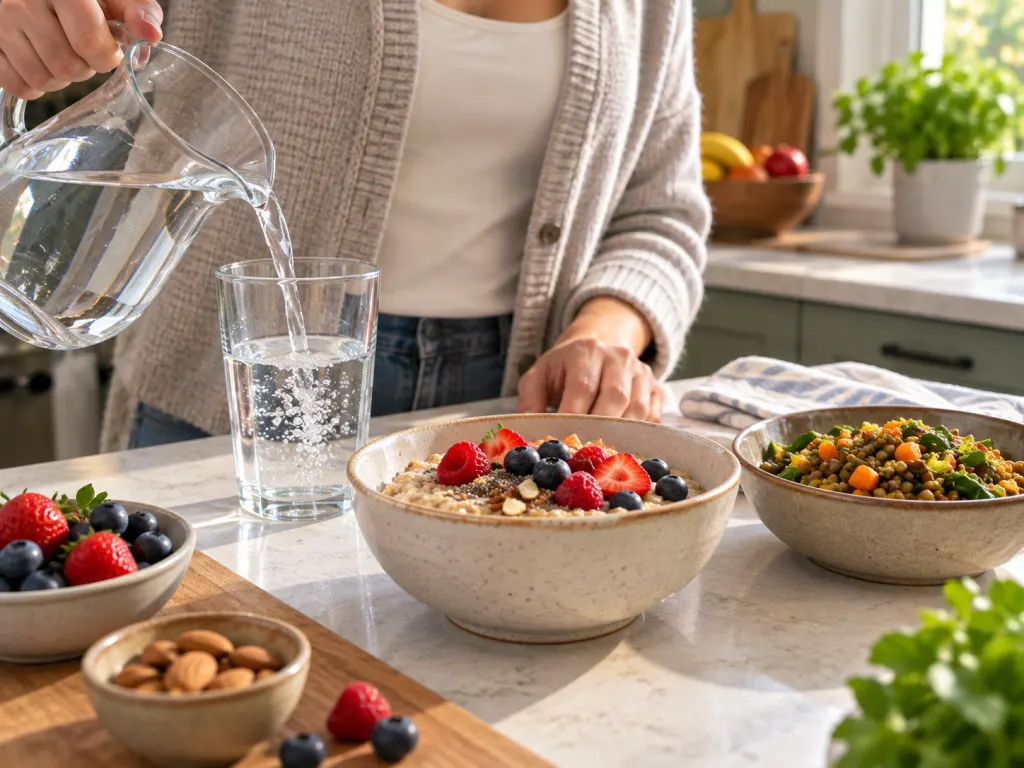
Fluids matter alongside fiber. If fiber goes up while fluid stays low, stools may still feel hard or difficult to pass. MedlinePlus also points to water, fiber, exercise, and responding to bathroom urges as core self-care steps for constipation: MedlinePlus constipation self-care. This does not mean everyone needs the same amount of water; body size, activity, climate, and health conditions affect fluid needs. It does mean that a spoonful of a strong mixture should not distract from the simpler question of whether enough fluid is coming in during the day.
Where Honey, Lemon, Ginger, Onion, and Garlic Fit
These ingredients belong in food culture and home cooking. Ginger brings heat, lemon brings acidity, honey brings sweetness, garlic adds pungency, and onion releases sharp juices when it sits with an acidic or sweet ingredient. As a kitchen blend, the combination may be added to warm water, dressings, marinades, or savory dishes. But from a constipation standpoint, the blend is not fiber-rich in the way beans, whole grains, fruit skins, and vegetables are fiber-rich.
The blend can also be hard on taste and comfort. Garlic and onion are intense, lemon is acidic, and ginger is spicy. Some people tolerate that well; others may find it unpleasant. Honey also adds sugar, so it may not fit every person’s eating plan. The point is not to fear these foods. The point is to keep them in proportion: they are culinary ingredients, not a stand-alone answer for bowel regularity.
A Smarter Way to Use a Kitchen Mixture
If someone enjoys this blend, the most reasonable place for it is as a small flavor element within a broader food routine. For example, it may be stirred into warm water for taste, whisked into a vinaigrette, or used to season beans or roasted vegetables. That pairing matters: the beans, whole grains, fruit, and vegetables contribute the fiber; the mixture contributes flavor. If the mixture crowds out breakfast, replaces a fiber-rich snack, or becomes the entire plan, it is being asked to do too much.
Food changes also work best when they are trackable. Instead of chasing a new jar every week, keep a short note for several days: what you ate, how much fluid you drank, whether you moved your body, whether you delayed bathroom urges, and what changed. This kind of observation can reveal simple patterns, such as lower fiber on busy days or less fluid during travel. It can also show when the issue is not responding to routine changes and deserves a professional conversation.
Routine Often Matters More Than Intensity
Bathroom habits are easy to overlook because they are ordinary. Yet MedlinePlus advises going when you feel the urge and notes that waiting can contribute to constipation. NIDDK also describes bowel training, such as trying to use the bathroom at a regular time, especially after a meal, as a strategy a clinician may suggest. The kitchen side of the plan is only one part of the day; timing, privacy, posture, and not rushing can all matter.
Movement belongs in the same steady category. Regular walking, swimming, or other activity can support bowel routine for many people, and it also helps counter the sluggishness that often comes with sitting for long periods. This does not require an extreme workout. The useful habit may be a short walk after a meal, gentle stretching, or building more standing and walking into the day. The best routine is the one a person can repeat.
When Constipation Deserves Prompt Attention
Most occasional constipation is not an emergency, but some patterns should not be managed with kitchen experiments. Mayo Clinic advises contacting a health care professional when constipation lasts longer than three weeks, interferes with daily activities, comes with rectal bleeding, black stool, unusual stool changes, ongoing stomach pain, or weight loss without trying. MedlinePlus advises contacting a provider if there has been no bowel movement in three days, or if there is bloating, stomach pain, nausea, vomiting, or blood in the stool.
It is also worth seeking guidance when constipation is new for you, keeps returning, follows a major routine or health change, or appears after starting a prescription or supplement. A professional can look at the full picture: symptoms, diet, activity, prescriptions, supplements, medical history, and whether testing is appropriate. That fuller picture is something a kitchen mixture cannot provide.
How to Build a Food-First Constipation Plan
A food-first plan should be plain enough to repeat. Start with meals that naturally include fiber: oatmeal with berries, lentil soup, beans with brown rice, whole grain toast with fruit, or a salad with chickpeas and vegetables. Add fluid through the day, especially as fiber increases. Keep processed, low-fiber foods from dominating the plate. None of this needs to be perfect. The goal is a pattern that makes soft, passable stool more likely.
Increase fiber gradually rather than all at once. If your usual pattern is low in beans, whole grains, and produce, a sudden jump may feel uncomfortable. Add one meaningful fiber source at a time, then observe. A high-fiber breakfast for several days may be easier to understand than changing every meal at once. This is where the kitchen mixture can be repositioned: use it to make high-fiber foods taste better, not as the main event.
What to Avoid in Viral Constipation Advice
Be cautious with advice that promises a dramatic cleanout, uses shame, or suggests that old food is stuck in the body for years. Those claims do not match how reliable health sources explain constipation. Cleveland Clinic specifically notes that the idea of toxins building up during ordinary constipation is usually not the case. Constipation can be uncomfortable and sometimes serious, but sensational claims are more likely to confuse than help.
Also be careful with “more is better” thinking. More garlic, more lemon, more ginger, or more honey does not automatically make a mixture more useful. Strong flavors can make a preparation harder to tolerate, and large changes can make it harder to tell what is helping or bothering you. A measured, boring plan may look less exciting online, but it is usually easier to assess in real life.
The Bottom Line
A honey, lemon, ginger, onion, and garlic mixture can be a bold kitchen preparation, but it should be kept in the food lane. Constipation care begins with the basics that authoritative sources repeat: fiber-rich foods, fluids, movement, bathroom timing, and attention to warning signs. If a mixture helps you drink warm water or enjoy beans and vegetables, fine. If it becomes the whole strategy, it is stealing attention from the habits that matter more.
Wrap-Up
Constipation is best approached with steady, evidence-based habits rather than a dramatic kitchen mixture. Focus first on gradual fiber increases, enough fluid, regular movement, and responding to bathroom urges. Use honey, lemon, ginger, onion, and garlic as flavor if you enjoy them, but do not rely on the mixture as the main plan. Seek professional guidance for persistent constipation, blood in stool, ongoing pain, vomiting, unexplained weight loss, or a major change from your normal pattern.
Frequently Asked Questions
- → Can a honey, lemon, ginger, onion, and garlic mixture help constipation?
It may be used as a strong-tasting kitchen blend, but evidence-based constipation guidance points first to fiber-rich foods, fluids, movement, and bathroom habits. The mixture is not a substitute for those basics.
- → What foods are more useful than a strained kitchen mixture?
Foods that naturally provide fiber are more relevant: oats, whole grains, lentils, beans, chickpeas, berries, pears, apples with skin, vegetables, nuts, and seeds. Add them gradually and drink enough fluid as fiber increases.
- → Is it necessary to have a bowel movement every day?
No. Normal patterns vary. Constipation is more about a change from your usual pattern, hard or dry stool, straining, discomfort, or fewer than three bowel movements in a week.
- → When should constipation be discussed with a qualified health professional?
Seek guidance if constipation lasts longer than usual, continues for weeks, is new for you, comes with blood in stool, black stool, vomiting, ongoing stomach pain, unexplained weight loss, or major difficulty with daily life.
- → Can I still use the mixture if I like the taste?
Yes, if the ingredients fit your usual eating pattern and feel comfortable for you. Think of it as flavoring for warm water, dressings, beans, or vegetables, while the main support comes from fiber, fluids, movement, and routine.
References
This content was developed and refined using reliable sources.
- https://www.niddk.nih.gov/health-information/digestive-diseases/constipation/definition-facts
- https://www.niddk.nih.gov/health-information/digestive-diseases/constipation/eating-diet-nutrition
- https://medlineplus.gov/ency/patientinstructions/000120.htm
- https://www.mayoclinic.org/diseases-conditions/constipation/symptoms-causes/syc-20354253
- https://my.clevelandclinic.org/health/diseases/4059-constipation