 Save
If your feet swell, the most direct answer is this: swelling often reflects extra fluid in the tissues, but the meaning depends on the pattern. Mild swelling after a long day on your feet, a long ride, or hot weather is common. Swelling that is new, persistent, one-sided, painful, red, hot, or paired with breathlessness or chest discomfort needs medical attention. MedlinePlus explains that fluid buildup in the feet, ankles, and legs is called edema, and that gravity often makes it most noticeable in the lower body https://www.medlineplus.gov/ency/article/003104.htm. The goal is not to panic over every tight shoe; it is to recognize when a familiar nuisance becomes useful information.
What Foot Swelling Usually Means
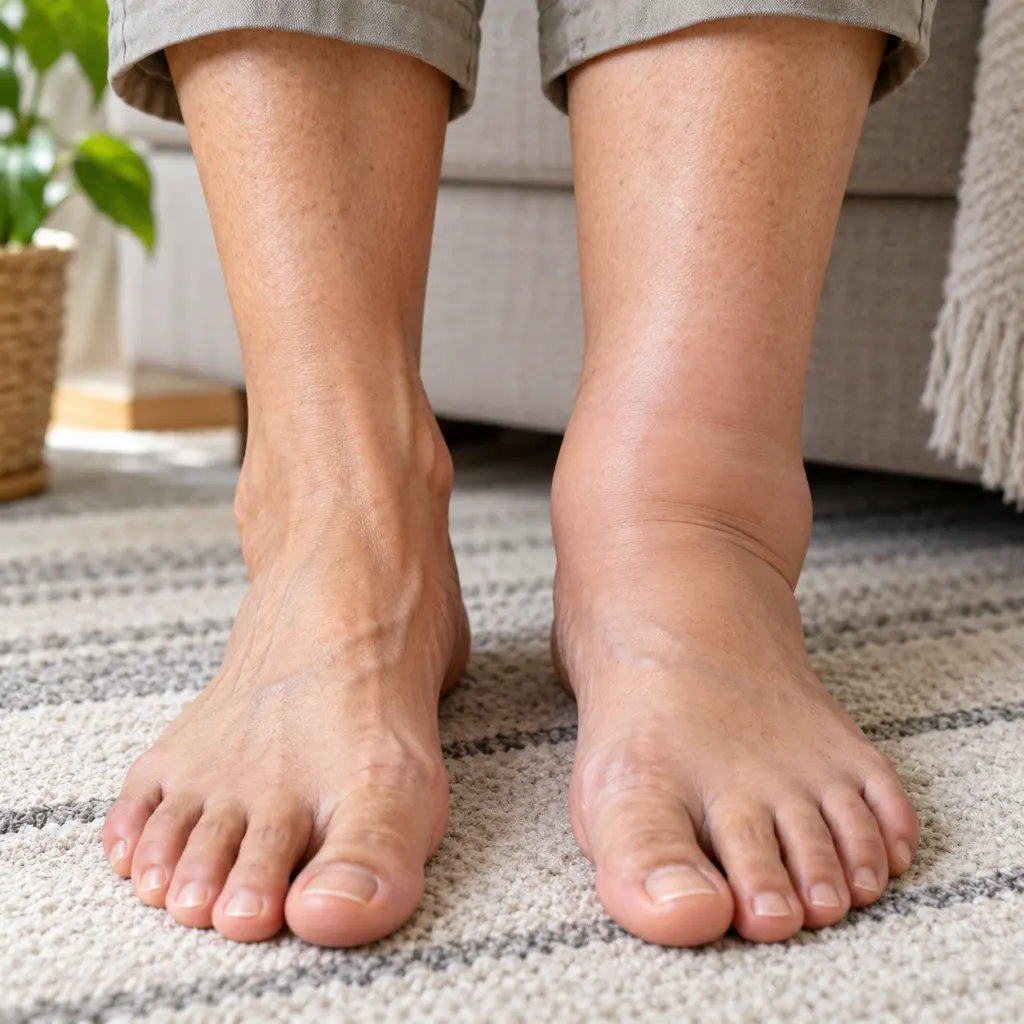
Feet and ankles are common places to notice swelling because they sit at the lowest point of the body for much of the day. Fluid that might be barely noticeable elsewhere can settle around the ankles, the tops of the feet, and the lower legs. Mayo Clinic describes edema as swelling caused by too much fluid trapped in body tissues, with the legs and feet especially likely to show it https://www.mayoclinic.org/diseases-conditions/edema/symptoms-causes/syc-20366493. The skin may feel tight or shiny, socks may leave deeper marks than usual, and the area may feel heavy by evening.
Not all swelling has the same meaning. A person who has been standing at a kitchen counter all afternoon may notice both ankles look puffy at night and improve after rest. Someone else may wake with swelling that has not happened before, or may see one calf and ankle become larger than the other. Those patterns deserve different levels of attention. A helpful first question is whether the swelling is on one side or both sides. A second is whether it improves with movement or elevation. A third is whether other symptoms are present, especially breathlessness, chest discomfort, fever, redness, warmth, or new pain.

Common Everyday Triggers
Everyday swelling can follow simple mechanical triggers. Sitting still for hours slows the pumping action of the calf muscles. Standing for long periods also encourages fluid to collect lower in the body. MedlinePlus notes that long airplane or car rides and prolonged standing can lead to some swelling in the feet and ankles https://www.medlineplus.gov/ency/article/003104.htm. Warm weather can make swelling more noticeable for some people. A recent ankle sprain, foot injury, or surgery can also cause swelling near the affected area. In these situations, the story around the swelling often points to a likely explanation.
Food patterns and prescriptions can matter too, but they should be handled carefully. Mayo Clinic lists medicines, pregnancy, heart failure, kidney disease, venous insufficiency, and cirrhosis among possible edema causes https://www.mayoclinic.org/diseases-conditions/edema/symptoms-causes/syc-20366493. If swelling began soon after a new prescription or a change in a prescription, do not stop it on your own; contact the prescribing clinician and ask what to do next. If swelling follows a salty meal or a day with little movement, the pattern may still be useful to mention at a routine visit, especially if it repeats.
The Pattern Matters More Than a Single Moment
A simple swelling log can make a clinic conversation clearer. Track the time of day, whether the swelling is one-sided or both-sided, what you were doing before it appeared, and whether elevation or walking changed it. Also note whether the skin looks stretched, whether a fingertip press leaves a dent, and whether shoes or rings suddenly feel tight. Mayo Clinic describes pitting as a dimple left in the skin after pressure, and lists stretched or shiny skin and heaviness as edema symptoms https://www.mayoclinic.org/diseases-conditions/edema/symptoms-causes/syc-20366493. These details help distinguish a passing pattern from swelling that needs evaluation.
Use this quick checklist when you notice swelling:
- Location: one foot, both feet, ankles, calves, hands, face, or abdomen.
- Timing: sudden, gradual, worse at night, present on waking, or linked with travel.
- Skin changes: tight, shiny, red, warm, darker than usual, or denting after pressure.
- Associated symptoms: shortness of breath, chest discomfort, fever, pain, faintness, or new tiredness.
- Response: improves with elevation, walking, roomy shoes, or rest, or keeps getting worse.
When Swelling Can Point to Circulation or Vein Problems
Veins in the legs work against gravity to return blood upward. If vein valves are not working well, fluid can collect in the lower legs and feet. MedlinePlus identifies venous insufficiency, often related to varicose veins, as one possible contributor to foot, leg, and ankle swelling https://www.medlineplus.gov/ency/article/003104.htm. This kind of swelling may be more noticeable after standing and may improve with elevation. It can be uncomfortable without being an immediate emergency, but repeated swelling, skin changes, or worsening heaviness should be reviewed by a health professional.
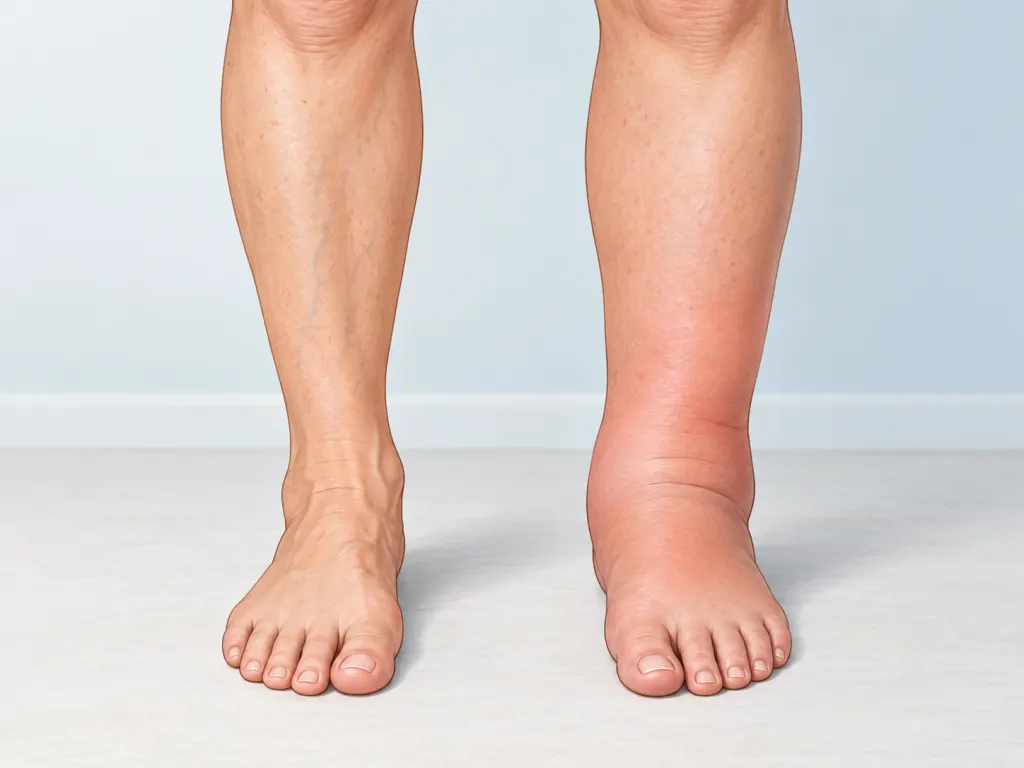
A blood clot is a different concern. The CDC explains that deep vein thrombosis often occurs in deep veins of the leg and needs prompt medical attention; common signs can include swelling, pain or tenderness, warmth, and redness or discoloration in the affected limb https://www.cdc.gov/blood-clots/about/. The National Heart, Lung, and Blood Institute similarly notes that swollen and tender legs can occur when clots block blood flow in leg veins https://www.nhlbi.nih.gov/venous-thromboembolism/symptoms. One-sided swelling after long immobility, injury, surgery, or another risk factor should not be brushed off.
When Feet Swelling May Be Part of a Whole-Body Signal
Swollen feet can sometimes be one part of a larger fluid-balance issue. The American Heart Association lists swelling in the feet, ankles, legs, fingers, stomach, and other tissues as a sign that can occur with heart failure, often along with shortness of breath, cough, tiredness, changes in thinking, or sudden weight change https://www.heart.org/en/health-topics/heart-failure/warning-signs-of-heart-failure. This does not mean swollen feet automatically point to a heart problem. It means swelling should be interpreted alongside breathing, activity tolerance, energy, and whether symptoms are new or worsening.
Kidney function is another reason swelling may matter. NIDDK explains that chronic kidney disease may have no symptoms early, and that edema can happen when the kidneys cannot remove extra fluid and salt from the body; it may appear in the legs, feet, ankles, hands, or face https://www.niddk.nih.gov/health-information/kidney-disease/chronic-kidney-disease-ckd/what-is-chronic-kidney-disease. Swelling around the eyes, changes in urination, marked tiredness, shortness of breath, or known kidney risk factors are reasons to discuss the symptom rather than treating it as only a footwear problem.
Red Flags That Should Change the Timeline
Some swelling patterns call for prompt help. MedlinePlus advises emergency care for foot, leg, or ankle swelling with shortness of breath or chest pain, and contacting a provider right away for worsening swelling with heart or kidney disease, a history of liver disease with leg or abdominal swelling, red or warm swelling, fever, or new or worsened swelling in only one leg https://www.medlineplus.gov/ency/article/003104.htm. CDC also notes that pulmonary embolism signs can include difficulty breathing, faster or irregular heartbeat, chest discomfort, coughing blood, very low blood pressure, lightheadedness, or fainting, and that medical help should be sought immediately for those signs https://www.cdc.gov/blood-clots/about/.
Call emergency services if swelling is paired with trouble breathing, chest pressure, fainting, confusion, coughing blood, or a suddenly racing or irregular heartbeat. Seek same-day medical advice if one leg becomes newly swollen, tender, warm, red, or discolored; if swelling follows an injury and becomes severe; if the swollen area is hot with fever; or if swelling is getting worse despite rest. These boundaries are not meant to alarm people with mild evening puffiness. They are there because a few swelling patterns can represent time-sensitive problems.
What You Can Do While You Arrange Appropriate Care
For mild swelling without red flags, simple measures may make the day more comfortable while you observe the pattern. MedlinePlus suggests raising the legs, exercising the legs, taking movement breaks during travel, avoiding tight clothing around the thighs, and using support stockings when appropriate https://www.medlineplus.gov/ency/article/003104.htm. CDC recommends walking every one to two hours during long sitting periods and doing seated leg movements such as raising heels and toes https://www.cdc.gov/blood-clots/about/. Keep these steps gentle: the aim is comfort and circulation support, not forcing activity through significant pain.
Foot care also matters when swelling is present. Choose shoes that do not pinch, remove tight socks if they leave deep bands, and check the skin for pressure spots. Wash and dry the feet well, especially between the toes. If swelling makes shoes suddenly tight, switch to roomy footwear until the cause is clearer. People with known heart, kidney, vein, nerve, or circulation issues should be especially cautious about skin breakdown and should ask their clinician what level of compression, if any, is appropriate for them.

How a Clinician May Sort It Out
A clinician will usually start with the story: when swelling began, whether it is one-sided or both-sided, what makes it better or worse, and what other symptoms came with it. MedlinePlus notes that a visit may include attention to the heart, lungs, abdomen, lymph nodes, legs, and feet, and may involve tests such as blood work, urine testing, chest or extremity imaging, leg-vein ultrasound, or an electrocardiogram depending on the situation https://www.medlineplus.gov/ency/article/003104.htm. That evaluation is why a swelling log is useful: it gives the clinician a clearer starting point.
Try not to arrive with only a conclusion, such as "it must be my shoes" or "it must be my heart." Arrive with observations: "both ankles swell by dinner and improve by morning," "one calf became larger after a long trip," or "my shoes have felt tight for two weeks and I get breathless climbing stairs." Those sentences help separate mechanical swelling from patterns that may need tests. They also keep the focus on what is actually happening in your body rather than on internet guesses.
The Practical Takeaway
Swollen feet are a sign worth noticing, not a diagnosis by themselves. If the swelling is mild, both-sided, clearly linked with long sitting or standing, and improves with movement or elevation, it may be reasonable to monitor and mention it at a routine visit if it recurs. If swelling is new, one-sided, painful, red, hot, persistent, or paired with breathing symptoms, chest discomfort, faintness, fever, or rapid worsening, move the timeline up and seek medical advice promptly. The best response is measured: observe the pattern, respect the warning signs, and let a qualified clinician connect the symptom to the right next step.
Wrap-Up
Foot swelling can come from everyday causes such as long sitting, standing, heat, injury, or tight footwear, but it can also reflect vein, heart, kidney, liver, infection, or blood-clot concerns. The pattern is the clue: one side versus both sides, sudden versus gradual, painful versus painless, and whether other symptoms are present. Mild swelling that improves with movement and elevation is different from swelling with breathlessness, chest discomfort, fever, warmth, redness, or sudden one-sided enlargement. When in doubt, document the details and ask a qualified health professional.
Frequently Asked Questions
- → Are swollen feet always serious?
No. Swelling can happen after long standing, long sitting, warm weather, travel, or a minor injury. It becomes more concerning when it is new, persistent, one-sided, painful, red, hot, or paired with shortness of breath, chest discomfort, fever, faintness, or sudden worsening.
- → Why do my feet swell more at the end of the day?
Gravity and reduced calf-muscle movement can let fluid collect in the lower legs and feet during the day. If swelling improves overnight or with elevation, that pattern is useful to track. Repeated or worsening swelling should still be discussed with a qualified health professional.
- → What does one swollen foot or ankle mean?
One-sided swelling can follow an injury, but it can also raise concern for infection, vein problems, or a blood clot, especially if the area is painful, warm, red, tender, or newly enlarged. New or worsening swelling in only one leg should be checked promptly.
- → Can swollen feet be connected to heart or kidney problems?
Yes, swelling in the feet and ankles can sometimes occur when the body is holding extra fluid because of heart or kidney problems. It is not proof of either condition by itself. Other clues, such as shortness of breath, sudden weight change, fatigue, changes in urination, or swelling elsewhere, make medical evaluation more important.
- → What should I track before an appointment?
Write down when swelling started, whether it affects one or both feet, whether pressing leaves a dent, what makes it better or worse, and whether you also have pain, warmth, redness, fever, breathlessness, chest discomfort, or changes in activity tolerance. Bring a current list of prescriptions and supplements.
References
This content was developed and refined using reliable sources.
- https://www.medlineplus.gov/ency/article/003104.htm
- https://www.mayoclinic.org/diseases-conditions/edema/symptoms-causes/syc-20366493
- https://www.cdc.gov/blood-clots/about
- https://www.heart.org/en/health-topics/heart-failure/warning-signs-of-heart-failure
- https://www.niddk.nih.gov/health-information/kidney-disease/chronic-kidney-disease-ckd/what-is-chronic-kidney-disease
- https://www.nhlbi.nih.gov/venous-thromboembolism/symptoms