 Save
If you found a small bug in your friend's hair, the most likely possibilities are head lice, a tick, a flea, or an insect that simply got caught there by accident. Start by looking for a live bug on the scalp and for tiny eggs stuck firmly to hairs near the scalp. Head lice are small parasitic insects that usually live on the scalp, while ticks matter most when attached to skin and should be removed promptly with tweezers according to CDC guidance. CDC head lice information and CDC tick guidance are good anchors for sorting the next step without panic.
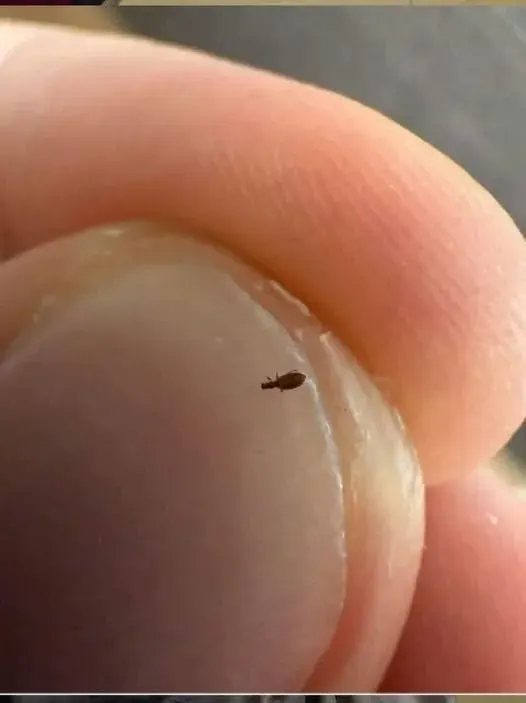
What is visible in the supplied close-up
The image shows a small brown insect, but the angle and resolution do not support a confident species diagnosis. Its outline can suggest a flea; it should not be declared a head louse just because the caption says it was found in hair. Use the distinctions below to check whether it jumps, crawls on the scalp, or is attached to skin. Keep a clear photograph or a securely contained specimen for identification if needed.
First, do not guess from one blurry photo
A single bug in hair is not enough to prove that someone has lice. Hair can catch outdoor insects, lint, plant debris, pet fleas, or a bug that crawled from bedding or clothing. The useful question is not only what does it look like? but where was it, was it attached, and are there more clues? If the insect was moving through the hair close to the scalp, head lice should move high on the list. If it was fixed to the skin and did not brush away, consider a tick. If it jumped, especially around pets, carpets, or bedding, fleas become more plausible. If it was flat, oval, reddish brown, and found after sleeping or travel, bed bugs are worth considering, although they usually hide in resting places rather than live in hair.
Before doing anything harsh, collect the evidence. Place the bug in a clear sealed bag or container if possible. Take a close photo beside a coin, ruler, or comb tooth for scale. Check the scalp under bright light, especially behind the ears and at the nape of the neck. If the person is comfortable, wetting the hair or adding conditioner can slow movement and make careful combing easier. The American Academy of Dermatology recommends bright light and a fine-tooth comb when checking for lice at home. AAD guidance also notes that nits are usually easier to see than adult lice because they stay attached to hair.
If the insect is a head louse
Head lice are tiny, wingless insects that live close to the scalp and feed on human blood. CDC describes adult head lice as roughly 2 to 3 millimeters long, about the size of a sesame seed, and notes that they move by crawling rather than jumping or flying. CDC says the best confirmation is finding a live nymph or adult louse on the scalp or hair. That matters because dandruff, dry skin, product droplets, scabs, sand, and lint are often mistaken for nits.
Nits are lice eggs. They are small, oval, and attached firmly to individual hair shafts, usually close to the scalp. MedlinePlus notes that lice and nits are commonly found near the neckline and behind the ears, and that personal cleanliness has nothing to do with getting head lice. MedlinePlus also explains that lice spread mainly through close person-to-person contact because they crawl. That is why a case often appears in households, schools, camps, sleepovers, or close friend groups.
How to check the hair carefully
A calm check is better than frantic searching. Use a bright lamp, a fine-tooth lice comb if available, hair clips, a white towel, and a magnifying glass or phone camera zoom. Work in small sections from the scalp outward. Adults can move quickly away from light, so the person checking may find nits first. The CDC says nits firmly attached within about one-quarter inch of the base of the hair shaft are more meaningful than specks farther away, which are often old, hatched, or dead. CDC
- Look for location: behind the ears, at the nape of the neck, and close to the scalp.
- Check attachment: dandruff and lint usually brush or comb away; nits tend to stay cemented to the hair.
- Watch movement: head lice crawl; fleas jump; ticks crawl and may attach to skin.
- Use scale: adult lice are about sesame-seed sized, while many harmless specks are much smaller or irregular.
- Check close contacts: do not treat everyone automatically, but do inspect people with close hair-to-hair contact.
If the bug is attached, think tick
A tick in hair is different from a louse because the immediate question is whether it is attached to the skin. Ticks can crawl into hair after time in grassy, brushy, or wooded areas, and a person may notice one only when it reaches the scalp or hairline. If it is attached, CDC advises removing it as soon as possible with clean fine-tipped tweezers, grasping it close to the skin, and pulling upward with steady pressure. After removal, clean the bite area and hands. CDC tick guidance
Do not use petroleum jelly, heat, nail polish, or similar methods to try to make a tick detach. CDC specifically cautions against those approaches. If the person later develops a rash or fever within several days to weeks after removing a tick, CDC says to see a doctor and mention when and where the bite likely happened. That does not mean every tick encounter leads to illness; it means the timeline and location are useful facts if symptoms appear.
If it jumped, look beyond the hair
Fleas can bite people, but they usually point to animals or an indoor source rather than a true human-hair infestation. CDC describes fleas as small insects that survive by feeding on animal or human blood and notes that fleas generally prefer animal hosts but may bite people when animals are unavailable. CDC flea information Cornell IPM adds a practical clue: fleas are often seen moving on pets and can jump, unlike ticks. Cornell IPM
If the bug jumped from the hair or was found after holding a pet, check pets, pet bedding, carpets, and resting areas. Small dark flecks in pet fur or bedding can be flea dirt. A veterinarian is the right person for pet flea decisions, especially because products meant for one animal species can be unsafe for another. For the human side, wash the person's hair normally, inspect for more insects, and focus on the likely source rather than repeatedly applying products to the scalp without a confirmed problem.
Could it be a bed bug or something harmless?
A bed bug found in hair can happen, but hair is not where bed bugs usually settle. University of Maryland Extension describes adult bed bugs as light to reddish brown, oval, wingless insects, about one-quarter to three-eighths of an inch long before feeding, and says they tend to hide in areas that are not disturbed, such as around mattress edges and headboards. University of Maryland Extension If a flat oval bug was found after sleep, travel, or time on a couch, inspect the sleeping area, seams, headboard edges, luggage, and nearby clutter.
Other finds are less dramatic. A tiny beetle, gnat, aphid, carpet beetle larva, or outdoor insect can get trapped in hair. Hair spray, dandruff, flakes of skin, beads of dead hair tissue, and lint can also look bug-like. Mayo Clinic notes that dandruff, hair product droplets, scabs, dirt, and other insects can be mistaken for lice or nits. Mayo Clinic If there is only one insect, no attached nits, no repeated finding, and no scalp symptoms, the best next move may simply be to save the specimen and recheck once more in good light.
What to do the same day
Match the response to the evidence. For suspected lice, confirm live lice or close-to-scalp nits before using lice products. Follow the product label exactly if a lice product is used, and use only products meant for people. AAD warns against using more than the stated amount or combining lice products unless a dermatologist advises it. AAD For a confirmed tick attached to skin, remove it promptly and note the date and likely exposure location. For possible fleas or bed bugs, inspect the environment and source instead of focusing only on the hair.
Household cleaning should be targeted, not extreme. CDC recommends washing and drying clothing, towels, bed linens, and items used by a person with lice during the two days before care, using hot water and high heat when appropriate, and soaking combs and brushes in hot water. CDC also says spending large amounts of time and money on housecleaning is not necessary for head lice, and fumigant sprays or fogs are not needed and can be toxic if inhaled or absorbed through the skin. CDC
When to ask for professional identification
Ask for help when the evidence is unclear or the stakes are higher. A school nurse, pharmacist, primary care office, dermatologist, local extension service, pest management professional, or veterinarian may be the right contact depending on the suspected insect. A clinician can help confirm lice when the scalp check is confusing. A veterinarian can guide flea control for pets. A local extension office or pest professional may help identify bed bugs or household insects from a photo or specimen.
Professional help is also sensible if the person has persistent scalp irritation, open scratched areas, eye involvement, a tick bite followed by rash or fever, repeated bugs despite careful checking, or a young child involved. The aim is not to embarrass anyone. Head lice and other insects are common human problems, and stigma often makes people delay sensible steps. Calm evidence, privacy, and careful checking usually solve the mystery faster than blame.
A quick decision guide
If the bug was sesame-seed sized, tan or gray, crawling near the scalp, and there are tiny eggs stuck close to hairs, think head lice first. If it was embedded in the skin, think tick and remove it promptly with tweezers. If it jumped and pets are nearby, investigate fleas. If it was flat, oval, reddish brown, and the setting involves sleep, travel, or furniture, inspect for bed bugs. If it was a one-time find with no nits, no attachment, and no repeated sightings, it may have been an incidental insect caught in the hair.
The most useful tool is a careful check, not panic. Save the specimen if you can, photograph it with scale, inspect the scalp in sections, and make the next step fit the evidence. If you cannot tell, get identification help before using chemicals or spreading alarm through a household or friend group.
Wrap-Up
A bug in hair is most often sorted by behavior and location: lice crawl and leave nits attached near the scalp, ticks attach to skin, fleas jump and often trace back to pets or indoor resting areas, and bed bugs usually point to bedding or furniture rather than hair. Confirm before acting, use only appropriate products when needed, and get professional identification when the evidence is uncertain.
Frequently Asked Questions
- → How can I tell lice from dandruff?
Dandruff usually flakes or brushes away. Nits tend to stay firmly attached to individual hair shafts close to the scalp, especially behind the ears and near the nape of the neck. A bright light and fine-tooth comb make checking easier.
- → Can head lice jump from one person to another?
No. Head lice crawl; they do not jump or fly. They usually spread through direct hair-to-hair contact, and less often through recently shared items such as combs, hats, or towels.
- → What should I do if the bug was a tick in the hair?
If the tick is attached to skin, remove it promptly with clean fine-tipped tweezers by grasping close to the skin and pulling steadily. Clean the area and hands afterward, and seek medical advice if rash or fever develops in the following days or weeks.
- → Can fleas live in human hair?
Fleas may bite people and may briefly land in hair, but they usually point to pets, wildlife, carpets, bedding, or resting areas rather than a settled human-hair problem. If the bug jumped, check pets and the home source.
- → Should everyone in the house use a lice product right away?
No. Check close contacts carefully, but avoid using lice products on people without evidence of lice. If a product is used for a confirmed case, follow the label exactly and ask a qualified professional when the situation is unclear.
References
This content was developed and refined using reliable sources.
- https://www.cdc.gov/lice/about/head-lice.html
- https://www.medlineplus.gov/headlice.html
- https://www.aad.org/public/diseases/a-z/head-lice-treatment
- https://www.cdc.gov/ticks/after-a-tick-bite/index.html
- https://www.cdc.gov/fleas/about/index.html
- https://cals.cornell.edu/integrated-pest-management/outreach-education/whats-bugging-you/fleas
- https://www.extension.umd.edu/resource/bed-bugs
- https://www.mayoclinic.org/diseases-conditions/head-lice/symptoms-causes/syc-20356180?p=1