 Save
The most useful doctor-style advice for losing weight naturally is simple but not simplistic: choose habits you can repeat for months. That means a realistic goal, meals that help you feel satisfied, drinks that do not quietly add many calories, regular movement you enjoy, enough sleep, and a way to review progress without shame. The CDC describes healthy weight loss as part of a broader lifestyle that includes good nutrition, physical activity, sleep, and stress management, and notes that gradual, steady progress is more likely to last than faster loss (CDC).
1. Start With a Specific, Realistic Goal
A good weight-loss plan begins with clarity. Instead of aiming to overhaul your whole life by Monday, write down one reason the change matters and two or three actions you can actually do this week. The CDC recommends setting specific and realistic goals, such as replacing sugary drinks with water or adding a short walk, because vague goals are hard to measure and easy to abandon (CDC). This is also where a doctor, registered dietitian, or other qualified health professional can help you choose a target that makes sense for your body, history, preferences, and daily schedule.
One practical way to begin is to separate outcome goals from behavior goals. An outcome goal might be a change in body weight over time. A behavior goal is the action you control today: cooking dinner at home three nights this week, eating a vegetable with lunch, or walking after work. Behavior goals are not a consolation prize; they are the route. If your goal depends on perfect motivation, it is probably too fragile. If it can survive an ordinary busy week, it has a better chance.

2. Build Meals Around Foods That Help You Feel Full
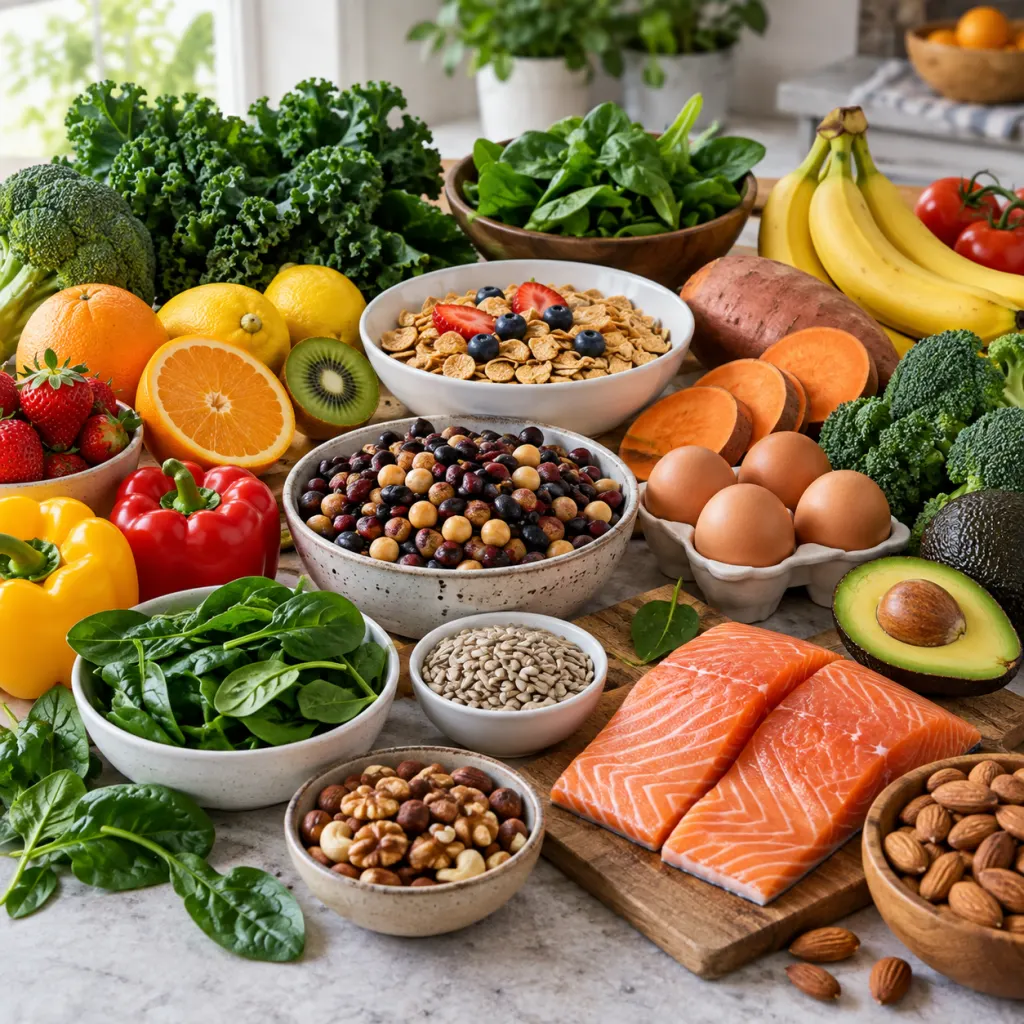
Restriction often backfires because hunger is loud. A steadier approach is to build meals that include protein-rich foods, high-fiber foods, colorful vegetables or fruit, and satisfying fats in sensible amounts. Nutrition.gov summarizes healthy eating as choosing foods across vegetables, fruits, protein, grains, and dairy or fortified alternatives (Nutrition.gov). That pattern gives you more volume, texture, and staying power than a plate built mostly from refined snacks or sweet drinks.
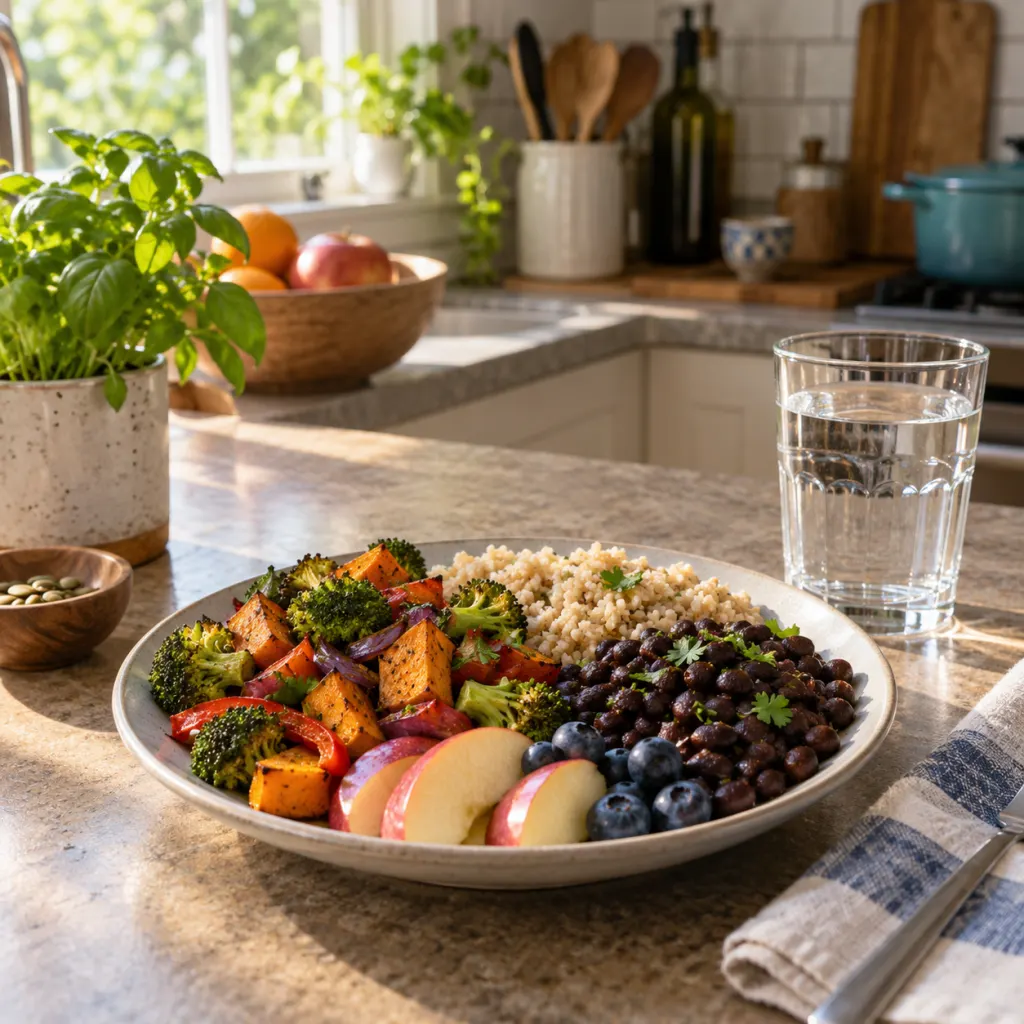
A simple plate check can help: Is there a protein food, a fiber-rich carbohydrate or starchy vegetable, and a generous non-starchy vegetable or fruit? Are you using enough fat to make the meal enjoyable without letting oil, creamy sauces, or toppings become the main event? This is not about making every meal perfect. It is about making ordinary meals easier to repeat. A satisfying breakfast, lunch, or dinner reduces the urge to graze through the kitchen later because the meal itself did its job.
3. Make Drinks Work For You
Drinks are easy to overlook because they disappear quickly. Water has no calories, and the CDC notes that replacing sugary drinks with plain water can reduce caloric intake while helping the body function normally (CDC). That does not mean every drink has to be plain water. Unsweetened tea, plain coffee, sparkling water, and milk or fortified alternatives can fit into many eating patterns. The useful question is whether your usual drinks are helping, neutral, or quietly making your plan harder.
Try a low-drama drink audit for three days. Notice sweet coffee drinks, soda, fruit drinks, energy drinks, cocktails, sweet tea, and frequent juices. You do not need to label them as forbidden. You are simply learning where calories may be entering without much fullness. Many people get progress from one change: keeping the favorite drink they truly enjoy, while swapping the automatic or forgettable ones for water, sparkling water, or unsweetened options.
4. Use Tracking As Information, Not Punishment
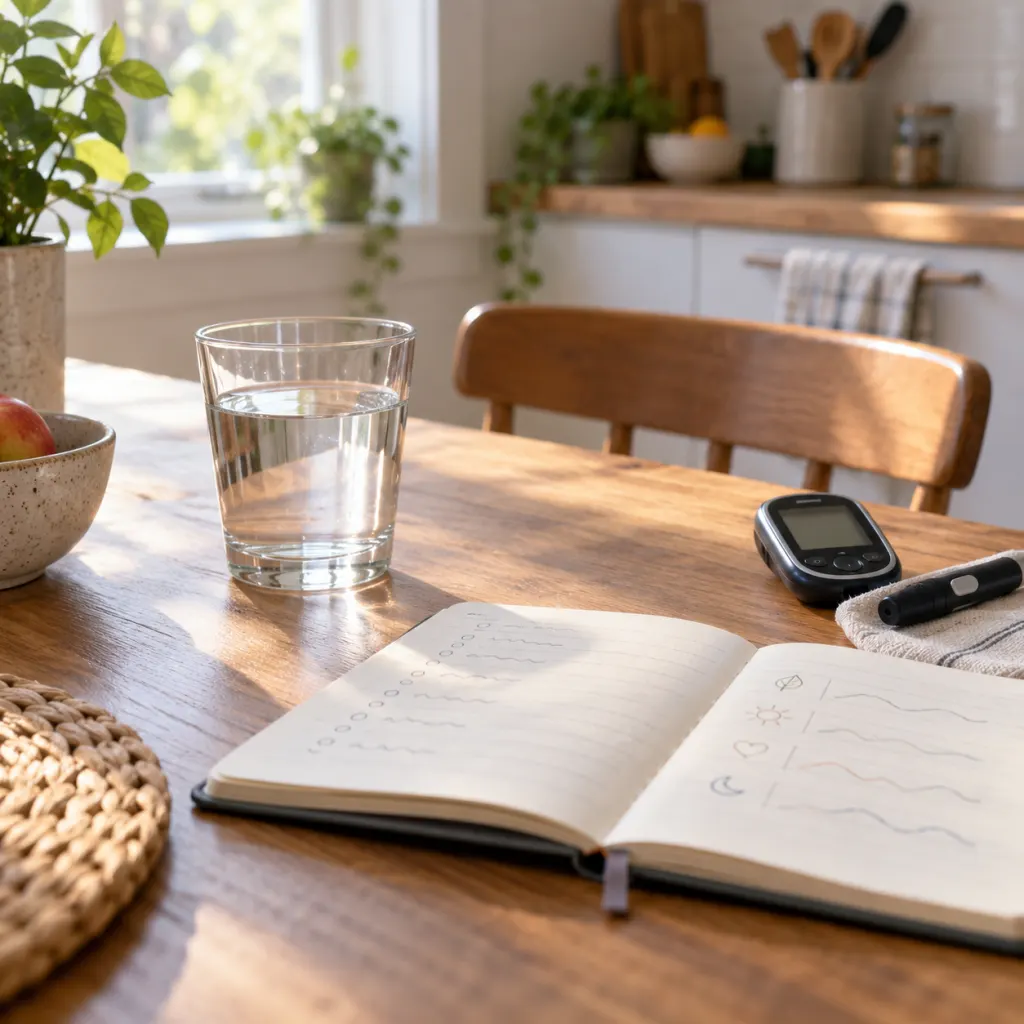
Tracking can be helpful when it answers a specific question. The CDC suggests tracking nutrition, physical activity, sleep, stress, and other lifestyle patterns to understand where changes may help (CDC). The point is not to turn eating into accounting forever. The point is to see the pattern you could not see from memory alone: skipped lunches that lead to late-night snacking, weekends that lack structure, or a walking routine that disappears when meetings run long.
If detailed calorie tracking feels stressful, use a lighter method. Photograph meals, keep a short notes app log, or mark habits on a calendar. Look for patterns once a week, not ten times a day. A useful review asks: What worked? What got in the way? What is the smallest adjustment for the next seven days? That tone matters. Shame makes people avoid the data. Curiosity helps people use it.
5. Choose Movement You Can Repeat
Exercise does not have to be punishing to matter. NIDDK describes physical activity as part of lifestyle change for safe weight loss and notes that structured programs often include at least 150 minutes a week of moderate-intensity aerobic activity, such as brisk walking or cycling (NIDDK). The best starting point is often the activity you will actually do: walking, dancing, swimming, cycling, gardening, a beginner class, or short movement breaks at work.
Enjoyment is not a luxury detail. MedlinePlus describes dancing as a social way to work out that combines aerobic and weight-bearing activity, and it lists many styles for different preferences (MedlinePlus). That lesson applies beyond dance. If you dislike one form of movement, try another before deciding you are not an exercise person. Start where your body is today. Ten minutes after dinner is a real start. Two short walks can count. A beginner class is allowed to feel beginner-level.
6. Keep Strength In The Conversation
Many weight-loss plans focus only on burning calories, but daily function matters too. Strength-building activities help you carry groceries, climb stairs, garden, cook, and stay active with more confidence. The Physical Activity Guidelines for Americans provide evidence-based guidance to help people maintain or improve health through physical activity (ODPHP). For a home-friendly start, think of movements such as chair stands, wall pushups, step-ups, resistance bands, or carrying moderately heavy household items safely.
Strength work does not need to be complicated, but it should be sensible. Use a stable surface, move with control, and stop if something feels sharp or unsafe. If you have a medical condition, recent injury, balance concern, or long period of inactivity, ask a qualified professional what is appropriate before increasing intensity. The goal is not to train like an athlete. The goal is to build a body that supports the rest of your routine.
7. Protect Sleep Like A Weight-Loss Habit
Sleep is often treated as separate from weight, but it changes hunger, energy, patience, and planning. The CDC states that good sleep is essential for health and emotional well-being, and that adults generally need at least 7 hours a night, with needs varying by age (CDC). For weight management, sleep is not a magic switch. It is more like the foundation under your decisions. Tired people often have less energy to cook, move, shop well, or pause before snacking.
Start with a routine you can repeat: a consistent wake time, a wind-down period, a cooler and darker bedroom, and screens off before bed when possible. Caffeine timing matters for many people. So does late-night eating if it leaves you uncomfortable. If sleep is consistently poor, loud snoring is present, or you feel very sleepy despite enough time in bed, that is a good reason to talk with a qualified health professional rather than simply trying harder.

8. Design Your Kitchen For Easier Choices
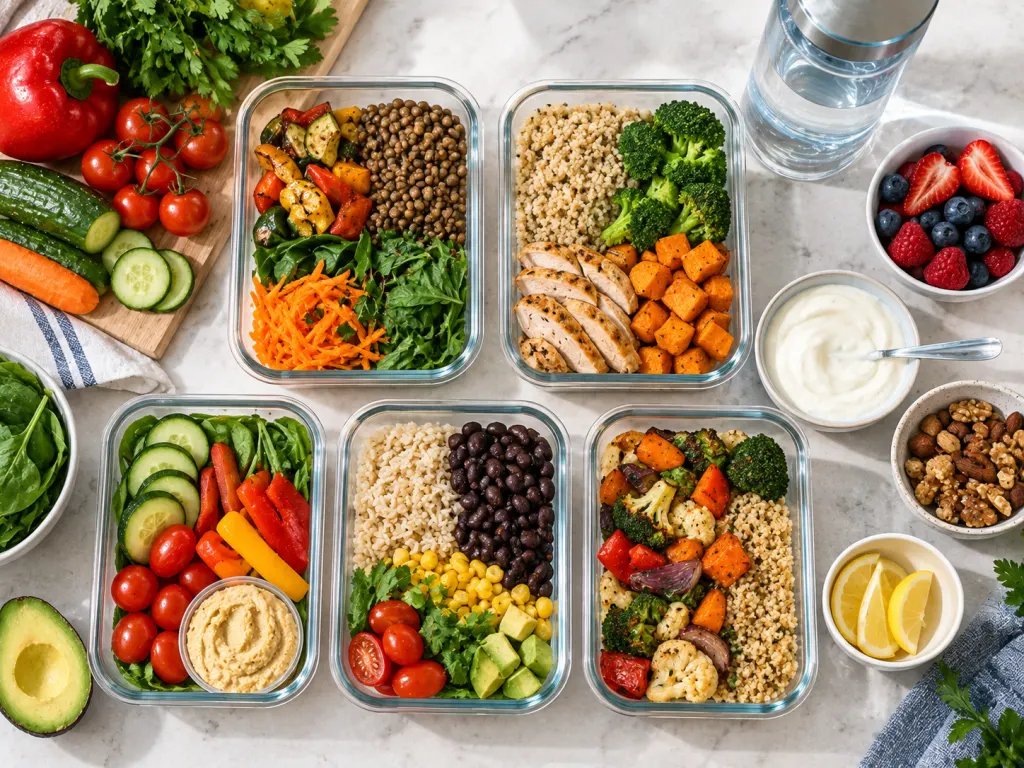
Willpower is easier when the environment cooperates. A practical kitchen setup makes the desired choice visible and convenient. Keep washed fruit where you can see it, portion leftovers into lunch containers, store water within reach, and make quick protein options easy to find. Put highly tempting foods in less visible places or buy smaller amounts if they tend to become automatic snacks. This is not about moralizing food. It is about reducing decision fatigue in the room where many decisions happen.
A weekly reset helps more than a dramatic clean-out. Choose two proteins, two vegetables, one grain or starchy food, and a simple breakfast option. Cook some pieces ahead if that suits your schedule: boiled eggs, lentils, chopped vegetables, roasted chicken, beans, yogurt cups, or cooked oats. Your future self does not need a perfect menu. Your future self needs a plan that makes the next reasonable choice less annoying.
9. Plan For Setbacks Before They Happen
A plan that assumes no stress, no travel, no celebrations, and no tired evenings is not a real plan. The CDC notes that setbacks are expected and encourages getting back on track quickly, then thinking about what could help next time (CDC). That is a mature approach to weight loss. One meal does not decide the week. One hard week does not erase the work. What matters is how quickly you return to ordinary helpful habits.
Here is a simple recovery checklist to keep the plan grounded:
- Return to your next regular meal instead of skipping food to compensate.
- Drink water and choose a familiar filling meal.
- Take a short walk or do gentle movement if it feels appropriate.
- Review what made the setback likely: hunger, stress, no groceries, poor sleep, or social pressure.
- Choose one small adjustment for tomorrow rather than rewriting the whole plan.
When To Get Professional Help
Weight is influenced by food, activity, sleep, stress, age, environment, genes, hormones, medical conditions, and some medicines, according to the CDC (CDC). That means a stuck or confusing weight pattern is not a character flaw. It may be a sign that you need a better-fitting plan, a review of your health history, or support from a clinician or registered dietitian. NIDDK also notes that health care professionals can help people adopt lifestyle changes safely and may refer some people to trained weight-management specialists (NIDDK).
Professional support is especially useful if you have a history of disordered eating, significant medical concerns, rapid unexplained weight change, ongoing fatigue, digestive symptoms, or uncertainty about what is safe for you. It is also helpful if weight loss feels emotionally consuming. A good plan should make daily life more stable, not smaller.
A Steady Plan Beats A Severe Plan
The thread through all nine tips is sustainability. You are not trying to prove discipline by choosing the hardest version of every habit. You are trying to create an eating, movement, sleep, and planning routine that can carry you through normal life. A useful weight-loss plan should leave room for family meals, culture, budget, preferences, and imperfect days. It should also be adjustable. As your schedule, appetite, fitness, or responsibilities change, the plan should change with you.
Start with the easiest useful habit, not the most impressive one. Drink water with lunch. Add vegetables to dinner. Walk for ten minutes. Set a bedtime alarm. Pack tomorrow's breakfast. Keep notes for three days. Then build. Natural weight loss is not a single trick; it is the quiet accumulation of repeatable choices that respect both health and real life.
Wrap-Up
Natural weight loss is best approached as a practical routine: set a realistic goal, eat filling meals, reduce sugary drinks, move consistently, include strength, protect sleep, track patterns kindly, organize your kitchen, and plan for setbacks. When weight loss is confusing, medically complicated, or emotionally distressing, get support from a doctor or qualified health professional.
Frequently Asked Questions
- → How fast should weight loss happen?
Many public-health resources emphasize gradual, steady progress rather than rapid change. The better question is whether your plan is safe, repeatable, and helping you build habits you can maintain. A doctor or qualified health professional can help set a target that fits your situation.
- → Do I have to count calories to lose weight?
No single tracking method is required for everyone. Some people benefit from calorie tracking, while others do better with meal photos, habit checklists, planned plates, or brief food notes. The goal is useful information, not constant monitoring.
- → What is the easiest first step?
Pick one small habit you can do this week: drink water with meals, take a short walk after dinner, add a vegetable to lunch, plan breakfast, or keep a three-day pattern log. A small habit done repeatedly is more useful than a dramatic change that lasts two days.
- → Can I lose weight without going to a gym?
Yes. Walking, dancing, cycling, home strength movements, gardening, active errands, and beginner classes can all support a more active routine. The most useful movement is the kind you can repeat safely and consistently.
- → When should I talk to a professional about weight loss?
Consider professional support if you have medical concerns, a history of disordered eating, rapid unexplained weight change, persistent symptoms, or confusion about what is safe for you. It is also reasonable to ask for help if the process feels overwhelming.
References
This content was developed and refined using reliable sources.
- https://www.cdc.gov/healthy-weight-growth/losing-weight/index.html
- https://www.niddk.nih.gov/health-information/weight-management/adult-overweight-obesity/treatment
- https://www.cdc.gov/healthy-weight-growth/water-healthy-drinks/index.html
- https://www.nutrition.gov/topics/basic-nutrition/healthy-eating
- https://odphp.health.gov/our-work/nutrition-physical-activity/physical-activity-guidelines/current-guidelines
- https://medlineplus.gov/ency/patientinstructions/000809.htm
- https://www.cdc.gov/sleep/about/index.html