 Save
High blood pressure does not mean every over-the-counter or prescription medicine is off limits, but it does mean labels and medication lists matter. The biggest categories to check are decongestants, NSAID pain relievers, stimulants, some hormone medicines, systemic steroids, certain mental health medicines, some migraine medicines, high-sodium products, and stimulant or herbal supplements. The American Heart Association advises people with high blood pressure to check with a healthcare professional or pharmacist before using over-the-counter medicines or supplements, and Mayo Clinic gives similar cautions for cold remedies that contain decongestants American Heart Association Mayo Clinic.
Why Some Medicines Matter More When Blood Pressure Is High
Blood pressure rises and falls through the day, but sustained high readings mean the heart and blood vessels are already working under extra pressure. The FDA explains that blood pressure is the force of blood pushing against artery walls, and higher levels are linked with higher risk for serious heart, kidney, eye, and brain problems over time FDA. Some medicines can narrow blood vessels, increase fluid retention, add sodium, stimulate the nervous system, or reduce how well a blood pressure medicine works. The result is not always dramatic, and it may not happen to everyone, but it can be enough to matter for someone whose readings are already difficult to manage.
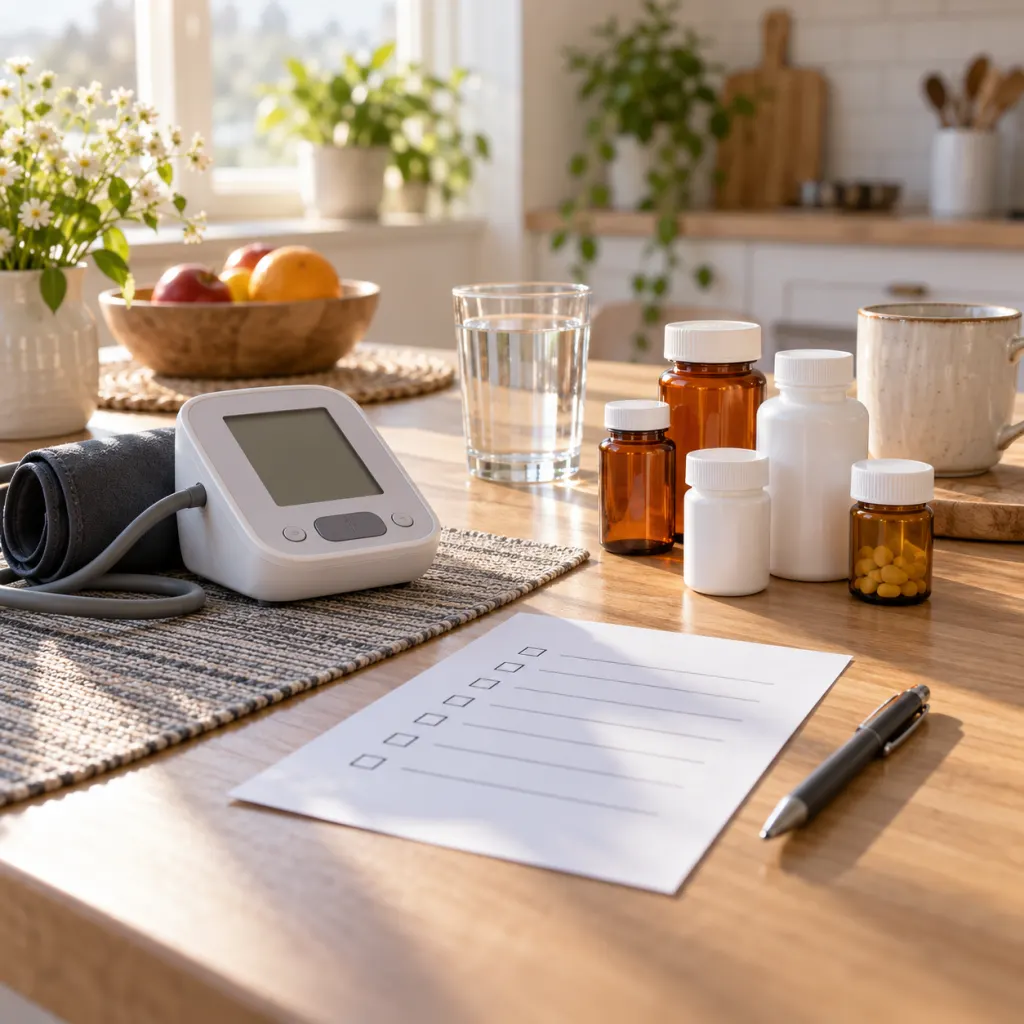
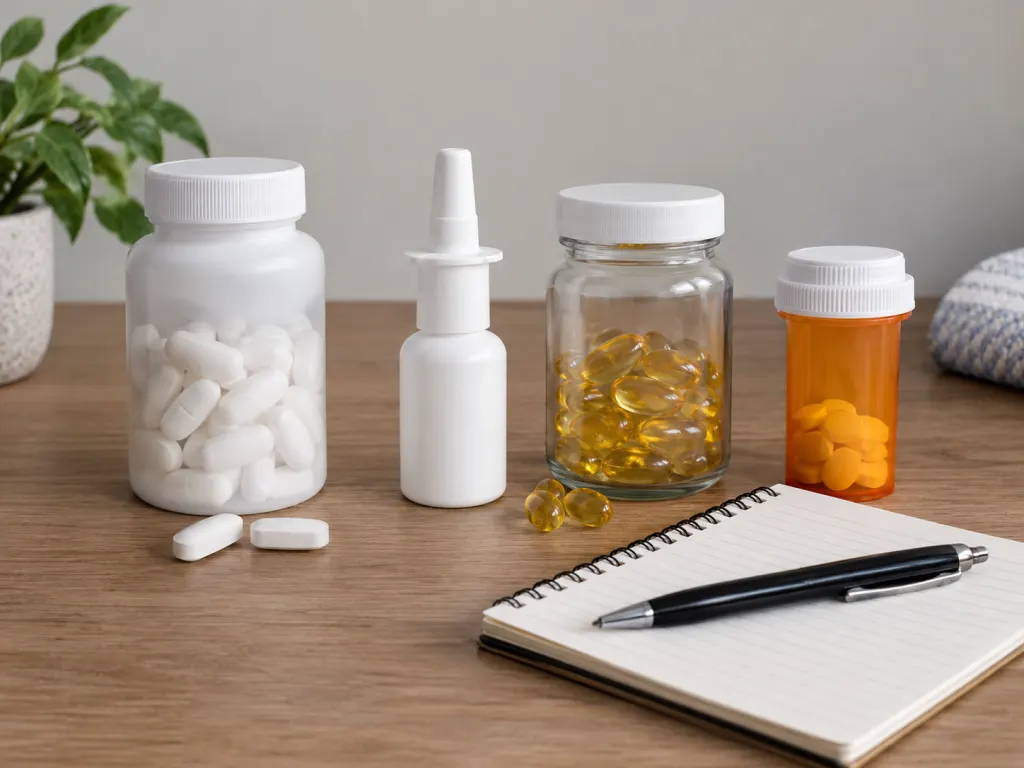
The safest approach is not panic; it is inventory. Keep a current list of prescriptions, over-the-counter products, vitamins, supplements, nasal sprays, patches, and occasional medicines. Include products used only during colds, allergy season, headaches, menstrual cramps, back pain, travel, or sleep changes. A pharmacist can often spot duplicated ingredients or warnings quickly, especially when combination cold and flu products include several active ingredients in one bottle or packet.
Decongestants Are Often the First Label Check
Oral decongestants such as pseudoephedrine and phenylephrine are common in cold, flu, sinus, and allergy products. Mayo Clinic notes that decongestants narrow blood vessels to reduce nasal swelling, but that narrowing can also make it harder for blood to flow and may increase blood pressure. Mayo Clinic specifically says people with severe or uncontrolled high blood pressure should not take a decongestant without professional guidance Mayo Clinic. MedlinePlus also advises checking with a provider before taking decongestants if you have high blood pressure MedlinePlus.
Decongestants can be easy to miss because the front of the package may emphasize congestion, sinus pressure, cold relief, or allergy relief rather than the active ingredient. Look for words such as pseudoephedrine, phenylephrine, ephedrine, oxymetazoline, and naphazoline. Nasal sprays can act locally, but they still deserve a label check, and some sprays should be used only for a short period because congestion may rebound with longer use. A safer conversation at the pharmacy sounds like this: “I have high blood pressure and take these medicines. Which cold product avoids decongestants?”
NSAID Pain Relievers Can Be a Problem for Some People
NSAIDs, short for nonsteroidal anti-inflammatory drugs, include common pain relievers such as ibuprofen and naproxen. The American Heart Association lists NSAIDs among drugs that can raise blood pressure, and Mayo Clinic advises people with high blood pressure to consider pain medicine carefully during colds, specifically noting that ibuprofen and naproxen may lead to higher blood pressure American Heart Association Mayo Clinic.
This does not mean every person with high blood pressure can never use an NSAID. It means the choice should be deliberate, especially if you use pain relievers often, have kidney disease, take a diuretic, take an ACE inhibitor or ARB, have heart disease, are older, or are using more than one product that may contain an NSAID. Some cold medicines, menstrual products, sleep-pain combinations, and prescription pain medicines may contain an NSAID even when the front label does not make that obvious. FDA guidance on blood pressure medicines also flags NSAIDs as medicines to discuss with a healthcare provider when using several blood pressure medicine classes FDA.
A Practical Label Checklist
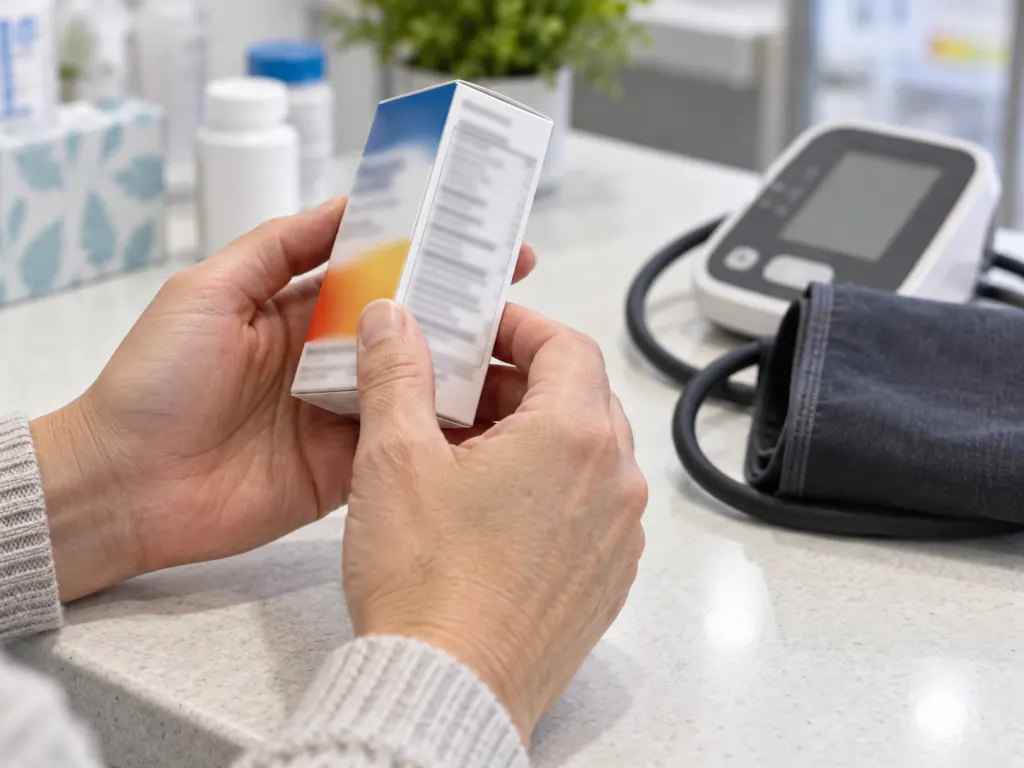
When you are standing in front of a pharmacy shelf, a short checklist helps more than a long warning list. Use the Drug Facts label for over-the-counter products and the patient information for prescriptions. If the product is a supplement, look for a Supplement Facts panel and a complete ingredient list. Then ask whether the product fits your blood pressure plan.
- Active ingredient: Check for pseudoephedrine, phenylephrine, ibuprofen, naproxen, caffeine, stimulant blends, or hidden duplicate ingredients.
- Warning section: Look for warnings for high blood pressure, heart disease, kidney disease, thyroid disease, diabetes, or use with blood pressure medicines.
- Sodium wording: The American Heart Association advises checking labels for sodium or soda wording because some medicines can contain meaningful sodium.
- Combination products: Avoid assuming a multi-symptom product is safer because it treats several symptoms at once.
- Frequency: A medicine used once may have a different risk profile than one used several days a week.
- Professional check: Ask a pharmacist before using a new product if you have high blood pressure or take blood pressure medicine.
Hormones, Steroids, and Stimulants Need Individual Review
Some prescription categories require a more personal risk-benefit discussion. MedlinePlus lists estrogens, including birth control pills, corticosteroids and mineralocorticoids, phentermine, testosterone and other anabolic steroids, excess thyroid hormone, and several other medicines as possible medicine-related causes of high blood pressure MedlinePlus. The American Heart Association also lists birth control pills, systemic corticosteroids such as prednisone and methylprednisolone, antidepressants, atypical antipsychotics, caffeine, and stimulant or recreational drugs among substances that can raise blood pressure American Heart Association.
Birth control is a good example of why “avoid” is too simple a word. MedlinePlus notes that birth control pills can rarely be associated with high blood pressure and that women using them should have blood pressure checked after starting, while pills without estrogen are much less likely to cause those specific problems MedlinePlus. A person may have several options, but the right choice depends on blood pressure readings, smoking status, migraine history, age, clotting history, other medicines, and personal priorities. That is a clinician-level decision, not a package-front decision.
Supplements and “Natural” Products Are Not Automatically Gentle
Supplements can be especially tricky because people often do not think of them as medicines. The American Heart Association warns that supplements and natural remedies can affect blood pressure or other medicines, and it specifically calls out Ma Huang and ephedra. MedlinePlus lists black licorice, ephedra and many other herbal products, yohimbine or yohimbe extract, and caffeine among substances linked with medicine-related high blood pressure American Heart Association MedlinePlus.
Be especially cautious with products promoted for energy, weight loss, workout intensity, sexual performance, or fast symptom relief. Those categories may contain stimulant ingredients, caffeine sources such as guarana, or herbal blends with unclear amounts. Bring the actual bottle, packet, or photo of the label to a pharmacist or doctor. A vague ingredient name such as “proprietary blend” is not enough information to judge safety for someone managing high blood pressure.

Do Not Stop Prescribed Medicines on Your Own
If a medicine on your list appears in a caution category, the next step is a professional conversation, not an abrupt change. The FDA tells patients taking blood pressure medicines to take them every day and not stop until a healthcare provider says it is okay, and the American Heart Association gives the same basic warning about prescribed medicines FDA American Heart Association. This is particularly important for beta blockers, clonidine, steroids, antidepressants, antipsychotics, stimulant prescriptions, migraine medicines, and hormone medicines, where sudden changes can create their own problems.
A useful message to send the clinic is specific: “My home readings have been higher since I started this medicine,” or “I need something for congestion and I take these blood pressure medicines.” Include the product name, active ingredient, dose on the label, how often you use it, and your recent blood pressure readings. If the medicine was prescribed by a specialist, tell both that specialist and the clinician who manages your blood pressure so that advice is coordinated.
When to Get Help Quickly
Seek urgent medical help if a high reading comes with chest pain, trouble breathing, weakness on one side, fainting, confusion, severe headache, vision changes, or trouble speaking. If you are not sure whether a symptom is urgent, it is safer to contact emergency services or an urgent care line than to wait. For non-urgent increases, repeat the measurement using your usual technique, write down the result, note any new medicine or supplement, and contact your healthcare team for guidance.
The Bottom Line for Everyday Decisions
The medicines most worth checking are not obscure. They are often the cold medicine in the cabinet, the pain reliever in a purse, the allergy product bought in a hurry, the supplement suggested by a friend, or a prescription from another specialist. Keep a single updated medication list, read active ingredients rather than marketing language, and ask a pharmacist before adding a product when you have high blood pressure. That simple habit can prevent many avoidable conflicts without turning every routine symptom into an alarm.
Wrap-Up
People with high blood pressure should be careful with oral decongestants, NSAID pain relievers, stimulant medicines, certain hormone medicines, systemic steroids, some mental health medicines, migraine medicines, high-sodium products, and stimulant or herbal supplements. The best step is to check labels, keep an updated medication list, and ask a doctor or pharmacist before adding anything new. Never stop a prescribed medicine suddenly unless a qualified health professional tells you to do so.
Frequently Asked Questions
- → Can I take cold medicine if I have high blood pressure?
Sometimes, but choose carefully. Avoid assuming that a cold, flu, sinus, or allergy product is safe just because it is sold over the counter. Check for decongestants such as pseudoephedrine or phenylephrine, and ask a pharmacist for an option that fits your blood pressure history and current medicines.
- → Are ibuprofen and naproxen unsafe for everyone with high blood pressure?
Not necessarily for every person or every situation, but they deserve caution. NSAIDs such as ibuprofen and naproxen can raise blood pressure in some people and may interact with certain blood pressure medicines. Ask a doctor or pharmacist what pain reliever is appropriate for your own health history.
- → What should I bring to a pharmacist when asking about a medicine?
Bring a current medication list, including prescriptions, over-the-counter products, supplements, patches, nasal sprays, and occasional medicines. If possible, bring the package or a clear photo of the active ingredients and warning label. Also share recent blood pressure readings if they have changed.
- → Can supplements raise blood pressure?
Yes, some can. Products containing stimulant herbs, caffeine sources, ephedra or Ma Huang, yohimbe, black licorice, or unclear proprietary blends may affect blood pressure or interact with medicines. “Natural” does not automatically mean low-risk for someone managing high blood pressure.
- → Should I stop a prescription if I learn it may raise blood pressure?
No. Do not stop a prescribed medicine on your own. Contact the prescriber or the clinician who manages your blood pressure and explain your concern, your readings, and the exact product you are taking. They can help decide whether monitoring, a change, or another approach is appropriate.
References
This content was developed and refined using reliable sources.
- https://www.heart.org/en/health-topics/high-blood-pressure/changes-you-can-make-to-manage-high-blood-pressure/managing-high-blood-pressure-medications
- https://www.mayoclinic.org/diseases-conditions/high-blood-pressure/expert-answers/high-blood-pressure/faq-20058281
- https://www.medlineplus.gov/ency/article/000155.htm
- https://medlineplus.gov/ency/article/002208.htm
- https://www.fda.gov/consumers/womens-health-topics/high-blood-pressure
- https://www.medlineplus.gov/ency/article/007460.htm