 Save
The clearest warning signs of stroke are sudden neurological changes: one-sided weakness or numbness, face drooping, trouble speaking, trouble understanding speech, vision changes, loss of balance, or a sudden severe headache. The safest response is to call 911 immediately, even if the person seems embarrassed, uncertain, or starts to improve. Stroke is a medical emergency because brain cells can be injured quickly when blood flow is blocked or bleeding occurs in the brain, according to the National Heart, Lung, and Blood Institute (NHLBI).
Why fast recognition matters
A stroke can happen when blood flow to part of the brain is blocked or when bleeding puts pressure on brain tissue. The NHLBI describes ischemic stroke as the more common type, involving blocked blood vessels, while hemorrhagic stroke involves bleeding in the brain (NHLBI). From the outside, the first clue is not usually pain in one neat location. It is often a sudden change in how a person moves, speaks, sees, thinks, or balances.
The Centers for Disease Control and Prevention says every minute counts during a stroke and lists sudden trouble walking, dizziness, loss of balance, vision trouble, one-sided numbness or weakness, confusion, speech difficulty, trouble understanding speech, and sudden severe headache as symptoms that should trigger emergency help (CDC). That advice applies even when the symptom looks mild. A person may still smile, answer a question, or insist they are fine while one arm drifts, words sound slurred, or vision has changed.
Use B.E. F.A.S.T. without turning it into a home test
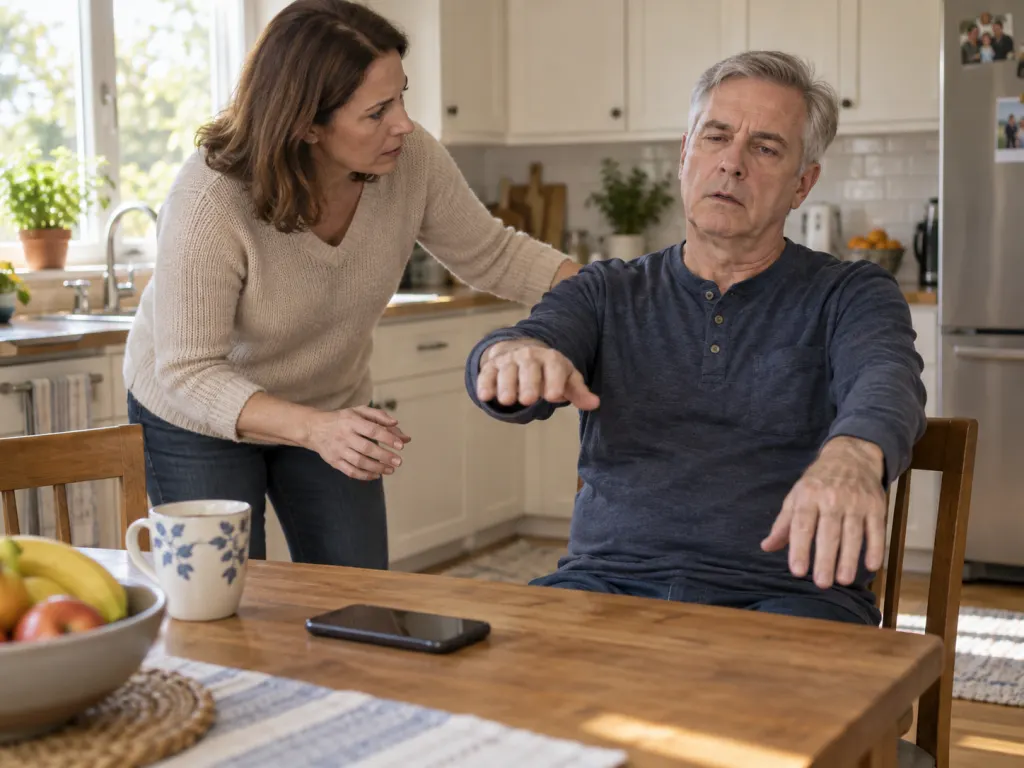
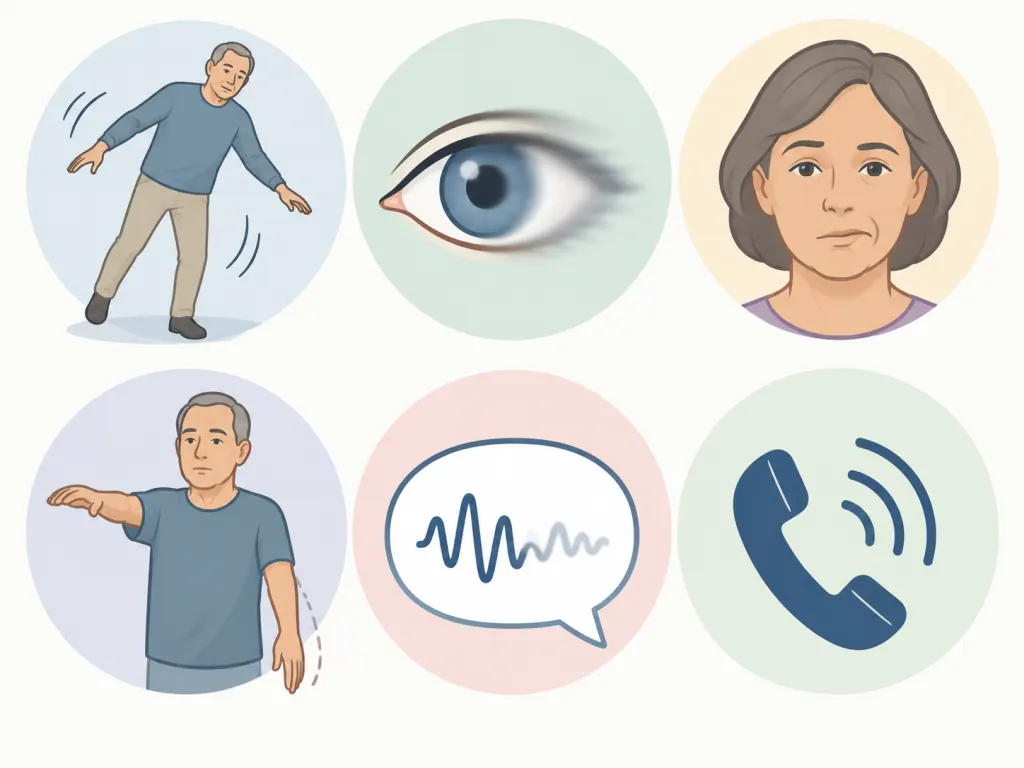
B.E. F.A.S.T. is a memory aid, not a way to rule stroke out at home. The American Heart Association and the CDC both use this framework to help people act quickly when common stroke signs appear (American Heart Association; CDC). The letters stand for balance, eyes, face, arms, speech, and time. If a person suddenly loses balance, has new vision trouble, develops facial drooping, cannot lift both arms evenly, has slurred or strange speech, or cannot repeat a simple sentence, it is time to call 911.
The word sudden matters. A gradual ache after yard work, long-standing numbness from a known injury, or blurry vision that has been stable for weeks may have other explanations. Stroke warning signs usually stand out because they begin abruptly or represent a clear change from the person’s normal state. When the story is unclear, choose the safer response. Emergency professionals would rather evaluate a false alarm than have someone stay home during a true stroke.
A TIA is not a reassuring event
Some people have stroke-like symptoms that disappear within minutes or hours. This may be a transient ischemic attack, often shortened to TIA. The CDC warns that a TIA can be a sign of a serious condition and should not be ignored just because symptoms clear (CDC). The practical rule is simple: if the symptom would have made you call 911 while it was happening, it still deserves urgent medical evaluation after it improves.
A TIA can be especially easy to dismiss when it happens during a busy morning, during a meal, or after a person stands up quickly. Families may explain it away as fatigue, stress, dehydration, or aging. Those may be possible in some situations, but they cannot be safely sorted out by watching from the kitchen table. Tell the emergency team what happened, when it started, how long it lasted, and whether similar episodes have happened before.
What to do while waiting for help
Call 911 first. The CDC advises against driving yourself or letting someone else drive the person to the hospital, because ambulance personnel can begin urgent care on the way and alert the hospital before arrival (CDC). Note the time symptoms began, or the last time the person was known to be normal. That timing can affect what options the emergency team considers.
Keep the person as calm and still as possible. Do not give food, drink, alcohol, or extra pills unless emergency dispatch or a clinician specifically instructs you. If the person is confused, speak plainly and avoid arguing. If they lose consciousness or stop breathing normally, follow dispatcher instructions. The job at home is not to diagnose the type of stroke. It is to shorten the time between symptoms and professional evaluation.
Risk factors worth knowing before there is an emergency
Stroke risk is not controlled by willpower alone. Age, family history, and some inherited or medical conditions matter. Still, several major risk factors can be measured, followed, and discussed with a health care team. The CDC lists high blood pressure, high cholesterol, heart disease, diabetes, obesity, previous stroke or TIA, tobacco use, physical inactivity, and heavy alcohol use among factors that can raise stroke risk (CDC).
High blood pressure deserves special attention because it often has no obvious symptoms and is a leading stroke risk factor. Cholesterol and blood sugar also matter because they can affect blood vessels over time. Heart rhythm problems, including atrial fibrillation, can raise concern because clots can form and travel. These are not issues most people can feel reliably, which is why routine checkups and follow-up visits are part of practical stroke risk awareness.
Everyday habits that support lower risk
The CDC says many strokes can be lowered in likelihood through healthier lifestyle choices and by working with a health care team to manage conditions that raise risk (CDC). The American Heart Association’s Life’s Essential 8 groups cardiovascular health around food pattern, activity, tobacco avoidance, sleep, weight, cholesterol, blood sugar, and blood pressure (American Heart Association). A useful plan is usually specific, boring in the best way, and realistic enough to repeat.
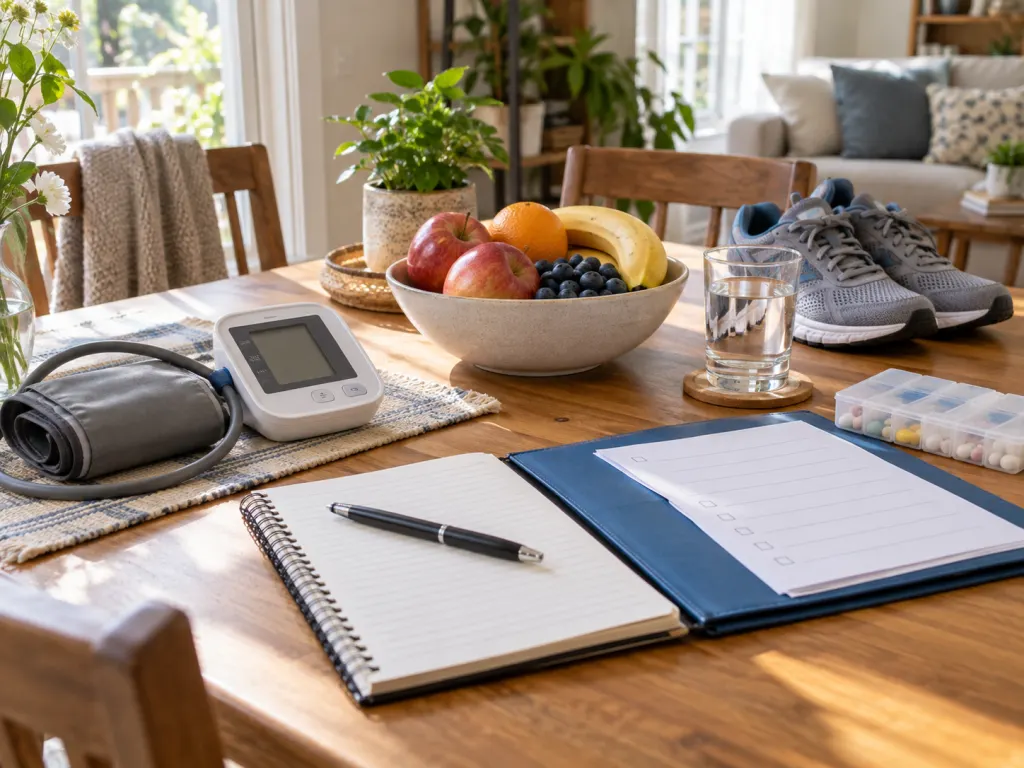
- Know your numbers: ask how often to check blood pressure, cholesterol, and blood sugar based on your own history.
- Make tobacco a direct conversation: if you smoke or vape nicotine, ask about support options instead of relying on willpower alone.
- Build movement into normal days: walking, chores, cycling, swimming, or supervised exercise can all count when they fit your ability level.
- Shift the food pattern: emphasize vegetables, fruit, beans, whole grains, lean proteins, and less heavily salted or highly processed food.
- Respect sleep and recovery: poor sleep can make other health habits harder to sustain.
- Follow up on heart symptoms: palpitations, fainting, chest discomfort, or unexplained shortness of breath deserve professional guidance.
Why risk reduction is bigger than one checklist
The World Health Organization describes cardiovascular diseases as disorders of the heart and blood vessels and notes that heart attacks and strokes are usually acute events related to blocked blood flow, bleeding, or blood clots (WHO). It also identifies tobacco use, unhealthy diet, physical inactivity, harmful alcohol use, air pollution, raised blood pressure, raised blood glucose, raised blood lipids, and obesity as important risk factors. That broad view helps explain why stroke risk is not only an emergency topic; it is also a routine-care topic.
MedlinePlus gives similar prevention-oriented guidance: do not smoke, keep blood pressure under control, follow a heart-healthy eating pattern, stay active as able, manage diabetes if present, and work with clinicians on cholesterol or heart problems when they apply (MedlinePlus). The important point is not to chase perfection. It is to choose the next measurable action: schedule a blood pressure check, bring a medication list to an appointment, ask about atrial fibrillation, or plan meals that make lower-salt choices easier.
How to talk about risk with a clinician
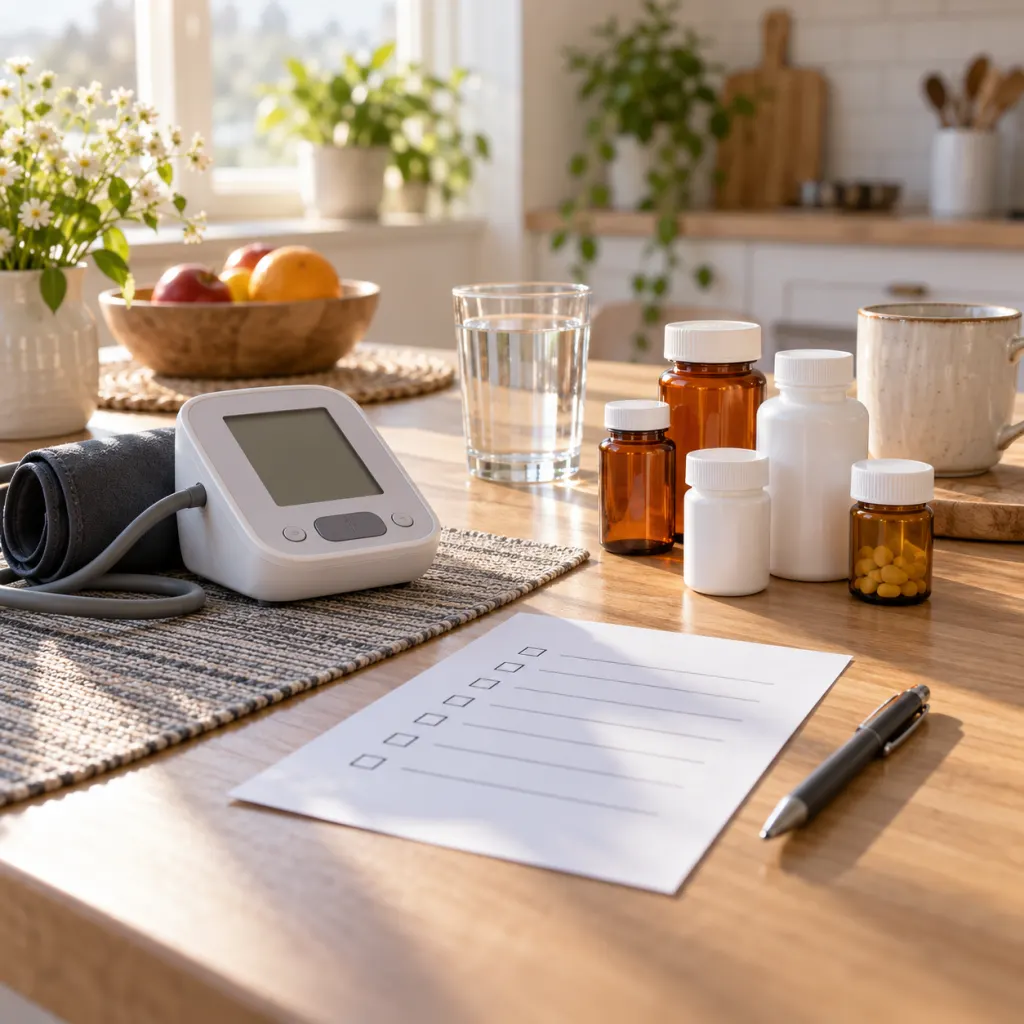
A good appointment is easier when you bring specifics. Write down recent blood pressure readings, current prescriptions and supplements, tobacco or alcohol use, family history of stroke, prior TIA-like episodes, and any new symptoms. Ask which risk factors matter most for you, which numbers should be rechecked, and what changes are most urgent. If you have already had a stroke or TIA, ask what follow-up plan you should follow and what symptoms should send you back to emergency care.
A household plan helps people act under stress
Stroke recognition is easier when everyone in the household knows the same plan. Keep emergency numbers visible, know your address if you ever need to call from a landline or shared phone, and decide who can meet emergency responders at the door. If an older adult, a person with heart disease, or someone with previous stroke or TIA lives with you, keep an updated list of medical conditions, prescriptions, allergies, and clinician contacts where it can be found quickly. Preparation does not make an emergency less serious, but it can make the first minutes less chaotic.
Wrap-Up
Stroke warning signs usually arrive suddenly, and the right response is urgent: call 911 for sudden face drooping, arm weakness, speech trouble, confusion, vision or balance changes, one-sided numbness, or a severe headache with no clear cause. Do the same if symptoms disappear, because a possible TIA still needs prompt medical evaluation. Longer-term risk reduction starts with knowing personal risk factors and working with a qualified health professional on blood pressure, cholesterol, blood sugar, tobacco use, activity, sleep, food patterns, and heart conditions.
Frequently Asked Questions
- → What is the fastest way to remember stroke warning signs?
Use B.E. F.A.S.T.: Balance loss, Eye or vision changes, Face drooping, Arm weakness, Speech difficulty, and Time to call 911. It is a quick memory aid, not a complete exam. Any sudden neurological change should be treated as urgent.
- → Should I call 911 if the symptoms go away?
Yes. Brief stroke-like symptoms can be a transient ischemic attack, or TIA. Because a TIA can signal a serious problem, it should be evaluated urgently even if the person feels normal again.
- → Can younger adults have strokes?
Yes. Stroke is more common with older age, but it can happen at younger ages too. Risk depends on many factors, including blood pressure, heart rhythm, diabetes, smoking, cholesterol, family history, and other medical conditions.
- → What information should I tell emergency responders?
Tell them when symptoms started, the last time the person seemed normal, what changed, whether symptoms improved, and any known medical conditions or prescriptions. If the exact time is uncertain, say that clearly.
- → What is a realistic first step for lowering stroke risk?
A practical first step is to know your blood pressure and ask a qualified health professional what follow-up is appropriate for you. From there, discuss cholesterol, blood sugar, tobacco use, activity, food patterns, sleep, and any heart rhythm concerns.
References
This content was developed and refined using reliable sources.
- https://www.cdc.gov/stroke/signs-symptoms/index.html
- https://www.cdc.gov/stroke/risk-factors/index.html
- https://www.cdc.gov/stroke/prevention/index.html
- https://www.nhlbi.nih.gov/health/stroke
- https://www.heart.org/en/about-us/heart-attack-and-stroke-symptoms
- https://www.heart.org/en/healthy-living/healthy-lifestyle/lifes-essential-8
- https://www.who.int/news-room/fact-sheets/detail/cardiovascular-diseases-(cvds)
- https://medlineplus.gov/ency/patientinstructions/000678.htm