 Save
The seven arthritis signs worth taking seriously are ongoing joint pain, swelling or warmth, stiffness that lasts after waking or resting, painful grinding or clicking, reduced range of motion, pain that seems to show up somewhere else, and unusual fatigue with joint symptoms. Arthritis is a broad term, not a single diagnosis: the CDC notes that it includes more than 100 conditions affecting joints, tissues around joints, and connective tissues CDC. Occasional aches can happen for many reasons, but symptoms that persist, repeat, spread, or interfere with daily tasks should be discussed with a doctor or qualified health professional.
Why these signs matter
Many people use the word arthritis as if it always means the same thing, but different forms behave differently. Osteoarthritis often starts slowly and may affect one or a few joints. Rheumatoid arthritis is an autoimmune condition that can involve multiple joints and may come with whole-body symptoms. Gout, psoriatic arthritis, ankylosing spondylitis, and other forms can look different again. That is why the pattern matters as much as the symptom itself. A sore knee after an unusually long walk is one story; a knee that repeatedly swells, feels warm, and limits stairs is another.
Think of the following signs as prompts to pay attention, not as a self-diagnosis checklist. Arthritis symptoms overlap with injuries, infections, tendon problems, nerve irritation, and other causes of joint pain. A clinician may ask when symptoms began, which joints are involved, whether both sides of the body are affected, what time of day is worst, and whether fever, fatigue, or unexplained swelling is present.
1. Joint pain that keeps coming back
Persistent joint pain is one of the most recognizable reasons people start wondering about arthritis. The pain may appear with movement, after activity, at rest, or in repeated flares. In osteoarthritis, NIAMS describes pain with joint use as common, sometimes improving with rest, while symptoms may worsen over time in some people NIAMS. Pain becomes more meaningful when it repeats in the same joint, lasts longer than expected after routine activity, wakes you at night, or makes ordinary tasks harder.
Daily-life clues are often practical: gripping a pan feels harder, getting out of a chair takes planning, stairs become a negotiation, or a hand joint aches every time you open a jar. Pain alone does not identify which type of arthritis is present, but recurring joint pain is worth documenting instead of automatically blaming age, weather, or being busy.

2. Swelling, warmth, or tenderness around a joint
A joint that looks puffy, feels warm, or is tender to touch may be showing inflammation or fluid around the joint. Cleveland Clinic lists swelling, tenderness, reduced range of motion, and warmth near joints among common arthritis signs Cleveland Clinic. The pattern again matters. Swelling after a clear injury, swelling that comes with fever, and swelling that appears without an obvious reason should not all be treated as the same situation.
It helps to compare sides. Is one wrist visibly larger than the other? Does a knee feel tight when you bend it? Is there redness or heat? Is the tenderness directly over the joint, or in the muscles and tendons nearby? These observations can help a clinician decide whether the issue sounds inflammatory, mechanical, injury-related, or something else.
3. Morning stiffness that lasts longer than your usual
Stiffness after sleep or sitting still can happen even without arthritis, especially after heavy activity or an awkward posture. What deserves attention is stiffness that is frequent, long-lasting, or paired with pain and swelling. NIAMS notes that osteoarthritis stiffness is often brief after rest, commonly lasting less than 30 minutes in the morning NIAMS. Rheumatoid arthritis, by contrast, can cause stiffness that is worse in the morning and after rest; Mayo Clinic describes it as lasting 45 minutes or longer in some people Mayo Clinic.
A useful question is not simply, "Am I stiff?" but, "How long does it take before I move normally?" If your hands need a long warm-up before buttons, utensils, or typing feel manageable, or if your knees and hips take much of the morning to loosen, that is useful information to bring to an appointment.
4. Grinding, clicking, or cracking that comes with pain
Joint sounds by themselves are common and often harmless. Many people have painless popping or cracking. The sound becomes more relevant when it comes with pain, swelling, reduced movement, or a scraping sensation. NIAMS notes that people with knee osteoarthritis may hear grinding or scraping when walking or moving, along with other symptoms such as pain, swelling, and changes in joint motion NIAMS.
Pay attention to the whole package: sound plus pain, sound plus a feeling of instability, or sound plus a joint that becomes swollen after use. A painless pop after stretching is very different from a knee that grinds, hurts, and feels unreliable on stairs.
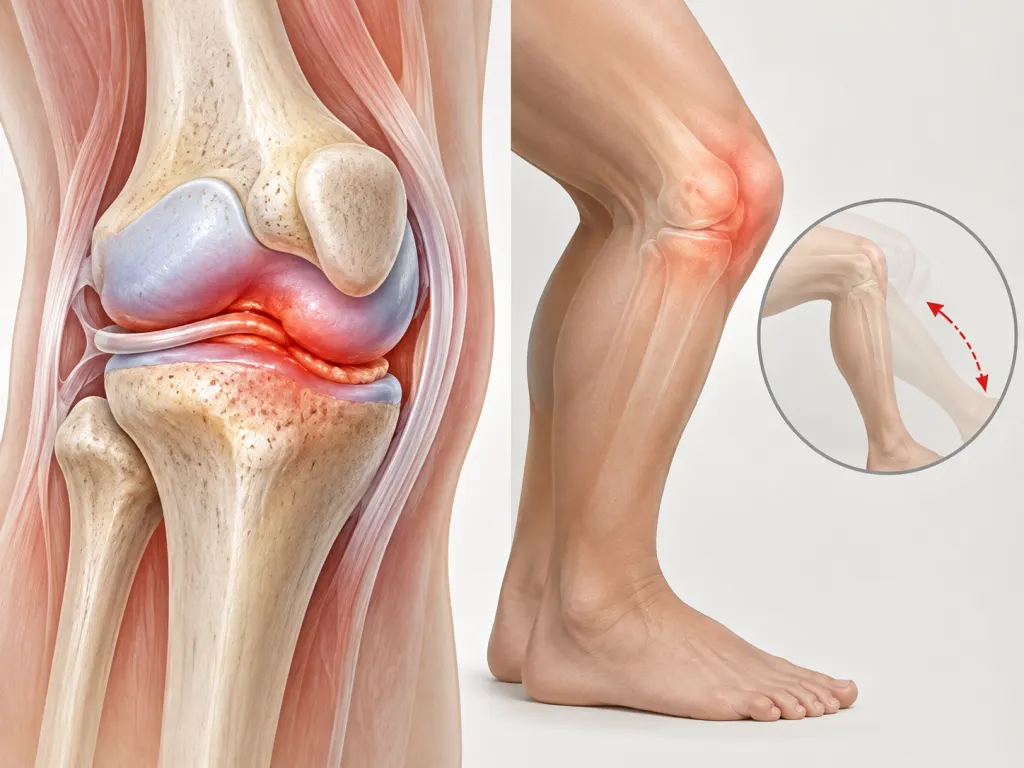
5. Reduced range of motion
Reduced range of motion means a joint no longer moves as freely as it used to. You may notice that you cannot fully bend a finger, turn your neck comfortably, squat as far as before, raise an arm overhead, or straighten a knee. The CDC lists joint pain and stiffness as usual arthritis symptoms, and clinicians may use a physical exam, X-rays, and lab tests when needed to identify the cause CDC.
Loss of motion can come from pain, swelling, joint changes, muscle guarding, or a combination of factors. The important part is progression. A joint that is gradually becoming harder to use deserves attention, especially if it changes how you dress, cook, work, exercise, drive, or sleep.
6. Pain that seems to show up somewhere else
Arthritis pain does not always stay exactly where people expect it. NIAMS notes that hip osteoarthritis may be felt in the hip joint, groin, inner thigh, buttocks, and sometimes may spread toward the knee NIAMS. That means knee discomfort is not always only a knee story, and groin or thigh pain can sometimes be connected to the hip.
This does not mean traveling pain automatically equals arthritis. Nerve irritation, muscle strain, back problems, and other causes can also refer pain. Still, if pain appears in a repeatable pattern and is paired with stiffness, swelling, or reduced movement, a broader musculoskeletal evaluation can be more useful than focusing only on the spot that hurts most.
7. Fatigue alongside joint symptoms
Fatigue is easy to dismiss because it does not feel like a joint symptom. But inflammatory forms of arthritis can involve more than the joint itself. The CDC lists fatigue or tiredness, weakness, fever, and weight loss among possible rheumatoid arthritis symptoms, along with pain, aching, stiffness, tenderness, warmth, redness, and swelling in joints CDC. Fatigue alone has many possible explanations, but fatigue plus persistent joint swelling or stiffness is worth mentioning.
Be specific when describing fatigue. Is it new? Does it arrive with joint flares? Does it come with fever, poor appetite, or several painful joints? Does rest help? These details give a clinician more to work with than the general statement, "I am tired."

Patterns that are more useful than one symptom
No single sign on this list proves arthritis. A more useful approach is to watch the pattern over time. Consider writing down symptoms for two to four weeks, or sooner if they are severe. Include the joint involved, the time of day, how long stiffness lasts, what makes symptoms worse or better, and whether swelling or warmth is present.
A simple symptom note might include:
- Which joint hurts, such as right thumb, left knee, both wrists, or hip and groin.
- How the joint feels: aching, sharp, stiff, warm, swollen, unstable, or tender.
- When it happens: morning, after sitting, during use, after activity, or at night.
- How long it lasts and whether it is becoming more frequent.
- Which activities are affected, such as stairs, cooking, dressing, walking, typing, or sleep.
When a joint symptom needs faster attention
Some symptoms should be checked promptly because arthritis is not the only possible cause. MedlinePlus advises contacting a provider right away if joint pain and swelling occur with fever, and also advises contacting a provider for unexplained joint swelling or swelling after an injury MedlinePlus. A sudden hot, red, very swollen joint, especially with fever or feeling very unwell, should not be assumed to be a routine arthritis flare.
Faster attention is also sensible when a joint suddenly cannot bear weight, looks misshapen after an injury, or movement becomes sharply worse. The goal is to rule out problems that can look similar from the outside but need different care decisions.
What to expect at a medical visit
A medical visit for possible arthritis usually starts with history and examination. The clinician may ask where symptoms started, whether they are on one or both sides, how long morning stiffness lasts, whether joints swell, whether symptoms come in flares, and how daily life is affected. Cleveland Clinic notes that clinicians may examine affected joints, check range of motion, compare similar joints, and use imaging or blood tests when needed to help sort out possible causes Cleveland Clinic.
It is also reasonable to ask what type of arthritis is being considered, what else could explain the symptoms, what signs should prompt faster follow-up, and which daily activities are sensible while evaluation is underway. Clear questions can make the appointment more practical and less rushed.
Movement, rest, and daily habits while you are paying attention
Complete rest is not always the best response to joint symptoms, but pushing through severe pain is not wise either. The CDC says physical activity can help people with arthritis reduce joint pain and improve function and mood, and lists joint-friendly options such as walking, cycling, swimming, water exercise, dancing, tai chi, and light gardening CDC. The practical middle ground is to choose low-stress movement that does not sharply worsen symptoms and to ask a clinician or physical therapist for personal guidance when pain is severe, new, or limiting.
The bottom line
The signs worth noticing are not rare or mysterious: persistent joint pain, swelling or warmth, lingering morning stiffness, painful grinding or clicking, reduced range of motion, pain that appears away from the affected joint, and fatigue alongside joint symptoms. Any one of these can have causes other than arthritis. But when the pattern is repeated, worsening, or interfering with ordinary life, it deserves a careful conversation with a qualified clinician.
Wrap-Up
Arthritis can look different from person to person, so the most useful signal is often the pattern over time. Track persistent pain, swelling, warmth, stiffness after rest, painful joint noises, loss of movement, referred pain, and fatigue with joint symptoms. Seek faster medical guidance for a hot, swollen joint with fever, unexplained swelling, swelling after injury, or sudden loss of function.
Frequently Asked Questions
- → Does joint pain always mean arthritis?
No. Joint pain can come from injuries, tendon irritation, infection, nerve problems, overuse, and many other causes. Arthritis becomes more likely to discuss when pain is persistent, recurring, paired with swelling or stiffness, or limiting daily activities.
- → How long should morning stiffness last before I pay attention?
There is no single cutoff that applies to everyone, but stiffness that repeatedly lasts a long time after waking or sitting is worth noting. Tell a clinician how long it takes to loosen up, which joints are involved, and whether swelling or warmth is present.
- → Is joint cracking a sign of arthritis?
Painless cracking or popping is common. It becomes more meaningful when the sound comes with pain, swelling, stiffness, grinding, instability, or reduced movement. Those added symptoms give a clinician more reason to evaluate the joint.
- → Can arthritis cause tiredness?
Some inflammatory forms of arthritis can include fatigue or tiredness, especially when joint symptoms are active. Fatigue alone has many possible causes, so it is most useful to mention when it occurs with painful, warm, swollen, or stiff joints.
- → When should a swollen joint be checked quickly?
Seek prompt medical guidance if joint pain and swelling come with fever, if swelling is unexplained, or if swelling follows an injury. A suddenly hot, red, very swollen joint should not be assumed to be ordinary arthritis without medical evaluation.
References
This content was developed and refined using reliable sources.
- https://www.cdc.gov/arthritis/basics/index.html
- https://www.niams.nih.gov/health-topics/osteoarthritis
- https://my.clevelandclinic.org/health/diseases/12061-arthritis
- https://www.mayoclinic.org/diseases-conditions/rheumatoid-arthritis/symptoms-causes/syc-20353648
- https://www.cdc.gov/arthritis/rheumatoid-arthritis/index.html
- https://medlineplus.gov/ency/article/003262.htm
- https://www.cdc.gov/arthritis/prevention/index.html