 Save
There is no dependable way to say that the body gives a precise warning one month before a stroke. What evidence-based sources do emphasize is that stroke and transient ischemic attack symptoms usually appear suddenly, and they deserve emergency action right away. The CDC lists sudden balance trouble, vision trouble, face or limb weakness, confusion, speech difficulty, and severe unexplained headache as key signs, and says to call 911 immediately if they appear. https://www.cdc.gov/stroke/signs-symptoms/index.html
The Myth of a One-Month Countdown
A popular headline may suggest that stroke announces itself weeks in advance with a fixed list of clues. That framing can be misleading. Some people do have a transient ischemic attack, or TIA, before a later stroke, and a TIA can happen days, weeks, or months before another event. But many strokes do not come with a neatly timed early signal. Waiting to see whether a symptom fits a calendar can cost time that should be used for emergency assessment.
The practical question is not whether a symptom appeared exactly a month early. The practical question is whether a new symptom looks like a stroke or TIA. MedlinePlus explains that TIA symptoms are stroke-like, often short-lived, and can go away before a person reaches care; it still calls a TIA a warning sign that a future stroke may happen if the underlying cause is not addressed. https://medlineplus.gov/ency/article/000730.htm
Use B.E. F.A.S.T. First
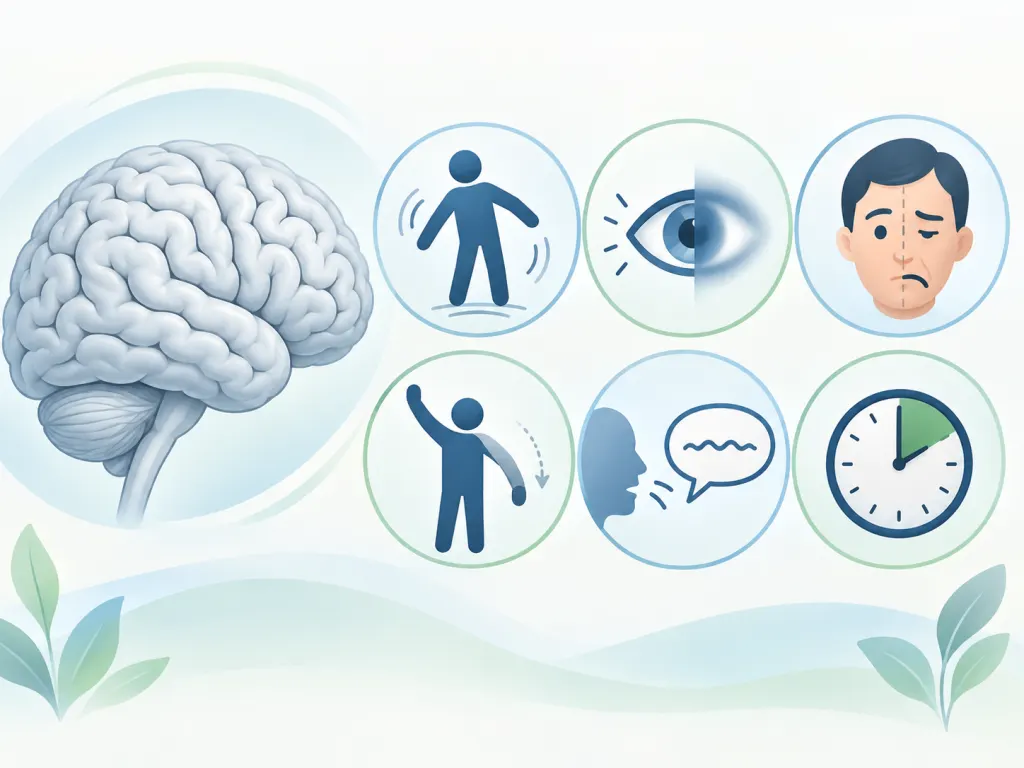
B.E. F.A.S.T. is a memory tool for the signs most people can check quickly. It is not a full exam, and it cannot rule out stroke, but it helps families act while minutes matter. The CDC version includes Balance, Eyes, Face, Arms, Speech, and Time. https://www.cdc.gov/stroke/signs-symptoms/index.html
- Balance: sudden dizziness, trouble walking, loss of coordination, or feeling off-balance.
- Eyes: sudden trouble seeing clearly, vision loss, double vision, or a major change in one or both eyes.
- Face: one side of the face droops, feels numb, or does not move normally when the person smiles.
- Arms: one arm drifts downward, feels weak, or cannot be raised like the other arm.
- Speech: words are slurred, strange, hard to find, or hard to understand.
- Time: call 911 or the local emergency number immediately and note the time symptoms began.

Ten Signs That Deserve Urgent Attention
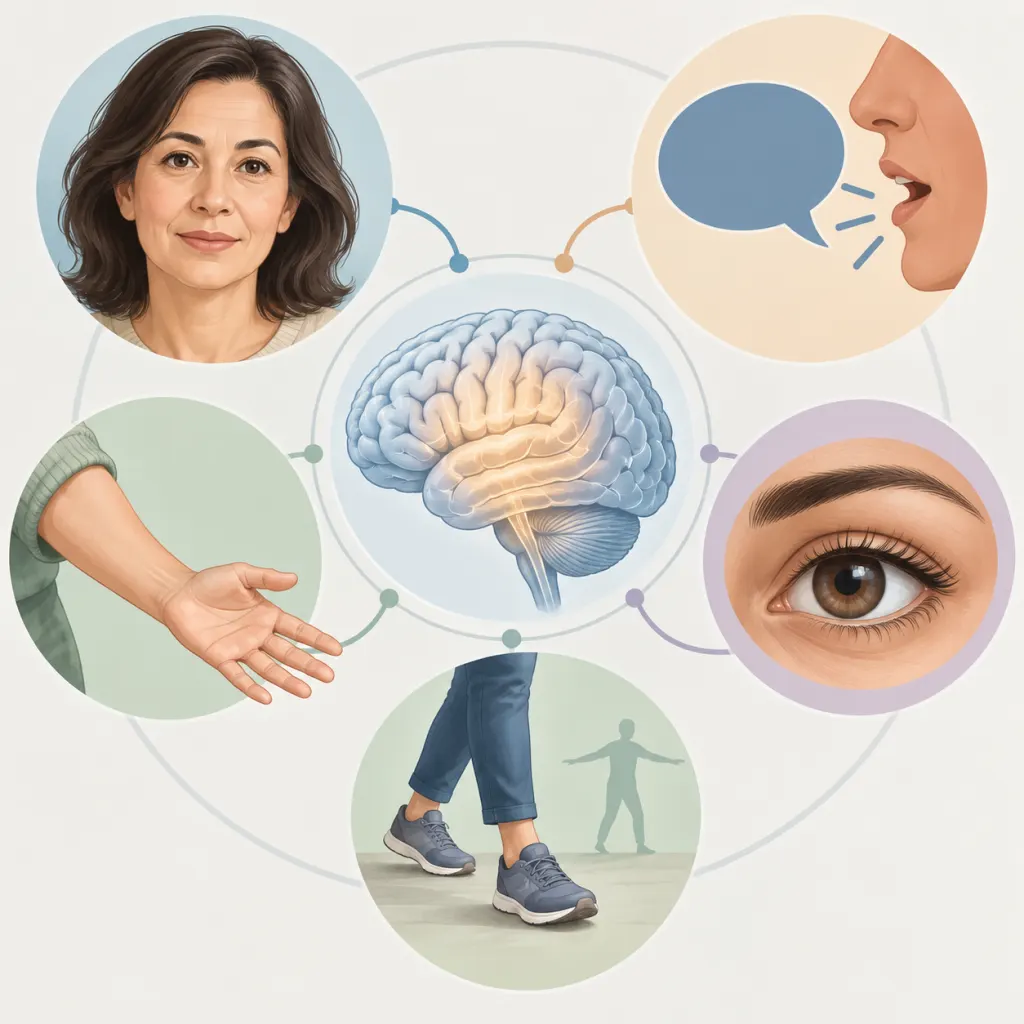
A simple list can help readers remember what to watch for, as long as the list does not imply that every sign will appear or that these are the only possible signs. The ten warning signs below overlap because different parts of the brain control different tasks. A person may have one sign, several signs, or a symptom that changes quickly.
1. Face drooping. A new uneven smile, a mouth corner that falls, or numbness on one side of the face can be a stroke sign. 2. Arm or leg weakness. Weakness or numbness often affects one side of the body. 3. Speech trouble. The person may slur words, use the wrong words, or be unable to understand a simple sentence. 4. Confusion. Sudden confusion can look like disorientation, unusual behavior, or trouble following familiar directions.
5. Vision changes. Sudden blurred vision, blackened vision, double vision, or vision loss in one or both eyes needs urgent attention. 6. Balance or coordination problems. A sudden stumble, clumsiness, spinning sensation, or trouble walking can be part of a stroke pattern. 7. Severe unexplained headache. A sudden severe headache, especially with vomiting, dizziness, or change in alertness, is a warning sign listed by major medical sources. 8. Numbness or tingling on one side. Sensory changes may affect the face, arm, leg, or a combination.
9. Trouble swallowing or sudden change in alertness. Some events affect muscles and awareness in ways that are easy to mistake for fatigue or another problem. 10. Symptoms that disappear. If the symptom fades, do not treat that as reassurance. A TIA can clear quickly, but Cleveland Clinic describes it as a medical emergency because the same symptoms can be a stroke and because another stroke may follow. https://my.clevelandclinic.org/health/diseases/14173-transient-ischemic-attack-tia-or-mini-stroke
Why Sudden Symptoms Matter
The National Heart, Lung, and Blood Institute notes that stroke signs often occur quickly, though they can sometimes develop over hours or days, including when a TIA turns into a stroke. Its symptom list includes sudden confusion, one-sided weakness or numbness, severe headache with no known cause, vision trouble, and walking or balance trouble. https://www.nhlbi.nih.gov/health/stroke/symptoms
The word sudden
is important because stroke symptoms usually represent an abrupt change from the person’s normal function. A mild, vague, long-running complaint may have many possible explanations, but a new inability to speak normally, raise an arm, see clearly, or walk steadily should shift the response from observation to emergency action. That remains true if the person is young, if symptoms are painless, or if the person feels embarrassed about making a fuss.
A TIA Is Not a Harmless Episode
A TIA happens when blood flow to part of the brain is briefly blocked. Because symptoms can improve within minutes or hours, people may call it a small episode and move on. That is risky. MedlinePlus says a TIA is a medical emergency and that symptoms may occur again later; it also describes evaluation for causes such as blood vessel narrowing, blood clots, irregular heartbeat, blood pressure, diabetes, and cholesterol problems. https://medlineplus.gov/ency/article/000730.htm
The American Heart Association has also emphasized that stroke-like symptoms that disappear within an hour need emergency assessment. Its 2023 scientific statement summary notes that TIA diagnosis is challenging because symptoms often disappear, and it reports that nearly one in five people with a suspected TIA may have a full stroke within three months. https://newsroom.heart.org/news/stroke-symptoms-even-if-they-disappear-within-an-hour-need-emergency-assessment
What to Do While Waiting for Help
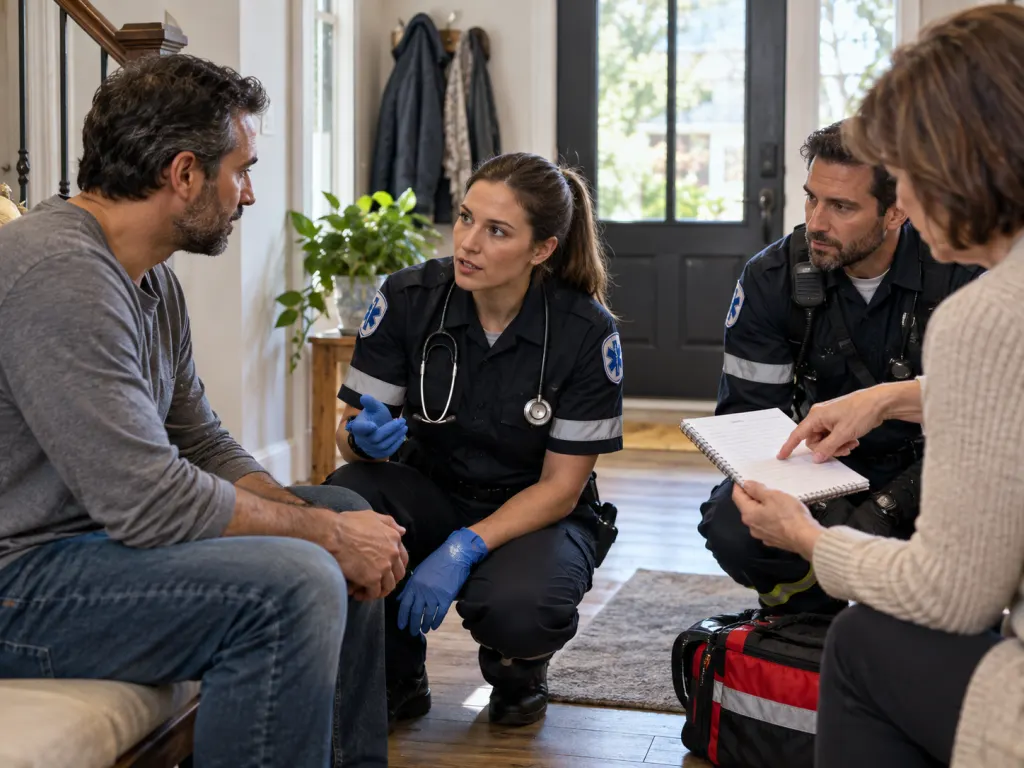
Call 911 first. Do not drive the person to the hospital and do not let the person drive. The CDC explains that emergency medical services can begin care on the way and alert the hospital before arrival. https://www.cdc.gov/stroke/treatment/index.html If the person is awake, keep them seated or lying safely, watch their breathing and alertness, and avoid giving food or drink if swallowing seems affected.
Write down the time the person was last known to be well and the time symptoms were first noticed. If symptoms come and go, record that too. Gather a medication list, allergy information, recent medical history, and emergency contacts if doing so does not delay the call. Stay calm and specific with the dispatcher: say what changed, when it started, and whether face, arm, speech, vision, balance, or alertness is affected.
What Not to Do
Do not wait for a nap, a meal, water, or rest to see whether symptoms improve. Do not ask the person to walk around repeatedly to prove they are fine. Do not give aspirin or any medicine unless emergency professionals or a qualified clinician instruct you, because not all strokes are caused by a clot. Do not assume that a younger adult, active person, or person with no known risk factors cannot have a stroke.
It is also unhelpful to debate whether the symptom is dramatic enough. A person may still talk, walk, or smile partly during a stroke. Some signs are subtle, and some people minimize symptoms because they are frightened. If the symptom is sudden and neurological, emergency assessment is the safer threshold.
Risk Factors Are Background, Not a Waiting Test
Risk factors help clinicians understand who may be more likely to have a stroke, but they should not be used to decide whether to call for emergency help during sudden symptoms. NHLBI lists causes and risk factors that include blocked blood flow, bleeding in the brain, high blood pressure, diabetes, high blood cholesterol, atrial fibrillation, smoking, physical inactivity, and other medical or lifestyle factors. https://www.nhlbi.nih.gov/health/stroke/causes
For routine prevention conversations, it can help to know your blood pressure numbers, ask whether heart rhythm checks are appropriate, review cholesterol and diabetes screening, and talk honestly about tobacco, alcohol, sleep, movement, and family history. Those are office-visit topics. During a possible stroke, the first step is still emergency care.
A Calm Way to Remember the Bottom Line
Think of stroke response as a two-part rule. First, there is no trustworthy one-month timer, so do not rely on viral countdown claims. Second, sudden symptoms that affect face, arm or leg strength, speech, vision, balance, alertness, or a severe unexplained headache should be treated as urgent. If the symptom disappears, the need for assessment does not disappear with it.
Wrap-Up
Stroke warning signs are usually about sudden change, not a predictable month-long countdown. B.E. F.A.S.T. is a useful first screen, but any sudden neurological change deserves urgent attention. Call 911, note when symptoms began, and treat a possible TIA seriously even when symptoms fade.
Frequently Asked Questions
- → Can a stroke really give warning signs a month before it happens?
There is no reliable one-month countdown. Some people have a TIA before a later stroke, but many strokes happen without a clear advance warning. Sudden stroke-like symptoms should be treated as urgent whenever they occur.
- → What if stroke symptoms go away after a few minutes?
Call 911 or seek emergency help anyway. Symptoms that disappear may still represent a TIA or stroke, and several authoritative medical sources describe a TIA as needing urgent assessment.
- → Is B.E. F.A.S.T. enough to recognize every stroke?
B.E. F.A.S.T. is useful, but it is not perfect. It highlights balance, eyes, face, arms, speech, and time. Other sudden changes, such as severe unexplained headache, confusion, numbness, or altered alertness, can also matter.
- → Should I drive someone to the hospital if I think it is a stroke?
No. Call 911 or the local emergency number. Emergency responders can begin care on the way, gather key timing details, and alert the hospital before arrival.
- → What information should I give emergency responders?
Tell them when the person was last known to be well, when symptoms started, what changed, whether symptoms improved or returned, and any known medications, allergies, medical conditions, or emergency contacts.
References
This content was developed and refined using reliable sources.
- https://www.cdc.gov/stroke/signs-symptoms/index.html
- https://medlineplus.gov/ency/article/000730.htm
- https://www.nhlbi.nih.gov/health/stroke/symptoms
- https://my.clevelandclinic.org/health/diseases/14173-transient-ischemic-attack-tia-or-mini-stroke
- https://newsroom.heart.org/news/stroke-symptoms-even-if-they-disappear-within-an-hour-need-emergency-assessment
- https://www.cdc.gov/stroke/treatment/index.html
- https://www.nhlbi.nih.gov/health/stroke/causes