 Save
The honest answer is: no single vitamin should be expected to make swollen legs and ankles disappear. The vitamin most often discussed in this context is thiamin, or vitamin B1, because severe deficiency can involve wet beriberi, a rare condition that may include swelling of the lower legs. But everyday swelling is much more often related to fluid balance, veins, long sitting or standing, injury, heart strain, kidney or liver problems, or other medical factors. MedlinePlus explains that abnormal fluid buildup in the ankles, feet, and legs is called edema, while Mayo Clinic notes that leg swelling can come from fluid retention or inflamed tissues and can sometimes point to a more serious problem. This guide keeps the vitamin question in perspective: vitamin B1 is important, but swelling is a sign to interpret, not a symptom to chase with a bottle.
The short answer: vitamin B1 is relevant, but it is not the whole story
Thiamin helps the body turn food into usable energy and supports normal cell function. The NIH Office of Dietary Supplements says thiamin is a water-soluble B vitamin that must be supplied regularly because the body stores only small amounts. Severe deficiency is uncommon in the United States, but it can happen in people with poor intake, heavy alcohol use, certain absorption problems, or other risk factors. In rare cases, thiamin deficiency can appear as beriberi. MedlinePlus describes wet beriberi as the form that affects the cardiovascular system and can include swelling of the lower legs. That link is real, but it does not mean that vitamin B1 is the usual explanation for swollen ankles. It means that vitamin status is one piece of a much broader clinical picture.
Why legs and ankles swell in the first place
Leg and ankle swelling often reflects gravity and fluid movement. Fluid may collect in the lower body after long periods of sitting, standing, or travel. It can also appear after an ankle injury, after surgery, with vein problems, or when the body is holding extra fluid. MedlinePlus lists common contributors such as older age, excess body weight, leg infection, blood clots, venous insufficiency, long travel, standing for long periods, and certain prescriptions. Cleveland Clinic also describes edema as swelling from fluid trapped in body tissues, most often in the feet, ankles, and legs, and advises contacting a healthcare provider when swelling occurs without an obvious cause.
- Both legs, worse late in the day: this can happen with standing, sitting, heat, salt-heavy eating patterns, or vein circulation issues.
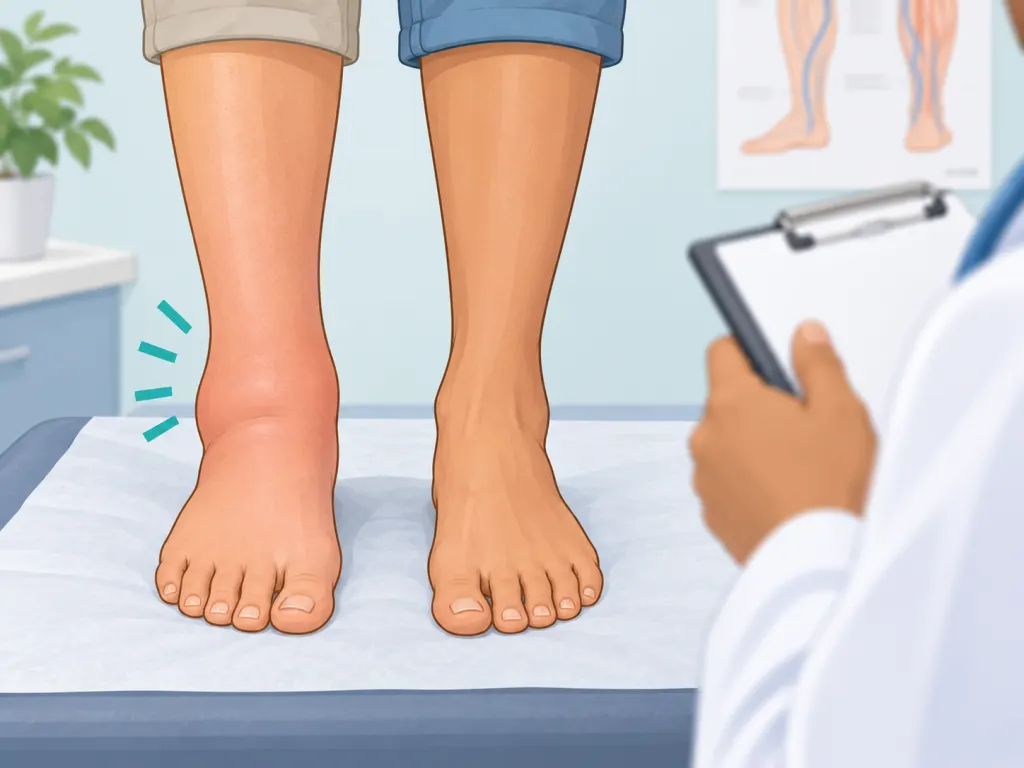
- One leg only: this deserves more caution, especially if it is new, painful, warm, red, or tender.
- Swelling with breathing trouble or chest discomfort: this needs urgent medical attention.
- Swelling with rapid weight change or new shortness of breath: this may signal a fluid-balance problem that needs evaluation.
- Swelling after a twist, fall, or impact: injury and inflammation may be part of the explanation.

Where vitamin B1 fits into the swelling conversation
Vitamin B1 deserves attention because thiamin deficiency can affect nerves, muscles, and the cardiovascular system. The NIH Office of Dietary Supplements notes that early thiamin deficiency can involve appetite and weight changes, confusion, muscle weakness, and cardiovascular symptoms; in rare cases, beriberi can lead to heart failure with edema in the lower limbs. MedlinePlus similarly describes wet beriberi as involving shortness of breath with activity, increased heart rate, and lower-leg swelling. These are not subtle wellness clues. They are reasons for professional evaluation, especially when swelling appears with breathlessness, unusual fatigue, confusion, weakness, or a history that raises concern for low thiamin intake.
Who may be more likely to have low thiamin status
The NIH consumer and professional thiamin fact sheets identify several groups that may be more likely to have trouble getting or using enough thiamin, including older adults, people with alcohol dependence, people with HIV/AIDS, people with diabetes, and people who have had bariatric surgery. A clinician may also consider nutrition history, digestive absorption, kidney function, alcohol intake, overall food access, and related symptoms. The key point is that thiamin status is not judged by ankle size alone. Swelling plus a risk factor may justify a deeper conversation, while swelling without those features still needs the common causes considered first.
Why a vitamin-only approach can miss important causes
Swelling is a body signal with many possible sources. A person who assumes it is simply a vitamin issue may overlook vein disease, a clot, heart failure, kidney disease, liver disease, infection, an injury, or a prescription side effect. Mayo Clinic says unexplained leg swelling with chest discomfort, breathing trouble, or fainting needs immediate care, and sudden swelling in one leg also needs prompt attention. The CDC notes that deep vein thrombosis most often forms in the lower leg, thigh, or pelvis and may cause swelling, tenderness, warmth, or redness; a clot that travels to the lungs can cause breathing difficulty, chest discomfort, coughing blood, low blood pressure, lightheadedness, or fainting. Those patterns are not situations for guessing.
Food sources can support thiamin intake without overpromising
For most people, a varied eating pattern supplies thiamin. The NIH Office of Dietary Supplements lists whole grains and fortified breads, cereals, pasta, and rice, along with pork, fish, legumes, seeds, and nuts as thiamin sources. This is useful everyday information, but it should be kept in proportion. Eating thiamin-containing foods supports general nutrition; it is not a way to self-diagnose the cause of swelling. If a clinician suspects deficiency, they may look at the whole picture, including symptoms, intake, medical history, and lab evaluation. If a person already has a medical condition, has had digestive surgery, drinks heavily, or has swelling that is new or worsening, the conversation should happen sooner rather than later.
What to notice before you call for advice
A clear description helps a health professional sort the likely causes. Notice whether swelling affects one side or both, whether it improves overnight, whether shoes or socks leave deeper marks than usual, whether the skin looks shiny or tight, and whether pressing a finger over the ankle leaves a temporary dent. MedlinePlus explains that a provider may ask which body parts swell, whether swelling is worse in the morning or evening, what improves it, what worsens it, and what other symptoms are present. A short written timeline can be more useful than a long memory-based story, especially if the swelling changes from day to day.

When swelling needs prompt attention
Get urgent help now if leg or ankle swelling comes with chest discomfort, trouble breathing, fainting, coughing blood, sudden severe shortness of breath, or sudden swelling in one leg. Contact a medical professional promptly if the swollen area is red, warm, painful, or associated with fever, or if swelling is new, worsening, unexplained, or interfering with walking and daily routines. The American Heart Association lists swelling in the feet, ankles, legs, fingers, stomach, and other tissues as one possible sign of fluid buildup in people with heart failure, especially when paired with breathlessness, fatigue, coughing, or sudden weight change. These signs do not prove one diagnosis, but they do raise the stakes.
A practical takeaway
If you arrived here because you saw a claim about one vitamin for swollen ankles, the balanced takeaway is this: vitamin B1 is the nutrient with a medically recognized connection to a rare deficiency state that can include lower-leg swelling, but it is only one possible clue. Most swelling questions are better framed around pattern, timing, risk factors, and accompanying symptoms. Support normal nutrition with thiamin-containing foods, avoid long stretches without movement when possible, elevate legs when appropriate, and write down what changes. Most importantly, do not use the vitamin question as a reason to delay care when swelling is sudden, one-sided, painful, warm, associated with breathing trouble, or clearly getting worse.
Wrap-Up
Vitamin B1 matters because severe thiamin deficiency can, rarely, be linked with wet beriberi and lower-leg swelling. Still, swollen legs and ankles are more often explained by fluid retention, vein circulation, long sitting or standing, injury, infection, heart strain, kidney or liver problems, or other medical factors. The safest approach is to treat swelling as information: note the pattern, look for warning signs, support steady nutrition, and discuss persistent or unexplained swelling with a qualified health professional.
Frequently Asked Questions
- → Is vitamin B1 the vitamin most connected with swollen legs?
Vitamin B1, also called thiamin, is the vitamin with the clearest link to a rare deficiency condition called wet beriberi, which can include lower-leg swelling. That does not make it the usual cause of swollen ankles. Swelling still needs context, especially if it is new, one-sided, painful, or paired with breathing trouble.
- → Can normal foods provide vitamin B1?
Yes. The NIH Office of Dietary Supplements lists whole grains and fortified grain products, pork, fish, legumes, seeds, and nuts as thiamin sources. Food sources can support normal intake, but they cannot identify why a person is swelling. Persistent or unexplained swelling belongs in a medical conversation.
- → What warning signs should I take seriously with ankle swelling?
Seek urgent help for swelling with chest discomfort, breathing trouble, fainting, coughing blood, or sudden one-sided leg swelling. Also contact a health professional promptly if the area is red, warm, painful, associated with fever, or getting worse without a clear reason.
- → Why does swelling often show up around the ankles?
Gravity makes fluid more noticeable in the lower body, especially after long sitting, long standing, warm weather, or travel. That is one reason ankles and feet often look puffy first. Even so, swelling can also reflect vein, heart, kidney, liver, injury, infection, or clot-related issues.
- → What information should I track before an appointment?
Write down when swelling began, whether it affects one leg or both, whether it improves after lying down, whether pressing the skin leaves a dent, and whether there is warmth, redness, pain, shortness of breath, fatigue, or sudden weight change. Bring a list of prescriptions, supplements, and recent travel or injuries.
References
This content was developed and refined using reliable sources.
- https://www.medlineplus.gov/ency/article/003104.htm
- https://www.mayoclinic.org/symptoms/leg-swelling/basics/causes/sym-20050910
- https://my.clevelandclinic.org/health/diseases/12564-edema
- https://ods.od.nih.gov/factsheets/Thiamin-HealthProfessional
- https://medlineplus.gov/ency/article/000339.htm
- https://www.heart.org/en/health-topics/heart-failure/warning-signs-of-heart-failure
- https://www.cdc.gov/blood-clots/about