 Save
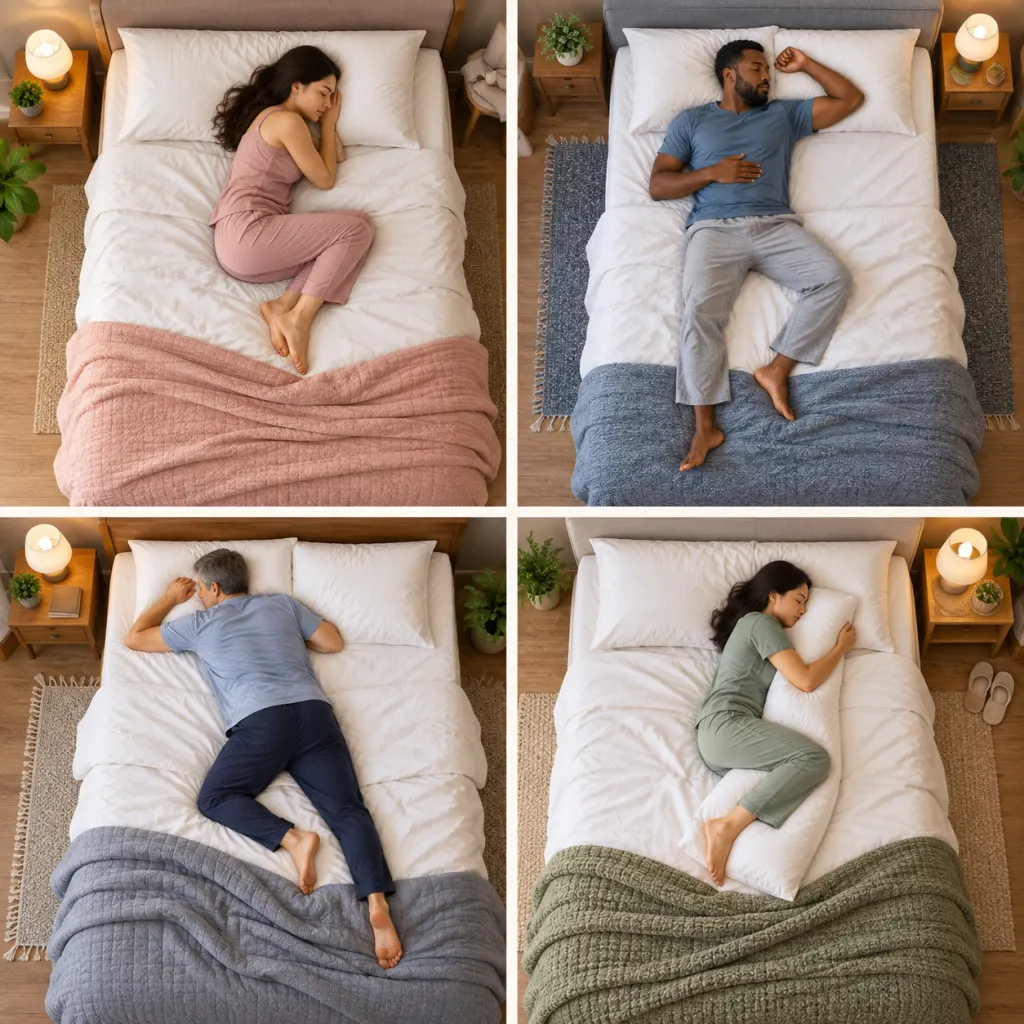
Your sleep position may reveal small clues about your habits, comfort needs, and how you settle down at night, but it is not a reliable personality test. The popular idea is fun: side sleepers are agreeable, back sleepers are disciplined, stomach sleepers are bold, and curled-up sleepers are guarded. The evidence is much more modest. Sleep research supports that people often have preferred positions, and personality research finds some associations with sleep timing and restfulness, but a single pose cannot diagnose who you are.
Why the idea feels so convincing
Sleep-position personality claims feel believable because they borrow from body language. When someone sits upright in a meeting, folds their arms, or leans toward a friend, we naturally look for meaning. It is tempting to extend that habit into the bedroom and assume the sleeping body is expressing a hidden self. The problem is that sleep posture is not chosen with the same awareness as daytime posture. Once you drift off, position is shaped by comfort, mattress support, temperature, breathing ease, habit, and small movements you may not remember.
That does not make the topic useless. A sleep position can be a gentle prompt for self-observation. Someone who curls tightly may notice they like extra warmth or the feeling of being tucked in. A back sleeper may simply have a pillow setup that keeps them settled. A stomach sleeper may be following a pattern learned years ago. The useful question is not, “What label does this prove?” It is, “What does this position help me feel at bedtime?”
What research can say with more confidence
Research is stronger on sleep behavior than on sleep-position personality typing. The CDC emphasizes that both enough sleep and sleep quality matter, and that adults generally need at least seven hours. MedlinePlus similarly explains that sleep involves active brain and body processes, with different stages supporting rest, learning, memory, and next-day functioning at a general level MedlinePlus. These sources support taking sleep seriously, but they do not support reading a full personality profile from one posture.

Personality links exist, but they are not posture labels
There is serious research on personality and sleep, just not in the neat “this pose equals this trait” format often shared online. A peer-reviewed article summarized by Penn State examined five-factor personality traits and sleep in older adults. It reported that higher neuroticism and lower extraversion and conscientiousness were associated with more fragmented sleep and feeling less rested, while conscientiousness was associated with earlier and more consistent bedtimes. The same summary notes that body mass index, disease burden, perceived stress, and depressive symptoms accounted for those associations, which is a reminder to avoid overreading simple patterns Penn State research summary.
In plain terms, personality may relate to bedtime regularity, restfulness, and how people perceive their sleep. That is different from saying a fetal position proves sensitivity or a back position proves discipline. A trait is a broad pattern across many situations. A sleeping pose is one behavior in one setting, often influenced by practical constraints. It can be part of the picture, but it is too narrow to carry the whole picture.
How common positions are often interpreted
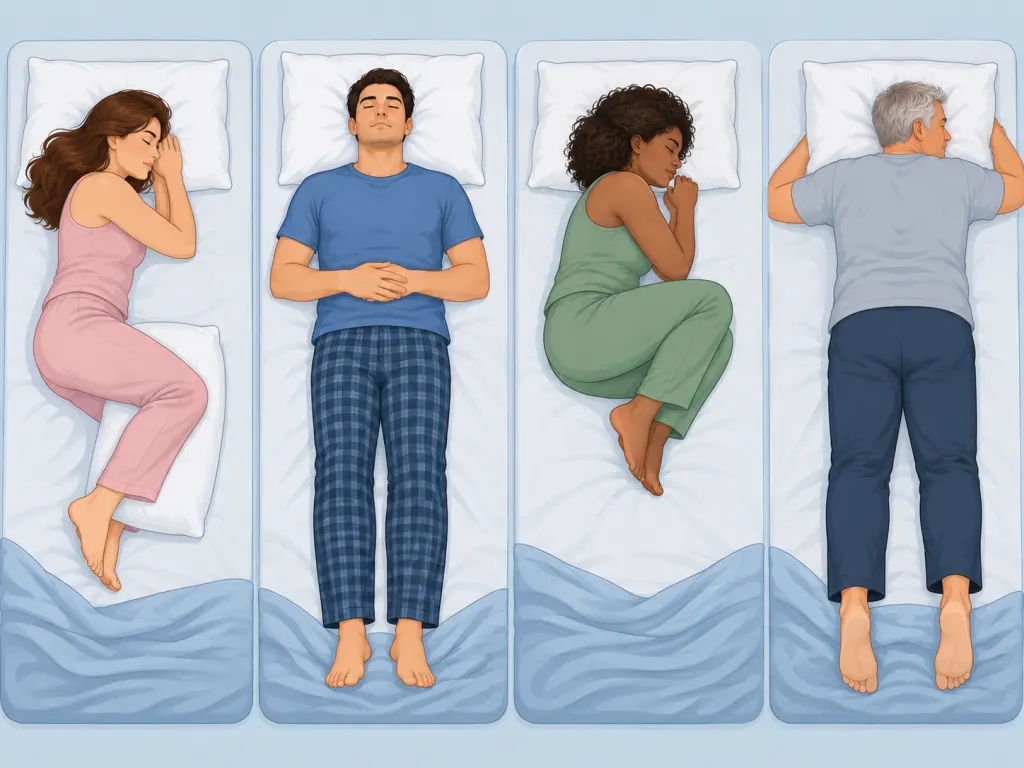
If you enjoy the symbolic side of the topic, use these interpretations as prompts rather than verdicts:
- Side sleeping: often read as easygoing or adaptable, but it may simply be comfortable and common.
- Curled or fetal-style sleeping: often read as protective or inward-looking, but it may reflect warmth, pillow shape, or habit.
- Back sleeping: often read as calm or structured, but it may reflect mattress support or a preference for open space.
- Stomach sleeping: often read as bold or restless, but it may come from long-standing routine or how someone learned to fall asleep.
- Arms-up or spread-out positions: often read as relaxed or expressive, but they may change through the night without meaning much.
Position preference can be surprisingly stable
One reason people attach meaning to sleep position is that it can feel consistent. A 2024 Journal of Sleep Research article found that sleep-position preference was strongly consistent across two nights in a group of mature-aged adults using at-home sleep measurement. In that study, participants slept an average of about 61.8 percent of total sleep time laterally, 34.4 percent supine, and 3.9 percent prone; the authors also warned against broad one-size-fits-all advice because responses varied among individuals Journal of Sleep Research.
Stability can make a behavior feel revealing. If you have slept curled on your left side for years, it is natural to wonder whether that says something about you. It might say something about continuity: your body has learned a reliable way to settle. It might also say something about your sleep environment. A firm mattress, a favorite pillow, a partner, a pet, room temperature, or even the side of the bed can make one position easier to return to night after night.
Comfort is a stronger explanation than character
Physical comfort often explains sleep position better than personality does. Cleveland Clinic guidance on sleeping positions focuses on alignment, pillow support, and doing what works for the individual rather than naming one universal best position Cleveland Clinic. That practical framing matters: if a position helps you rest comfortably, it may be serving a physical purpose before it expresses a symbolic one.
Think of sleep posture as an adaptation. Side sleepers may like the feeling of having knees and hips supported. Back sleepers may like even weight distribution. Curled sleepers may prefer containment. Stomach sleepers may enjoy pressure against the mattress even if some people find that position less comfortable. None of those preferences need a dramatic personality explanation. Often, the body is simply choosing the least distracting option available.
A better way to read your own sleep position
Instead of asking whether your position proves you are confident, guarded, trusting, or independent, ask more concrete questions. Do you wake up feeling settled or stiff? Do you fall asleep faster in one position? Do you move away from a position during the night? Do you sleep differently when stressed, traveling, sharing a bed, or using a different pillow? Those observations are more useful than a fixed personality chart because they connect your posture to real conditions.
You can also notice how your position fits your evening routine. A person who reads in bed may begin on the back and later roll to the side. Someone who uses extra pillows may naturally stay more elevated or supported. Someone who falls asleep while thinking may curl up because it feels quiet and enclosed. These patterns can reveal preferences for comfort, predictability, warmth, space, or sensory calm, but they still should not be treated as a formal psychological assessment.
When the personality angle is harmless and when to be careful
The personality angle is harmless when it stays playful. It can start a conversation with a partner, make you notice your habits, or help you think about what makes bedtime feel safe and comfortable. It becomes less helpful when it turns into certainty: “I sleep like this, so I must be that,” or “My partner sleeps like that, so they must feel this.” People are more complicated than a nighttime pose.
Be especially careful with claims that make sleep position sound diagnostic. A sleeping posture is not enough to judge emotional stability, honesty, loyalty, anxiety, ambition, or relationship health. If your sleep has changed suddenly, the better first step is to look for ordinary explanations: schedule changes, stress, a new mattress, room temperature, noise, caffeine timing, travel, or discomfort. Personality may influence routines, but routines are built from many moving parts.
The practical takeaway
Sleep position can be a mirror, but it is a small mirror. It may reflect how you seek comfort, how consistent your habits are, and what your body finds easiest at night. It may also change with your environment. The most evidence-friendly answer is this: your sleep position may reveal preferences and patterns, but it does not reveal your whole personality. Enjoy the symbolism if it makes the topic fun, then give more weight to how well you actually rest.
Wrap-Up
Sleep-position personality charts are best treated as playful reflection, not evidence. Research supports that people often have stable sleep-position habits and that personality traits can relate to some sleep patterns, but it does not support assigning a complete character profile from side, back, stomach, curled, or arms-up sleeping. Comfort, routine, sleep environment, and body mechanics are usually more practical explanations.
Frequently Asked Questions
- → Can sleep position really reveal personality?
It can suggest possible comfort preferences or habits, but it cannot reliably reveal personality on its own. Treat popular meanings as conversation starters, not proof.
- → Why do I always return to the same sleep position?
A familiar position may feel easiest because of habit, pillow setup, mattress feel, temperature, or how your body settles. Research suggests some people show consistent position preferences across nights.
- → Is side sleeping linked to a certain personality type?
Side sleeping is often given friendly or adaptable meanings in popular articles, but research supports it mainly as a common posture. It does not prove a specific trait.
- → What if my sleep position changes during stressful times?
Changes can happen for many reasons, including schedule, room conditions, travel, or emotional strain. It is reasonable to notice the pattern, but avoid turning it into a firm personality conclusion.
- → Should I change my sleep position to match a personality goal?
No. A sleep position is not a self-improvement shortcut. Comfort, restfulness, and a consistent routine matter more than trying to sleep in a pose that symbolizes a trait.