 Save
The direct answer is that no one can know which couple is the happiest from a single image. A picture-based personality test can still be fun, though, because your first choice may reveal what you tend to notice in relationships: calm loyalty, growth, passion, optimism, independence, or steady companionship. The key is to treat the result as a mirror for reflection, not as proof about your personality or anyone else’s relationship.
Formal assessments need evidence that their scores are consistent and meaningful for the purpose claimed. The American Psychological Association describes reliability and validity as core measurement ideas for psychological tests, including whether results are consistent and whether evidence supports a specific interpretation of a score APA PsycTests methodology. A social image quiz does not meet that standard. It can, however, help you notice what happiness looks like to you.
The Real Answer: You Are Choosing a Value, Not Solving a Mystery
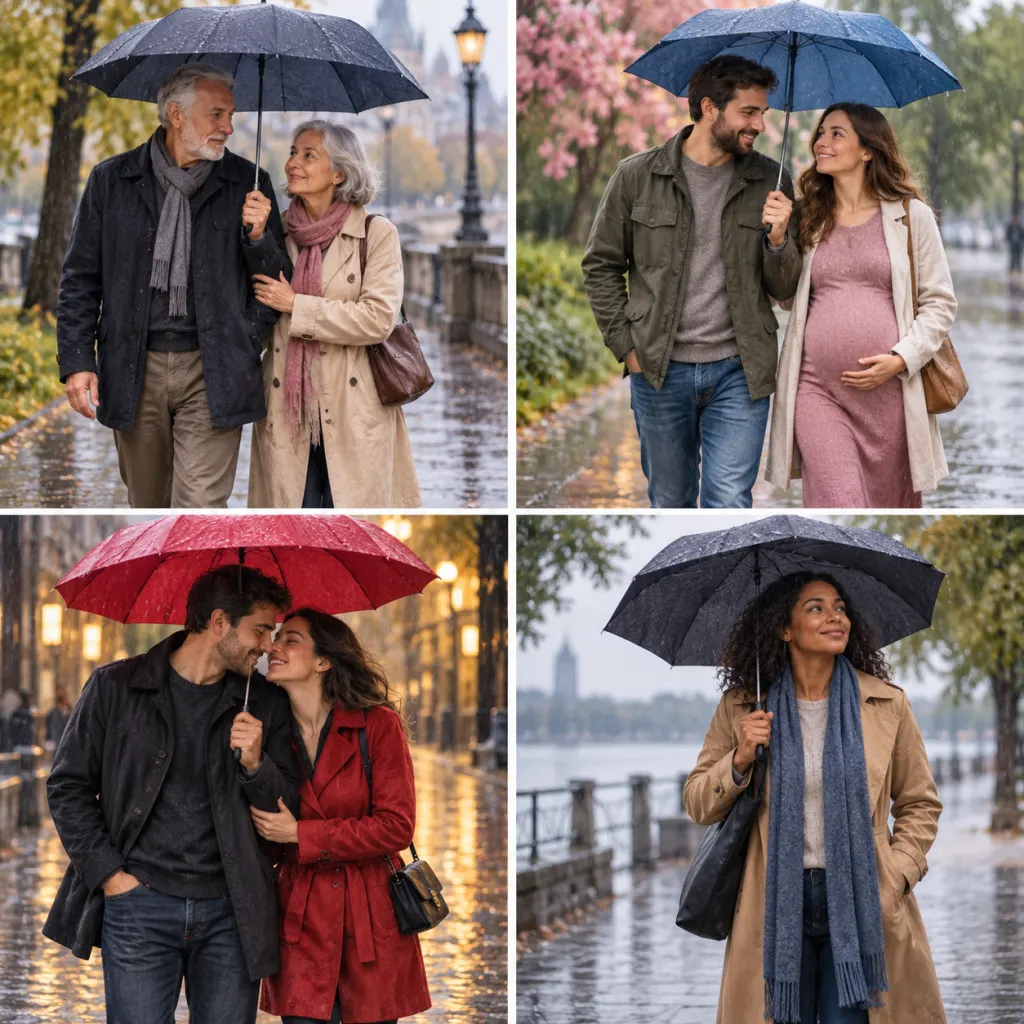
When a quiz asks, “Which couple is the happiest?” it invites you to read a lot from very little information. You may notice color, closeness, posture, facial expression, umbrella placement, movement, or the general mood of the scene. Those clues can suggest a feeling, but they cannot prove the private quality of a relationship. A couple can look cheerful in public and be distant in private; another couple can look quiet and still feel deeply secure together.
That is why the best version of this test changes the question slightly. Instead of asking which pair is objectively happiest, ask, “Which pair represents the kind of happiness I recognize first?” That shift makes the quiz more honest. Your answer may say less about the illustrated couple and more about what you associate with closeness: protection, freedom, affection, teamwork, or calm.
How to Take the Test Without Overreading It
Look at the image for a few seconds and choose the couple that feels happiest before you start analyzing. Do not spend too long searching for the “correct” answer. The point is your first impression. Then read the meaning as a prompt and ask whether it fits, partly fits, or misses the mark. A result can be useful even when it is imperfect, because the disagreement tells you something too.
- If you chose quickly, your answer may reflect the quality that feels most attractive to you right now.
- If you hesitated, you may value several relationship styles at once.
- If you rejected the whole test, you may be cautious about judging happiness from appearances.
- If your answer changed after reading, that may mean your reflective answer differs from your instinctive answer.
Professional personality tools are built around clearer scoring rules, intended uses, and evidence. APA’s public discussion of personality tests notes that useful assessments are judged by reliability, validity, and fairness APA Speaking of Psychology. A casual image test does not rank you or label you. It simply gives you a structured reason to think.
If You Chose the Calm, Protected Couple
You may connect happiness with steadiness. A couple walking close together under an umbrella can represent shelter, patience, and trust during ordinary difficulties. If this was your first choice, you may admire relationships where love is not loud but dependable. You may feel that the happiest pair is the one that can move through a gray day without blaming each other for the rain.
This choice often appeals to people who value consistency over drama. You might appreciate partners who show up, remember small details, keep promises, and make everyday life feel less uncertain. The possible blind spot is that steadiness can sometimes be confused with silence. If you prize calm, it may help to ask whether important concerns are truly being discussed or simply kept out of sight.
If You Chose the Growing, Easygoing Couple
You may see happiness as growth. This couple often represents the feeling that two people do not have to be perfect; they simply need to keep learning how to move together. If this pair drew your attention, you may value kindness, adaptability, and a relationship that leaves room for change.
You may be drawn to partnerships where both people encourage each other’s goals and allow the relationship to evolve. You may prefer warmth over strict roles, and you may dislike games, scorekeeping, or needless tension. The possible blind spot is over-accommodation. If you are naturally supportive, remember that a strong partnership leaves space for your needs as well as the other person’s.
If You Chose the Romantic, Expressive Couple
You may associate happiness with visible affection and strong connection. A couple that looks vivid, close, and expressive can suggest warmth, attraction, and the joy of being openly chosen. If this was your first pick, you may appreciate relationships where affection is shown clearly rather than hidden behind restraint.
This choice may also mean you notice intensity first. You may want a relationship that feels alive, memorable, and emotionally honest. That can be a beautiful value when it is paired with respect and patience. The possible challenge is expecting every meaningful relationship to feel dramatic all the time. Long-term closeness often includes ordinary days, quiet repair after disagreements, and simple routines that would not look especially cinematic in a picture.
If You Chose the Bright, Independent Couple
You may see happiness as freedom with companionship. A bright couple in a rainy scene can suggest optimism, confidence, and the ability to keep your identity while still choosing another person. If this pair stood out to you, you may admire relationships where both people support each other without becoming overly dependent.
This choice often appeals to people who value humor, movement, creativity, and personal space. You may believe that love should add lightness rather than constant pressure. The possible blind spot is avoiding heavier conversations for too long. Independence is strongest when it includes honesty, not when it becomes a way to stay unreachable.

Why Different People See Different Couples First
Two people can look at the same picture and notice different things because attention is selective. One person may notice the color first. Another may focus on distance between the partners. Someone else may be drawn to the umbrella, the direction of movement, or whether one partner appears to be caring for the other. These impressions are not random, but they are not fixed truths either.
Your answer can also change with context. After a week full of conflict, a calm couple may look especially appealing. After a lonely period, the most affectionate-looking pair may stand out. During a season of personal rebuilding, the independent couple may feel most hopeful. This does not mean your personality has changed completely. It may mean your current priorities are easier to see.
What Happiest Looks Like Beyond the Picture
Relationship happiness is better understood through patterns than snapshots. Utah State University Extension summarizes relationship principles such as choosing commitment, knowing a partner, caring, sharing, managing differences, and connecting with supportive networks USU Extension relationship principles. Those patterns are much richer than a single pose.
For example, a genuinely close couple may not always look cheerful. They may disagree, pause, reset, and try again. They may divide chores quietly, check in during a difficult week, or repair a misunderstanding before it grows. The happiest-looking image is not necessarily the strongest relationship. Real connection is usually built through repeated choices that are too ordinary to fit neatly into a viral quiz.
Use Your Result as a Conversation Starter
The most useful part of this personality test is not the label. It is the question that comes after it: “What did I assume happiness would look like?” If you are taking the quiz with a partner, friend, or family member, compare your answers without trying to win. One person may choose the protected couple because they value loyalty. Another may choose the bright couple because they value room to breathe. Both answers can be valid.
USU Extension’s communication guidance highlights clear, honest “I” messages as a way to express thoughts and feelings while leaving room for discussion USU Extension communication skills. That idea fits this quiz well. Instead of saying, “You chose that because you are afraid of commitment,” try, “I chose this couple because I like the feeling of teamwork.” The first turns a quiz into a verdict. The second turns it into a doorway.

A Better Way to Read the Four Results
Think of each couple as a symbol rather than a category. The calm couple can stand for security. The growing couple can stand for flexibility. The romantic couple can stand for openness and affection. The independent couple can stand for freedom and optimism. Most people contain more than one of these preferences, and many strong relationships need all four at different times.
A secure relationship may need romance so it does not become dull. A passionate relationship may need steadiness so it does not burn through trust. An independent relationship may need shared rituals so both people still feel chosen. A growth-focused relationship may need boundaries so one person does not do all the adapting. Your first choice is simply the door you walked through first.
When the Result Does Not Fit You
If the interpretation does not feel accurate, do not force it. You may have picked a couple because of color contrast, composition, clothing, or the way the image was arranged. You may also dislike personality quizzes in general, especially when they sound too certain. That skepticism is useful. It keeps a light activity from becoming a label.
You can still get something from the exercise by writing your own meaning. Ask yourself what made the couple look happy, what seemed missing, and what you would need to see before believing they were truly content. Maybe you would want to see how they handle disagreement. Maybe you would want to know whether both people feel heard. The questions you ask may reveal more than the answer you picked.
Bottom Line
The happiest couple in the picture is not a fact to uncover. It is a reflection of what you notice, admire, or currently want from closeness. Choose the pair that draws you in, read the result gently, and then look beyond the image. The real value of this personality test is not predicting your future. It is giving you a simple way to name what happiness in a relationship means to you today.
Wrap-Up
A picture-based happiest-couple test should be read as entertainment and self-reflection, not as a formal personality measure. Your choice may point toward the relationship qualities you notice first: steadiness, growth, romance, or independence. The more useful takeaway is to ask why that version of happiness appealed to you and how those values show up in real conversations, choices, and routines.
Frequently Asked Questions
- → Can this test really tell which couple is happiest?
No. A single image cannot prove the private quality of a relationship. The test is best used as a reflection prompt about what you associate with happiness, closeness, and trust.
- → Should I choose the couple I noticed first or the one I like after thinking?
For the classic version, choose the couple you noticed first. Then compare that instinctive answer with the one you prefer after thinking. The difference between the two can be just as revealing as the result.
- → What if I see parts of myself in every result?
That is normal. Most people value more than one relationship quality. You may want steadiness, growth, affection, and independence at different moments or in different kinds of relationships.
- → Is one result better than the others?
No result is better. Each points to a different value: security, flexibility, expressiveness, or freedom. A strong relationship often needs a balance of several qualities rather than one style alone.
- → How can couples use this quiz together?
Take the quiz separately, compare answers, and explain your choice using “I” statements. For example, say, “I chose this couple because it looks calm to me,” instead of turning the other person’s answer into a judgment.
References
This content was developed and refined using reliable sources.
- https://www.apa.org/pubs/databases/training/psyctests-method-values
- https://www.apa.org/news/podcasts/speaking-of-psychology/personality-tests.html
- https://extension.usu.edu/relationships/research/marriage-principles-from-a-national-extension-model
- https://extension.usu.edu/relationships/research/effective-communication-skills-i-message-and-beyond