 Save
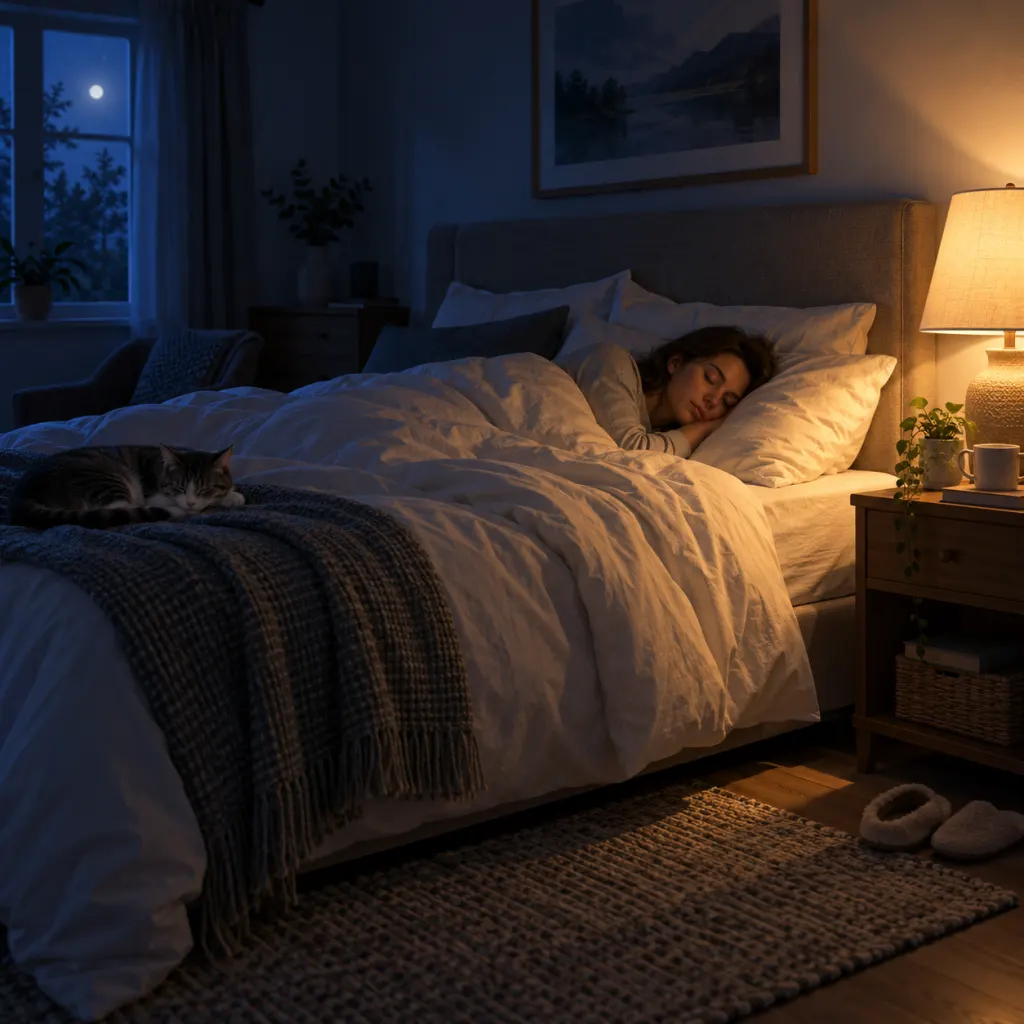
Sleeping in a room that is not fully dark affects sleep quality in ways that are now well-documented. Light entering the eye during the sleep period suppresses melatonin, the hormone that signals the body to stay in sleep mode, and shifts the internal clock toward a later schedule. A large prospective study of nearly 89,000 participants found that those in the brightest nighttime light environments carried meaningfully higher long-term health risks than those who slept in genuine darkness. The evidence consistently points in the same direction: darkness during sleep is not merely comfortable; it is biologically significant. Understanding the mechanisms helps translate that evidence into practical decisions about the bedroom environment.
How Light Signals the Sleeping Brain
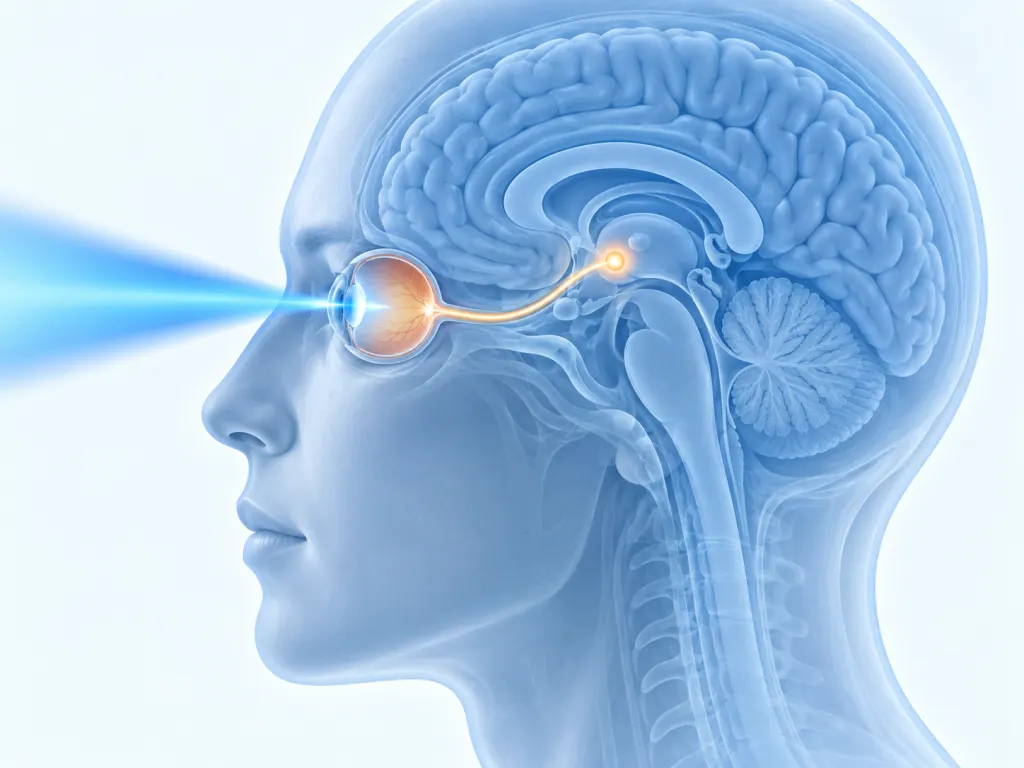
The human body evolved in a world where darkness reliably followed sunset, giving the brain an unambiguous signal to shift into sleep-promoting mode. Specialized cells in the retina, intrinsically photosensitive retinal ganglion cells (ipRGCs), remain active even when the rest of the visual system is at rest. These cells contain a photopigment called melanopsin, which is particularly sensitive to short-wavelength blue light around 480 nanometers. When light reaches them, they transmit signals along the retinohypothalamic tract to the suprachiasmatic nucleus (SCN) in the hypothalamus, the central pacemaker of the body's circadian clock. Research published in PMC 11670413 describes this pathway in detail, noting that throughout most of human evolutionary history, any meaningful nighttime light would have been solar in origin and therefore reliably associated with daytime.
The SCN interprets any incoming light signal as a wake cue, regardless of what the clock reads. This means that a bedside lamp left on, a television emitting screen glow in standby mode, or a bright phone screen placed on the nightstand can transmit the same biological message as sunrise: it is time to be alert. The same research identifies meaningful individual variation in this sensitivity, children demonstrate greater sensitivity to light-induced circadian disruption than adults, making household light management particularly relevant in sleeping environments shared with or near younger family members.
Melatonin: The Sleep Hormone Under Pressure
Melatonin is synthesized in the pineal gland and released primarily in response to darkness. Its rise in the evening sends a signal to nearly every organ in the body that nighttime has arrived, lowering core temperature, slowing metabolic rate, and building sleep pressure. Light at night interrupts this process at the source. Research reviewed in PMC 6751071 shows that even ordinary indoor ambient light can delay melatonin's evening rise, with the most pronounced suppression coming from blue-enriched light emitted by electronic screens.
A well-cited laboratory finding examined the effect of four hours of illuminated device use before and during sleep onset, and found that it suppressed melatonin secretion, delayed sleep onset, and reduced next-morning alertness, effects attributed to the blue-wavelength component that typifies most modern screens. Beyond screens, any ambient light source bright enough to reach the retina through closed eyelids or peripheral vision activates the same suppression pathway. The practical consequence is that a person who falls asleep with a light on may reach the deeper, slow-wave stages of sleep less readily and may wake more easily in the night than they would in full darkness.
Circadian Rhythm Disruption: The Body Clock Under Strain
A single night of meaningful light exposure during sleep tends to delay the circadian phase, pushing the body's internal timing toward a later schedule. Repeated exposure reinforces this shift. As explained in PMC 11670413, morning light advances the circadian clock while evening and nighttime light delays it. This directionality means that chronic late-evening or overnight light exposure functions like repeated westward jet lag, progressively misaligning the body's internal timing with the schedule that daily life requires, a condition sometimes described as circadian misalignment.
The Multi-Ethnic Study of Atherosclerosis (MESA), a large observational study of 1,933 older adults, quantified this effect in a real-world setting. Published findings show that for every 5-lux increase in light measured at the eye during the sleep period, participants showed a 7.8-minute increase in night-to-night sleep onset variability. Those in the highest light-exposure group had 32% greater odds of irregular sleep timing, defined as variability exceeding 90 minutes between nights. Notably, the relationship was bidirectional: irregular sleep timing was itself associated with increased future light exposure, suggesting that disruption of one reinforces the other. The researchers connected irregular sleep timing to elevated cardiovascular risk and increased inflammatory biomarkers, based on prior published literature they cited.
Mood, Alertness, and Next-Day Function
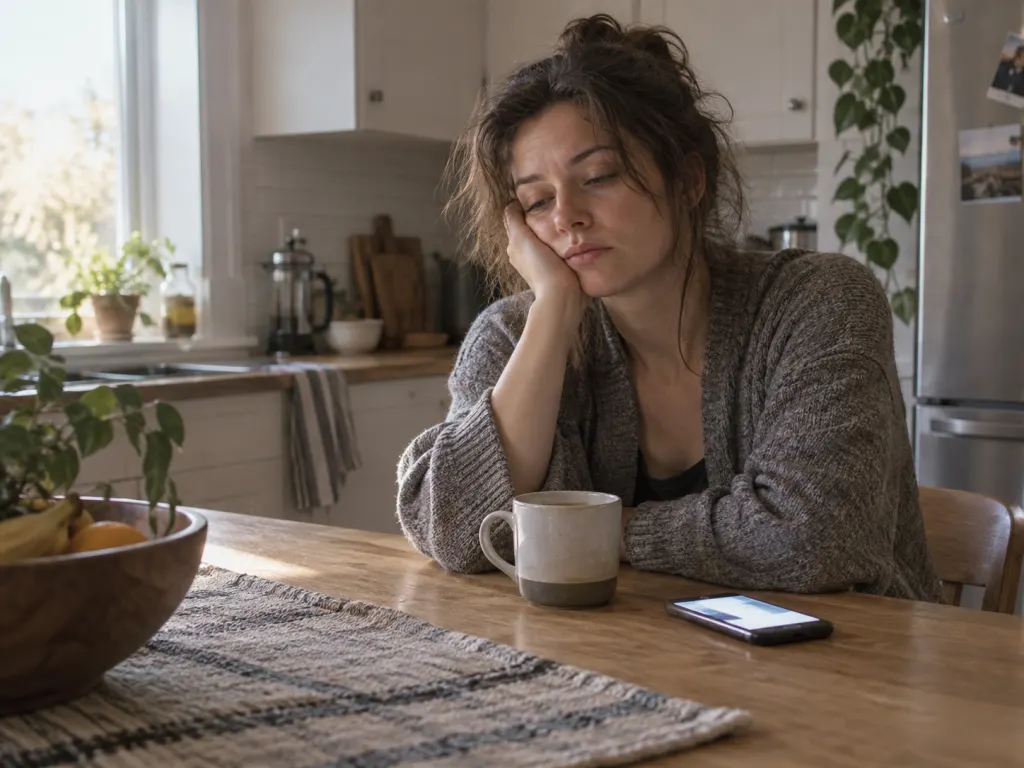
The effects of light-disrupted sleep extend well beyond tiredness the following morning. The Cleveland Clinic notes that nighttime light exposure is associated with increased risk of fatigue, confusion on waking, and mood disturbance. Research summarized in PMC 6751071 identifies a connection between poorly timed light exposure and depressive symptoms, linked partly to light's effects on the serotonin system, the same neurochemical pathway targeted by bright-light therapy used in clinical settings for mood conditions. This is not a symmetric effect: light at the wrong time can have adverse mood-related consequences, while light at the right time, bright daytime exposure, is associated with improved sleep quality and is used therapeutically.
From a cognitive standpoint, chronic mild sleep disruption accumulates across days and weeks. Research associated with nighttime light exposure found approximately 10 minutes less sleep per night among those with ambient light during their sleep window, an amount that over a full week totals roughly an hour of lost sleep. Sustained mild sleep deficits have well-documented effects on attention, reaction time, and working memory, making the downstream consequences of nighttime light relevant not just to how a person feels on waking but to how they function throughout the following day.
Longer-Term Health Associations
The most substantial epidemiological evidence for the consequences of nighttime light exposure comes from a 2024 prospective study drawing on data from approximately 88,900 UK Biobank participants. That research found that individuals in the brightest 10% of personal nighttime light exposure showed 21 to 34% higher risk of all-cause mortality compared to those whose nights were darkest. Risk for cardiometabolic mortality, covering cardiovascular events and metabolic disease, was 33 to 46% higher for the highest-exposure group. The peak of apparent harm occurred between 2:30 and 3:00 AM, a window in which the body's circadian physiology is typically at maximum night-mode depth and most sensitive to disruption.
The researchers attribute the mechanism to circadian amplitude suppression: persistent nighttime light reduces the contrast between the body's day-mode and night-mode, weakening the hormonal and metabolic rhythms that support cardiovascular and metabolic function over time. Importantly, the same dataset found a protective association in the opposite direction, those with the brightest daytime light exposure showed 17 to 34% lower mortality risk than those with minimal daytime light. This shifts the practical recommendation from simply avoiding night light to maintaining a strong daily contrast: seeking genuine daytime brightness and genuine nighttime darkness as the fuller picture of what the evidence supports.
Who Is More Sensitive to Nighttime Light?
Sensitivity to nighttime light is not uniform across people. Research reviewed in PMC 11670413 identifies age as a significant variable: children show greater sensitivity to light-induced circadian disruption than adults, making bedroom and hallway light management particularly worth considering in household arrangements that affect younger family members. Genetic and ethnic variation in melanopsin sensitivity also exists, with Europeans showing higher average sensitivity than East Asians, a finding that underscores the need to treat individual experience as a variable rather than assuming any single standard applies universally.
Older adults face a different profile of vulnerability. The MESA study, which drew its sample from adults aged 54 to 93, found significant effects across that entire age range, confirming that the circadian system remains meaningfully responsive to environmental light throughout the lifespan, not only in youth. People who already have irregular sleep patterns, those managing conditions that affect sleep architecture, or those taking medications with sleep-related effects may experience more pronounced consequences from ambient bedroom light. In these cases, optimizing the sleep environment is among the low-risk, low-cost adjustments worth attempting before more complex interventions are considered.
Creating a Darker Sleep Environment
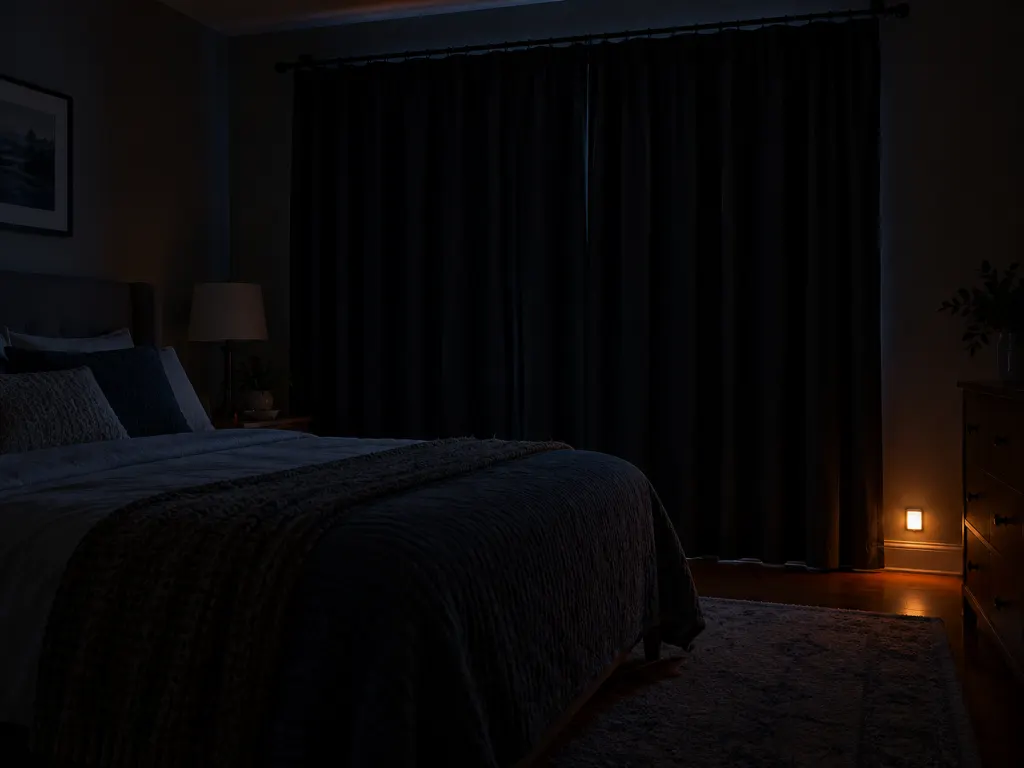
A bedroom that remains genuinely dark throughout the night, below approximately five lux at eye level, is achievable with consistent, incremental adjustments that require no special equipment. The following changes address the most common sources of unintended nighttime light in a typical home:
- Blackout curtains or roller blinds to block streetlights, passing vehicle headlights, and early-morning sun before the intended wake time
- An eye mask for travel, shift work, or situations where full blackout is not immediately achievable
- Turning televisions, tablets, and smartphones fully off rather than leaving them in standby or screen-on modes at the bedside
- Covering LED indicator lights on routers, chargers, and other electronics with opaque tape, or moving these devices out of the sleeping space
- Replacing illuminated clock faces with non-illuminated models, or facing them toward the wall
- If a safety nightlight is needed, choosing one with a red or amber wavelength rather than white or blue-toned LED, since longer-wavelength light has significantly less impact on melatonin suppression according to photobiology research
These changes are most effective when combined with a consistent daytime light schedule. Getting genuine bright light during the morning and early afternoon reinforces the circadian contrast that makes nighttime darkness biologically meaningful. The evidence does not support waiting until sleep difficulties become severe before making these adjustments; maintaining a dark sleep environment is as much a preventive measure as a remedial one, and the changes involved are among the most accessible in the broader landscape of sleep hygiene.
Wrap-Up
Sleeping with lights on disrupts the biological systems that make sleep restorative. Melatonin production falls when the eye detects light at night, delaying sleep onset and reducing time spent in deeper sleep stages. Repeated exposure shifts the circadian clock toward a later schedule, a pattern associated in large population research with elevated long-term health risk. The effects scale with brightness and wavelength, with blue-toned light from screens being particularly disruptive, though ordinary ambient light at sufficient intensity produces similar outcomes. Practical improvements, blackout curtains, covering electronic indicator lights, limiting screen use before bed, and choosing warm-toned nightlights when needed, are among the most accessible changes available for the sleep environment. The broader evidence also makes a case for seeking bright daytime light, since the body's internal clock responds to the full 24-hour contrast between day and night, not only to darkness at bedtime.
Frequently Asked Questions
- → Does it matter how bright the light is when sleeping?
Yes. Research shows that even relatively low light levels, around five lux, comparable to a dim nightlight, can affect melatonin production and sleep onset variability night to night. Effects tend to scale with brightness and with the proportion of blue-wavelength light present in the source.
- → Is leaving the TV on worse than a regular lamp?
Screens typically emit a high proportion of blue-wavelength light, which research identifies as particularly disruptive to melatonin and circadian signaling. However, any light source bright enough to reach the retina disrupts sleep at sufficient intensity. The most practical goal is reducing all ambient light in the sleeping space regardless of source.
- → How long does it take to notice an improvement after sleeping in darkness?
Melatonin timing and sleep onset latency can begin to shift within a few nights of consistent darkness. Full circadian rhythm regularization, particularly after a sustained period of irregular light exposure, typically takes one to two weeks of consistent dark sleep conditions.
- → Are children more affected by nighttime light than adults?
Research indicates that children show greater sensitivity to light-induced circadian disruption than adults. This makes the sleeping environment particularly worth optimizing for younger family members, including managing hallway or corridor light that reaches the sleeping space during the sleep window.
- → Does a red or amber nightlight cause the same disruption?
Longer-wavelength red and amber light has significantly less impact on melanopsin-driven melatonin suppression than white or blue-toned light. If a nightlight is needed for safety, warm-toned red or amber options are preferable based on photobiology research on wavelength sensitivity.
- → Is getting bright daytime light as important as avoiding nighttime light?
Evidence suggests yes. Population research found that bright daytime light exposure was associated with lower long-term health risk, while bright nighttime exposure was associated with higher risk. The circadian system responds to the full 24-hour contrast between light and dark, making daytime brightness an important complement to nighttime darkness.