 Save
Drinking coffee every morning usually causes a temporary lift in alertness, quicker wakefulness, and, in some people, side effects such as jitters, stomach upset, a faster pulse, or later sleep trouble. The effect is not mysterious: coffee contains caffeine, which stimulates the central nervous system and reaches the bloodstream relatively quickly. The U.S. Food and Drug Administration says up to 400 milligrams of caffeine a day is an amount not generally associated with negative effects for most adults, while also noting that sensitivity varies widely from person to person FDA.
The Short Answer: Morning Coffee Is Mostly About Caffeine
Coffee is not a magic switch, but it is biologically active. Harvard's Nutrition Source describes caffeine as a mild stimulant that can quickly boost alertness and energy levels, and notes that an 8-ounce cup of brewed coffee contains about 95 milligrams of caffeine on average Harvard T.H. Chan School of Public Health. That number is only a rough guide. A large mug, a strong cafe drink, cold brew, espresso-based drinks, and an extra refill can move a person from a modest morning dose to a much higher daily total before lunch.
The reason the same habit feels smooth for one person and uncomfortable for another is that coffee is not a single fixed exposure. Bean type, roast, grind, brewing method, serving size, and the person's own caffeine sensitivity all matter. Harvard's coffee review also emphasizes that coffee contains caffeine, riboflavin, magnesium, and plant compounds such as polyphenols, so the drink is more than caffeine alone Harvard T.H. Chan School of Public Health. Still, when people ask what a morning cup causes right away, caffeine explains most of the noticeable short-term effects.
- More alertness: many people feel less drowsy after caffeine begins working.
- More urination: MedlinePlus describes caffeine as a stimulant and a diuretic, meaning it can increase urine output for some people.
- Possible restlessness: higher intake or higher sensitivity can lead to feeling wired, shaky, or uneasy.
- Possible sleep disruption: caffeine taken too late, or caffeine that lingers into evening, can make sleep harder.
- Habit effects: regular use can make the morning cup feel like part of the body's daily rhythm.

Why A Cup Can Feel Stronger On An Empty Stomach
Timing changes the experience. Harvard notes that caffeine is absorbed within about 45 minutes and can peak in the blood anywhere from 15 minutes to 2 hours after consumption. The same source explains that drinking coffee on an empty stomach may give a quicker energy boost than drinking it with breakfast because food can slow how quickly caffeine peaks Harvard T.H. Chan School of Public Health. That does not mean everyone needs food first, but it explains why a rushed cup before leaving the house can feel sharper than the same cup sipped with a meal.
For someone who enjoys coffee but dislikes a sudden buzz, the first adjustment is often simple: slow down, drink it with breakfast, or choose a smaller serving. Another option is to split the habit into a smaller regular coffee plus a later decaf or half-caf. These are routine choices, not medical rules. The point is to shape the exposure so the cup supports the morning instead of dominating it.
How Much Is Usually Considered Moderate
The most repeated benchmark is 400 milligrams of caffeine per day for most adults. The FDA gives this as an amount not generally associated with negative effects for most adults, while Mayo Clinic gives the same figure and reminds readers that caffeine content varies widely by drink Mayo Clinic. MedlinePlus gives another useful reference point: brewed or drip coffee totaling about four 8-ounce cups is roughly 400 milligrams of caffeine MedlinePlus. In real kitchens, cups are often larger than 8 ounces, so counting mugs rather than ounces can underestimate intake.
It also helps to count the whole day, not only the breakfast cup. Caffeine can appear in tea, cola, chocolate, energy drinks, certain packaged foods, and some over-the-counter products. The FDA points out that packaged foods must list caffeine in the ingredients when caffeine is added as a stand-alone ingredient, but naturally caffeine-containing ingredients may appear without a separate caffeine amount listed FDA. That means a person who has coffee in the morning and an energy drink later may be consuming more caffeine than the coffee routine alone suggests.
The Sleep Question Is About Clock Time, Not Just Cup Count
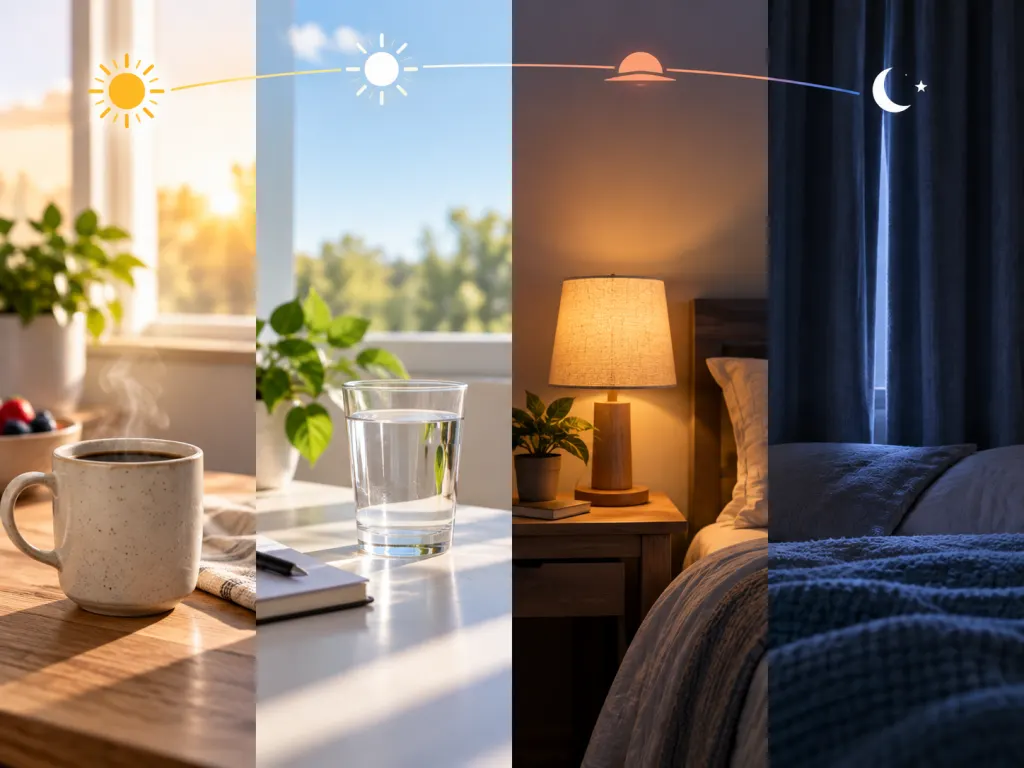
A morning cup is less likely to disturb sleep than an afternoon or evening cup, but the boundary is personal. Harvard explains that caffeine is broken down mainly in the liver and may remain in the blood for a wide range of time, from about 1.5 to 9.5 hours depending on individual factors Harvard T.H. Chan School of Public Health. A 2023 systematic review and meta-analysis indexed by PubMed found that caffeine reduced total sleep time and sleep efficiency in the included studies, and the authors concluded that timing matters when people want to protect sleep PubMed.
This is why the phrase 'I only drink coffee in the morning' can mean different things. A 6 a.m. cup is not the same as an 11:30 a.m. extra-large coffee for someone who goes to bed early. Someone who metabolizes caffeine slowly may notice an effect from coffee that another person barely feels. Mayo Clinic warns that using caffeine to make up for too little sleep can create a cycle: caffeine helps during the day, then sleep becomes harder at night, then the next morning feels even more dependent on caffeine Mayo Clinic.
When The Habit Starts To Feel Like Too Much
The clearest sign that a morning coffee routine needs adjusting is not a headline claim. It is how the person feels. MedlinePlus lists possible caffeine side effects such as a fast pulse, anxiety, difficulty sleeping, nausea, restlessness, tremors, and more frequent urination MedlinePlus. Mayo Clinic similarly suggests considering a cutback when caffeine is associated with headache, trouble sleeping, nervousness, frequent urination, a fast heartbeat, shaky muscles, or stomach upset Mayo Clinic. These signs do not prove coffee is the only cause, but they are useful prompts to review timing and amount.
There is also a difference between brewed coffee and concentrated caffeine products. The FDA warns that pure or highly concentrated caffeine products can be dangerous, and that rapid consumption of very large amounts can lead to toxic effects FDA. Ordinary coffee drinkers do not need to panic over a daily cup, but concentrated powders, liquids, and heavily caffeinated products belong in a different risk category than a normal mug.

A Practical Way To Evaluate Your Own Morning Cup
The easiest audit is a three-day caffeine log. Write down the size of each coffee, the time you drink it, and any other caffeinated products. Then add a simple note about sleep quality, restlessness, stomach comfort, and whether you felt a late-day slump. The purpose is not to turn breakfast into homework forever. It is to replace guesswork with a small snapshot of your routine.
- Measure the mug once: a home mug may hold 12, 16, or more ounces, which changes the estimate.
- Track refills: one morning habit may actually be two or three servings.
- Watch the add-ins: sugar, syrups, cream, and whipped toppings change the drink's role in the day.
- Protect sleep first: if sleep is sliding, move caffeine earlier before blaming willpower.
- Use decaf strategically: decaf can keep the ritual while reducing caffeine, though it may still contain small amounts.
Bottom Line
For most adults, a plain morning coffee is a common caffeine habit, not a guaranteed problem. It can make the morning feel easier by improving alertness for a while. The tradeoff is that caffeine is active in the body, and the same drink can cause restlessness, stomach discomfort, a faster pulse, or sleep disruption in people who are sensitive or who drink more than they realize. The best answer is neither fear nor overconfidence: keep the cup if it works for you, count the caffeine honestly, and adjust the amount, timing, or format when your body gives you consistent feedback.
Wrap-Up
Morning coffee mainly causes short-term stimulation from caffeine: many people feel more awake, more focused, and less drowsy. The habit can still backfire when the serving is larger than expected, when caffeine is added from other products, or when it lingers long enough to affect sleep. Authoritative sources such as the FDA, MedlinePlus, Mayo Clinic, Harvard's Nutrition Source, and sleep research indexed by PubMed all point to the same practical conclusion: moderation, timing, and individual response matter more than dramatic claims about coffee.
Frequently Asked Questions
- → Is it bad to drink coffee every morning?
For many adults, a morning coffee can fit into an ordinary routine. The key variables are total caffeine, serving size, timing, sleep quality, and personal sensitivity. If coffee leaves you restless, shaky, uncomfortable, or unable to sleep, it is worth reducing the amount or changing the timing.
- → How long does caffeine from morning coffee last?
Caffeine can peak within the first couple of hours after drinking it, but it may remain in the bloodstream for several hours. Harvard's Nutrition Source notes a wide range in how long caffeine stays in the blood, which helps explain why the same cup affects people differently.
- → Does decaf coffee have no caffeine at all?
No. Decaf usually has much less caffeine than regular coffee, but it is not always caffeine-free. The FDA notes that decaf coffee can still contain small amounts, so highly sensitive people may still want to pay attention to how they feel.
- → What should I do if coffee makes me jittery?
Try a smaller cup, drink it with food, switch to half-caf or decaf, and avoid stacking coffee with energy drinks or other caffeinated products. If symptoms are intense, new, or worrying, discuss them with a qualified health professional.
- → Can morning coffee make sleep worse later?
It can, especially if the morning cup is large, close to midday, or followed by more caffeine later. Sleep research shows that caffeine can reduce sleep time and sleep quality, and individual metabolism varies. Moving caffeine earlier is a simple first test.
References
This content was developed and refined using reliable sources.
- https://www.fda.gov/consumers/consumer-updates/spilling-beans-how-much-caffeine-too-much
- https://medlineplus.gov/ency/article/002445.htm
- https://nutritionsource.hsph.harvard.edu/caffeine
- https://nutritionsource.hsph.harvard.edu/food-features/coffee
- https://www.mayoclinic.org/healthy-lifestyle/nutrition-and-healthy-eating/in-depth/caffeine/art-20045678
- https://pubmed.ncbi.nlm.nih.gov/36870101