 Save
This challenge looks tricky because it gives areas but asks for perimeters. The key is to notice that the numbers 4 m², 9 m², and 16 m² can each describe a square region. Once you turn each square area into a side length, the perimeter is quick to calculate.
Step 1: Check that the shapes are squares

Start by naming the assumption: the challenge is solvable as stated only if each given area belongs to a square. Area and perimeter are different measurements, and the same area can belong to shapes with different perimeters; NIST defines perimeter as the boundary around a closed figure and area as surface size.
Step 2: Write down the square area formula
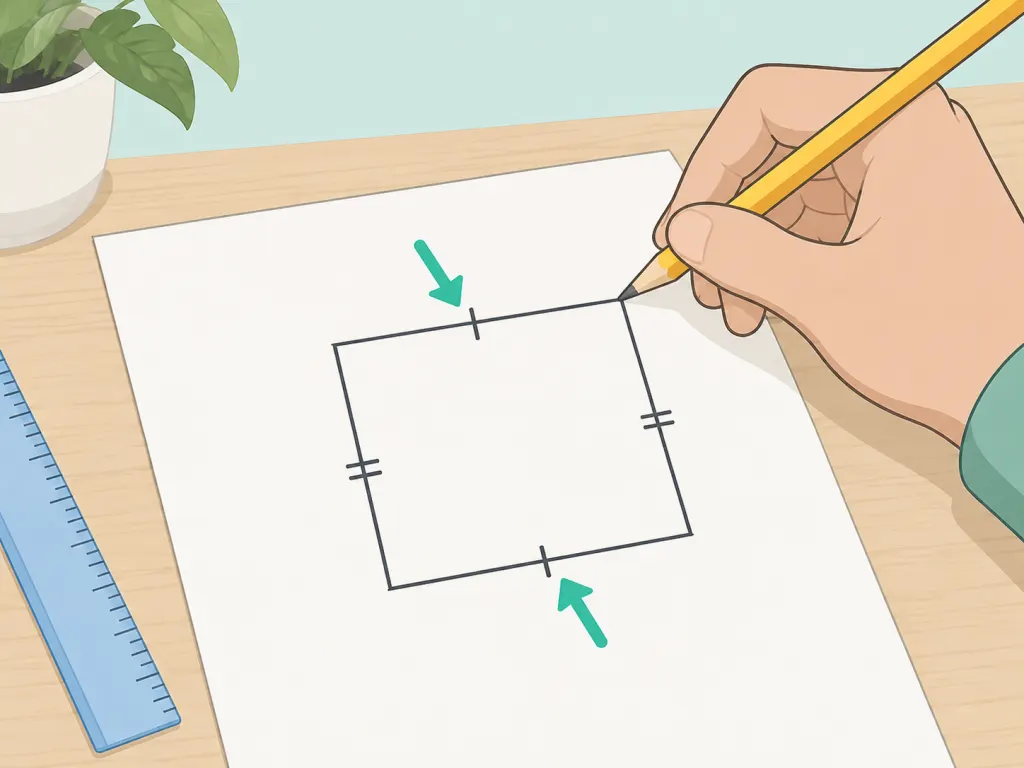
For a square, all four sides have the same length, so its area is side times side. In formula form, that is A = s², and a university math reference gives the square area formula as A = s².
Step 3: Take the square root of each area

Use the square root because it reverses squaring and gives the side length. The areas in this challenge are perfect squares: the square root of 4 is 2, the square root of 9 is 3, and the square root of 16 is 4.
Step 4: Keep area units and length units separate
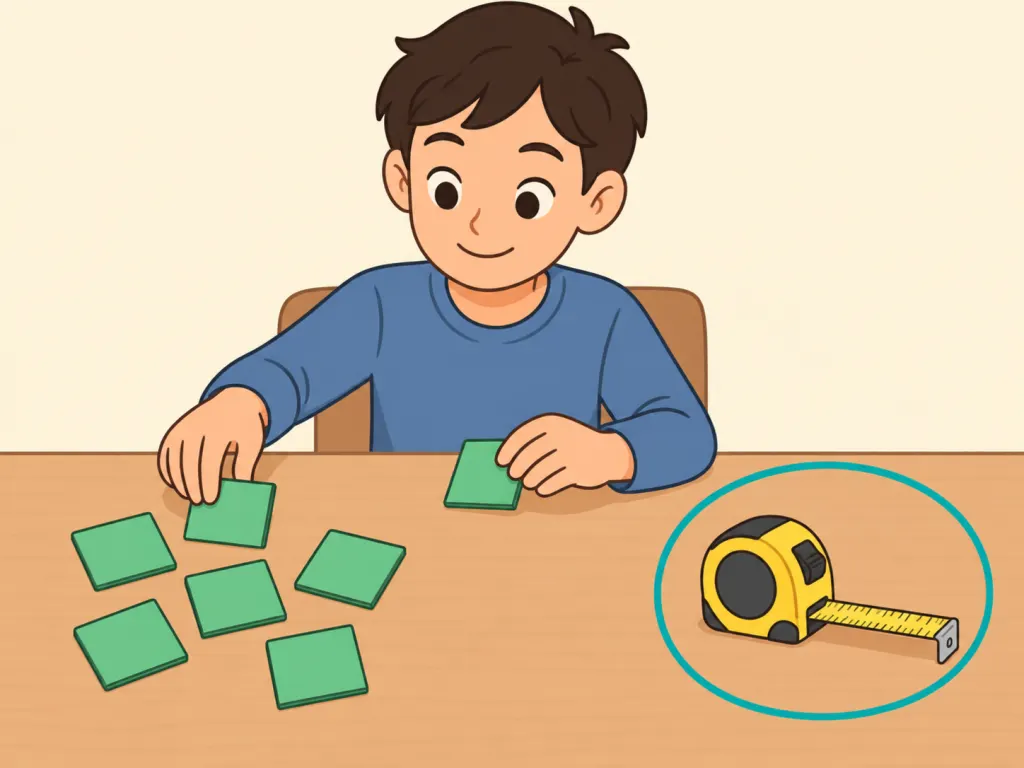
The given areas are in square meters, written as m². A side length is measured in meters, not square meters; NIST describes the square meter as a unit of area, while perimeter is a length around the edge.
A square has four equal sides, so its perimeter is 4 times the side length. The MSU mathematics archive lists the perimeter of a square with side length a as 4a, which is the same rule in different notation.
Step 6: Calculate the three perimeters

Multiply each side length by 4: 4 x 2 m = 8 m, 4 x 3 m = 12 m, and 4 x 4 m = 16 m. If your class writes formulas first, you can combine the steps as P = 4√A, which follows from the square relationship between area and perimeter shown in this university pre-calculus example.
Step 7: State the answer and any total requested
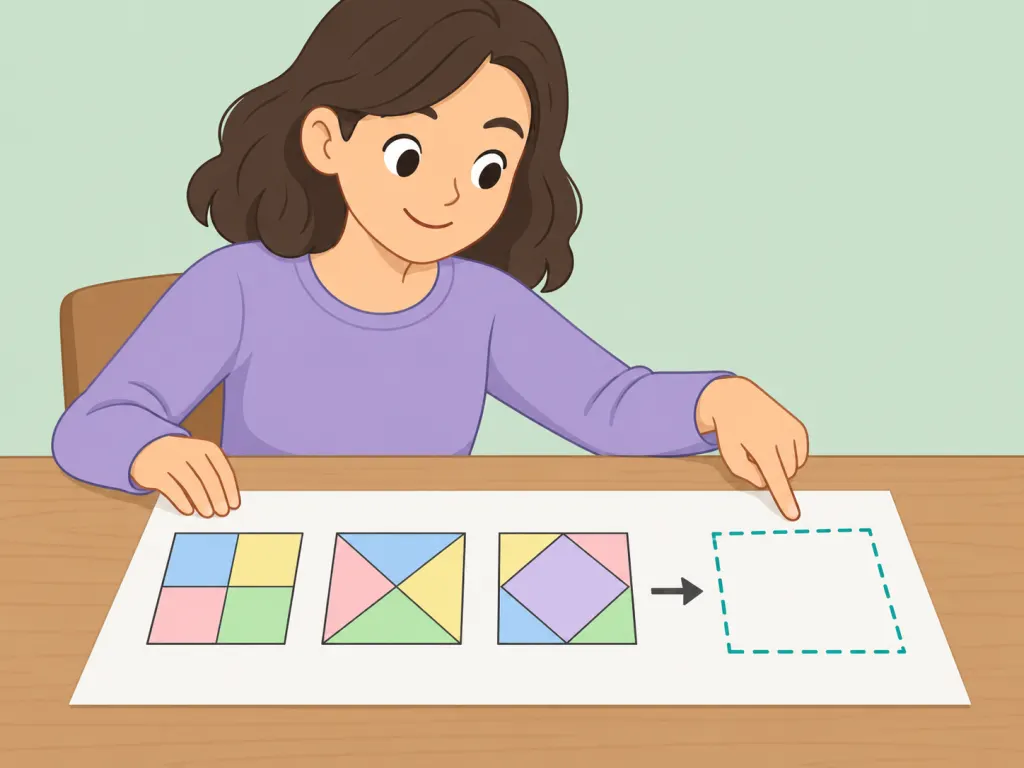
Write the perimeters as 8 m, 12 m, and 16 m for the square areas 4 m², 9 m², and 16 m². If the challenge asks for the combined perimeter of all three separate squares, add 8 + 12 + 16 to get 36 m.
Wrap-Up
The bottom line: assuming the regions are squares, convert each area to a side length with a square root, then multiply by 4. The three perimeters are 8 m, 12 m, and 16 m, with a combined total of 36 m if the problem asks for all three together.
Frequently Asked Questions
- → What is the answer to the 4 m², 9 m², and 16 m² square perimeter challenge?
If each area is a square, the perimeters are 8 m, 12 m, and 16 m. If the problem asks for the total perimeter of the three separate squares, the total is 36 m.
- → Why do you take the square root of the area?
A square's area is one side multiplied by itself. Taking the square root reverses that operation and gives the length of one side.
- → Can you always find perimeter from area alone?
No. Area alone usually does not determine one exact perimeter because different shapes can have the same area and different boundaries. This challenge works cleanly only when the areas are treated as squares.
- → Why are the answers in meters instead of square meters?
Area measures surface and uses square units such as m². Perimeter measures distance around the edge, so the answer uses linear units such as meters.
- → What is the shortcut formula for a square's perimeter from its area?
For a square with area A, the side length is √A and the perimeter is 4√A. Use the same length unit that matches the square-area unit.
- → What if the three areas are not squares?
Then the problem needs more information, such as side lengths, a diagram, or a stated shape. Without that, there is no single exact perimeter.