 Save
The way you carry your phone may reveal less about your fixed personality and more about your routines: how quickly you want access, how you manage privacy, whether notifications pull at your attention, and how clearly you separate rest, work, driving, and social time. Research on smartphone behavior does show that phone activity can be linked with broad patterns such as sociability, context, and sleep timing, but a single habit like keeping a phone in your hand or bag is too thin to judge someone by. Treat phone placement as a small clue, not a verdict.
A Habit Is A Clue, Not A Character Reading
It is tempting to turn phone placement into a tidy personality quiz: in the hand means urgency, in the pocket means practicality, in the bag means caution, and on the nightstand means attachment. Real life is messier. A parent waiting for a school call, a contractor moving between job sites, a student commuting, and a person using a phone for glucose monitoring, translation, maps, or work authentication may all keep the device close for different reasons. The same behavior can come from convenience, caregiving, safety planning, job pressure, habit, or simple pocket design.
The strongest research does not say that one visible carrying style proves a trait. It says that many streams of smartphone behavior, studied together, can sometimes predict broad tendencies. A 2023 meta-analysis found small-to-moderate associations between smartphone activity data and Big Five traits, with extraversion showing the largest association and other traits showing smaller ones https://pubmed.ncbi.nlm.nih.gov/36738137/. That matters because it pushes the conversation away from folk labels and toward patterns: frequency, timing, context, app use, communication, and mobility together say more than whether a phone is in a front pocket.
The Hand-Carried Phone Often Means Readiness
Keeping a phone in your hand can signal readiness. Sometimes that readiness is practical: you are navigating a new neighborhood, waiting for a pickup, checking a grocery list, scanning a ticket, or expecting an urgent message. It can also reflect a fast-response culture. If the phone stays in your palm even when there is no task, the habit may be worth noticing because the device is available to interrupt any quiet gap.
Researchers at the University of Washington interviewed smartphone users about habitual checking and found that people often described specific triggers that started and ended unwanted phone use https://www.washington.edu/news/2019/04/29/patterns-of-compulsive-smartphone-use/. That finding is useful because it frames the issue as a loop rather than a flaw. The phone in the hand can make the loop shorter: notification, glance, app, another app, then a few extra minutes that were never planned.
- If the phone is in your hand for a task, name the task before unlocking it.
- If it is in your hand because silence feels uncomfortable, try placing it face down and out of reach for one short activity.
- If you need fast access, reduce lock-screen previews so readiness does not become accidental exposure.
- If you are with someone, decide whether the phone is a tool for the moment or a third presence in the conversation.

The Pocket Or Belt Clip Is Usually About Speed
A phone in a front pocket, jacket pocket, or belt clip often says, I need this nearby and I need both hands free. That may be the most ordinary carrying style because it balances access with mobility. It can fit a person who values efficiency, but it can also fit someone who has no bag, moves through secure entry points, uses the phone for payments, or worries about leaving it behind.
Pockets also change privacy. A locked phone in a pocket is less visible than one lying face up on a counter, but the protection depends on the settings. The Federal Trade Commission notes that a phone can hold passwords, account numbers, messages, photos, and other sensitive information, and recommends locking the phone, keeping software updated, backing up data, and enabling tools that help find or secure a lost device https://consumer.ftc.gov/articles/how-protect-your-phone-hackers. A pocket habit works best when paired with a strong screen lock and limited notification previews.
The Bag Habit Can Mean Boundaries, Not Distance
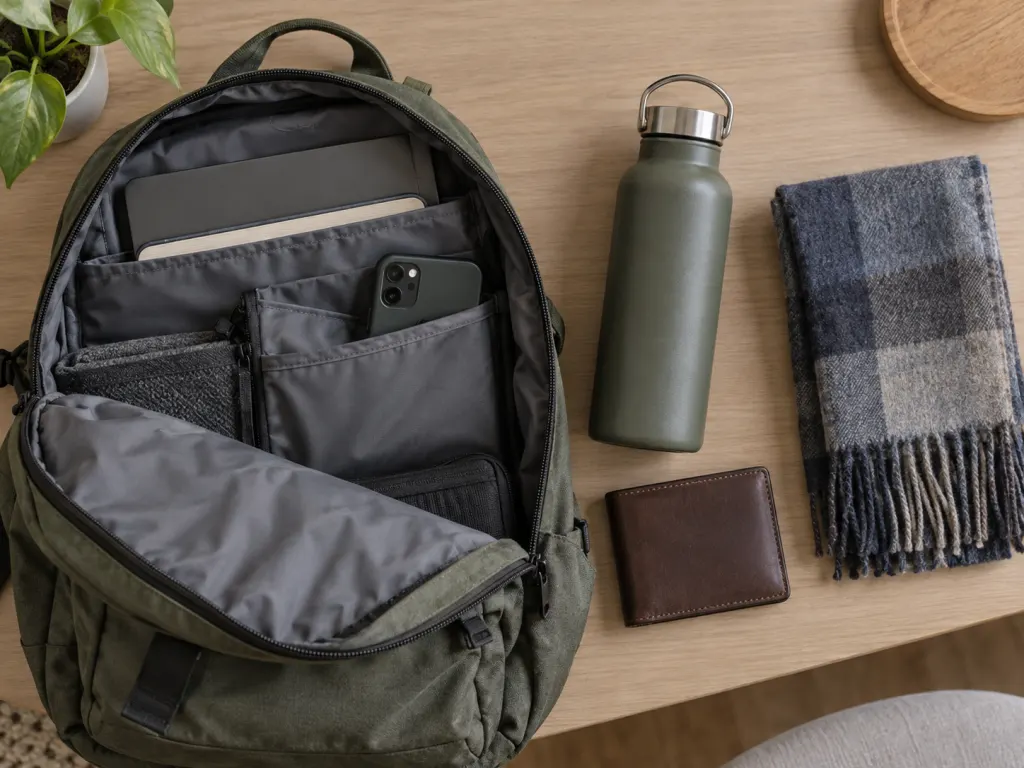
Putting the phone in a purse, backpack, tote, or work bag can create a little friction. That friction may be intentional: fewer reflexive checks, less visible distraction, more protection from drops, or a clearer line between the person and the device. It can also be practical. Larger phones may not fit pockets, some clothing has no secure pocket, and some people carry medical, caregiving, or work items together so the phone belongs with the rest of the daily kit.
From a privacy angle, the bag habit has a tradeoff. It can keep the screen away from passing eyes, but it may also make a phone easier to leave behind in a restaurant, rideshare, classroom, or office. The National Institute of Standards and Technology describes lock-screen notification exposure as a real security concern because sensitive information may appear even when a device is locked https://pages.nist.gov/mobile-threat-catalogue/authentication-threats/AUT-1.html. If your phone spends time in a shared space, consider showing notification icons only, hiding message previews, and using find-my-device features.
The Nightstand Habit Deserves The Most Reflection
A phone on the nightstand is common because phones are alarms, clocks, baby monitors, emergency lines, weather radios, and books. Still, bedtime placement is one of the habits most worth examining. The issue is not moral weakness; it is design. A device built for alerts, feeds, messages, and novelty is sitting within reach at the exact time the brain is trying to downshift.
The Centers for Disease Control and Prevention says good sleep is important for health and emotional well-being, and lists turning off electronic devices at least 30 minutes before bedtime among sleep-supporting habits https://www.cdc.gov/sleep/about/index.html. That does not mean every person needs the same nighttime rule. It does mean the nightstand is a useful test: if the phone is there for the alarm, a cheap alarm clock might do that job with fewer invitations. If it is there for emergencies, quieting nonessential alerts can preserve the useful reason while reducing the noise.
Phone Behavior Changes With Context
Context is one reason simple personality readings fail. A Stanford Media and Personality Lab summary of a 2023 study reported that smartphone use differed by places, people, activities, and situations; phones were used more frequently in public places and with weaker social ties, and less in some close-social or focused contexts https://maplab.stanford.edu/publications/smartphone/situating-smartphones-daily-life-big-five-traits-and-contexts-associated. That sounds intuitive, but it is easy to forget when judging ourselves or others. The same person may keep the phone out at a train station, tucked away at dinner, visible during a work shift, and silent during a walk.
A better question is whether the placement matches the context. During focused work, a phone across the room may protect attention. During travel, a phone in a secure pocket may make maps and boarding passes easier. During a vulnerable commute, quick access may feel reassuring. During a meal with someone you care about, a phone in a bag may communicate presence. The habit reveals what the moment is asking from you and what you are asking from the device.

Safety Changes The Meaning Of Close Access
There are moments when phone access is not just a preference. If you are walking alone at night, caring for someone, managing transportation, or expecting time-sensitive family news, keeping a phone close can support coordination. But close access has limits in moving vehicles. The CDC explains that distracted driving can be visual, manual, or cognitive, and that texting, talking on a phone, and using navigation are examples of distractions while driving https://www.cdc.gov/distracted-driving/about/index.html. In the car, the best phone placement is the one that supports driving attention: set navigation before moving, silence nonessential alerts, and avoid handling the device while driving.
Some phone placement questions are also specific to medical devices. The FDA says it shares oversight responsibilities for cell phones with the FCC and notes that the weight of scientific evidence has not linked cell phone radiofrequency radiation with health problems for the general public https://www.fda.gov/radiation-emitting-products/home-business-and-entertainment-products/cell-phones. The same FDA page also points to special guidance for implanted medical devices, so people with those devices should follow the instructions they received from their care team or device manufacturer. For everyone else, the bigger everyday issues are usually attention, privacy, sleep routines, and safe use in motion.
How To Read Your Own Pattern Without Overreacting
Try observing your phone placement for two ordinary days without trying to fix anything. Notice where the phone is during meals, errands, work, rest, commuting, exercise, and conversations. Then write down what each placement seems to protect. A phone in the hand may protect responsiveness. A phone in the pocket may protect efficiency. A phone in the bag may protect attention. A phone on the nightstand may protect convenience, reassurance, or habit. None of those motives is automatically good or bad.
After that, choose one small adjustment tied to one context. You might keep the phone in another room for a 30-minute dinner, set bedtime charging outside arm's reach, hide lock-screen message previews, or create a driving mode that limits alerts. Small changes are easier to keep because they respect the useful jobs your phone already does. The goal is not to become a person who never checks a phone. The goal is to make phone placement serve your real priorities instead of letting the easiest reach decide for you.
Wrap-Up
Phone-carrying habits can reveal everyday priorities: access, privacy, readiness, boundaries, safety, and rest. A hand-held phone may reflect immediate tasks or frequent checking; a pocket may reflect efficiency; a bag may create helpful distance; and a nightstand may mix convenience with sleep disruption. The fairest interpretation is contextual. Look for repeated patterns, then adjust one setting or placement so your phone supports the life in front of you.
Frequently Asked Questions
- → Can the way I carry my phone prove my personality type?
No. A visible carrying habit is only a small clue. Research suggests broader smartphone activity patterns can have small-to-moderate links with some personality traits, but one habit cannot define a person.
- → Is keeping my phone in my hand always a bad sign?
No. It may simply mean you are navigating, waiting for a message, paying for something, or managing a task. It becomes worth reviewing if the phone keeps interrupting quiet, work, driving, sleep, or face-to-face time.
- → What is the most useful phone habit to change first?
Choose the context that bothers you most. Many people start with bedtime, lock-screen privacy, mealtimes, or driving. A small change, such as hiding message previews or charging the phone farther away, is often more realistic than a full digital reset.
- → Does putting my phone in a bag mean I have better boundaries?
Sometimes, but not always. A bag can reduce reflexive checking and screen visibility, yet it may also be chosen because of clothing, phone size, work needs, or convenience. The meaning depends on the situation.
- → Should I worry about phone radiofrequency exposure from pockets?
For the general public, the FDA says the weight of scientific evidence has not linked cell phone radiofrequency radiation with health problems. People with implanted medical devices should follow guidance from their doctor, device maker, or care team.
References
This content was developed and refined using reliable sources.
- https://pubmed.ncbi.nlm.nih.gov/36738137
- https://www.washington.edu/news/2019/04/29/patterns-of-compulsive-smartphone-use
- https://consumer.ftc.gov/articles/how-protect-your-phone-hackers
- https://pages.nist.gov/mobile-threat-catalogue/authentication-threats/AUT-1.html
- https://www.cdc.gov/sleep/about/index.html
- https://maplab.stanford.edu/publications/smartphone/situating-smartphones-daily-life-big-five-traits-and-contexts-associated
- https://www.cdc.gov/distracted-driving/about/index.html
- https://www.fda.gov/radiation-emitting-products/home-business-and-entertainment-products/cell-phones