 Save
A three-day beet, ginger, and lemon drink is best understood as a short kitchen experiment: it can help you see whether you enjoy a vegetable-forward beverage, whether it fits your morning routine, and whether you prefer it blended, strained, tart, or lightly sweet. It should not be treated as a rapid body reset or a test of personal health. The strongest evidence-based framing is simple: vegetables and fruits contribute vitamins, minerals, fiber, water, flavor, and variety, and public health guidance consistently places them inside a broad, balanced eating pattern. The World Health Organization describes variety, balance, adequacy, and moderation as core principles of healthy diets, while the Dietary Guidelines for Americans emphasize nutrient-dense foods across food groups.
What This Drink Is Actually For
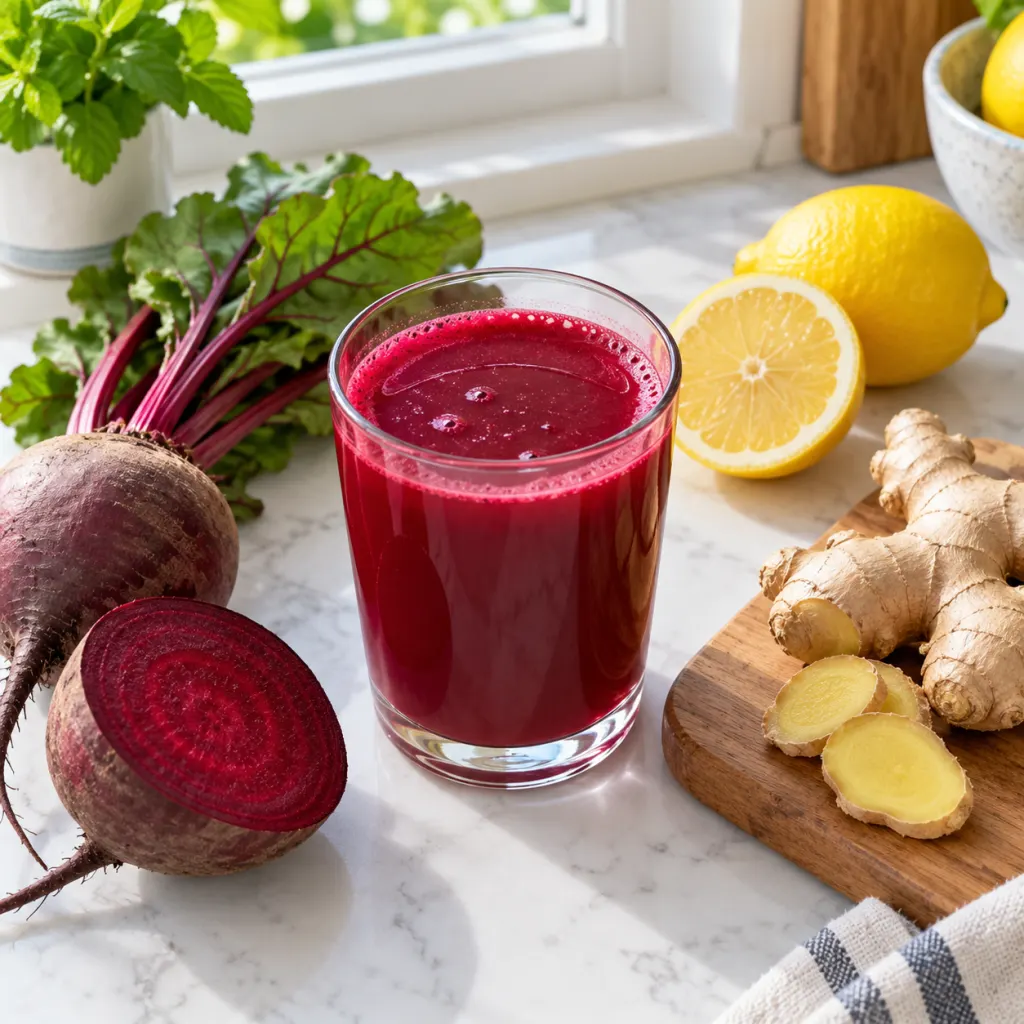
The appeal of a beet, ginger, and lemon drink is easy to understand. Beetroot brings deep color and an earthy sweetness, ginger adds heat and aroma, and lemon sharpens the whole glass. Together they make a drink that feels more deliberate than plain juice but less complicated than a full smoothie bowl. The useful goal is not to chase a promised result in three days. The useful goal is to build a repeatable habit around produce: buy it, wash it, blend it, taste it, and notice whether it helps you choose a more balanced breakfast or snack.
A Simple Composition, Not a Magic Formula
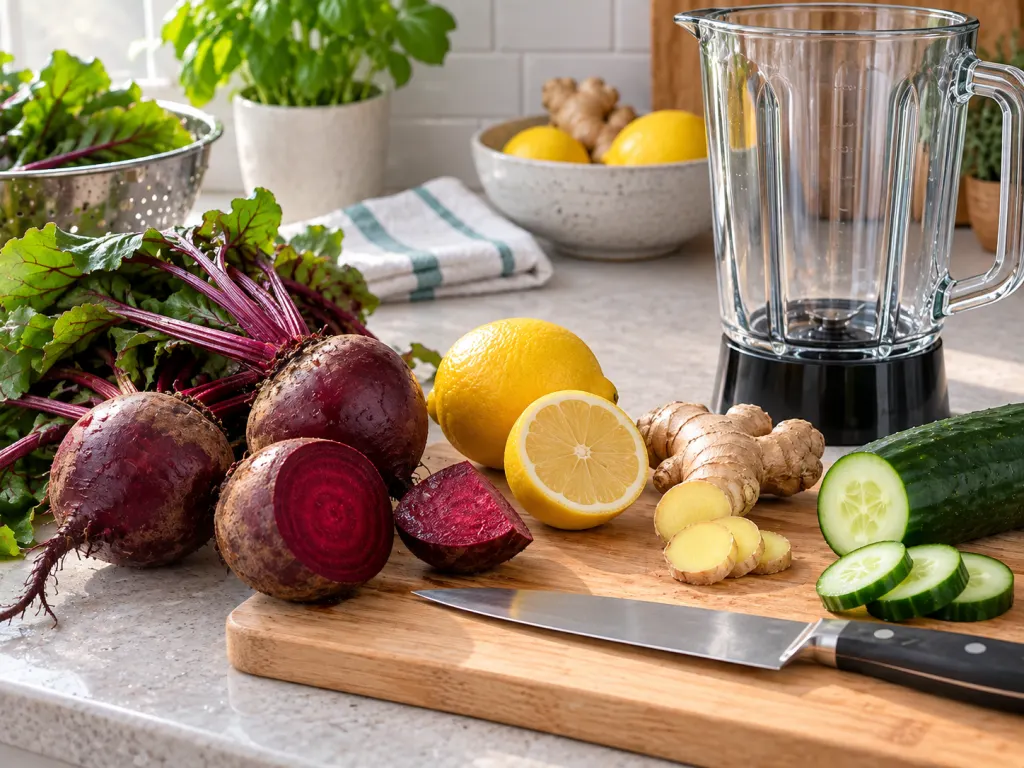
A practical version starts with cooked or raw beetroot, a small piece of fresh ginger, lemon juice, cold water, and optional sweetness. Blending the beet with water keeps more body in the drink than straining it into a clear juice. If the texture feels too thick, add more water or pour it through a fine sieve. If the flavor is too earthy, lemon, orange, cucumber, mint, or a little plain yogurt can make it gentler. This is kitchen adjustment, not a wellness challenge. The drink earns its place if it is enjoyable enough to repeat and easy enough to prepare without turning the morning into a project.
Why Beetroot Gets So Much Attention
Beetroot is a root vegetable with a naturally vivid pigment and a sweet, mineral flavor. Scientific interest in beets often centers on their plant compounds and naturally occurring nitrate content, but home cooks do not need to turn the ingredient into a supplement. A better everyday lens is culinary: beetroot is affordable in many markets, works raw or cooked, blends well with citrus, and gives a glass enough body to feel substantial. Because vegetables differ by variety, growing conditions, storage, and preparation, no homemade glass has a standardized nutrient profile. That variability is one reason this article keeps the focus on food pattern and preparation instead of making specific promises.
- For a smoother drink: use cooked beetroot, chilled water, and a high-speed blender.
- For a brighter drink: use more lemon juice or part orange juice, keeping added sweeteners modest.
- For a lighter drink: add cucumber or extra water and serve over ice.
- For more body: blend rather than strain, and pair the glass with a balanced meal.
What Ginger Adds Beyond Heat
Fresh ginger is the warming note in this drink. The National Center for Complementary and Integrative Health notes that ginger is the rhizome of Zingiber officinale and is used both as food and in health-related products. For a kitchen drink, the most reliable reason to use it is flavor: a small piece can make beetroot taste fresher and less flat. Ginger can also be strong, especially when blended raw. Start with a thin slice, taste, and add more only if you like the bite. Ground ginger can work in a pinch, but fresh ginger gives a cleaner aroma and blends more naturally into citrus and vegetable drinks.
What Lemon Contributes
Lemon juice does two practical things. First, it balances beetroot's sweetness and earthy flavor. Second, it contributes vitamin C, a nutrient found in fruits and vegetables. The NIH Office of Dietary Supplements explains that vitamin C is water-soluble and participates in collagen formation, antioxidant activity, and immune function as part of normal nutrition; it also lists citrus fruits and juices among familiar food sources (NIH ODS). In this drink, lemon should be treated as a bright culinary ingredient, not as a concentrated health shortcut. A squeeze is often enough; too much can make the drink harsh or hard on the palate.
The Three-Day Frame: A Better Way to Use It
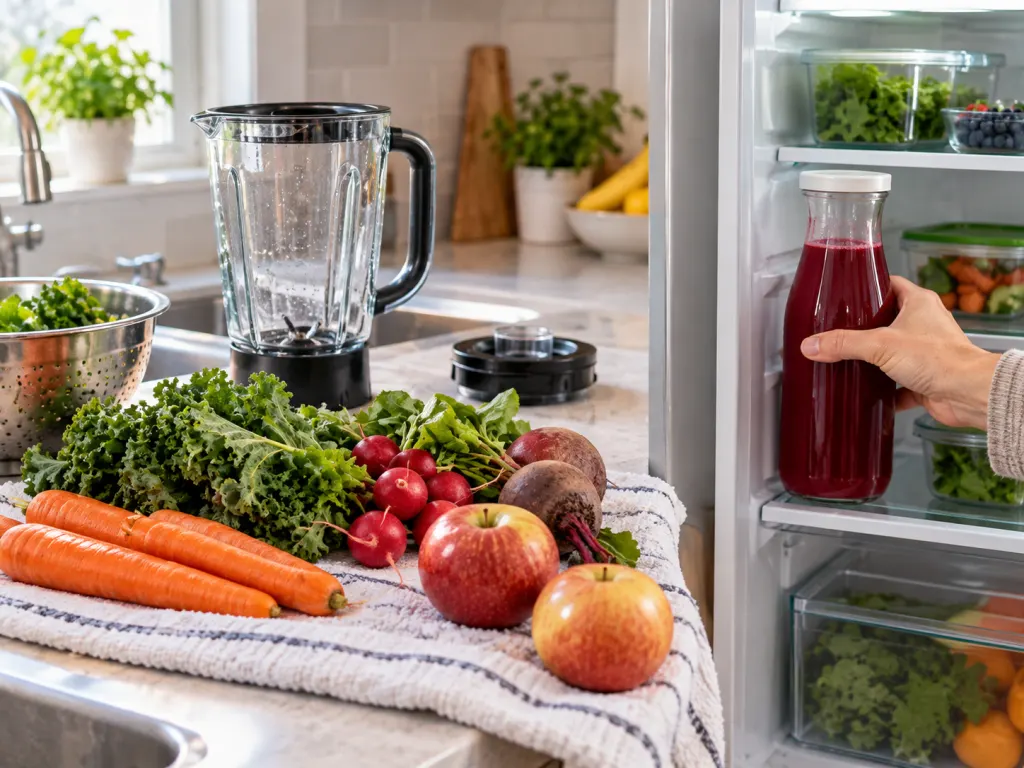
Three days is a reasonable tasting window. It is long enough to find out whether the drink fits your shopping, prep time, digestion, and flavor preferences, and short enough that you are not forcing a routine you dislike. Day one can be the basic beet, ginger, lemon, and water blend. Day two can test texture by adding more water, ice, cucumber, or a small amount of orange juice. Day three can test timing: with breakfast, as an afternoon drink, or alongside a meal. If the drink makes ordinary meals more satisfying and helps you include produce more often, that is a meaningful kitchen win. If it feels like a chore, choose another fruit or vegetable habit.
How to Keep Added Sweetness in Check
Many beet drink recipes add honey, syrup, or fruit juice to soften the flavor. That can be pleasant, but sweetness should stay intentional. WHO guidance notes that free sugars include sugars added by the cook as well as sugars naturally present in honey, syrups, and fruit juices (WHO). For this drink, try flavor balancing before sweetening: add lemon, dilute with cold water, include cucumber, or use cooked beetroot for a softer taste. If you still want sweetness, use a small amount and make the choice for flavor, not because the drink needs to taste like dessert.
Blended Versus Juiced
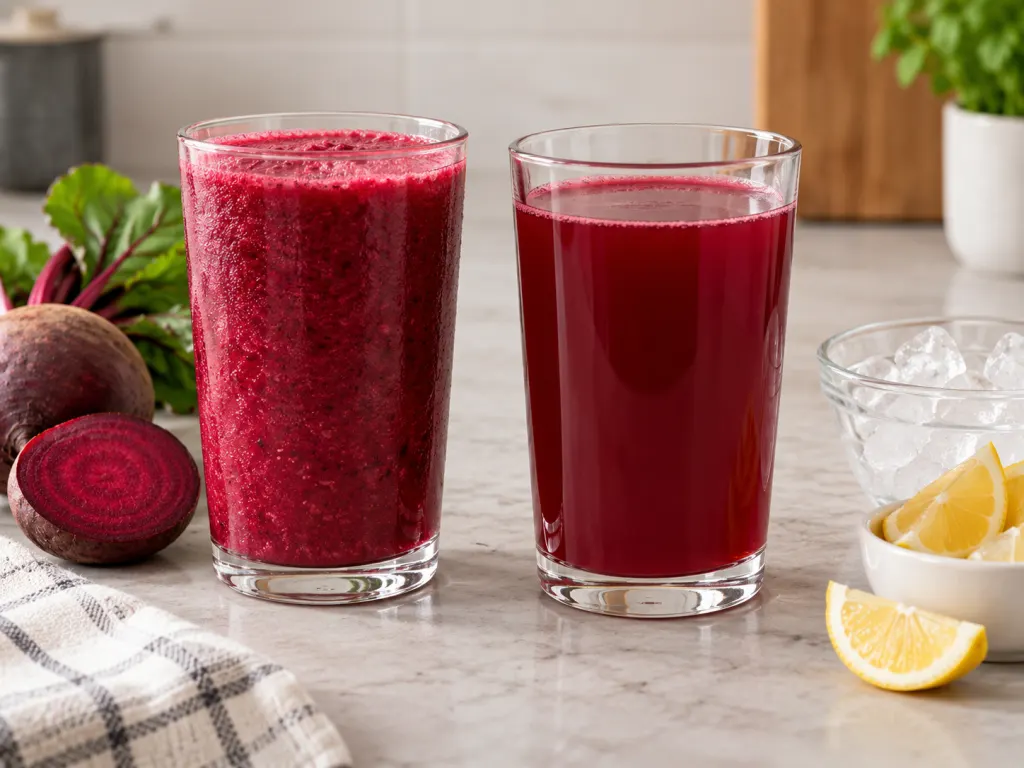
A blended drink and a strained juice are not the same experience. Blending whole produce keeps more of the ingredient in the glass, which usually means more body and a thicker texture. Straining makes the drink smoother and lighter, but it leaves some plant material behind. MedlinePlus describes dietary fiber as a substance in plants and lists fruits and vegetables among good sources (MedlinePlus). If you are trying to make the drink feel more like a snack, blending is the more satisfying route. If you want a refreshing beverage with a cleaner finish, straining may be more enjoyable. Either way, the drink should complement meals rather than crowd out food variety.
Food Safety Matters With Fresh Produce
Because this drink uses produce that may be raw or lightly handled, safety is part of the recipe even in an editorial guide. The FDA advises washing produce under running water before preparing it, cutting away damaged areas, keeping produce separate from raw meat, poultry, and seafood, and refrigerating perishable produce at 40 degrees F or below (FDA). Wash beets, lemons, cucumber, celery, carrots, and any herbs before cutting, even if you will peel them. Use clean knives, cutting boards, blender jars, and lids. If you prepare the drink ahead, refrigerate it promptly in a covered container and discard it if the smell, texture, or appearance seems off.
Who Should Be More Cautious
Most food articles can stay focused on taste, but wellness drinks invite personal-health questions. Be extra cautious if you have a condition that requires individualized nutrition guidance, if you have been told to follow a specialized eating plan, if you are preparing drinks for young children, older adults, or someone with limited immune function, or if raw produce has caused problems for you before. That does not make beet, ginger, or lemon unusual; it simply means one-size-fits-all advice is the wrong tool. A qualified health professional or registered dietitian can help place drinks like this inside your overall needs, food preferences, and usual meals.
How to Make It Taste Good Enough to Repeat
The best wellness habit is often the one that tastes good and does not ask for too much drama. Chill the beet before blending. Peel ginger with the edge of a spoon. Use lemon zest only if the lemon is well washed and you enjoy a slightly bitter citrus edge. Add water gradually so the drink does not become too thin. If the color stains your cutting board, rinse promptly and use a little baking soda paste during cleanup. Serve in a glass you enjoy, but skip the performance of forcing it down. The drink should feel like a small act of care in the kitchen, not a test of willpower.
Wrap-Up
A three-day beet, ginger, and lemon drink routine can be a useful way to test a produce-forward beverage without turning it into a promise. Beets give color and body, ginger gives warmth, and lemon gives brightness and vitamin C as part of ordinary food. The most evidence-aligned approach is to keep the drink within a varied eating pattern, avoid turning it into a short-term health scorecard, handle fresh produce safely, and adjust texture and sweetness so the habit feels realistic. If it helps you enjoy more vegetables and fruit, keep it in rotation. If not, the same goal can be met with salads, soups, smoothies, roasted vegetables, or other meals you genuinely like.
Frequently Asked Questions
- → Is a three-day beet, ginger, and lemon drink routine enough to judge results?
Three days is enough to judge practical things: flavor, prep time, texture, cost, and whether the drink fits your meals. It is not a reliable way to evaluate personal health changes. Use the short routine as a tasting window, then decide whether the drink is worth keeping as one small kitchen habit.
- → Should I blend or strain the drink?
Blend it if you want a thicker drink with more of the beet left in the glass. Strain it if you prefer a smoother, lighter beverage. If you are new to beet drinks, cooked beetroot plus cold water usually creates the gentlest texture and flavor.
- → Can I add honey or orange juice?
Yes, but add sweetness for flavor and keep it modest. Lemon, cucumber, mint, extra water, and ice can balance beetroot before you reach for sweeteners. Orange juice gives a brighter flavor, but it also makes the drink sweeter than water.
- → How long can I keep a homemade beet drink in the refrigerator?
Freshly blended drinks are best soon after preparation. If you make one ahead, refrigerate it promptly in a clean, covered container and keep your refrigerator cold. Discard the drink if it looks, smells, or tastes unusual.
- → What is the simplest version to try first?
Blend cooked beetroot, a thin slice of fresh ginger, lemon juice, and cold water until smooth. Taste before adding anything else. From there, adjust with more water for lightness, more lemon for brightness, or cucumber for a cooler flavor.
References
This content was developed and refined using reliable sources.
- https://www.who.int/news-room/fact-sheets/detail/healthy-diet
- https://odphp.health.gov/our-work/nutrition-physical-activity/dietary-guidelines
- https://www.nccih.nih.gov/health/ginger
- https://ods.od.nih.gov/factsheets/VitaminC-HealthProfessional
- https://www.medlineplus.gov/dietaryfiber.html
- https://www.fda.gov/food/buy-store-serve-safe-food/selecting-and-serving-produce-safely