 Save
When you eat cabbage regularly, the most realistic change is not dramatic: you are adding more vegetable volume, fiber, vitamin C, vitamin K, water, and plant compounds to ordinary meals. A cup of raw chopped cabbage is light but bulky, so it can make plates feel more satisfying without making the meal heavy. For some people, a sudden jump in cabbage, especially raw cabbage, also means more gas or bloating. The best way to use cabbage is steady and flexible: raw for crunch, cooked for softness, and fermented when you enjoy the flavor and can choose products that fit your sodium and digestive needs.
Cabbage Is Simple, But Its Nutrition Is Real
Cabbage belongs to the Brassica family, the same broad vegetable group as broccoli, kale, cauliflower, bok choy, and Brussels sprouts. It is not a complete meal by itself, and it should not be treated as a special shortcut. Its value is more practical: it is affordable, stores well, and can help people eat vegetables more often. USDA FoodData Central lists raw cabbage as mostly water, with about 25 calories, 2.5 grams of fiber, 36.6 milligrams of vitamin C, 43 micrograms of folate, and 76 micrograms of vitamin K per 100 grams USDA FoodData Central. Those numbers explain why cabbage can be both light and useful in everyday cooking.
Regular cabbage eating works best when it is part of a varied pattern. Harvard T.H. Chan School of Public Health notes that vegetables and fruits are important in a healthy diet and that no single vegetable supplies everything the body needs Harvard Nutrition Source. That matters because cabbage is strong in some areas and modest in others. It can add crunch and micronutrients, but it does not replace beans, whole grains, protein foods, fruit, nuts, dairy or fortified alternatives, or other vegetables with different colors and nutrient profiles.
The First Thing You May Notice Is More Meal Volume
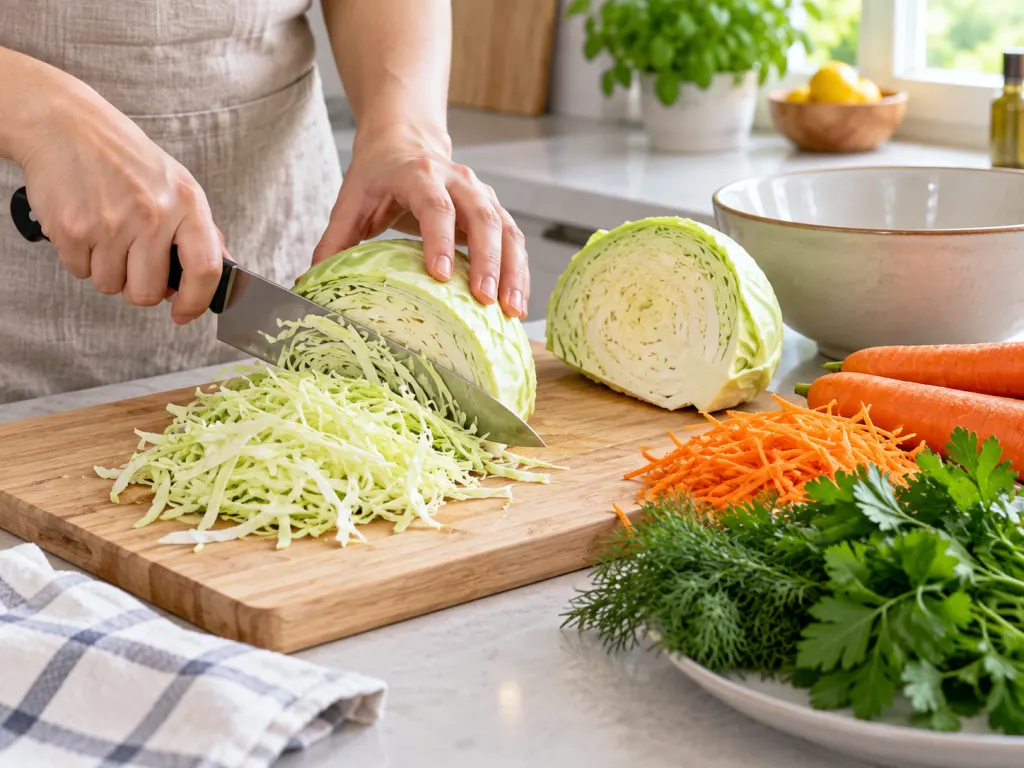
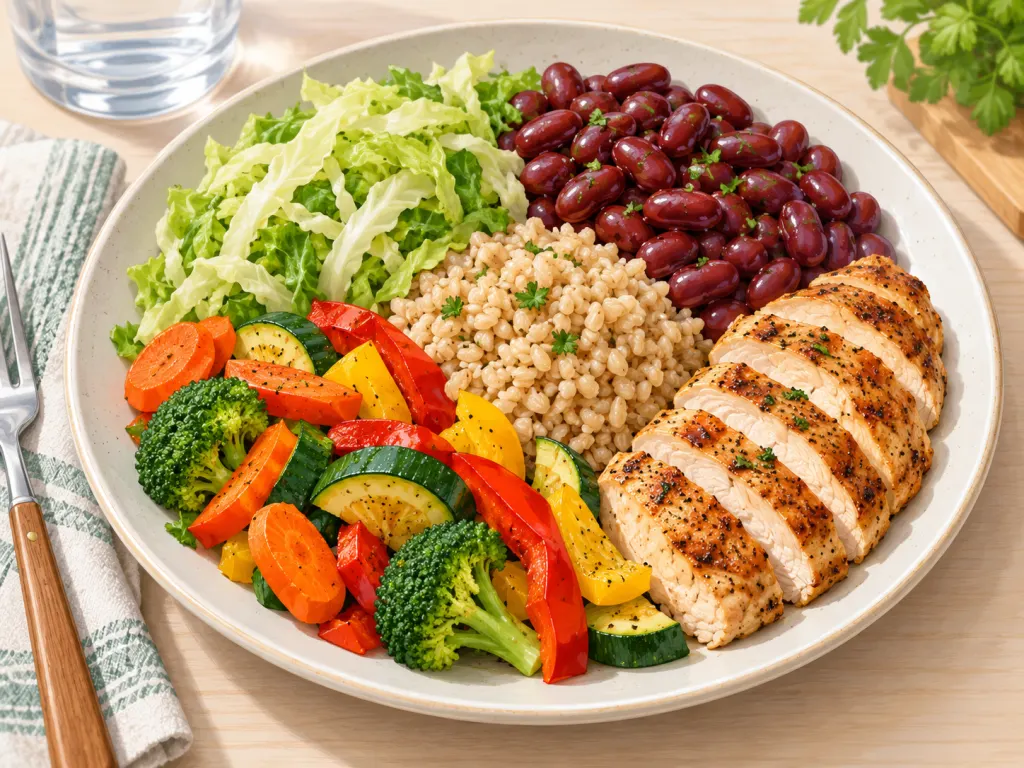
Cabbage has a lot of water and structure, which means it takes up space on the plate. Shredded raw cabbage can stretch a salad, slaw, taco bowl, sandwich, or grain bowl. Cooked cabbage softens and shrinks, but it still adds body to soups, stews, skillet meals, and braises. This is one of the most useful everyday effects of eating it regularly: meals may feel more generous, especially when cabbage replaces a smaller amount of richer add-ins rather than simply being piled on top of an already full meal.
Fiber Can Help Digestion, But Increase It Gently
Cabbage contributes dietary fiber, the plant carbohydrate that adds bulk to meals. MedlinePlus explains that dietary fiber comes from plant foods, helps digestion, and can help people feel full faster; it also cautions that increasing fiber too quickly can lead to gas, bloating, and cramps MedlinePlus. That is why regular cabbage feels good for some people and uncomfortable for others. If your meals have been low in vegetables, start with a small cooked portion a few times a week, then build from there. Cooking cabbage often makes it gentler because the leaves soften and lose some of their raw bite.
A practical serving does not have to be large. A handful of shredded cabbage in a wrap, a scoop in soup, or a wedge roasted with dinner can be enough to make the habit sustainable. People who already eat plenty of beans, whole grains, fruit, and vegetables may tolerate larger portions easily. People with sensitive digestion may do better with smaller amounts, cooked preparations, and a slower pace. Regularity matters more than oversized servings.
Vitamin C Supports Normal Body Functions
Cabbage is one everyday source of vitamin C. The NIH Office of Dietary Supplements describes vitamin C as a water-soluble nutrient that acts as an antioxidant, helps the body make collagen, supports iron absorption from plant foods, and helps immune function work normally NIH Office of Dietary Supplements. In kitchen terms, cabbage pairs well with iron-containing plant foods such as lentils, beans, and whole grains. A cabbage slaw beside bean chili or cabbage in a lentil soup is not a medical strategy; it is simply a sensible food pairing.
Vitamin K Is Another Reason To Keep the Habit Consistent
Raw cabbage also contains vitamin K. The NIH Office of Dietary Supplements states that vitamin K is important for normal blood clotting and healthy bones NIH Office of Dietary Supplements. For most healthy adults, that is a normal benefit of eating green vegetables. If a health professional has told you to keep vitamin K intake steady, the key is consistency rather than sudden swings. In that situation, changing from little cabbage to large daily portions is something to discuss with the professional who knows your care plan.
Fermented Cabbage Is Different From Fresh Cabbage
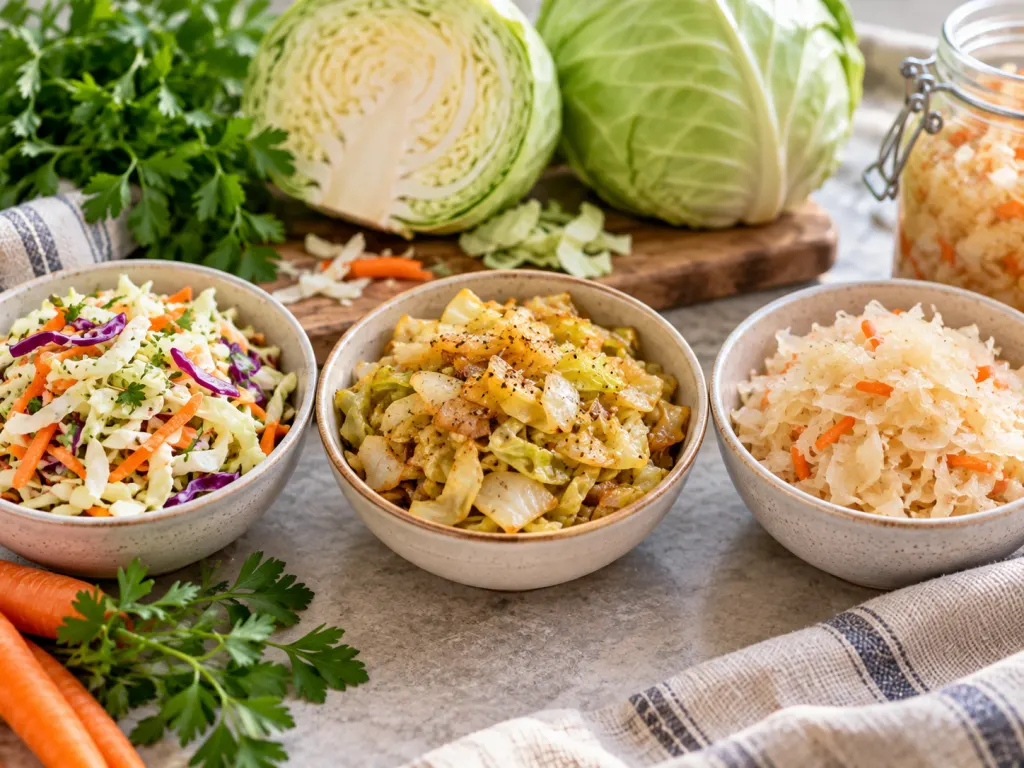
Sauerkraut and kimchi start with cabbage, but fermentation changes the food. Fermented cabbage can be tangy, salty, and easier to use in small amounts as a condiment. Some fermented foods contain live microorganisms, but processing, heat, storage, and labeling affect what is present by the time you eat them. The NIH Office of Dietary Supplements notes that fermented foods such as kimchi and sauerkraut are made with microorganisms, yet not every fermented food necessarily contains probiotics with proven health benefits NIH Office of Dietary Supplements. NCCIH also explains that probiotic effects differ by organism and product, so broad promises are not useful NCCIH.
Fermented cabbage also tends to be salty. That does not make it off-limits for everyone, but it does mean the portion size is usually smaller than fresh cabbage. Think of sauerkraut or kimchi as a bright accent: a spoonful with eggs, a little beside roasted potatoes, a topping for a rice bowl, or a tangy layer in a sandwich. If you want live cultures, look for products that are refrigerated and labeled accordingly, and avoid heating them hard before serving because heat can reduce live microorganisms.
Raw, Cooked, Red, Green, Napa, and Savoy All Count
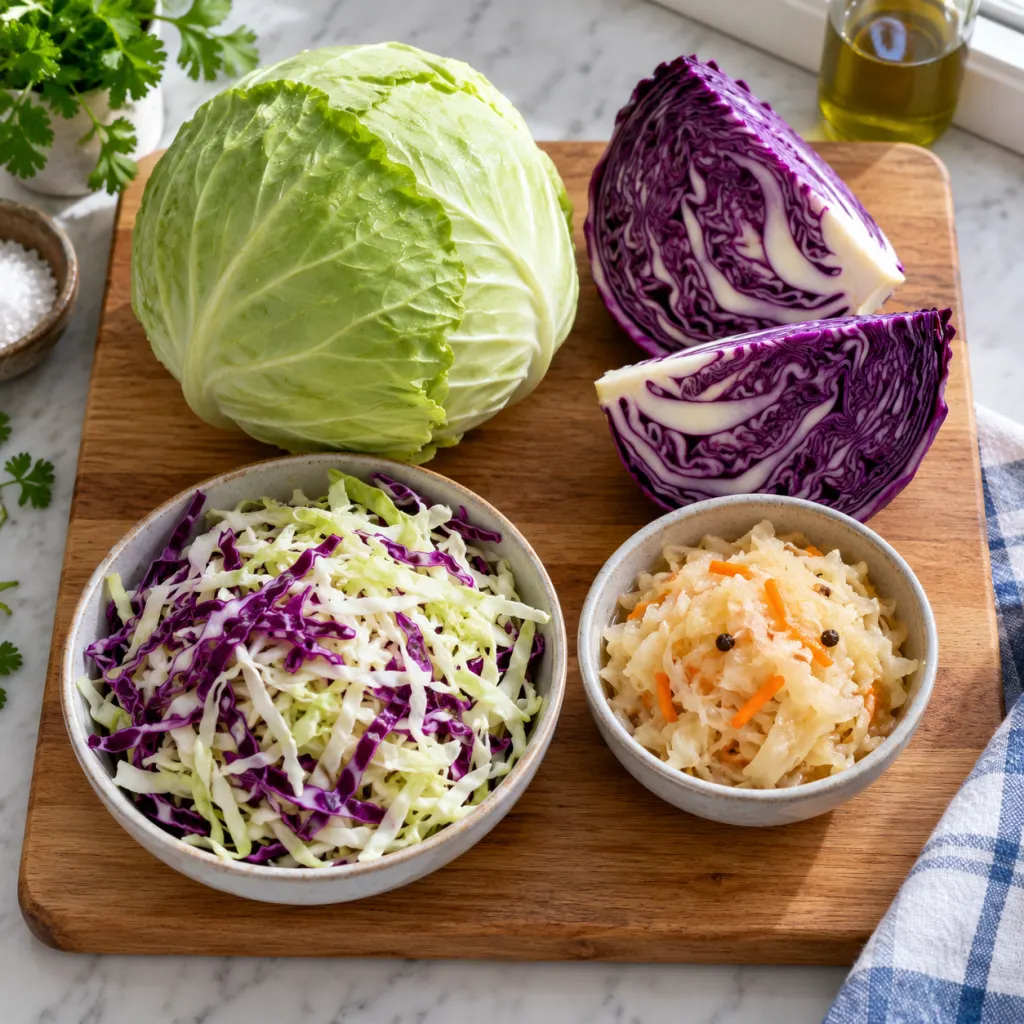
Different cabbages bring different textures. Green cabbage is sturdy and familiar, good for slaws, skillet meals, soups, and roasting. Red cabbage has a deeper color and holds its crunch well in salads and quick pickles. Napa cabbage is softer and more delicate, useful for stir-fries, soups, and fermented preparations. Savoy cabbage has crinkled leaves that cook tenderly and wrap around fillings well. Rotating types helps keep the habit from feeling repetitive and gives you a wider range of colors and plant compounds.
Cooking changes both flavor and texture. Raw cabbage is crisp and peppery. Sauteed cabbage becomes sweet and silky. Roasted cabbage wedges develop browned edges. Simmered cabbage turns mild and soft. If you dislike one version, try another before deciding cabbage is not for you. Many people who avoid raw cabbage enjoy it cooked with onions, garlic, olive oil, vinegar, apple, mustard, caraway, ginger, or a small amount of broth.
Easy Ways To Eat Cabbage Regularly Without Getting Bored
The easiest routine is to prep cabbage once and use it several ways. A head of cabbage can sit in the refrigerator longer than many tender greens, and it can be cut as needed. Keep one half for raw uses and cook the other half later in the week. These ideas keep cabbage useful without turning it into a strict plan:
- Shred green or red cabbage for tacos, grain bowls, sandwiches, or simple slaw.
- Add chopped cabbage to vegetable soup during the last part of cooking for a softer bite.
- Roast thick wedges with olive oil, pepper, and a splash of vinegar after cooking.
- Stir-fry napa cabbage quickly with ginger, garlic, and a protein food.
- Use a small spoonful of sauerkraut or kimchi as a tangy topping rather than a large side.
- Mix cabbage with carrots, herbs, and citrus for a crisp make-ahead salad.
When Regular Cabbage May Need Personal Adjustment
Cabbage is a good fit for many households, but not every body responds the same way. Raw cabbage can feel gassy because it contains fiber and fermentable carbohydrates. Large portions may be uncomfortable if your usual diet is low in fiber. Fermented cabbage can be too salty or too sharp for some people. People following a clinician-guided nutrition plan, people with persistent digestive symptoms, and people who have been asked to keep certain nutrients steady should personalize cabbage with professional guidance rather than relying on general food advice.
There is also a difference between regular and excessive. Eating cabbage several times a week as part of varied meals is very different from eating large bowls daily while crowding out other foods. A balanced plate still needs protein, fats, starches or grains if they suit you, and other produce. Cabbage is best used as one dependable vegetable in a rotation, not as the whole rotation.
The Bottom Line
Eating cabbage regularly can be a practical way to add vegetables, fiber, vitamin C, vitamin K, water, crunch, and variety to meals. The changes you notice are likely to be ordinary ones: fuller plates, more flexible cooking options, and perhaps digestive adjustment if you increase portions quickly. Fresh cabbage and fermented cabbage are not identical, and neither needs to be eaten in huge amounts. Keep portions comfortable, rotate colors and cooking methods, and treat cabbage as a useful supporting ingredient in a varied eating pattern.
Wrap-Up
Regular cabbage is a steady kitchen habit, not a dramatic health intervention. Raw cabbage is light, crunchy, and nutrient-containing; cooked cabbage is softer and often easier to eat in larger meals; fermented cabbage is tangy and may contain live microorganisms depending on the product. The wisest approach is gradual, varied, and personal: use cabbage often enough to make vegetables easier, but not so much that it crowds out the rest of a balanced plate.
Frequently Asked Questions
- → Is it okay to eat cabbage every day?
For many people, cabbage can fit into daily meals in moderate portions, especially when the rest of the diet is varied. The main practical issue is comfort. If daily raw cabbage causes gas or bloating, try smaller portions, cooked cabbage, or eating it less often.
- → Is raw cabbage better than cooked cabbage?
Neither is automatically better. Raw cabbage is crisp and convenient for salads, slaws, wraps, and bowls. Cooked cabbage is softer, sweeter, and often easier to digest. A mix of raw and cooked preparations gives you more texture and makes the habit easier to keep.
- → Does cabbage have probiotics?
Fresh cabbage does not count as a probiotic food. Fermented cabbage, such as some sauerkraut and kimchi, may contain live microorganisms, but processing and storage matter. Check labels if live cultures are important to you, and remember that fermented cabbage is often salty.
- → Why does cabbage make some people gassy?
Cabbage contains fiber and fermentable carbohydrates. If you suddenly eat much more than usual, bacteria in the digestive tract may produce more gas as they break down those carbohydrates. Smaller servings, gradual increases, and cooked cabbage can be more comfortable.
- → What is the easiest way to add cabbage to meals?
Start with small, repeatable uses: shredded cabbage in tacos, chopped cabbage in soup, a handful in stir-fries, roasted cabbage wedges, or a spoonful of sauerkraut as a topping. These uses add vegetables without requiring a new recipe every time.
References
This content was developed and refined using reliable sources.
- https://api.nal.usda.gov/fdc/v1/food/169975?api_key=DEMO_KEY
- https://nutritionsource.hsph.harvard.edu/what-should-you-eat/vegetables-and-fruits
- https://www.medlineplus.gov/dietaryfiber.html
- https://ods.od.nih.gov/factsheets/VitaminC/Consumer
- https://ods.od.nih.gov/factsheets/VitaminK-Consumer
- https://ods.od.nih.gov/factsheets/Probiotics-Consumer
- https://www.nccih.nih.gov/health/probiotics-usefulness-and-safety