 Save
The reason to soak pineapple in salt water is simple: a short, light soak can make fresh pineapple taste less sharp and feel gentler on the tongue. The effect is mostly culinary. Pineapple contains bromelain, a group of enzymes that break down proteins, and fresh pineapple can also taste bright, acidic, and slightly biting. A little salt in water may soften that overall impression by rinsing the cut surface and changing how your taste buds register bitterness, sourness, and sweetness. It will not make pineapple risk-free for someone who reacts badly to it, and it is not a medical use of bromelain. Think of it as a small kitchen adjustment, like salting melon or adding a pinch of salt to caramel: the fruit is still pineapple, just a bit rounder and easier to enjoy.
What the Salt-Water Soak Can Actually Do
A salt-water soak is useful because pineapple is a vivid fruit. It has sugar, acidity, aroma compounds, fiber, and active enzymes all arriving at once. The National Center for Complementary and Integrative Health describes bromelain as enzymes found in the stem and fruit of the pineapple plant that break down proteins: NCCIH bromelain overview. That protein-breaking quality is one reason fresh pineapple behaves differently from many other fruits in the kitchen. It can tenderize meat, interfere with gelatin setting, and leave a temporary prickly feeling for some eaters.
The salt-water method does not need to be dramatic. A brief soak can dilute some surface juice, mellow the first bite, and leave a faint saline contrast that makes the fruit seem sweeter. It is most noticeable with very fresh, very bright pineapple or with pieces cut close to the firmer core. It may be less noticeable with canned pineapple, very ripe pineapple, grilled pineapple, or fruit that has already sat for a while after cutting.
- Best use: fresh pineapple chunks, spears, or rings that taste sharp but otherwise look and smell fresh.
- Likely effect: a rounder flavor, less edge on the tongue, and a cleaner finish.
- What it is not: a way to make spoiled fruit safe or a substitute for food-safety basics.
- How much salt: just enough to make the water lightly seasoned, not briny like pickle liquid.
Why Fresh Pineapple Can Feel Prickly
Fresh pineapple’s tingle is often explained through bromelain, but the whole sensory experience is broader than one enzyme. Pineapple fruit contains fruit bromelain and related proteinases; a study on natural bromelain preparations reported that pineapple fruit proteinase activity reflects a mix of fruit bromelain, ananain, and stem bromelain-like activity: PubMed bromelain preparation study. In ordinary kitchen terms, that means fresh pineapple has active enzymes that can interact with proteins on the food surface and, briefly, with the tender tissues in the mouth.
Acidity matters too. A bright fruit can feel sharper when it is underripe, cold, or eaten in a large amount. People often describe this as tingling, prickling, or a scraped feeling. That does not automatically mean the pineapple is bad. Still, there is an important difference between ordinary mild irritation and a stronger personal reaction. If pineapple repeatedly causes swelling, hives, breathing difficulty, severe stomach upset, or intense mouth pain, that is not a flavor problem to solve with salt water.
Salt changes taste perception in ways that help explain the traditional trick. In a human taste study, sodium salts suppressed perceived bitterness for many bitter compounds, though the size of the effect varied by compound: PubMed sodium and bitterness study. Pineapple is not the same as the test solutions in that study, so it would be too strong to say the research proves this exact soak. But it supports the broader kitchen observation that small amounts of sodium can make some sharp flavors seem less harsh.
A Careful Way to Try It
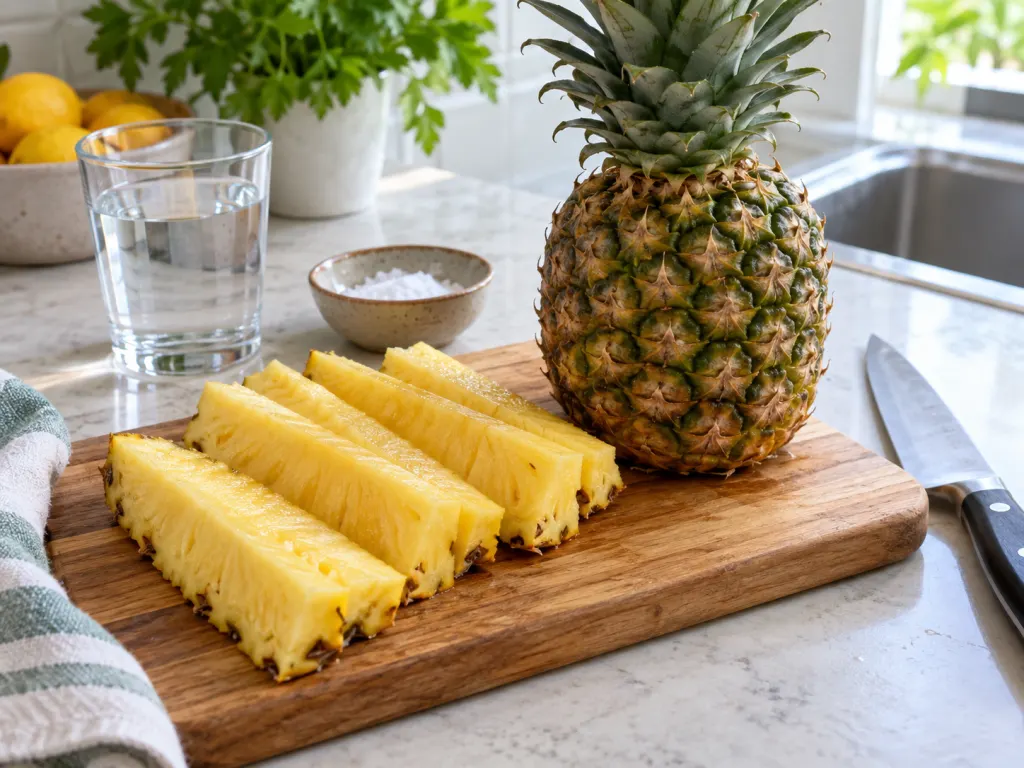
Start with safe produce handling, then treat the salt water as a finishing step. The U.S. Food and Drug Administration advises washing produce under running water before preparing it, even when you do not plan to eat the peel, because cutting can transfer dirt or microbes from the outside to the inside: FDA produce safety guidance. For pineapple, that means rinsing and scrubbing the outside first, drying it, then trimming and cutting with a clean knife on a clean board.
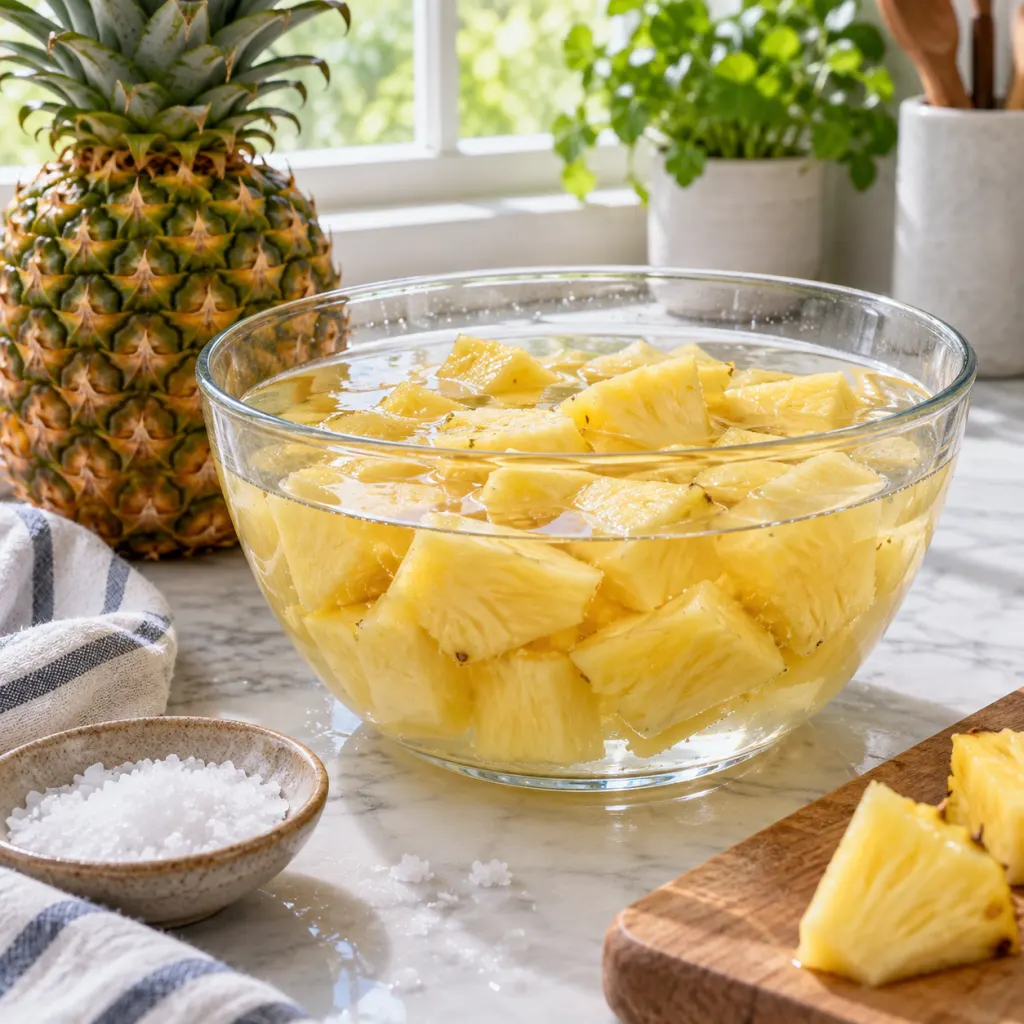
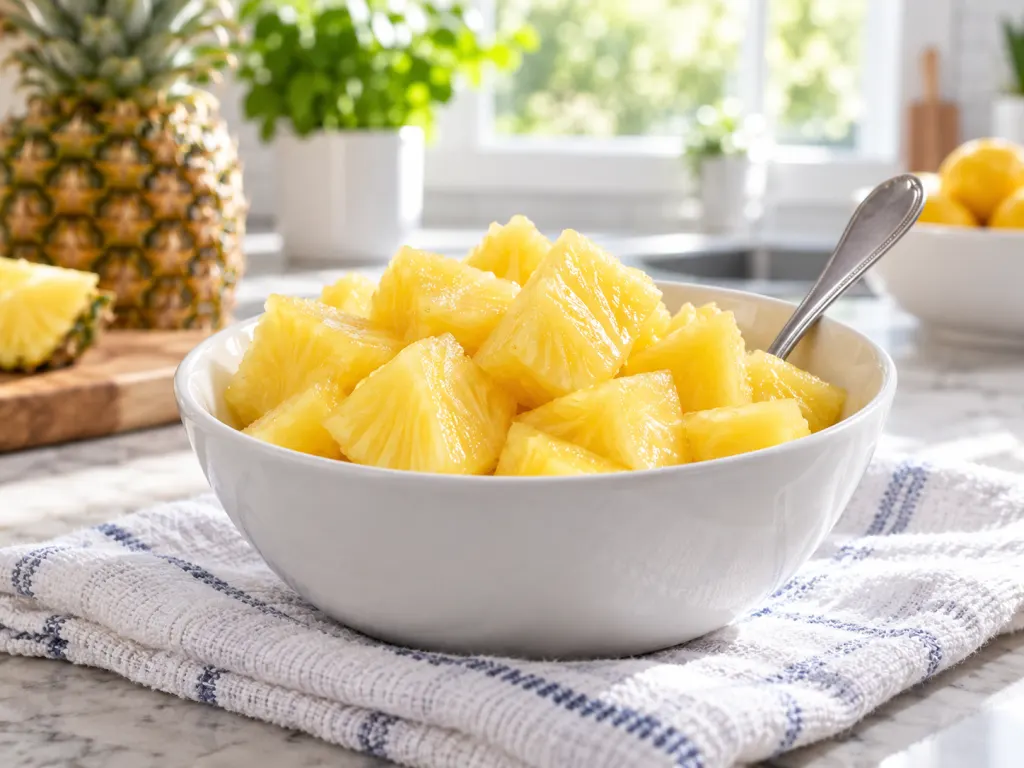
For a practical soak, dissolve a small pinch of salt in a bowl of cold water, add the cut pineapple, and let it sit for about five to ten minutes. Drain it well. If you want no obvious saltiness, rinse the pieces briefly under cold running water and pat them dry. Taste one piece before serving. If the pineapple still tastes too sharp, the fruit may be underripe, cut too close to the core, or simply more acidic than you enjoy raw.
This method works best when the pieces are evenly cut. Thin slices take up the seasoned water faster than large chunks, so they need less time. Very ripe pineapple needs only a quick dip, if any. Pineapple for salsa, skewers, or fruit salad should be well drained after soaking so it does not water down the rest of the dish.
What Salt Changes in Flavor
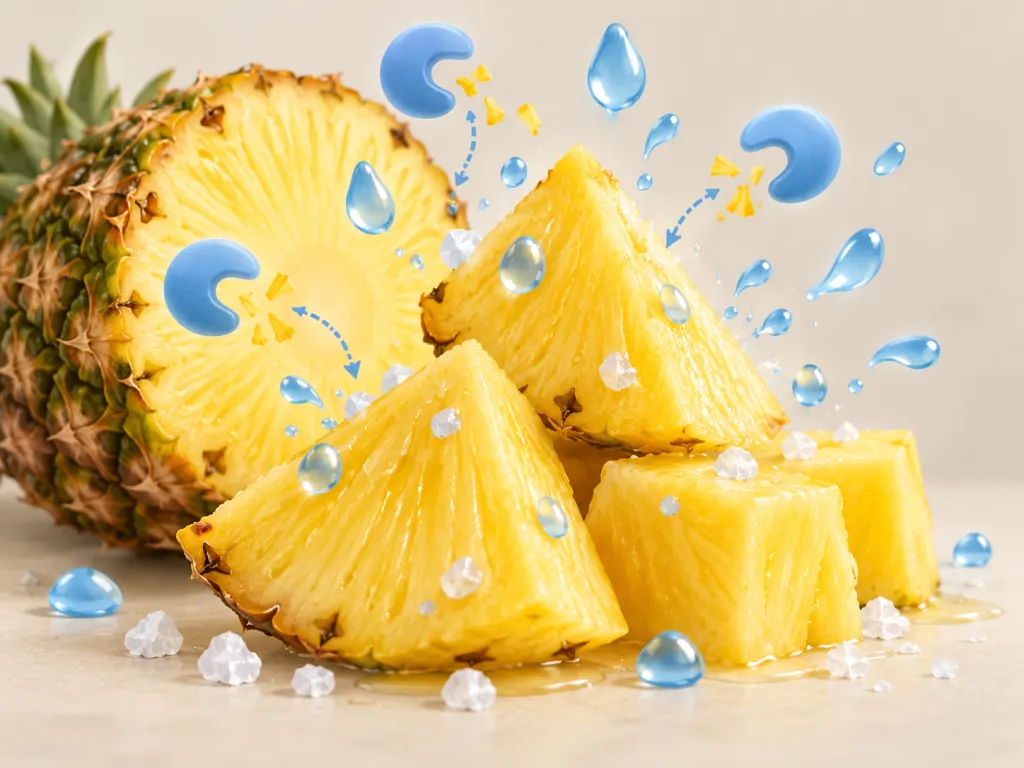
Salt does not have to make food taste salty to change how it tastes. In small amounts, it can reduce the perception of bitterness, increase contrast, and help sweetness read more clearly. That is why a pinch of salt can improve chocolate, citrus, tomatoes, and melon. With pineapple, the benefit is especially appealing because the fruit already has strong sweetness and strong brightness. The salt does not add sugar; it shifts the balance.
There is also a surface effect. Cut pineapple leaks juice. That exposed juice is the first thing your tongue meets, and it can be intense. A quick soak slightly dilutes that surface layer, then draining removes some of the sharpest liquid clinging to the outside. The inside of the piece remains juicy and aromatic, but the first impression may be less aggressive.
When the Trick Helps Most
Use the soak when pineapple tastes good but feels a little too lively. It is especially helpful for fruit platters, packed lunches, and snacks for people who like pineapple flavor but dislike the prickly finish. It can also be useful when pineapple will sit next to milder foods such as yogurt, cottage cheese, rice bowls, grilled chicken, or fresh herbs. A smoother pineapple bite is less likely to dominate everything around it.
The trick is less useful when the pineapple is underripe enough to taste woody, fermented, or mostly sour. Salt cannot create ripeness. It also cannot fix fruit with a dull smell, slimy surface, or signs of spoilage. In that case, the better kitchen decision is to discard questionable pieces and start with better fruit.
Fresh, Canned, and Cooked Pineapple
Fresh pineapple is where this trick makes the most sense. Canned pineapple has already been processed with heat, and its texture and enzyme activity are different from raw fruit. Cooked or grilled pineapple also tends to feel gentler because heat changes the fruit’s structure and flavor. If you are adding pineapple to a hot dish, soaking is optional; the cooking step may already soften the edge enough.
For fruit salad, the decision depends on timing. If you soak pineapple, drain it thoroughly before mixing it with berries, citrus, bananas, or tender herbs. Extra water shortens the lively texture of a fruit salad. If you are preparing ahead, store cut pineapple cold in a clean covered container, and keep it separate from foods that should stay dry until serving.
Sodium and Personal Preference
The amount of salt used for this method can be very small, but it still matters to people who are watching sodium for personal reasons. You can use less salt, shorten the soak, or skip it entirely and choose another approach: chill the pineapple, pair it with unsweetened dairy, grill it, or choose a riper fruit. The goal is enjoyment, not a rule everyone must follow.
If you like the fruit with a faint savory edge, do not rinse after draining. If you want only the mellowing effect, rinse quickly and dry the pieces. Both approaches are reasonable. The best test is not a strict formula; it is whether the finished pineapple tastes brighter, cleaner, and easier to eat.
Bottom Line
Soaking pineapple in salt water is worth trying when fresh pineapple tastes delicious but feels a little sharp. The likely benefit comes from several small effects working together: a diluted surface, a calmer first bite, and salt’s ability to shift taste perception. Keep the soak brief, start with clean fruit and clean tools, and do not expect it to change the basic nature of the pineapple. When done well, the fruit should still taste fresh, tropical, and bright, only smoother around the edges.
Wrap-Up
A brief salt-water soak can make fresh pineapple more pleasant by softening the first sharp bite and changing flavor perception. It is most helpful for raw pineapple that is ripe but prickly, and least helpful for underripe or spoiled fruit. Wash the whole pineapple before cutting, use only a light pinch of salt in cold water, soak for a few minutes, then drain well. For anyone who has strong or repeated symptoms after eating pineapple, the issue should be handled as a personal health question with a qualified professional.
Frequently Asked Questions
- → Does soaking pineapple in salt water make it sweeter?
It does not add sugar to the fruit. A little salt can change how sweetness and sharpness are perceived, so the pineapple may taste sweeter or rounder even though its natural sugar has not changed.
- → How long should pineapple sit in salt water?
Five to ten minutes is usually enough for cut pineapple. Thin slices may need less time, while large chunks may need the full few minutes. Longer soaking can make the fruit taste watery.
- → Should I rinse pineapple after soaking it?
Rinse it if you want no salty edge. If you like a faint savory contrast, drain it well and serve without rinsing. Either way, drying the pieces helps keep fruit salad and snack plates from becoming watery.
- → Can salt water make old pineapple safe to eat?
No. Salt water is not a fix for spoiled fruit. Discard pineapple that smells fermented, looks slimy, has mold, or seems otherwise questionable, and follow standard produce-handling guidance for fresh fruit.
- → Why does canned pineapple usually feel less prickly?
Canned pineapple has been processed differently from fresh pineapple, including heat processing, so its texture and enzyme activity are not the same as raw fruit. That is why the salt-water trick is mainly useful for fresh pineapple.