 Save
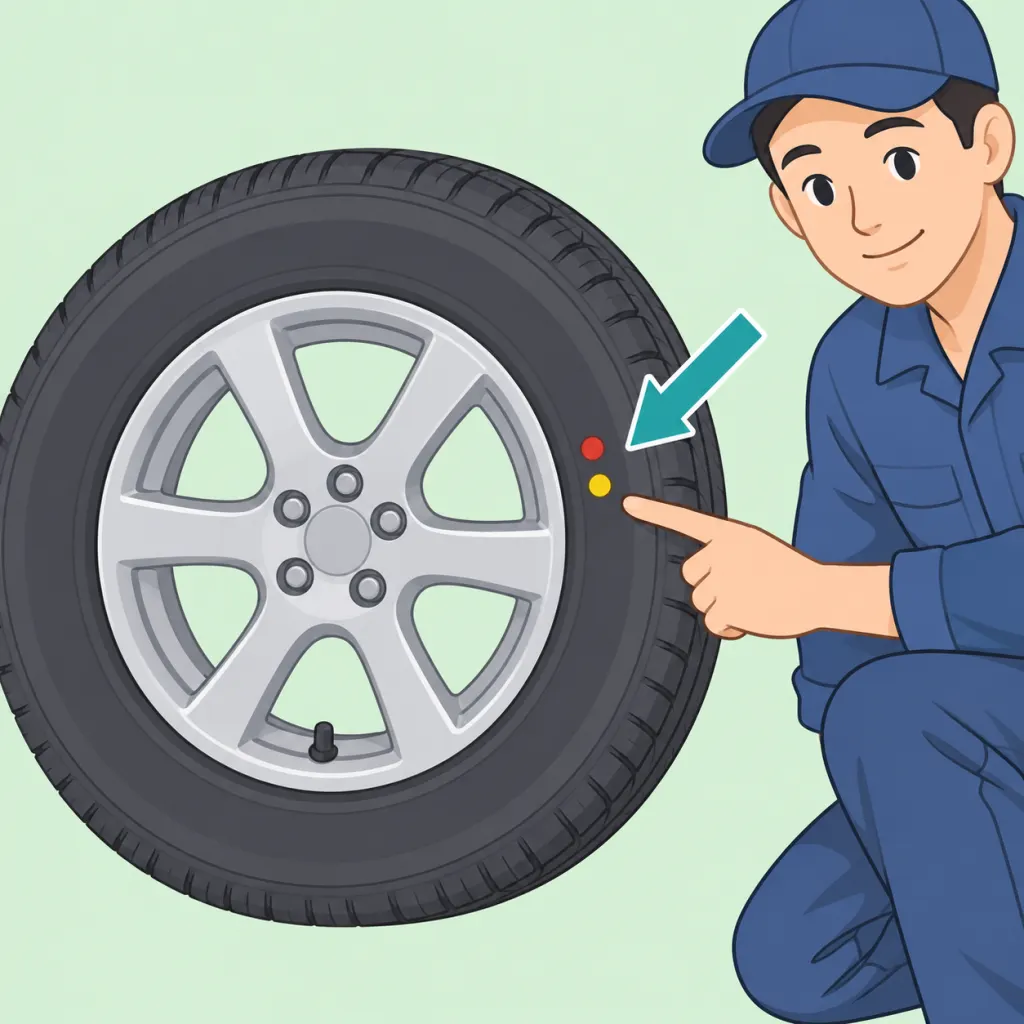
Small red and yellow paint dots on a new tire can look like damage or warning labels, but they are usually mounting aids for the tire installer. Their exact use can vary by tire brand, wheel type, and balancing equipment. This guide explains how to read the dots calmly, what to ask the shop, and when a vibration or pull needs follow-up.
Step 1: Find the paint dots on the outer sidewall
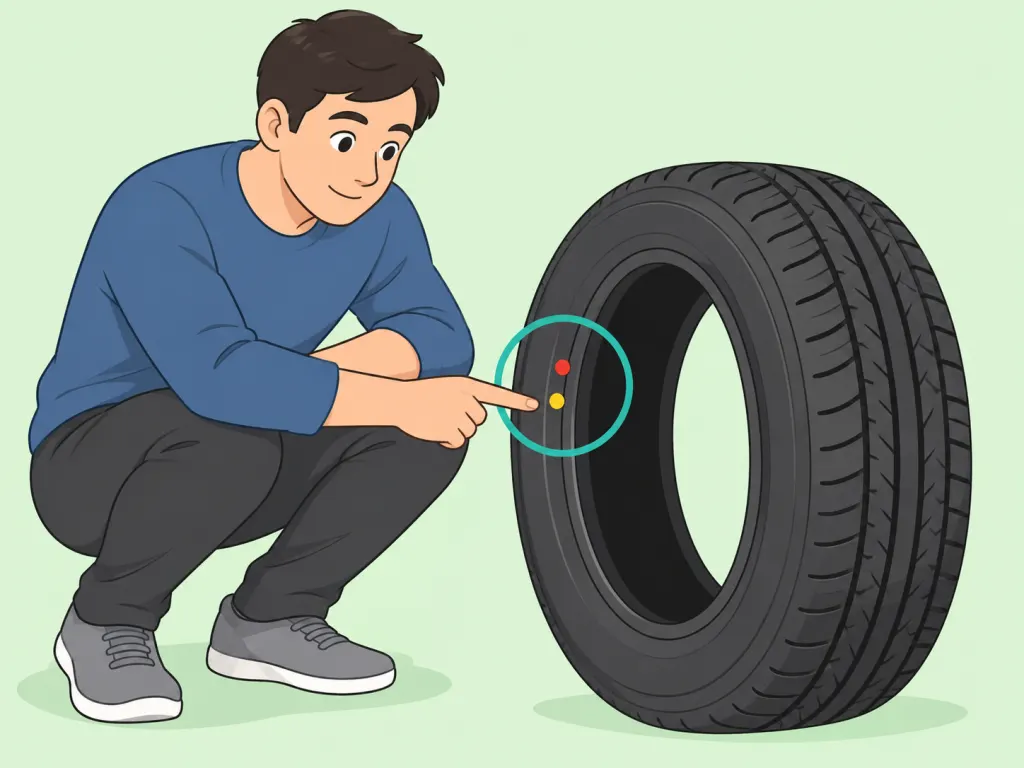
Look near the bead area of a new tire, close to where the sidewall meets the wheel. Small red, yellow, white, or other colored dots are different from molded sidewall information, since federal rules list required tire markings such as the DOT symbol, tire size, load rating, and inflation information in 49 CFR 571.139.
Step 2: Separate temporary paint from permanent tire information
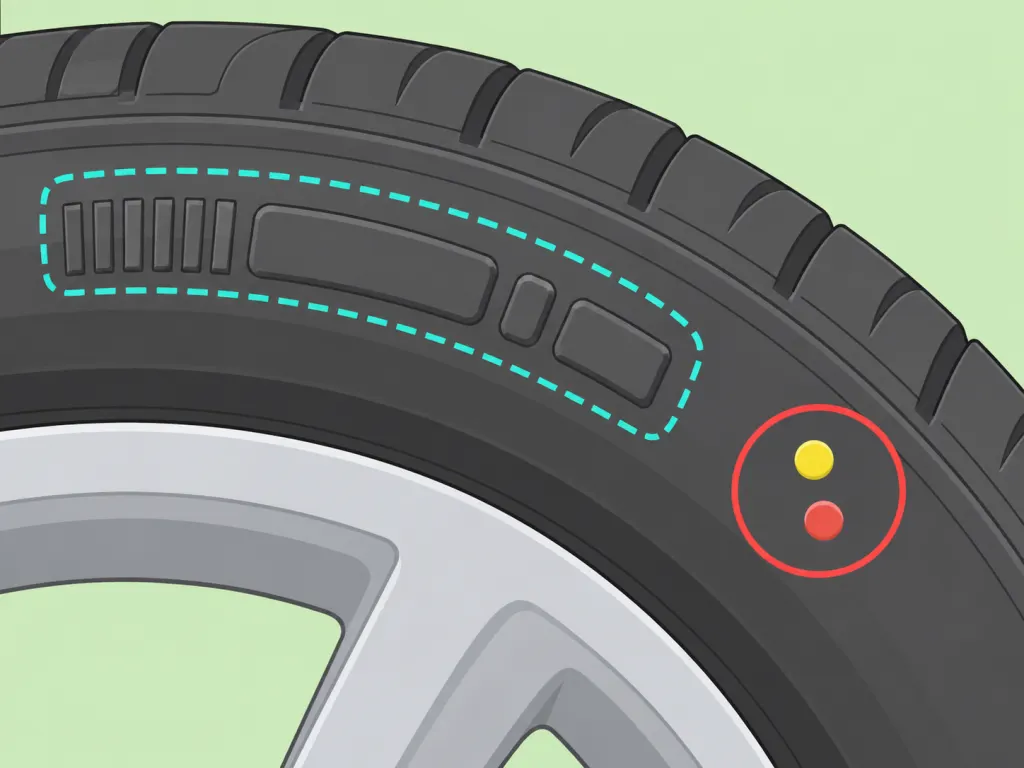
Do not use paint dots to identify the tire’s age, size, or safety rating. For that, read the molded DOT Tire Identification Number, because federal tire identification rules require the TIN to be permanently molded or branded into the sidewall.
Step 3: Treat the yellow dot as a mounting clue
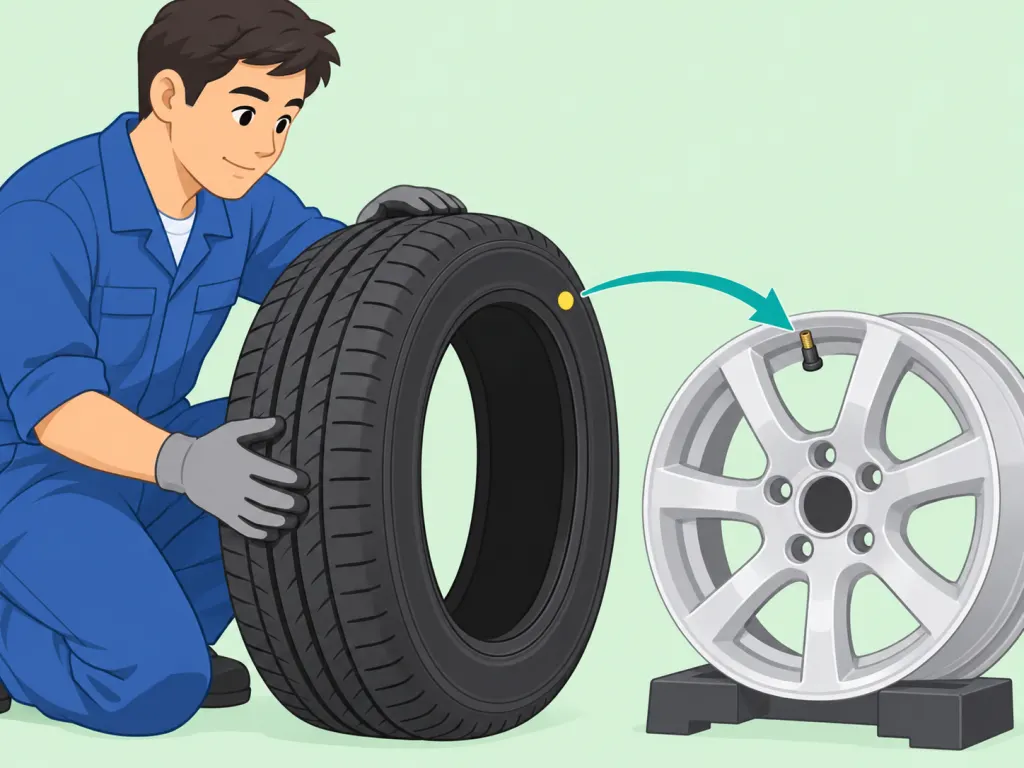
Many installers treat a yellow dot as a clue for weight matching, often to help position the tire before final balancing. Because paint-color conventions are not the same as required federal sidewall labels, ask the installer to follow the tire maker’s guidance and the balancing machine rather than relying on color alone. Technical references on pneumatic tires describe balance and force behavior as part of tire mechanics, but the visible paint mark is still a service aid, not a driver warning label.
Step 4: Treat the red dot as a uniformity clue
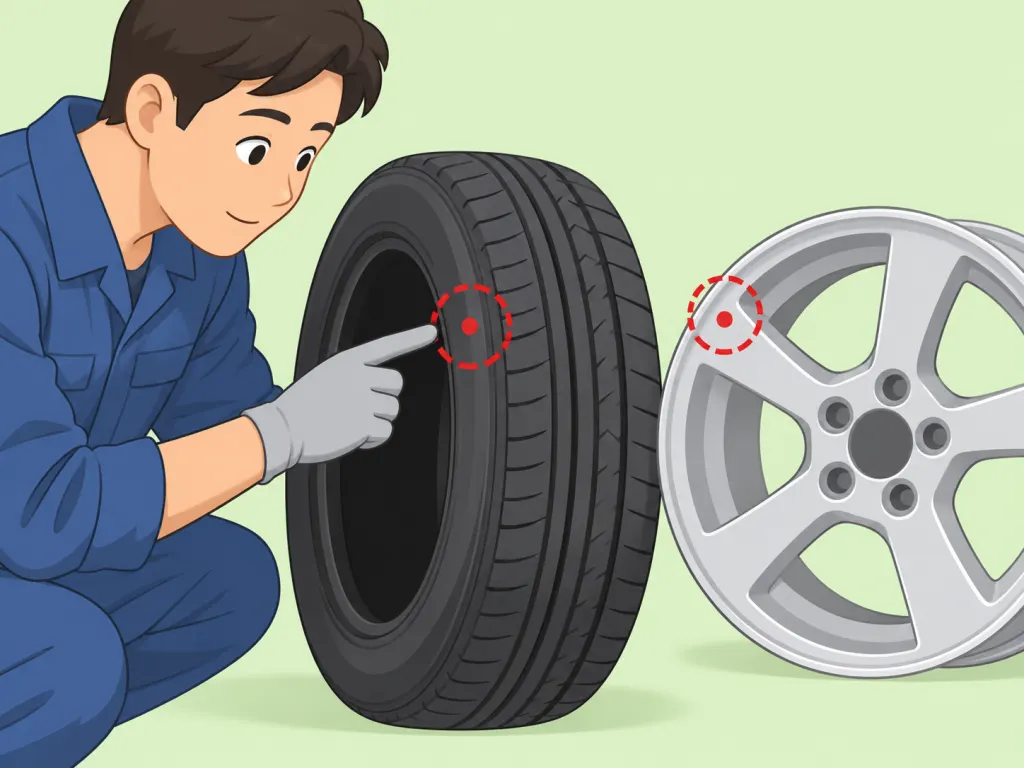
A red dot is commonly used by tire technicians as a clue for uniformity or force variation matching, especially when the wheel has a corresponding low-point mark. This relates to how a tire and wheel roll together under load, a subject covered in broader tire mechanics research such as the NIST publication Mechanics of Pneumatic Tires. If both red and yellow dots are present, let the technician decide which mark matters for that tire and wheel combination.
Some wheels may have a manufacturer mark, sticker, dimple, or measured low spot that affects how the tire is positioned. The same tire dot may be handled differently on a steel wheel, an alloy wheel, or a wheel that has already been measured on road-force balancing equipment. If you are buying replacement tires, also confirm the correct tire size from the owner’s manual or Tire and Loading Information Label, as NHTSA’s Tire Buyers’ FAQ recommends.
Step 6: Have the tire balanced after mounting
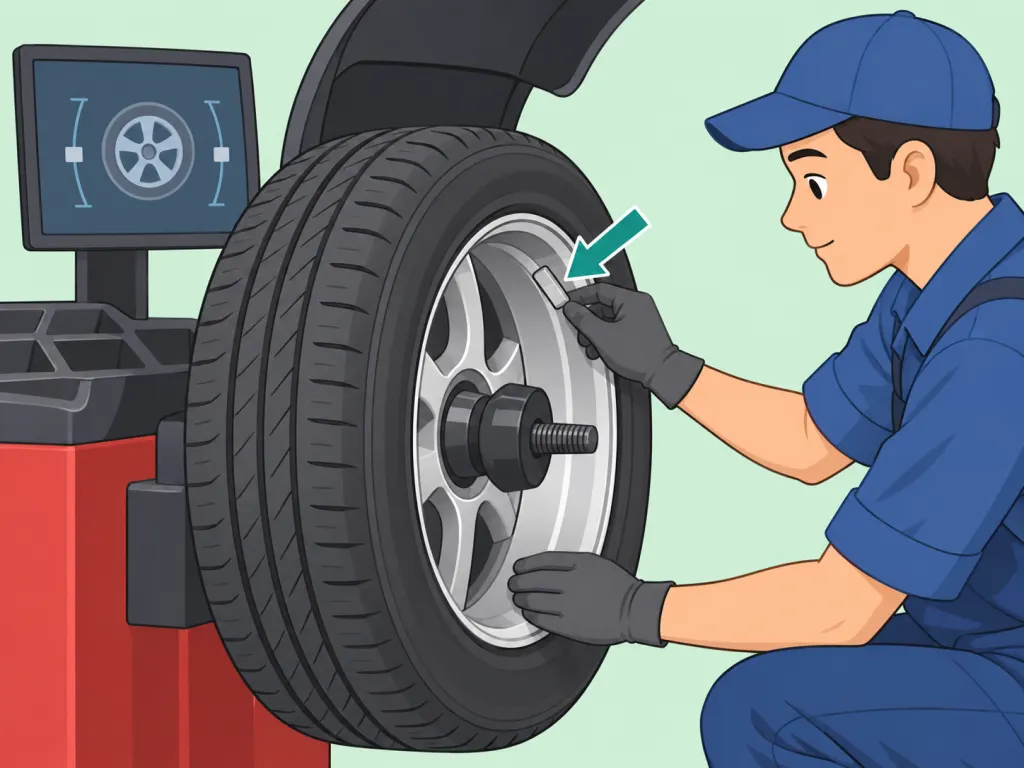
The dots may help with the starting position, but they do not replace balancing. NHTSA explains that tire balancing helps prevent shaking or vibration, and new tires should be balanced when installed. Keep your receipt or service record with your tire information for future reference.
Step 7: Ignore old dots and watch the tire’s real condition
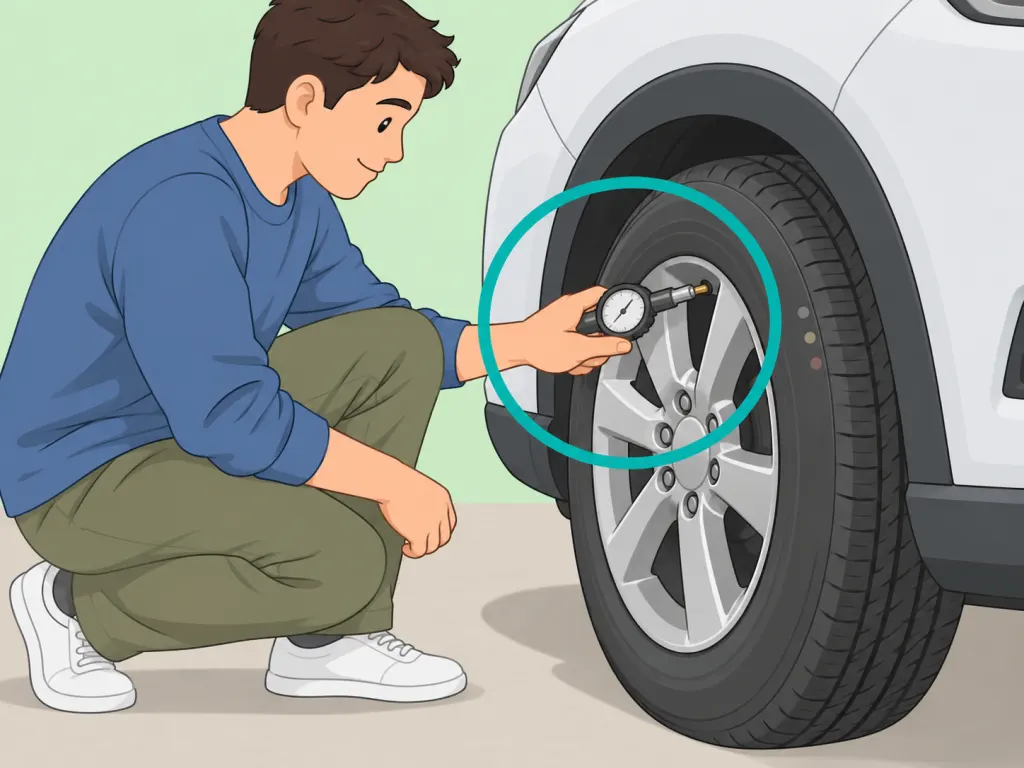
Once the tire is mounted, balanced, and driven, faded paint dots are much less useful than routine checks. NHTSA advises drivers to check cold tire pressure monthly, inspect tread and sidewalls, and keep records such as the tire manufacture date from the last four TIN digits in its new tire purchase guide. If the vehicle shakes, makes new tire noise, pulls, or will not hold proper pressure, consult a tire service professional and check for tire or vehicle recalls through NHTSA’s recall lookup.
Wrap-Up
The bottom line: treat red and yellow tire dots as temporary installer clues, not permanent safety labels. Once the tire is mounted, focus on correct size, cold pressure, tread condition, balance, alignment, and any changes in how the vehicle rides.
Frequently Asked Questions
- → Are red and yellow dots on tires bad?
No. On a new tire, small paint dots are usually temporary service marks, not damage. Check the tire for cuts, bulges, cracks, or other visible problems separately, and ask a tire professional if anything looks unusual.
- → Do all tires have red or yellow dots?
No. Some new tires have one dot, some have more than one, and some have none visible by the time you see them. Color conventions can also vary, so the tire maker’s service information matters more than a general rule.
- → Should the yellow dot always line up with the valve stem?
Not always. The yellow dot is often treated as a light-point clue, but a technician may choose a different method if the wheel has its own mark or if balancing equipment measures the assembly directly.
- → What if the red and yellow dots are not lined up after installation?
Do not assume the tire was installed incorrectly just from the dot position. If the wheel was balanced properly and the vehicle rides smoothly, the painted marks may no longer matter.
- → Do the dots replace tire balancing?
No. NHTSA says new tires should be balanced when installed, because balancing helps the wheel rotate properly without shaking or vibration.
- → Why did the dots disappear from my tires?
Paint dots are usually temporary and may fade, wash off, or wear away after normal use. Permanent safety and identification information is molded into the sidewall, including required markings such as the DOT symbol and tire identification number.
References
This content was developed and refined using reliable sources.
- https://www.nhtsa.gov/vehicle-safety/tires
- https://www.ecfr.gov/current/title-49/subtitle-B/chapter-V/part-571/subpart-B/section-571.139
- https://www.ecfr.gov/current/title-49/subtitle-B/chapter-V/part-574/section-574.5
- https://www.nhtsa.gov/node/35306
- https://www.nhtsa.gov/node/35301
- https://www.nhtsa.gov/recalls
- https://www.nist.gov/publications/mechanics-pneumatic-tires