 Save
The short answer is: not reliably, unless you are trained and the skeleton includes the right adult bones. Forensic anthropologists estimate biological sex from patterns in the skeleton, especially the pelvis, but they do it by combining observations, measurements, comparison data, and probability. A quick side-by-side picture can be a useful learning prompt, yet it can also be misleading because individual variation, ancestry, age, preservation, and missing bones all affect what can be concluded. The Smithsonian notes that pelvic shape provides the best skeletal evidence for sex, while the National Institute of Justice describes sex estimation as one part of a broader biological profile used in human identification Smithsonian NIJ.
Why the Question Is Trickier Than It Looks
Many online skeleton quizzes imply that there is a single obvious clue. In real forensic anthropology, the question is more careful: what sex estimate is best supported by the available adult skeletal evidence, and how strong is that support? The answer may be female, male, indeterminate, or too limited to assess. The reason is simple but important: human skeletons overlap. A smaller, smoother skull is not automatically female, and a broader-looking pelvis is not automatically enough if the view is poor, the bones are incomplete, or the person was not fully mature.
Professionals also distinguish biological sex estimation from gender identity. Bones may preserve some biological patterns shaped by development, hormones, population history, activity, and body size, but they do not reveal a person’s lived identity, name, culture, or self-understanding. That distinction matters because a skeleton is not a personality profile. It is one source of physical evidence that must be interpreted with humility and context.
The Pelvis Usually Carries the Most Weight
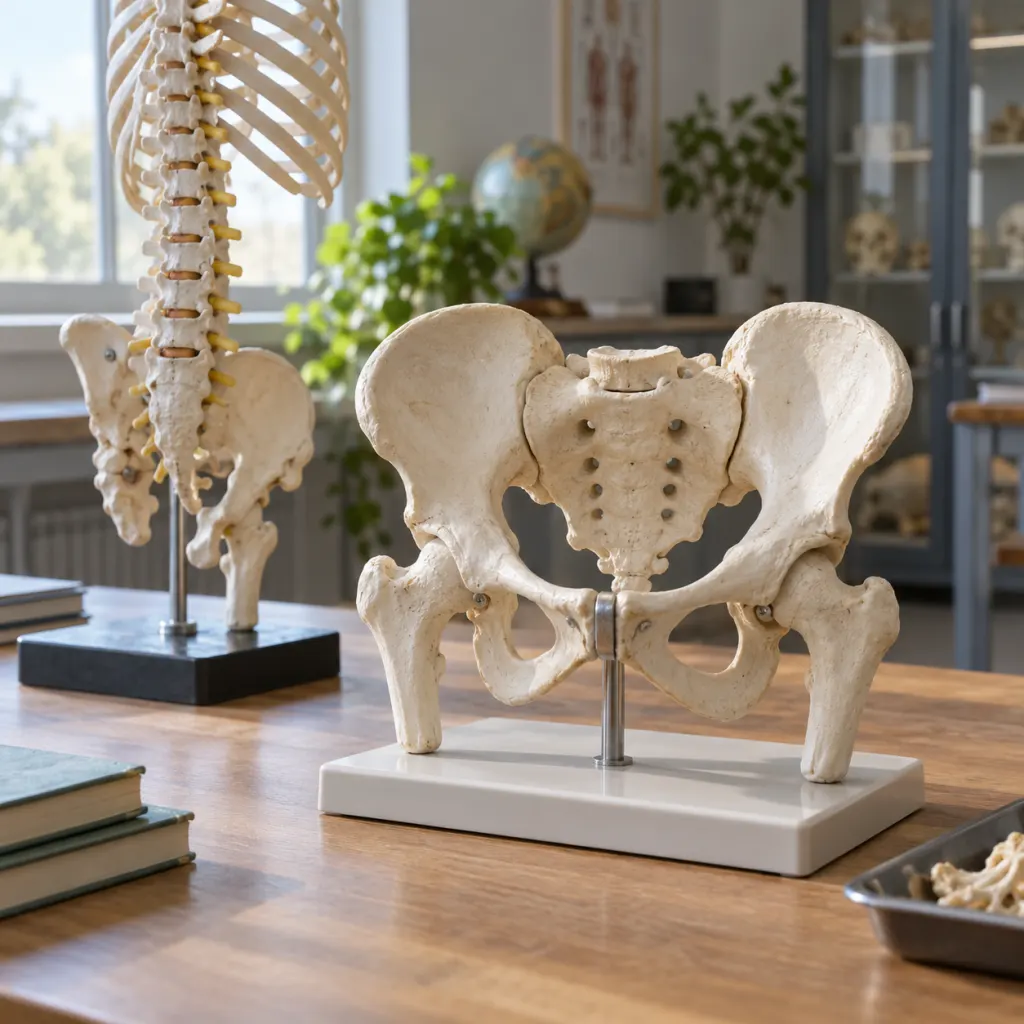
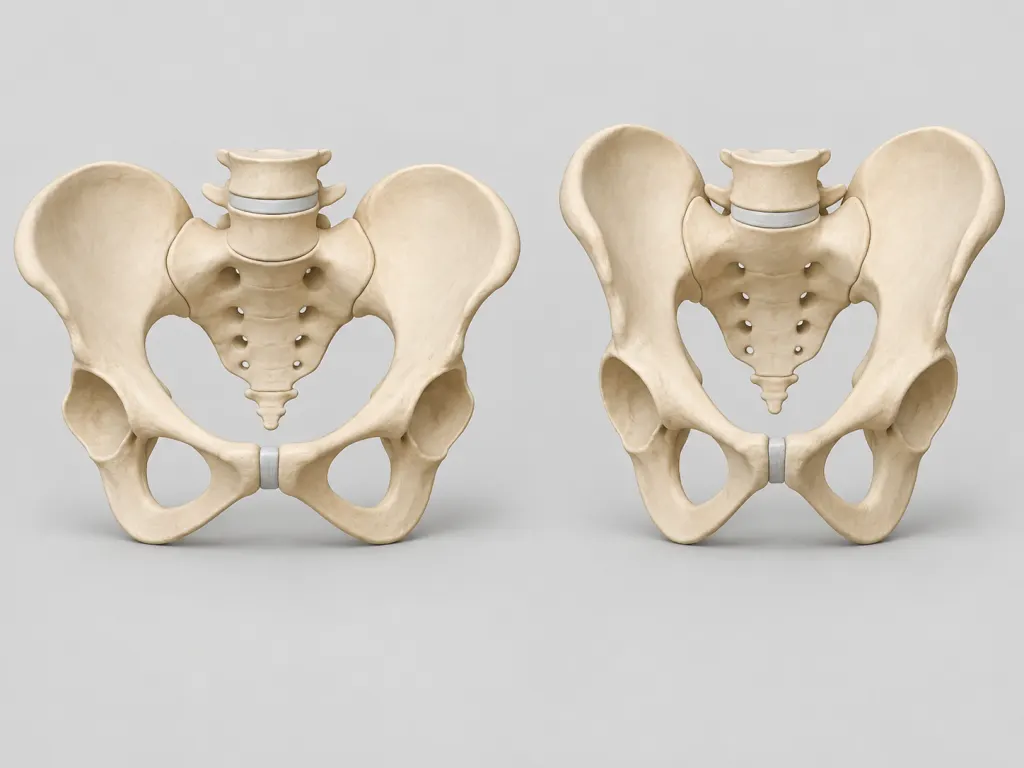
If an adult pelvis is present and well preserved, it is usually the first region specialists want to examine. The Smithsonian’s overview of forensic anthropology states that the shape of pelvic bones provides the best evidence for sex estimation Smithsonian. That does not mean every pelvis gives an easy answer. It means the pelvis tends to show stronger average differences than many other skeletal areas, so it can be especially informative when examined correctly.
What Specialists Look For in the Pelvis
In teaching settings, people often hear that a female pelvis is wider. That is an oversimplification. Forensic methods focus on specific traits and relationships among bones, such as features around the pubic bone, the subpubic region, and the shape of pelvic openings. NIJ training material on MorphoPASSE describes a method that combines three pelvic traits with skull traits and converts scored observations into a probability-based estimate NIJ MorphoPASSE. The important lesson is that specialists are not guessing from a silhouette. They are scoring defined traits, using comparison samples, and checking how reliable the method is for the case at hand.
- Best-case evidence: an adult skeleton with a well-preserved pelvis and clear trait visibility.
- Useful supporting evidence: skull traits, measurements of long bones, and other adult skeletal indicators when validated methods are available.
- Weak evidence: a single photo, a partial skeleton, a child or adolescent skeleton, or bones shown from an angle that hides the relevant landmarks.
- Responsible outcome: a probability or cautious estimate, not a dramatic yes-or-no claim based on one visual clue.
The Skull Can Help, but It Is Usually Secondary
When the pelvis is unavailable or ambiguous, the skull may provide useful information. A 2024 scoping review in PubMed Central explains that skull-based sex estimation is an active research area and that recent studies use dry skulls, imaging, three-dimensional models, measurements, visual scoring, and statistical models PMC. The review also notes that the pelvis is generally considered the most reliable bone for sex estimation, while the skull is often treated as an important alternative.
Common Skull Traits Are Patterns, Not Proof
Skull traits often discussed in forensic anthropology include the brow area, the mastoid process behind the ear, the nuchal crest at the back of the skull, the edge of the eye socket, and the chin region. On average, male skulls may appear more robust and female skulls may appear smoother or more gracile, but averages are not identities. A robust female skull and a gracile male skull can exist. That is why a responsible article, classroom exercise, or museum activity should frame the skull as supporting evidence rather than a magic answer key.
Why Measurements and Databases Matter
Modern methods often combine visual assessment with measurements, statistics, and reference databases. The National Institute of Justice explains that forensic anthropologists examine skeletal remains to assess sex, age, stature, ancestry or population-related information, injuries, and time since death as part of work that may help identify a decedent NIJ. A 2025 NIJ summary of practitioner practices found that nearly all surveyed practitioners used both qualitative and quantitative approaches, and that many used multiple methods in casework NIJ.
That mix of methods matters because each approach has limits. Visual scoring can be affected by training and observer judgment. Measurements require intact landmarks and appropriate comparison samples. Statistical models can be helpful, but they are only as useful as the data, assumptions, and validation behind them. In practice, a stronger estimate is usually one where several independent observations point in the same direction and the specialist can explain the uncertainty.
Adult Bones Are Different From Growing Bones
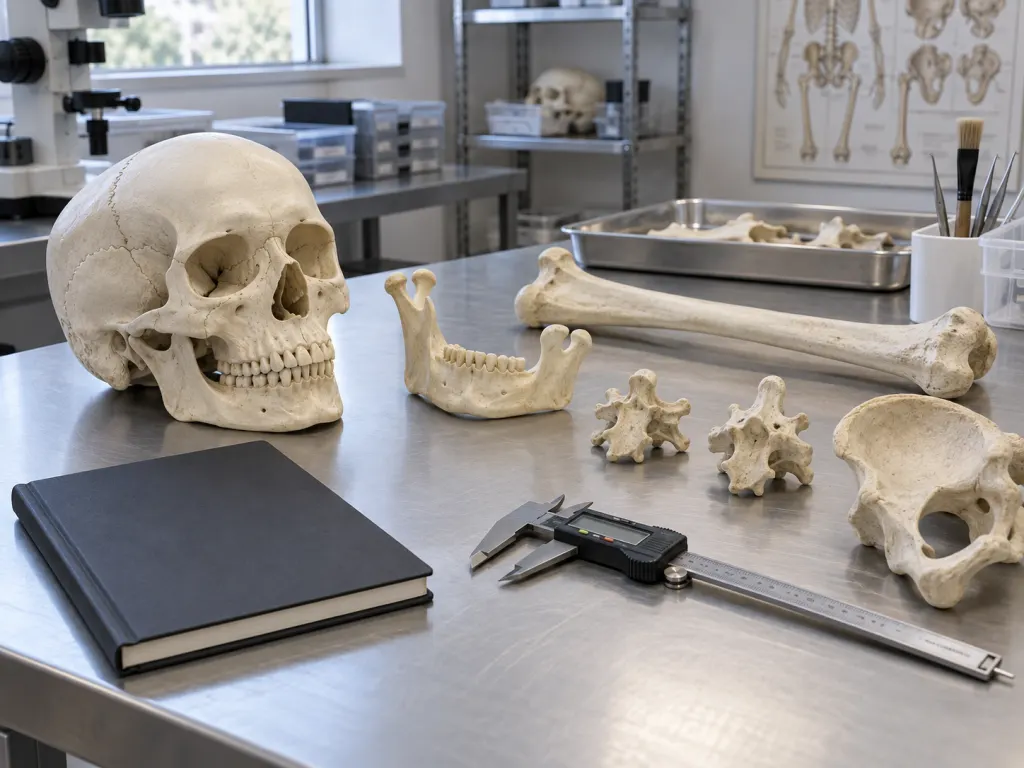
Sex estimation is most established for adult skeletal remains. NIST’s standards library lists ANSI/ASB Standard 090-19 for sex estimation in forensic anthropology, and a NIST OSAC bulletin describes that standard as covering adult skeletal elements from skeletal remains or radiographic images, while excluding subadult skeletal elements and DNA analysis NIST NIST OSAC Bulletin. In plain terms, a child or adolescent skeleton should not be judged by the same expectations people use for mature adult bones.
So, Can You Pick the Female Skeleton in a Picture?
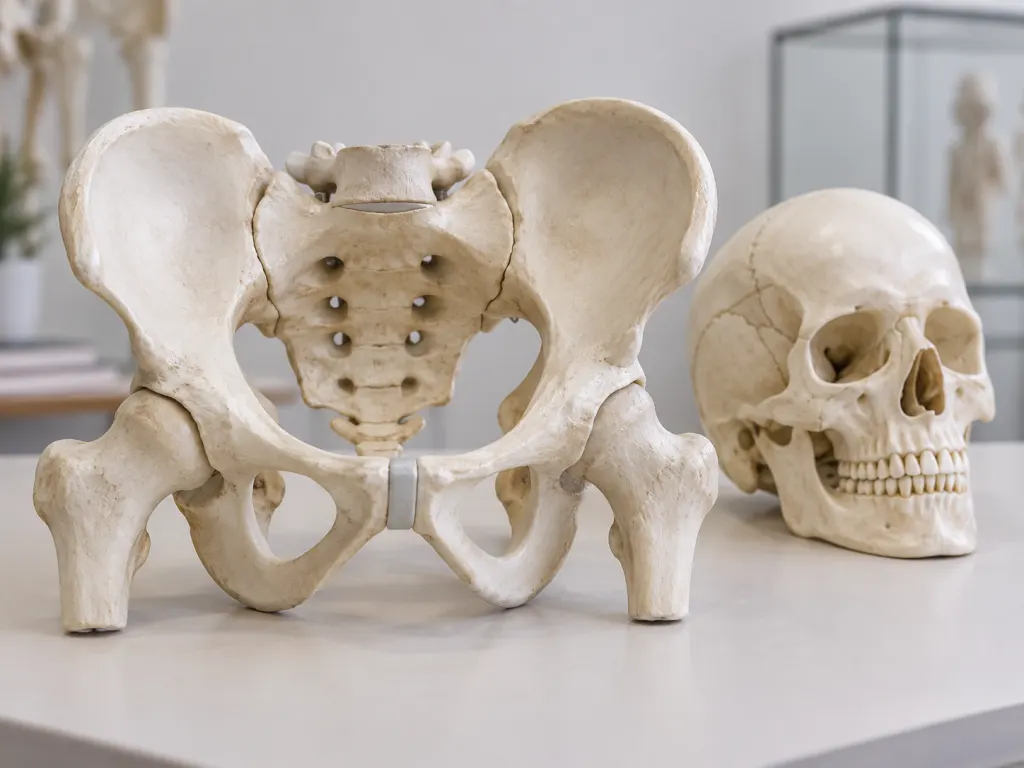
Sometimes a trained observer can make an informed estimate from a clear image if the relevant adult pelvic traits are visible. But most casual images do not show enough. If the image shows only full-body outlines, costume-like skeleton drawings, or skulls without scale and context, the honest answer is that you are probably seeing a teaching puzzle, not a forensic-quality assessment. A good educational version of the question would show the pelvis clearly, explain which traits are being compared, and give an uncertainty statement rather than claiming that only a tiny percentage of people can solve it.
A Better Way to Think About the Clues
Instead of asking, “Which skeleton is female?” ask, “Which observable traits support a female sex estimate, how many of those traits are visible, and what could make the estimate uncertain?” That shift turns the puzzle into science. It also prevents one of the most common mistakes: treating a single trait as decisive. Wider-looking hips, a rounded skull, smaller bones, or a narrow jaw may be clues in some contexts, but none should be treated alone as a final answer.
The Takeaway for Curious Readers
If you are looking at a classroom diagram or an online quiz, the most likely intended answer is based on the pelvis, not the skull alone. A skeleton with pelvic traits associated with a broader subpubic region and other defined adult pelvic markers may support a female estimate. But the scientifically accurate takeaway is broader: skeletal sex estimation is probabilistic, method-based, and context-dependent. Trained specialists use multiple traits, validated methods, and careful language because real human variation does not fit neatly into a quick visual riddle.
Wrap-Up
You may be able to notice clues that point toward a female sex estimate, especially in an adult pelvis, but you usually cannot identify a female skeleton with confidence from a casual image. The pelvis is generally the strongest skeletal region for sex estimation, the skull can help when interpreted carefully, and responsible forensic work reports uncertainty. The best answer to the puzzle is not just a label; it is an explanation of which traits are visible, which methods apply, and how confident the estimate should be.
Frequently Asked Questions
- → Is the pelvis better than the skull for identifying a female skeleton?
For adult skeletal remains, the pelvis is generally the most informative region for sex estimation. The skull can add useful evidence, especially if the pelvis is missing, but skull traits tend to overlap more between individuals and should be interpreted cautiously.
- → Can one bone prove that a skeleton is female?
Usually no. A single bone or single trait may support an estimate, but responsible sex estimation weighs multiple traits, measurements, preservation quality, and comparison data. The result is best understood as a supported estimate rather than absolute proof.
- → Why are online skeleton quizzes often misleading?
They often show simplified drawings, poor angles, or incomplete skeletons. Real forensic work depends on specific adult landmarks, validated methods, and uncertainty reporting. A quiz can be fun, but it should not be confused with professional skeletal analysis.
- → Does a skeleton show gender identity?
No. Skeletal analysis may support an estimate of biological sex in certain adult remains, but it does not reveal a person’s gender identity, name, culture, personality, or lived experience. Those are different kinds of information.
- → What answer should I give if the image only shows two skulls?
The careful answer is that the skulls may suggest a possible estimate if key traits are visible, but the confidence is limited. Without the pelvis and without method-based scoring, a skull-only image is better treated as a learning exercise than a firm identification.
References
This content was developed and refined using reliable sources.
- https://naturalhistory.si.edu/education/teaching-resources/anthropology-and-social-studies/forensic-anthropology
- https://nij.ojp.gov/topics/forensics/overview-forensic-anthropology
- https://www.nist.gov/osac/standards-library/ansiasb-standard-090-19
- https://www.nist.gov/magazine/osac-standards-bulletin/january-2020
- https://pmc.ncbi.nlm.nih.gov/articles/PMC11627412
- https://nij.ojp.gov/events/skeletal-sex-estimation-and-practitioner-use-morphopasse
- https://nij.ojp.gov/library/publications/reevaluating-skeletal-sex-estimation-practices-forensic-anthropology