 Save
The short answer: putting Vicks VapoRub on your feet before bed may create a cooling, scented, occlusive layer that some people find soothing, but reliable evidence does not show that the feet are a special route for its main labeled uses. The current DailyMed label for Vicks VapoRub lists camphor, eucalyptus oil, and menthol as active ingredients and describes applying it to the chest and throat for cough related to a cold, or to muscles and joints for minor discomfort, not to the soles as a targeted bedtime method. DailyMed
Why the Feet Became Part of the Habit
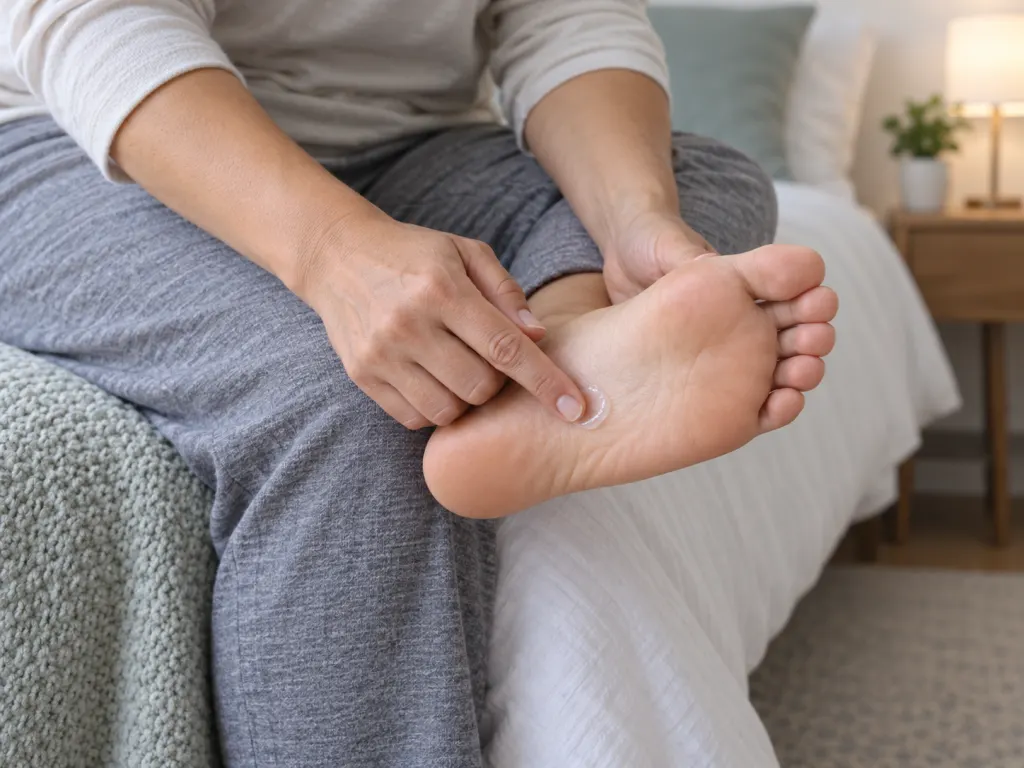
The bedtime foot routine likely caught on because it combines several things people already associate with comfort: a strong menthol scent, a cooling skin sensation, a brief massage, socks, and the ritual of doing something before sleep. Those parts can feel meaningful even when the product is not working through a special foot pathway. The feet also make practical sense for a nighttime ointment because socks can keep the product from getting on sheets. That practical convenience, however, is different from proof that applying it to the soles changes breathing, sleep, circulation, or nail health.
It is helpful to separate three questions: what the product is labeled for, what the ingredients can plausibly do on skin, and what is known about bedtime foot care. The label gives the clearest boundary. Vicks VapoRub is an over-the-counter topical product with camphor, eucalyptus oil, and menthol. Its label describes chest and throat application for cough linked to a cold, and application to muscles and joints for minor discomfort. It also says the product is for external use only and should not be used in the mouth, nostrils, wounds, or damaged skin. DailyMed
What Menthol, Camphor, and Petrolatum Can Explain
Menthol and camphor can create a noticeable cooling or warming sensation on the skin. That sensation can make a rub feel active even when it is not changing the underlying cause of a symptom. Cleveland Clinic notes that menthol products may provide temporary cough-related comfort for some people, while also warning that topical menthol products can irritate some skin. Cleveland Clinic On the feet, the same cooling sensation may be pleasant, especially when paired with a slow massage, but that is best described as sensory comfort rather than a demonstrated foot-specific benefit.
The ointment base also matters. The DailyMed label lists petrolatum among the inactive ingredients. Petrolatum is an occlusive ingredient, meaning it can help reduce moisture loss from the skin surface. That helps explain why some people wake up feeling that their heels are softer after applying a thick ointment and socks. Still, dermatology guidance for dry skin usually points readers toward fragrance-free creams or ointments, because fragrances and strong aromatic ingredients can bother sensitive skin. The American Academy of Dermatology lists petrolatum as one ingredient often found in effective dry-skin products, while also advising people with dry, sensitive skin to choose gentle, fragrance-free options. American Academy of Dermatology
The Most Realistic Benefits
If an adult with intact skin likes the sensation, the most realistic benefits are modest and practical. They are not unique to the feet, and some may come from the massage, socks, or ointment texture rather than from VapoRub itself.
- A cooling sensation: Menthol can make the skin feel cool, which some people find relaxing at bedtime.
- A sealed-in feel on dry heels: The petrolatum base can leave a protective coating, though plain petroleum jelly or a fragrance-free ointment may be a better fit for sensitive skin.
- A simple wind-down ritual: Washing, drying, massaging, and putting on clean cotton socks can make foot care feel more intentional.
- Less sheet transfer: Applying an ointment to the feet and covering with socks is cleaner than applying a scented rub to areas that touch bedding directly.
Those points are different from stronger claims often attached to this routine online. Evidence does not support treating the feet as a shortcut for broad body-wide effects. The product’s scent may be noticeable when you are lying in bed, but if cough from a cold is the issue, the label’s described cough application is the chest and throat so vapors can reach the nose and mouth area. Mayo Clinic’s cold guidance also keeps expectations modest for over-the-counter cough and cold products and emphasizes rest, fluids, humidity, and saline rinses as common comfort measures. Mayo Clinic
When Plain Foot Care Makes More Sense
For dry, rough, or cracked heels, a foot-care routine does not need menthol or fragrance to be useful. The American Academy of Dermatology recommends limiting long hot bathing, using a gentle cleanser, moisturizing shortly after bathing, and considering plain petroleum jelly before bed with socks to protect bedding. For cracked heels, it also points to moisturizers containing ingredients such as urea, alpha hydroxy acid, or salicylic acid. American Academy of Dermatology That is a more directly supported path than relying on a menthol rub as an all-purpose foot product.
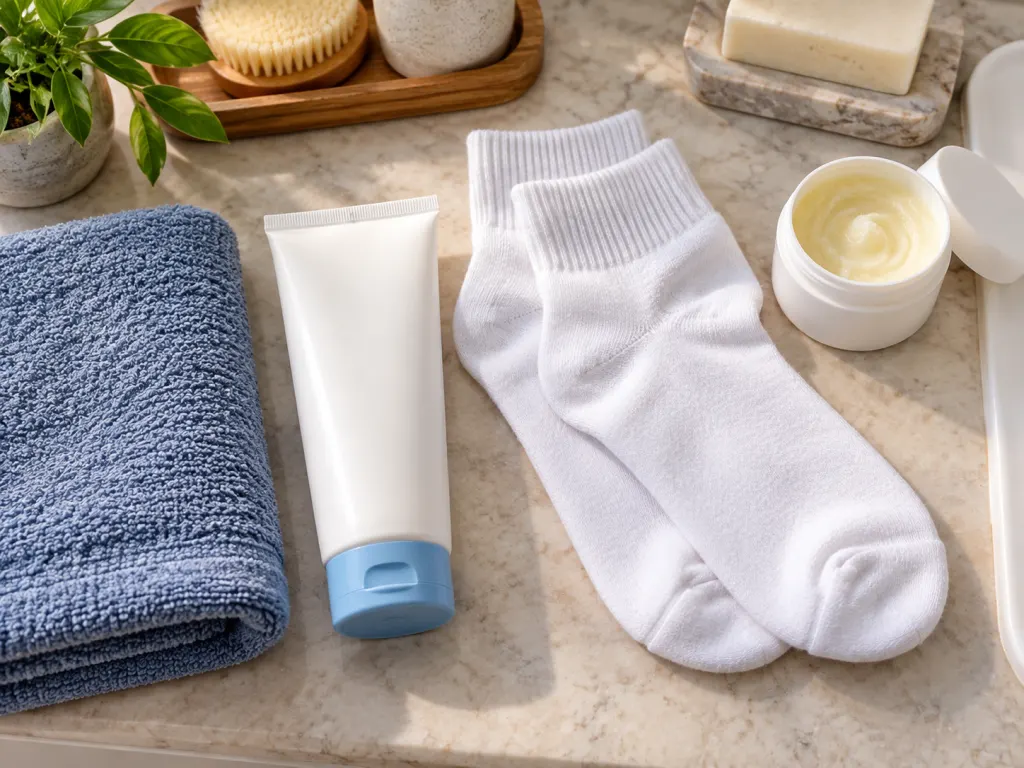
A practical nighttime foot routine can stay very simple: wash with warm water, dry carefully, apply a fragrance-free moisturizer or heel cream, add a small layer of plain petroleum jelly if your skin tolerates it, and wear clean socks. This is especially sensible if your feet are already dry, rubbed by shoes, or irritated by scented products. People often enjoy VapoRub because it smells familiar and feels strong, but strong-feeling skin products are not always better for dry skin. If a product stings, burns, causes redness, or makes the skin feel worse, stop using it and choose a gentler option.
What About Toenails?
Toenail claims are common in social posts, but they require careful wording. A scented ointment may make nails look temporarily shinier because it coats the surface. That does not prove that the nail itself has changed. Thick, yellow, crumbly, painful, lifting, or persistently changing toenails can have several causes, and appearance alone is not enough to know what is happening. If nail changes are ongoing, spreading, uncomfortable, or paired with skin breakdown, it is better to ask a qualified clinician or foot-care professional than to keep experimenting with a home routine.
Safety Rules If You Still Use It on Your Feet
If you choose to use Vicks VapoRub on your feet, keep the routine conservative. Use it only on intact skin, use clean hands, avoid putting it between toes where moisture can linger, and put on clean cotton socks if you want to protect bedding. Do not apply it to cuts, cracked open areas, blisters, irritated skin, or anywhere near the eyes, nose, mouth, or genitals. The label also says not to heat it, microwave it, or add it to hot water, because splattering can cause burns. DailyMed
Keep the jar away from children and pets. MedlinePlus explains that camphor is found in products including Vicks VapoRub and that camphor-containing products can be harmful if swallowed or used in excessive amounts. It advises immediate help for suspected swallowing and lists Poison Help in the United States at 1-800-222-1222. MedlinePlus This is one of the most important points in the whole article: the familiar smell can make a product seem harmless, but it still needs careful storage and use.

Who Should Be More Cautious
Extra caution makes sense for young children, people with very sensitive skin, and anyone with open areas on the feet. The DailyMed label says children under 2 should not use Vicks VapoRub. It also directs pregnant or breastfeeding people to ask a health professional before use. DailyMed People who have reduced feeling in their feet, circulation concerns, or recurring foot wounds should be especially careful with overnight products because they may not notice irritation early.
It is also worth being cautious with internet routines that pile on extra steps. More ointment is not necessarily better. Wrapping feet tightly, sealing them in plastic, using heat, or applying strong products to broken skin can turn a mild routine into a problem. Socks should be clean and breathable, not tight. If the goal is softer heels, dermatology guidance supports gentle cleansing, prompt moisturizing, and appropriate footwear more directly than a heavily scented rub.
A Balanced Bedtime Decision
The fairest conclusion is that Vicks VapoRub on the feet before bed is not a proven special health technique, but it can be a personal comfort habit for some adults when used carefully on intact skin. If you like the scent and cooling sensation, use it sparingly and respect the label. If the main issue is dry heels, a fragrance-free moisturizer, heel cream, or plain petroleum jelly is usually the more targeted choice. For broader questions about bedtime wellness habits, readers may also find it useful to compare this topic with Drinking Salt Water Before Bed: What to Know, which takes the same evidence-first approach to a popular nighttime claim.
The same caution applies across home-care trends. A product can be familiar, comforting, and still limited in what evidence supports. If you enjoy natural-leaning personal care topics, Aloe Vera Hair Oil: What to Know Before Using It is another example of checking the difference between a soothing routine and stronger claims. With VapoRub on feet, the best habit is modest: protect intact skin, avoid sensitive areas, keep the jar away from children, and choose plain foot moisturizers when dryness is the real concern.
Wrap-Up
Putting Vicks VapoRub on your feet before bed may feel cooling, scented, and soothing, especially with a gentle massage and socks. The best-supported explanation is sensory comfort plus an occlusive ointment base, not a special effect from the soles of the feet. The product label supports chest and throat use for cough related to a cold and use on muscles and joints for minor discomfort; dermatology sources more directly support fragrance-free moisturizers and plain petroleum jelly for dry heels. Use cautiously, only on intact skin, and keep it away from children.
Frequently Asked Questions
- → Does putting Vicks VapoRub on your feet before bed have proven benefits?
The proven foot-specific benefits are limited. It may feel cooling and comforting, and the ointment base may leave dry skin feeling coated. The official label describes chest and throat use for cough related to a cold and use on muscles and joints for minor discomfort, not a special foot-based bedtime effect.
- → Can Vicks VapoRub help dry heels?
It may make heels feel temporarily coated because it contains petrolatum, but dermatology guidance generally favors fragrance-free moisturizers, heel creams with appropriate ingredients, and plain petroleum jelly with socks. If scented products bother your skin, choose a simpler foot moisturizer.
- → Is it safe to sleep with Vicks VapoRub on your feet?
For many adults, a small amount on intact skin may be tolerated, but it should not be used on cuts, cracked open areas, irritated skin, or near the mouth, nose, or eyes. Stop if it stings, burns, or causes irritation. Keep it away from children and pets.
- → Should children use Vicks VapoRub on their feet?
The DailyMed label says children under 2 should not use Vicks VapoRub. For children over 2, follow the product label and ask a qualified health professional if you are unsure, especially if the child has sensitive skin or ongoing symptoms.
- → What should I use instead for rough feet at night?
A simple routine is often better: wash with warm water, dry carefully, apply a fragrance-free cream or ointment, add plain petroleum jelly if your skin tolerates it, and wear clean cotton socks. Seek professional guidance if cracks are deep, worsening, bleeding, or slow to improve.
References
This content was developed and refined using reliable sources.
- https://dailymed.nlm.nih.gov/dailymed/lookup.cfm?setid=699879f9-4a7e-3680-e053-2a91aa0a44af&version=9
- https://health.clevelandclinic.org/cough-syrup-cough-drops-menthol-rub-whats-best-for-my-cough
- https://www.aad.org/public/everyday-care/skin-care-basics/dry/dermatologists-tips-relieve-dry-skin
- https://www.mayoclinic.org/diseases-conditions/common-cold/diagnosis-treatment/drc-20351611
- https://www.aad.org/news/how-to-care-dry-cracked-heels
- https://medlineplus.gov/ency/article/002566.htm