 Save
Aloe vera hair oil is best understood as a cosmetic scalp-and-hair conditioning product, not a proven hair-growth product. It may make hair feel smoother, help reduce friction during grooming, and support a gentler routine when used sparingly, but strong claims about thicker hair or scalp changes deserve caution. The National Center for Complementary and Integrative Health notes that topical aloe gel is generally well tolerated, while occasional burning, itching, rash, and eczema have been reported (NCCIH). That balance is the heart of this guide: aloe vera can fit into a hair-care routine, but it should be chosen, applied, and evaluated like any other personal-care product that touches the skin.
What Aloe Vera Hair Oil Really Is
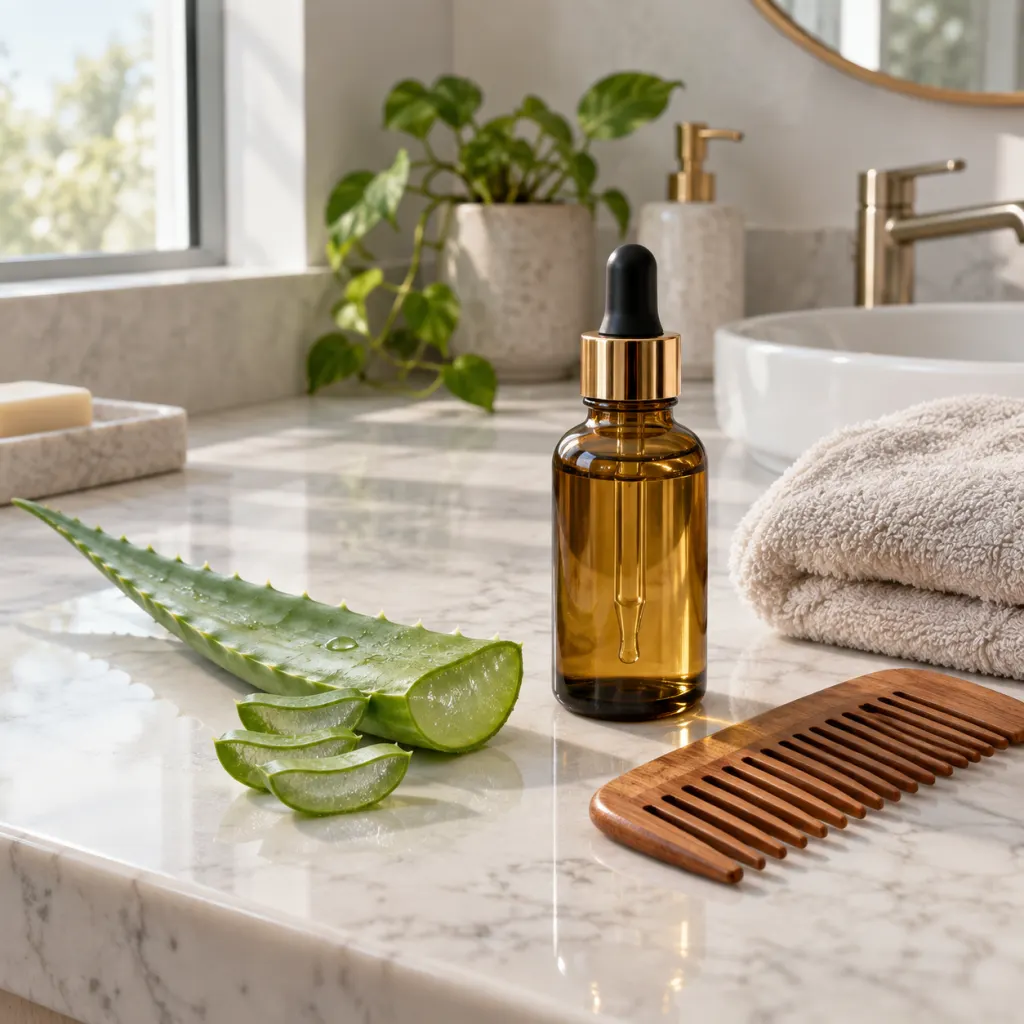
Aloe vera hair oil is usually not oil pressed from aloe leaves. Aloe is mostly known for its inner-leaf gel, while the oily part of a finished hair product usually comes from a carrier such as coconut, sunflower, jojoba, olive, mineral, or another plant-derived oil. In a commercial bottle, aloe may appear as aloe barbadensis leaf juice, aloe extract, aloe powder, or another aloe-derived ingredient blended into a base. In a homemade version, people may steep aloe gel or processed aloe material into oil, but water-rich fresh gel and oil do not naturally mix well, and fresh plant material can spoil if handled casually. That matters because the likely feel of the product depends as much on the carrier oil and fragrance as on aloe itself.
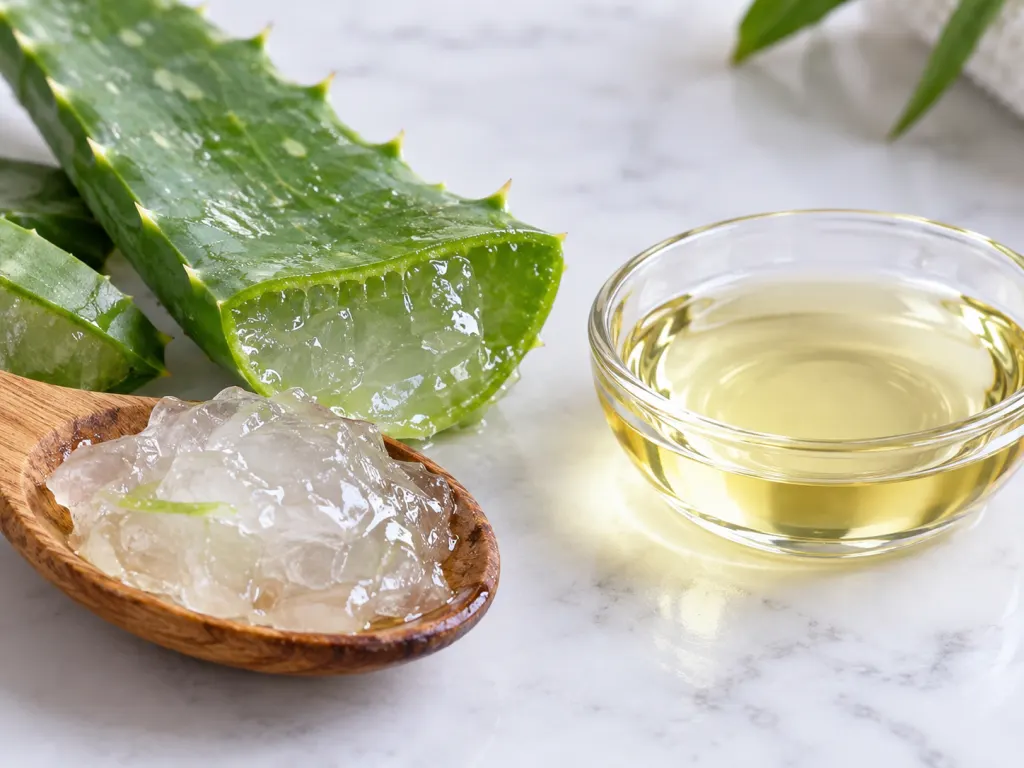
What Aloe Brings To The Mix
Aloe has a long history in skin care, and modern health sources describe both topical and oral uses, while separating those routes clearly. NCCIH explains that aloe products can be made from different parts of the leaf, including inner gel, latex from the outer layer, and whole leaf preparations (NCCIH). For hair oil, the relevant idea is topical use on skin and hair, not swallowing aloe or using aloe latex. The evidence base for aloe on human skin is mixed by condition and product type. A systematic review available through PubMed Central concluded that aloe vera’s clinical effectiveness was not sufficiently defined overall, even though some small studies looked promising for certain topical uses (PMC review). That means it is reasonable to enjoy aloe in a cosmetic product, but less reasonable to expect it to change a medical scalp problem on its own.
How Oils Affect Hair Strands And Scalp
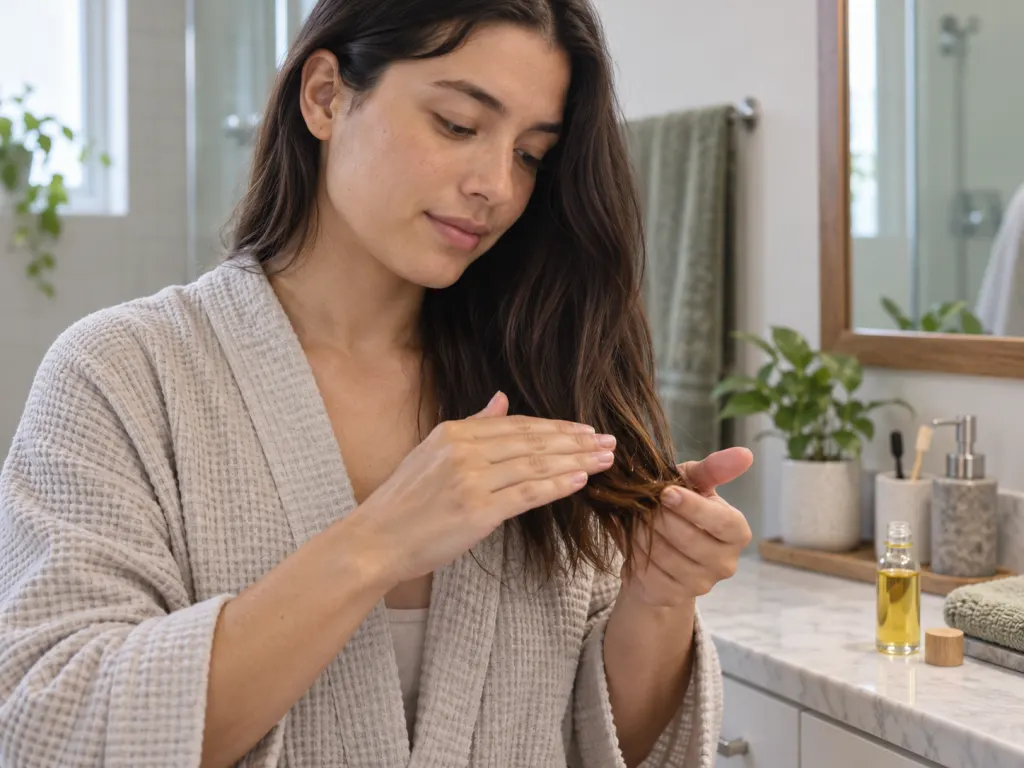
Hair oils work mainly by coating strands and changing how they feel. A small amount can add shine, reduce roughness between strands, and make detangling feel easier. That can indirectly help people who break hair while brushing or styling, because less tugging means less mechanical stress. The American Academy of Dermatology recommends gentle shampooing at the scalp, conditioner after shampoo, less rubbing with towels, careful detangling, and lower heat exposure to reduce damage (AAD hair damage guidance). Aloe vera hair oil fits best inside that wider routine, not as the whole routine.
- For dry ends: apply a tiny amount to the last few inches of hair, then reassess before adding more.
- For textured or tightly curled hair: oil may help seal in the feel of moisture after conditioning, but the hair still benefits from water-based conditioning products.
- For fine or easily weighed-down hair: use less than you think you need, and keep oil away from the roots if flatness or buildup is a concern.
- For oily or acne-prone skin: keep oily products away from the forehead, temples, and neck when possible.
Why Scalp Use Needs More Caution Than Ends-Only Use
The scalp is skin, and skin can react to botanicals, fragrances, preservatives, and oils. MedlinePlus notes that hair products, cosmetics, and perfumes can lead to skin reactions on the face, head, and neck, and that allergic reactions may appear after repeated exposure rather than the first use (MedlinePlus). This is one reason a product that feels fine on the hair shaft can still be a poor match for the scalp. The American Academy of Dermatology also warns that oils in hair-care products can move onto skin and clog pores, with bumps appearing along the hairline, forehead, or back of the neck (AAD acne and hair products). A good rule is simple: the closer a product sits to skin, the more carefully it should be introduced.
Safety Signs That Mean The Product Is Not A Good Match
Stop using an aloe vera hair oil if you notice itching, burning, stinging, swelling, new bumps, rash, flaking that worsens after use, or tenderness where the product touched. Mayo Clinic advises medical care for a rash that is severe or widespread, interferes with sleep or daily activities, involves the eyes, mouth, face, or genitals, or does not improve within three weeks; it also flags fever or pus as signs that need prompt attention (Mayo Clinic). For a hair oil specifically, also pay attention to the pattern: bumps around the hairline suggest the product may be migrating onto facial skin, while discomfort directly on the scalp suggests irritation or sensitivity where it was applied.
How To Read A Bottle Label Without Getting Distracted By Hype
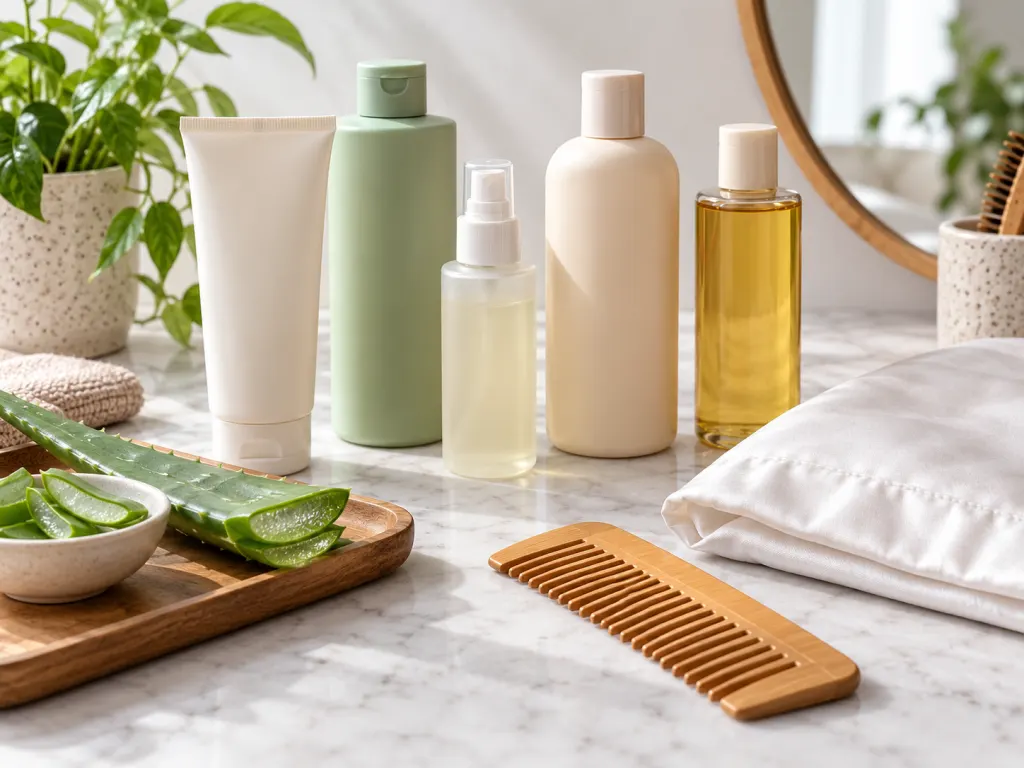
A label can tell you more than the front-of-bottle promise. Look first at the ingredient list and the order of ingredients. If aloe appears after fragrance, colorants, or a long list of extracts, the product may contain only a small amount of aloe-derived material. If the oil base is heavy and your skin is acne-prone, consider whether the product is likely to sit on the hairline or pillowcase. FDA explains that U.S. cosmetics are not generally pre-approved before sale, although companies are responsible for marketing safe, properly labeled products, and some claims can move a product into a different regulatory category (FDA cosmetics law). In plain language, a polished label is not the same as proof that a formula is right for your scalp.
A Practical Way To Try Aloe Vera Hair Oil
If you want to try aloe vera hair oil, start with the least complicated version of the routine. Apply a small amount to dry or slightly damp ends, not the whole scalp, and wait to see how your hair and skin respond over several uses. Keep the product away from the eyes. Avoid heating the oil before applying it; heat can make a routine feel spa-like, but it adds burn risk and can work against a low-damage hair-care plan. Wash hands after applying, and consider changing pillowcases more often if the oil transfers while you sleep. If the product makes hair limp, sticky, dusty-feeling, or harder to wash, use less, apply only before shampooing, or choose a lighter product.
Where Aloe Vera Hair Oil Fits Best
Aloe vera hair oil fits best as a finishing or pre-wash product for comfort, manageability, and shine. It is less suitable as a substitute for a gentle shampoo, conditioner, sun and heat protection habits, or evaluation of ongoing scalp symptoms. If your main concern is breakage, focus on reducing friction, heat, tight styles, harsh chemical services, and rough towel drying. If your main concern is the scalp, focus on identifying irritants, avoiding heavy residue, and getting professional guidance when symptoms persist. Aloe may be a pleasant ingredient, but the routine around it usually matters more than the plant name on the bottle.
Wrap-Up
Aloe vera hair oil can be useful when treated as a cosmetic product: a small amount may improve shine, softness, and grooming comfort. The evidence does not justify dramatic expectations, especially for hair growth, shedding, or scalp conditions. Choose a simple formula, introduce it slowly, avoid heated applications, keep oil away from acne-prone areas, and stop if your skin reacts. For ongoing scalp discomfort, sudden shedding, or a rash that worries you, bring the product list to a qualified health professional.
Frequently Asked Questions
- → Is aloe vera hair oil the same as aloe vera gel?
No. Aloe vera gel comes from the inner leaf, while aloe vera hair oil is usually a carrier oil blended with aloe-derived ingredients. The feel, safety, and usefulness depend on the full formula, not just the word aloe on the label.
- → Can I put aloe vera hair oil directly on my scalp?
Some people can, but scalp use deserves caution because the scalp is skin. Try a small amount first, avoid broken or irritated skin, and stop if itching, burning, rash, tenderness, or new bumps appear.
- → Will aloe vera hair oil make hair grow faster?
Evidence is limited for major changes in growth or shedding from aloe vera hair oil. It is more realistic to use it for cosmetic goals such as shine, slip, and a softer feel while keeping a gentle overall hair-care routine.
- → Can aloe vera hair oil cause bumps around the hairline?
Yes, oily hair products can move onto nearby skin and contribute to clogged pores in some people. If bumps appear on the forehead, temples, neck, or hairline after use, stop the product and wash residue from pillowcases, hats, and headbands.
- → What should I look for when buying aloe vera hair oil?
Look for a clear ingredient list, a carrier oil that suits your hair type, minimal fragrance if your skin is sensitive, and realistic wording. Be cautious with products that make dramatic scalp or growth claims without reliable evidence.
References
This content was developed and refined using reliable sources.
- https://www.nccih.nih.gov/health/aloe-vera
- https://pmc.ncbi.nlm.nih.gov/articles/PMC1313538
- https://www.aad.org/public/diseases/hair-loss/insider/stop-damage
- https://www.medlineplus.gov/ency/article/000869.htm
- https://www.aad.org/public/diseases/acne/causes/hair-products
- https://www.mayoclinic.org/diseases-conditions/contact-dermatitis/symptoms-causes/syc-20352742?p=1
- https://www.fda.gov/cosmetics/cosmetics-laws-regulations/cosmetics-us-law