 Save
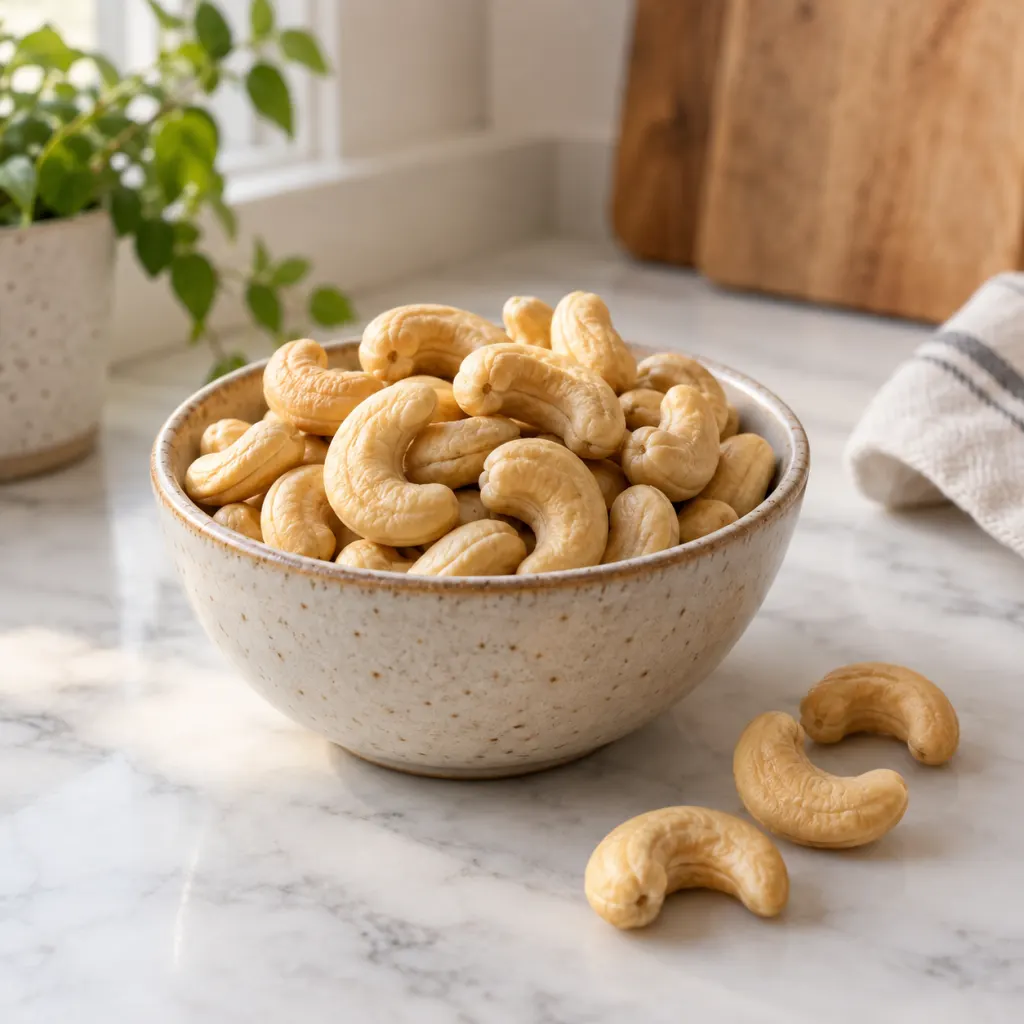
When you eat cashews, the main thing that happens is simple: you add a rich, calorie-dense plant food that contributes unsaturated fats, plant protein, magnesium, copper, and texture to your meal. They are not a special shortcut to better health, but they can be a useful everyday food when the portion is reasonable and the product is unsalted or lightly seasoned. Cashews are also tree nuts, so they are not safe for people with a cashew or tree nut allergy. The most practical answer is that cashews can make meals more satisfying, but they deserve the same label-reading and portion awareness as other nuts.
Cashews Are Small, but Nutrient Dense
Cashews are often treated like a casual snack, yet they are closer to a compact ingredient than a light nibble. Their creamy bite comes from fat, and the type of fat matters. The American Heart Association recommends choosing foods with monounsaturated and polyunsaturated fats in place of foods high in saturated and trans fats, and it lists nuts and seeds among those options https://www.heart.org/en/healthy-living/healthy-eating/eat-smart/fats/fats-in-foods. That does not turn cashews into an unlimited food; it simply explains why a small handful can feel more substantial than a low-fat snack. They bring fat, crunch, and mild sweetness at once, which is why they show up in trail mixes, stir-fries, sauces, desserts, and plant-based creams.
A useful way to think about cashews is by what they add to the plate. They are not just a garnish, but they are also not a complete meal by themselves. In everyday cooking, they work best as one part of a broader pattern:
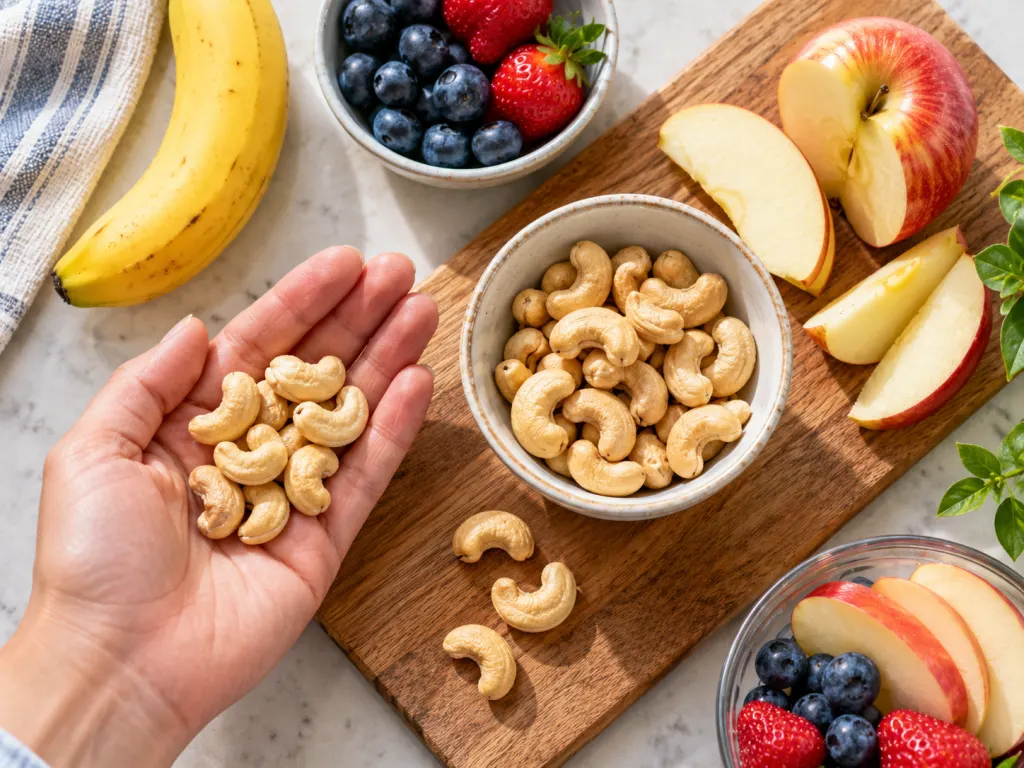
- For fullness: pair a small handful with fruit, vegetables, yogurt, oats, or whole grains.
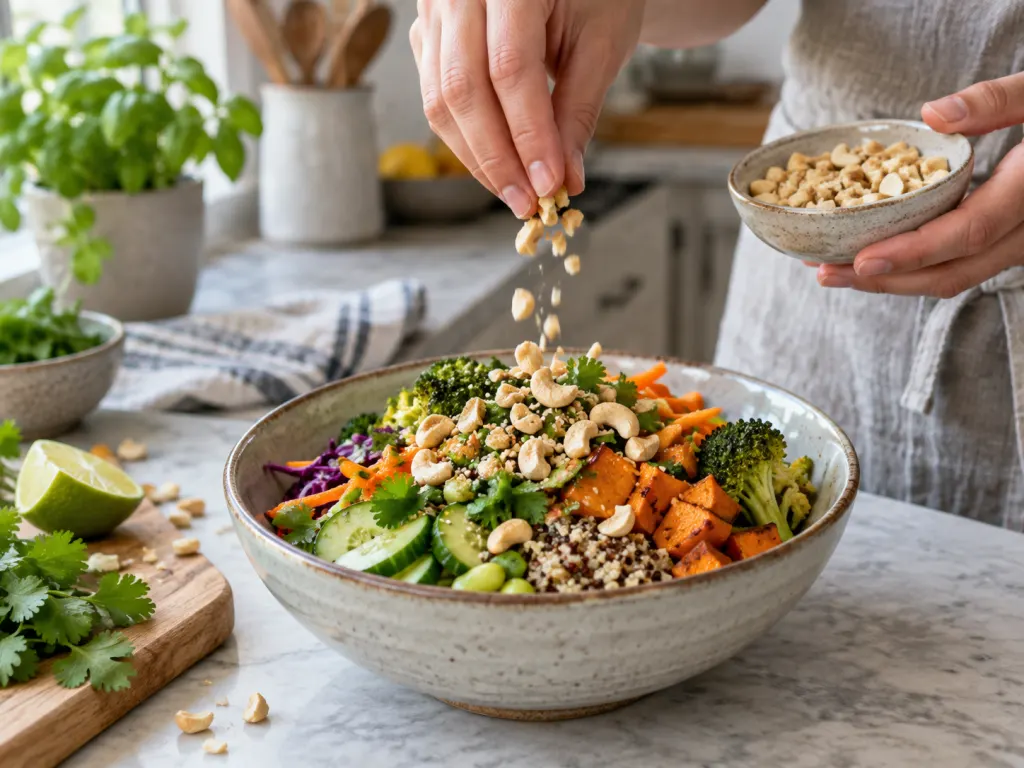
- For texture: scatter chopped cashews over salads, rice bowls, roasted vegetables, or soups.
- For creaminess: soaked and blended cashews can thicken sauces without adding a strong flavor.
- For balance: choose unsalted or lightly salted cashews when the rest of the meal already contains salty ingredients.
The First Change Is Usually Fullness, Not a Dramatic Body Signal
Most people will not feel a dramatic change after eating cashews. What they may notice is slower, steadier satisfaction compared with eating a snack made mostly of refined starch or sugar. Fat and protein take more time to eat and digest than many crisp packaged snacks, and cashews have enough richness that a measured portion can feel complete. The key word is measured. Eating straight from a large bag makes it easy to turn a small handful into several handfuls before you register how much you have eaten. For a snack, pre-portioning cashews into a small bowl is less about restriction and more about making the food visible.
Magnesium and Copper Are the Standout Minerals
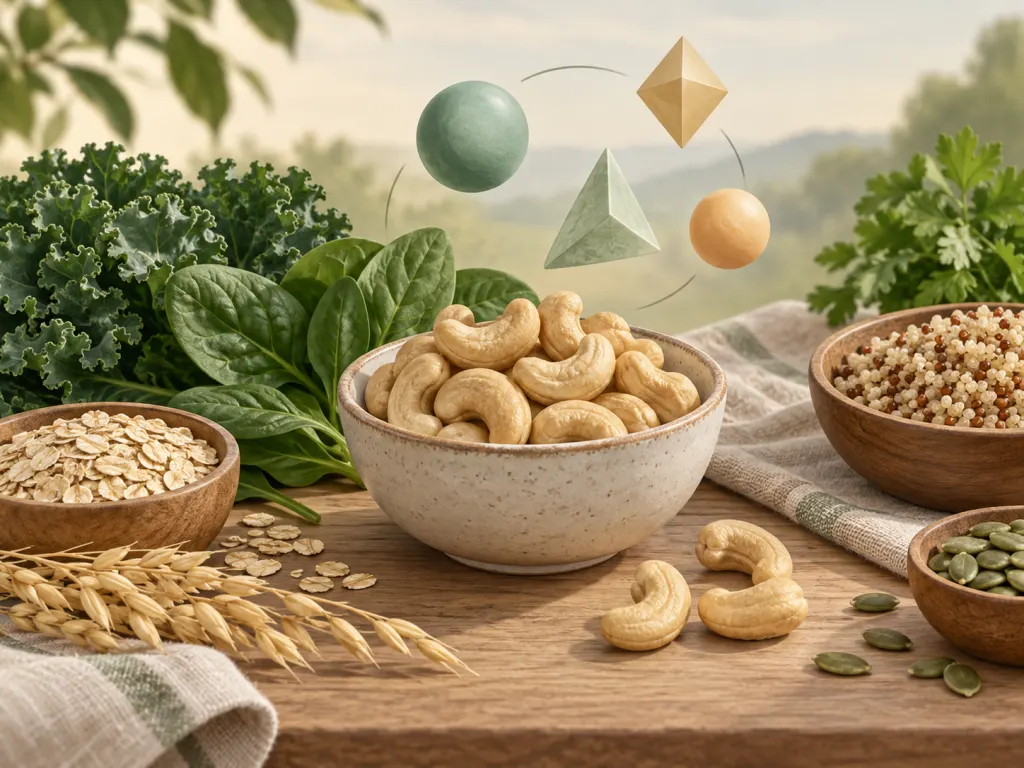
Cashews are often discussed because of their minerals, especially magnesium and copper. The NIH Office of Dietary Supplements lists dry-roasted cashews as providing 74 mg of magnesium in a 1-ounce serving, about 18 percent of the Daily Value shown in that table https://ods.od.nih.gov/factsheets/magnesium-healthProfessional/. The same NIH office lists dry-roasted cashews as providing 629 mcg of copper per 1-ounce serving, about 70 percent of the Daily Value in its copper table https://ods.od.nih.gov/factsheets/Copper-HealthProfessional/?uid=197cefbe33d9s16. Magnesium is involved in energy production and normal muscle and nerve function, while copper is involved in processes such as energy production, iron metabolism, and connective tissue synthesis. Those functions describe what the nutrients do in the body; they are not a promise that one snack will create a noticeable effect.
How Cashews Fit Into Meals
Cashews are easiest to use well when you treat them as a flavorful accent. A spoonful of chopped cashews can make a bowl of vegetables and grains feel more complete. A small handful can round out an afternoon snack when paired with a piece of fruit. Blended cashews can add body to soups, dressings, and dairy-free sauces. Because their flavor is mild, they adapt to sweet, savory, spicy, and tangy seasonings. That flexibility is part of their appeal, but it can also hide how much has been added. Cashew cream, cashew butter, and cashew-based desserts may contain a lot of nuts in a form that goes down quickly, so the serving size on the label is worth checking.
Salted, Sweetened, Raw, Roasted, and Butter Forms Are Not the Same Experience
The word cashew can describe several different products. Dry-roasted unsalted cashews are different from honey-roasted cashews, chocolate-covered cashews, salted snack mixes, or sweet cashew butter. Roasting changes flavor and texture. Salt changes how easy they are to keep eating. Sugar coatings turn them into a dessert-like food. Cashew butter spreads smoothly and can be convenient, but it is also easy to use more than intended because it does not have the same chewing pause as whole nuts. If cashews are part of your usual routine, compare labels for sodium, added sugar, and serving size rather than assuming every package plays the same role.
When Cashews May Not Be Right for Someone
The biggest safety issue is allergy. The FDA includes tree nuts among the major food allergens and explains that packaged foods must identify the food source of major allergens on labels https://www.fda.gov/food/nutrition-food-labeling-and-critical-foods/food-allergies. MedlinePlus notes that nut allergy reactions can begin quickly after eating nuts and may include hives, itching, swelling, stomach symptoms, coughing, wheezing, or trouble breathing https://medlineplus.gov/ency/article/007805.htm. Anyone with known or suspected nut allergy should follow guidance from a qualified clinician. If someone has trouble breathing, throat swelling, faintness, or a serious whole-body reaction after eating nuts, seek emergency help right away.
A Sensible Portion Is Usually the Difference Between Helpful and Too Much
Cashews are not a food where more is automatically better. Because they are dense and pleasant to eat, the main practical risk for many people is simply eating more than planned. A small handful can add flavor and staying power; repeated handfuls can crowd out other foods you meant to eat. This matters most when cashews are replacing vegetables, beans, fruit, whole grains, or full meals rather than complementing them. A helpful kitchen habit is to use cashews deliberately: measure them for a sauce, chop them before topping a dish, or put a snack portion in a bowl. That keeps the focus on enjoyment instead of grazing from the package.
What You May Notice Over Time
If cashews become a regular part of your eating pattern, the most likely changes are practical rather than dramatic. You may find that meals feel more satisfying when they include a crunchy, fatty element. You may use cashew cream to thicken sauces or soups. You may choose unsalted cashews as a snack that feels more complete than chips or candy. You may also notice that flavored cashews are easy to overeat, especially if they are salty, spicy, or sweet. None of these observations require treating cashews as a health project. They are simply a versatile nut with a rich texture and a useful nutrient profile.
Bottom Line
Eating cashews gives you a compact source of mostly unsaturated fat, plant protein, magnesium, copper, and culinary richness. The best use is moderate and intentional: a small handful as a snack, a topping for texture, or a blended base for creamy sauces. Choose simpler products most of the time, read labels when buying seasoned or mixed cashews, and take allergy concerns seriously. Cashews are neither a food to fear nor a food to overstate. They are most useful when they make a balanced plate more satisfying without pushing other nourishing foods aside.
Wrap-Up
Cashews are best understood as a rich, versatile nut that can help make meals more satisfying. Their notable minerals include magnesium and copper, and their fats are mostly the unsaturated types commonly emphasized in healthier eating patterns. The main practical limits are portion size, added salt or sugar, and tree nut allergy. For most people who can safely eat them, cashews fit well as a small snack, a crunchy topping, or a creamy cooking ingredient.
Frequently Asked Questions
- → How many cashews should I eat at one time?
A small handful is a practical serving for many adults, especially when cashews are part of a snack or meal rather than the whole meal. The best amount depends on your overall eating pattern, appetite, and personal health needs, so use the package serving size as a starting point and adjust with professional guidance if needed.
- → Are roasted cashews less useful than raw cashews?
Not necessarily. Roasted cashews can still be a useful food, and many people prefer their flavor. The bigger differences often come from added salt, sugar, oils, or coatings. If you eat cashews often, compare labels and choose simpler versions most of the time.
- → Why do cashews feel so filling?
Cashews combine fat, some plant protein, and a dense texture that takes chewing. That combination can make a small portion feel more substantial than many crisp, low-protein snacks. They are still energy-dense, so putting a portion in a bowl can help you enjoy them without losing track.
- → Can someone with a tree nut allergy eat cashews?
Cashews are tree nuts, and they are not safe for someone who is allergic to cashews. People with any nut allergy should read labels carefully and follow guidance from an allergist or qualified health professional, especially because cross-contact can occur in processing and food service settings.
- → What is the best way to use cashews in cooking?
Use cashews where their richness has a clear job: chopped over vegetables or grain bowls, blended into sauces, stirred into stir-fries, or paired with fruit for a snack. Their mild flavor works in both savory and sweet dishes, but portioning matters most when they are blended into creams or butters.
References
This content was developed and refined using reliable sources.
- https://www.heart.org/en/healthy-living/healthy-eating/eat-smart/fats/fats-in-foods
- https://ods.od.nih.gov/factsheets/magnesium-healthProfessional
- https://ods.od.nih.gov/factsheets/Copper-HealthProfessional/?uid=197cefbe33d9s16
- https://www.fda.gov/food/nutrition-food-labeling-and-critical-foods/food-allergies
- https://medlineplus.gov/ency/article/007805.htm