 Save
Ginger and dates may be a pleasant kitchen pairing, but they should not be treated as a special way to clean the colon. A more accurate takeaway is this: dates can add fruit-based fiber to meals, ginger can add flavor and warmth, and regular bowel habits usually depend on a broader pattern of fiber, fluids, movement, and medical attention when bowel changes are persistent or unusual. Mayo Clinic notes that colon cleansing is mainly used before certain medical procedures and is not needed for routine waste removal, while NIDDK emphasizes fiber and liquids for constipation-related eating habits (Mayo Clinic; NIDDK).
The Short Answer: Food Can Support Regularity, Not Wash the Colon Clean
The colon is part of a working digestive system, not a pipe that needs routine scrubbing. Food moves through the stomach and intestines, water is absorbed, and stool is formed and passed. When people talk about a natural colon routine, they often mean fewer hard stools, less straining, and a more predictable bathroom pattern. Those are practical goals, but they are different from the idea that a specific ingredient can remove hidden buildup. MedlinePlus describes constipation as fewer than three bowel movements a week, often with hard, dry stool, and lists fruits, vegetables, grains, fluids, exercise, and responding to the urge to go as common self-care habits (MedlinePlus).
That distinction matters because ginger and dates are foods, not procedures. Dates can be useful because they are a whole fruit with carbohydrate, sweetness, and fiber. Ginger is a rhizome used in cooking and traditional practices, but the National Center for Complementary and Integrative Health says ginger research in people has focused largely on nausea and a few other areas, with some study quality limitations (NCCIH). In everyday terms, a ginger-date drink or snack may be enjoyable and may help someone eat more plant foods, but it should be framed as food, not as a guaranteed digestive reset.
Why Dates Get Mentioned in Digestive Conversations
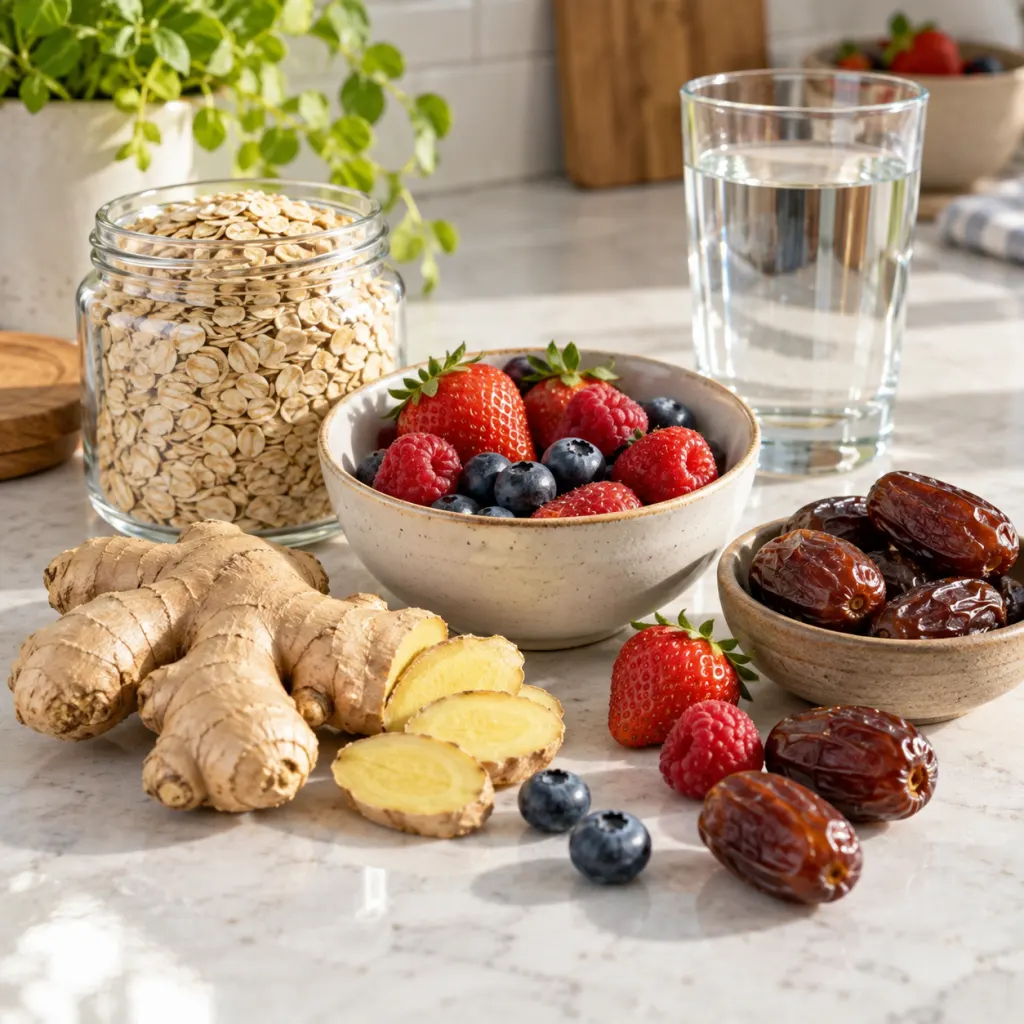
Dates are naturally sweet, chewy fruits, so they are often used to sweeten smoothies, oatmeal, yogurt bowls, sauces, and snack bites without adding table sugar. Their main digestive relevance is not mystery; it is fiber. Fiber is a type of carbohydrate the body does not fully break down, and Harvard T.H. Chan School of Public Health explains that different fibers can add bulk, hold water, and help support regular stool patterns as part of a wider eating pattern (Harvard T.H. Chan School of Public Health). This does not make dates a stand-alone answer, but it does explain why they can be a reasonable ingredient in a high-fiber kitchen.
Portion context is still important. Dates are dense and sweet, so a small number can add flavor quickly. If someone blends several dates into a drink, the calories and sugars can rise without feeling like much food was eaten. A practical approach is to treat dates as one fruit choice among many rather than the centerpiece of every digestive habit. The FDA sets the Daily Value for dietary fiber at 28 grams and notes that Nutrition Facts labels can help people compare fiber levels in packaged foods (FDA). Whole fruits, vegetables, legumes, nuts, and whole grains usually need to share the work.
What Ginger Adds, and What It Does Not Prove
Ginger brings heat, fragrance, and a slightly peppery taste that can make plain foods more appealing. That matters because sustainable food habits often depend on enjoyment. Fresh ginger grated into warm water, oats, lentil soup, rice, roasted carrots, or a date smoothie can make high-fiber meals feel more satisfying. However, it is easy to overstate the evidence. NCCIH reports that ginger has been studied for several uses, especially nausea, and that some research areas have uncertain or lower-quality evidence. It also notes that ginger taken by mouth can cause side effects such as abdominal discomfort, heartburn, diarrhea, or mouth and throat irritation in some people (NCCIH).
For a kitchen guide, the sensible position is modest: ginger is a flavorful culinary ingredient, and some people like how it feels in warm drinks or fruit-based snacks. It should not be sold as a forceful bowel stimulant, a medical substitute, or a way to force rapid changes. Strong ginger drinks, concentrated powders, capsules, and frequent large servings are different from a little fresh ginger used in cooking. People who are sensitive to spicy foods, reflux-prone, or already dealing with loose stools may prefer milder amounts or skip it.
The Bigger Pattern That Matters More Than One Pairing
If the goal is easier, more regular bowel movements, the evidence points toward a daily pattern rather than a single morning ritual. NIDDK advises eating enough fiber and drinking plenty of liquids so fiber can work better, and it lists whole grains, legumes, fruits, vegetables, and nuts as good fiber sources (NIDDK). Harvard also recommends increasing fiber gradually because a sudden jump can cause bloating or cramping, especially for people who are not used to fiber-rich meals (Harvard T.H. Chan School of Public Health).
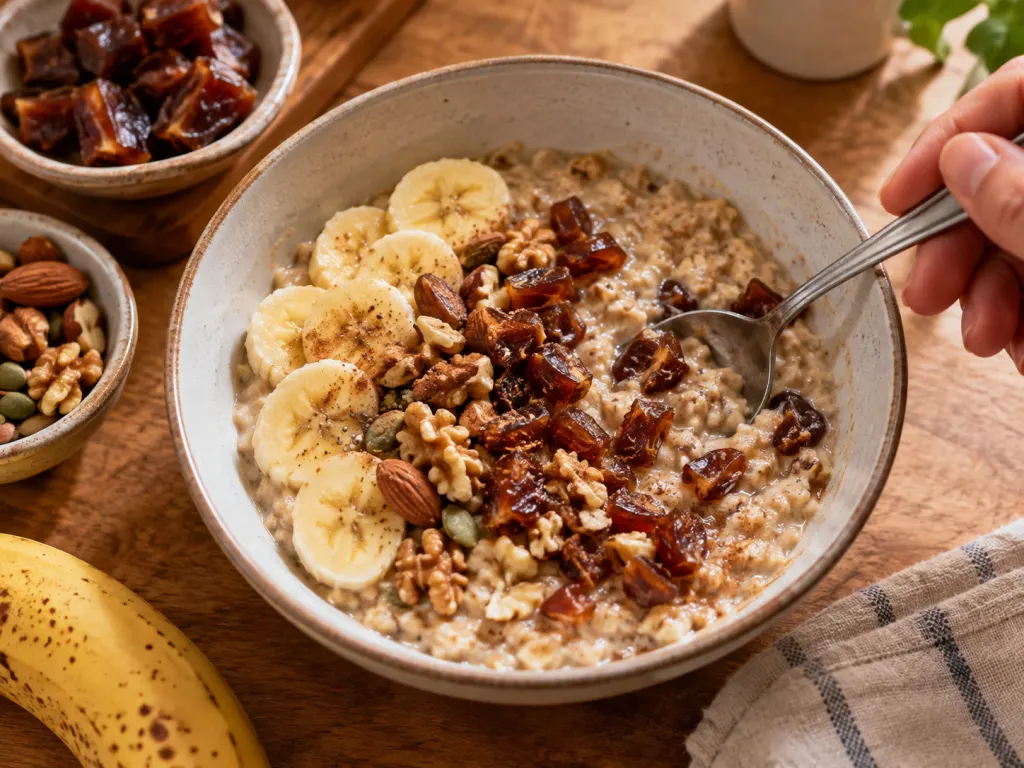
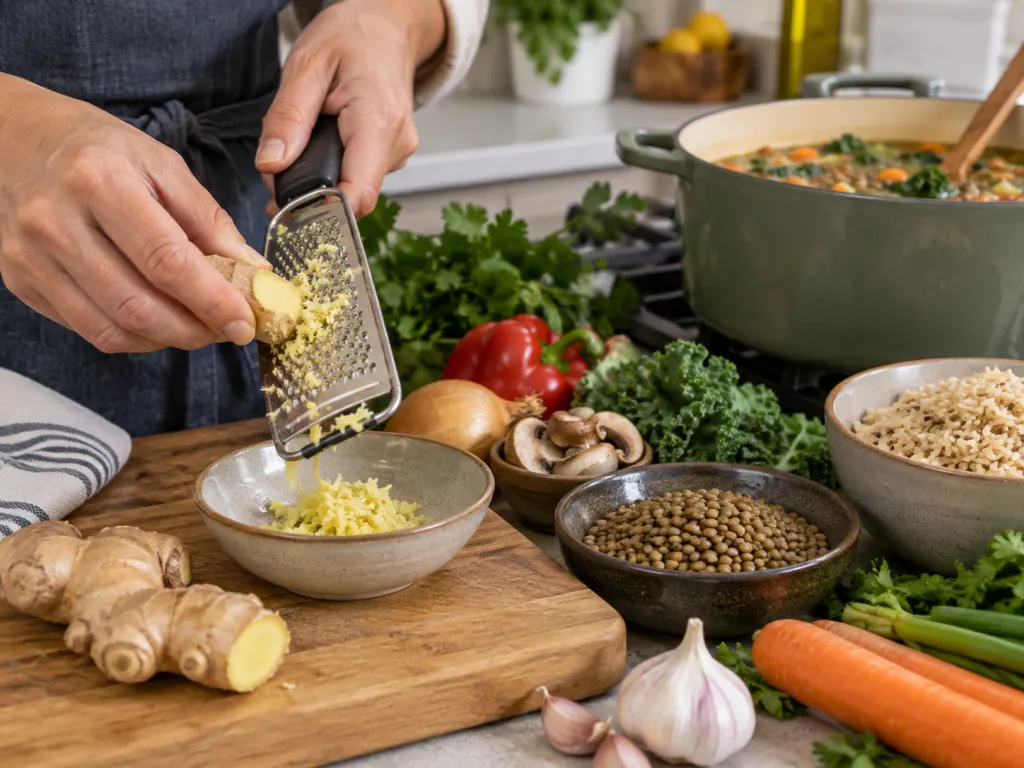
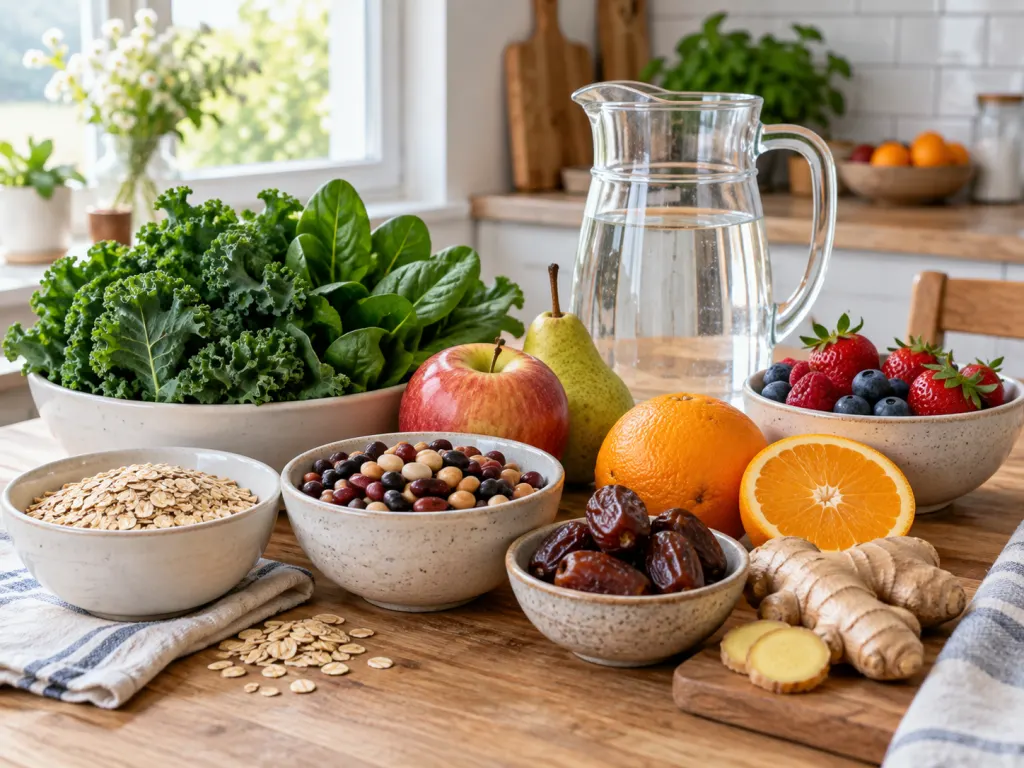
A ginger-date habit is most useful when it is part of that broader pattern. For example, one or two chopped dates stirred into oatmeal with nuts and berries gives more structure than a strained sweet drink. A lentil stew finished with grated ginger, vegetables, and brown rice brings fiber from several foods at once. A smoothie with dates, ginger, yogurt or a fortified alternative, and fruit can be filling, but it should not replace regular meals unless it truly meets the person’s needs. Chewing whole foods also helps people notice fullness in a way that very sweet drinks sometimes do not.
A Practical Kitchen Framework
Instead of chasing a dramatic result, use ginger and dates as accents inside ordinary meals. A simple framework can keep the idea grounded:
- Start with fiber variety: include fruits, vegetables, beans, lentils, oats, barley, whole-grain bread, nuts, or seeds across the day.
- Add dates for sweetness: chop them into foods where a small amount goes a long way, such as oatmeal, yogurt, grain bowls, or homemade snack bites.
- Use ginger for flavor: grate fresh ginger into soups, teas, marinades, sauces, or warm cereal instead of relying on very strong concentrated preparations.
- Pair fiber with fluids: water, soups, and other fluids help fiber do its job more comfortably.
- Increase slowly: if your usual meals are low in fiber, add more over days or weeks rather than all at once.
When a Food-First Approach Is Not Enough
Digestive patterns vary. MedlinePlus notes that it is not necessary for everyone to have a bowel movement every day, but a change in bowel habits should be checked with a provider (MedlinePlus). That is especially relevant when symptoms are new, persistent, painful, or paired with other concerning changes. A food routine can be supportive, but it should not become a reason to delay care when something feels unusual for your body.
Mayo Clinic also warns that colon-cleansing procedures can carry risks, including dehydration, infection, electrolyte changes, and injury, particularly for some people with digestive, kidney, heart, or other conditions (Mayo Clinic). This article is about everyday culinary use of ginger and dates, not procedures, enemas, laxative regimens, or commercial programs. Keeping that boundary clear helps prevent a gentle food idea from turning into something more aggressive than intended.
How to Think About a Ginger-Date Drink
If you enjoy a warm ginger-date drink, think of it as a beverage with flavor and some fruit contribution, not as a targeted colon intervention. Soaking a date and blending it into warm water with a little ginger may be soothing for some people, but straining out the fruit removes some of the fiber-containing pulp. Adding the blended mixture to oatmeal, chia pudding, plain yogurt, or a smoothie usually keeps the ingredient more food-like. The same idea applies to date paste: it can sweeten a recipe, but it is still concentrated fruit, so the rest of the meal should bring balance.
People sometimes expect immediate bathroom changes from a single drink. That expectation can lead to repeated servings, too much sweetness, or frustration. A better marker is whether your overall week includes enough plant foods, fluids, and opportunities to use the bathroom without rushing. Dates and ginger may have a place in that week, but they should not be asked to do the job of an entire eating pattern.
Bottom Line
Ginger and dates are best understood as useful kitchen ingredients. Dates can contribute fruit-based fiber and sweetness; ginger can make fiber-rich foods more appealing. The strongest evidence-based habits for digestive regularity remain consistent: eat a variety of fiber-containing foods, drink enough fluids, move your body as you are able, and pay attention to meaningful changes in bowel patterns. If a claim makes the pairing sound like a quick internal cleaning, scale it back to what food can realistically do.
Wrap-Up
Ginger and dates can be part of a pleasant, fiber-aware kitchen routine, but they should not be framed as a special colon-cleaning method. Dates fit best as a small whole-fruit sweetener, ginger works well as a culinary flavor, and the larger pattern of fiber, fluids, movement, and timely medical guidance matters most.
Frequently Asked Questions
- → Can ginger and dates clean the colon?
No food pairing should be treated as a way to clean the colon. Ginger and dates can be used in meals or drinks, but regular bowel habits are more strongly connected with overall fiber intake, fluids, movement, and individual health factors.
- → Are dates good for digestive regularity?
Dates can contribute fruit-based fiber, which may support a broader high-fiber eating pattern. They are also sweet and dense, so they work best in small amounts alongside other fiber sources such as oats, beans, vegetables, nuts, seeds, and whole grains.
- → Is ginger proven to improve bowel movements?
Ginger is a flavorful food ingredient, but the strongest public evidence summaries focus more on areas such as nausea than on bowel regularity. It is reasonable to use ginger for taste if you enjoy it, while keeping expectations modest.
- → What is a better way to use ginger and dates?
Use them as accents in real foods: chopped dates in oatmeal, a little ginger in lentil soup, or a smoothie that keeps the whole fruit rather than straining it out. Pair them with fluids and a varied, fiber-rich diet.
- → When should bowel changes be checked?
If your bowel habits change in a way that is unusual for you, or symptoms are persistent, painful, or worrying, speak with a qualified health professional. Food habits can support comfort, but they are not a substitute for personal medical guidance.
References
This content was developed and refined using reliable sources.
- https://www.mayoclinic.org/healthy-lifestyle/consumer-health/expert-answers/colon-cleansing/faq-20058435?p=1
- https://www.niddk.nih.gov/health-information/digestive-diseases/constipation/eating-diet-nutrition
- https://www.nccih.nih.gov/health/ginger
- https://medlineplus.gov/constipation.html
- https://nutritionsource.hsph.harvard.edu/carbohydrates/fiber
- https://www.fda.gov/food/nutrition-facts-label/daily-value-nutrition-and-supplement-facts-labels