 Save
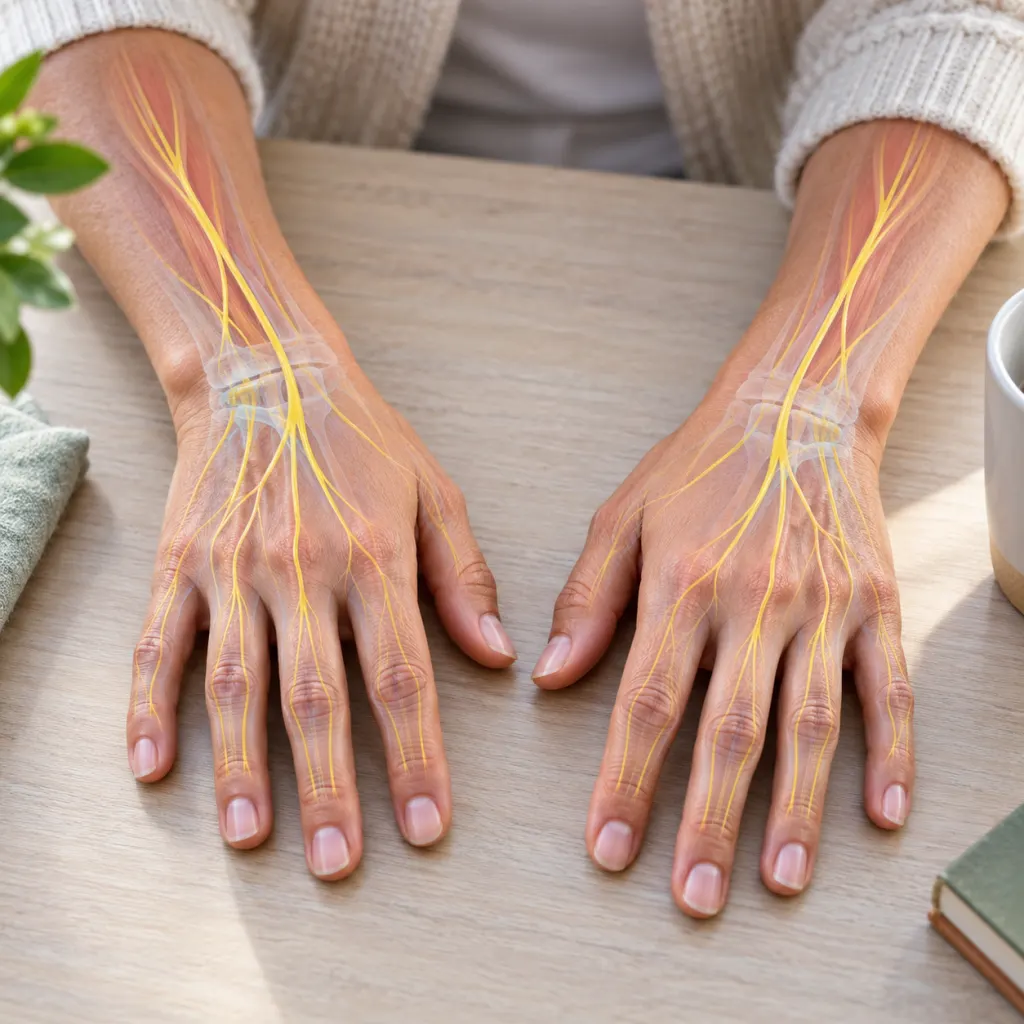
Numb hands most often mean a nerve has been compressed or irritated, or that blood flow to part of the hand has briefly changed. A hand that “falls asleep” after pressure usually improves within minutes. The pattern matters: numbness that is sudden, one-sided, linked with weakness, follows an injury, wakes you often, spreads, or keeps returning should be discussed with a qualified health professional. MedlinePlus notes that numbness and tingling can come from posture, nerve injury, nerve pressure, circulation problems, vitamin deficiencies, diabetes, carpal tunnel syndrome, stroke, transient ischemic attack, thyroid disease, and other causes: MedlinePlus.
Start With the Pattern, Not Panic
Hand numbness is a symptom, not a single condition. It can feel like loss of sensation, pins and needles, burning, prickling, coldness, clumsiness, or a weak grip. A brief episode after sleeping with a wrist bent is different from numbness that keeps returning while driving, wakes you at night, affects only the little finger, or appears suddenly with face or arm weakness. Mayo Clinic describes hand numbness as loss of feeling in one or both hands or fingers, often with tingling, burning, weakness, or clumsiness; it can follow one nerve path in one hand or involve both hands: Mayo Clinic.
A useful first step is to observe the map of the sensation. The thumb, index, middle, and part of the ring finger suggest a different nerve path than the little finger and outer half of the ring finger. Symptoms that start in the neck and travel down the arm may point higher than the wrist. Both hands going numb in a similar way may raise different questions from one finger going numb during one repeated task. None of these patterns proves a cause by itself, but they can help a clinician decide what to examine.
- Timing: Did it begin suddenly, gradually, after sleep, after an injury, or during a repeated activity?
- Location: Which fingers are affected, and is it one hand or both?
- Associated signs: Is there weakness, clumsiness, pain, color change, neck symptoms, balance trouble, or speech difficulty?
- Duration: Does it clear in minutes, last for hours, wake you at night, or keep returning?
- Triggers: Do driving, phone use, computer work, cold exposure, elbow bending, or wrist flexion bring it on?
Temporary Pressure Is Common
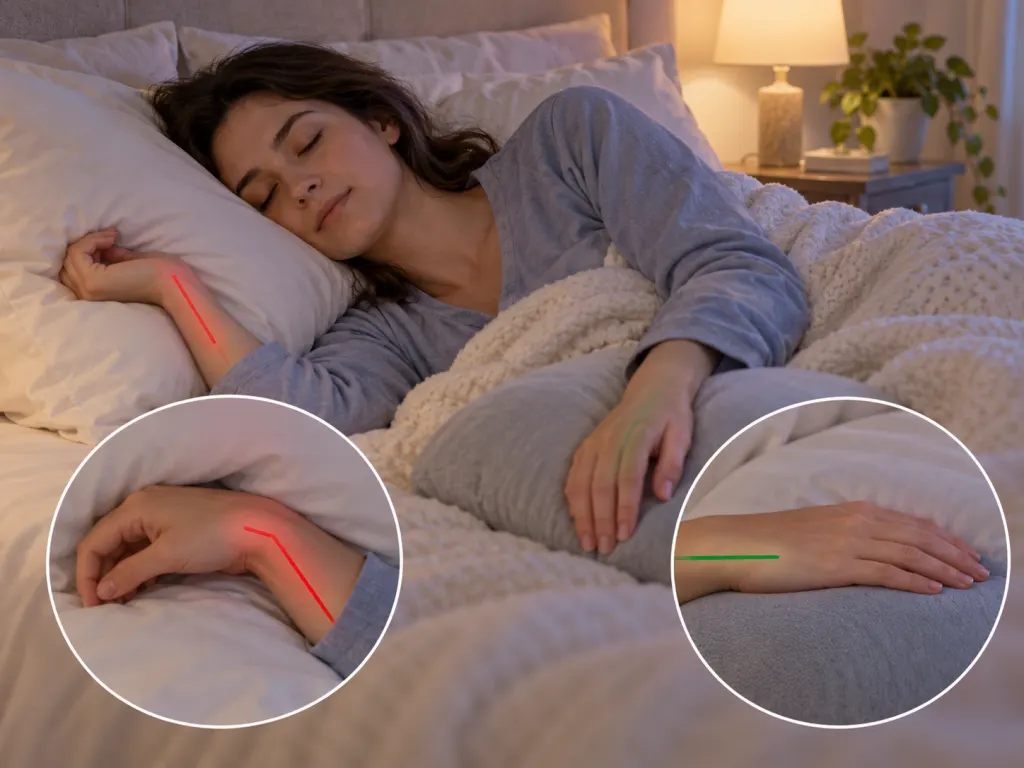
Many everyday episodes come from pressure on a nerve. Sleeping with the wrist folded under the body, leaning on an elbow, carrying a heavy bag by the handles, or holding a phone for a long time can compress a nerve enough to cause tingling. Once the pressure is removed, sensation often returns gradually. That brief return can feel prickly because the nerve is resuming normal signaling. MedlinePlus lists staying in one position for a long time and pressure on peripheral nerves among possible causes of numbness and tingling: MedlinePlus.
Short-lived numbness from position is usually easy to connect to a cause. The clue is that it improves after changing position, shaking out the hand, or resting the arm. Still, “common” does not mean “ignore every time.” If the same posture repeatedly causes numbness, the body may be showing that a work setup, sleep position, tool grip, or phone habit is placing steady strain on a nerve. Changing the angle of the wrist, avoiding prolonged elbow pressure, taking pauses, and keeping the neck, shoulders, elbows, and wrists in more neutral positions can reduce repeated irritation while you arrange care if symptoms persist.
Carpal Tunnel Often Affects the Thumb Side
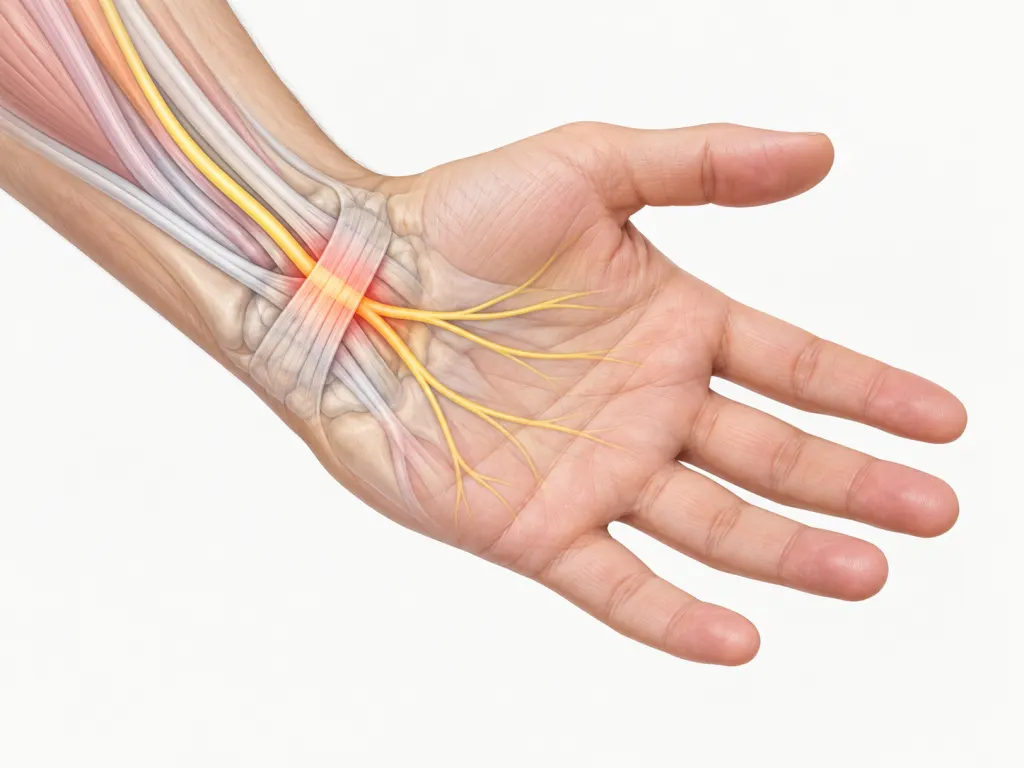
Carpal tunnel syndrome is a well-known reason for numbness in the hand. It occurs when the median nerve is compressed at the wrist. Mayo Clinic explains that symptoms often include tingling and numbness in the thumb, index, middle, and ring fingers, usually sparing the little finger; symptoms may occur while holding a steering wheel, phone, or book, or may wake someone from sleep: Mayo Clinic. Some people notice they shake the hand to relieve the sensation. Over time, the hand may feel weaker or objects may slip from the grip.
Carpal tunnel symptoms can be influenced by wrist anatomy, inflammatory conditions, diabetes, fluid retention, prior wrist injury, and repeated hand motions. Importantly, computer use alone is not a complete explanation for every case. Mayo Clinic notes that evidence is not clear enough to prove computer use as a direct carpal tunnel risk factor, although computer work may contribute to other hand discomfort. That distinction matters because a person with persistent symptoms needs the actual cause considered, not just a quick assumption about typing.
The Little Finger Points to Another Nerve Path
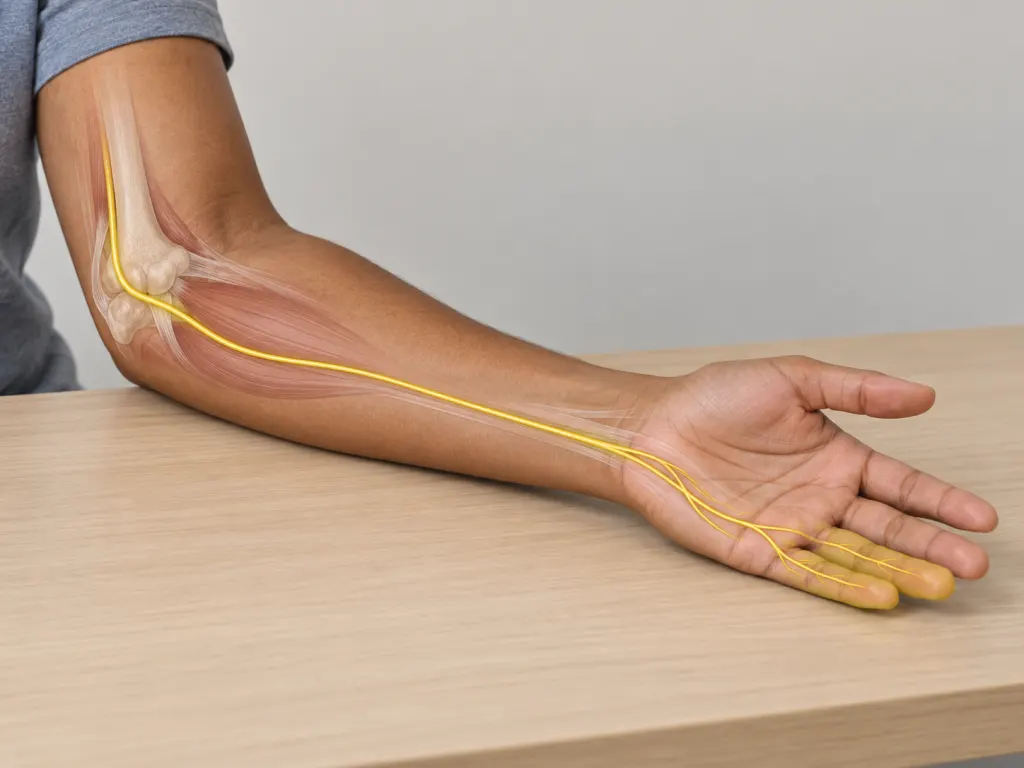
Numbness in the little finger and outer half of the ring finger often raises the question of ulnar nerve irritation. The ulnar nerve passes behind the inner elbow through the cubital tunnel and continues into the hand. Cleveland Clinic describes cubital tunnel syndrome as compression or irritation of this nerve, with symptoms that can include numbness or tingling in the hand, ring finger, and little finger, especially when the elbow is bent during driving, phone use, or sleep: Cleveland Clinic.
This is one reason the exact fingers matter. If someone says, “my hand is numb,” it can sound vague, but the thumb-side fingers and little-finger side are served by different nerve pathways. Long elbow bending, leaning on an armrest, prior elbow injury, elbow arthritis, swelling, or a cyst near the elbow can all change the pressure around the ulnar nerve. A clinician may ask how long symptoms have been present, whether fine movements feel harder, and whether there is visible muscle thinning or grip trouble.
Numbness Can Also Come From Broader Nerve Problems
Peripheral neuropathy means damage or dysfunction involving nerves outside the brain and spinal cord. It may affect sensation, movement, or body functions that happen automatically. The National Institute of Diabetes and Digestive and Kidney Diseases notes that peripheral neuropathy typically affects the feet and legs but can also affect the hands and arms; symptoms can include burning, tingling, numbness, pain, or weakness: NIDDK. Diabetes is a common setting for peripheral neuropathy, but it is not the only possible cause.
MedlinePlus lists many possible contributors to peripheral nerve disorders, including diabetes, physical injury, infections, autoimmune conditions, kidney or liver disease, certain medicines, exposure to toxic substances, alcohol use disorder, smoking, vitamin imbalances, and inherited conditions: MedlinePlus. This wide range is why a persistent numbness pattern should not be reduced to one guess. The office visit may include questions about medical history, work habits, injuries, alcohol use, medicines, thyroid disease, diabetes risk, vitamin status, and whether symptoms are changing over time.
Color Change and Cold Triggers Suggest Blood Flow Questions
Sometimes the main clue is not only numbness, but cold-triggered color change. Raynaud’s syndrome involves episodes in which small blood vessels in fingers or toes tighten more than usual, often in response to cold or stress. Cleveland Clinic describes symptoms such as color changes, coldness, numbness, and then tingling or throbbing as blood flow returns: Cleveland Clinic. Some people have mild primary Raynaud’s, while others have Raynaud’s linked with an underlying condition, medicine, or occupational exposure.
Raynaud’s is different from a hand falling asleep after pressure. The fingers may turn white, blue, purple, or red, and attacks may follow cold grocery aisles, winter weather, handling chilled food, or stress. A person who has new Raynaud-like episodes, sores on fingertips, symptoms on one side only, or other concerning changes should not assume it is just cold hands. The practical point is to notice whether color change, cold exposure, and numbness travel together, because that pattern can guide the next conversation with a health professional.
Vitamin B12 Is One Possible Piece, Not a Guessing Game
Vitamin B12 supports the nervous system and red blood cell formation. The NIH Office of Dietary Supplements states that vitamin B12 deficiency can include neurological changes such as numbness and tingling in the hands and feet, and that these neurological symptoms can occur without anemia: NIH Office of Dietary Supplements. B12 deficiency can occur because of low intake, difficulty absorbing B12 from food, lack of intrinsic factor, gastrointestinal surgery, or prolonged use of certain medicines.
That does not mean everyone with hand tingling should self-treat with supplements. The reason matters, and blood tests may be needed to understand B12 status and related markers. Taking large amounts of vitamins without professional guidance can also blur the picture if symptoms are being investigated. If numbness is persistent, spreading, or paired with balance changes, weakness, mouth soreness, fatigue, or other new symptoms, it is wiser to ask for a medical review than to assume a single nutrient explains everything.
When Numb Hands Need Urgent Attention
Some numbness patterns are urgent because they may signal a problem in the brain, spine, or major nerve pathways. MedlinePlus advises calling emergency services or going to a hospital if numbness or tingling occurs with weakness or inability to move, follows a head, neck, or back injury, is accompanied by loss of bladder or bowel control, confusion, loss of consciousness, slurred speech, vision change, difficulty walking, or weakness: MedlinePlus. These signs are not wait-and-see symptoms.
Stroke is a key emergency to recognize. The CDC lists sudden numbness or weakness in the face, arm, or leg, especially on one side of the body, along with sudden confusion, trouble speaking, trouble seeing, trouble walking, dizziness, loss of balance, or sudden severe headache as stroke warning signs; it advises calling 9-1-1 right away: CDC. Even if symptoms improve after a few minutes, prompt medical attention still matters because a brief episode can be a warning event.
What a Clinician May Ask or Check
A medical visit for hand numbness is usually built around pattern recognition and a focused exam. Mayo Clinic notes that detailed symptom information may be needed before the cause can be found, and that several tests may be required in some cases: Mayo Clinic. The clinician may check sensation, strength, reflexes, coordination, pulses, skin color, neck motion, elbow and wrist positions, and whether tapping or bending certain areas reproduces symptoms.
Depending on the story, possible tests may include blood work for diabetes, thyroid function, vitamin levels, inflammation markers, or other clues; nerve conduction studies or electromyography to evaluate nerve signaling; and imaging when the neck, spine, injury history, or a central nervous system concern needs investigation. A useful appointment starts before the appointment: write down which fingers are affected, when symptoms happen, what relieves them, how long they last, whether there is weakness or clumsiness, and any recent injuries or new medicines.
The Practical Takeaway
Occasional hand numbness after pressure is common, but recurring or unexplained numbness deserves attention because the cause can be local, such as wrist or elbow nerve compression, or broader, such as peripheral neuropathy, vitamin B12 deficiency, Raynaud’s syndrome, diabetes-related nerve changes, neck-related nerve irritation, or a more urgent neurologic event. The safest approach is to watch the pattern, remove obvious pressure, avoid repeating the trigger, and seek care when symptoms persist, spread, interfere with sleep or function, or appear with weakness, speech trouble, vision changes, confusion, severe headache, injury, or trouble walking.
Wrap-Up
Numb hands are usually a signal that something is interrupting normal sensation. Brief tingling after sleeping on an arm or leaning on an elbow often reflects temporary nerve pressure. Repeated numbness in the thumb-side fingers may suggest median nerve compression at the wrist, while little-finger numbness can point toward ulnar nerve irritation near the elbow. Both hands, spreading symptoms, cold-triggered color change, weakness, clumsiness, diabetes history, possible vitamin B12 deficiency, or neck symptoms call for a more careful medical conversation. Sudden one-sided numbness or numbness with weakness, confusion, speech trouble, vision change, trouble walking, severe headache, or recent head, neck, or back injury should be treated as urgent. The most helpful next step is to track the exact pattern and discuss persistent or concerning symptoms with a qualified health professional.
Frequently Asked Questions
- → Is it normal for my hands to go numb while I sleep?
It can happen when the wrist or elbow stays bent or compressed during sleep. If it clears quickly after changing position, pressure may be the reason. If it wakes you often, lasts, affects strength, or keeps returning, ask a qualified health professional to review it.
- → Which fingers are most associated with carpal tunnel syndrome?
Carpal tunnel syndrome commonly affects the thumb, index, middle, and part of the ring finger, and it usually spares the little finger. Symptoms may appear during phone use, driving, reading, or sleep.
- → What does numbness in the little finger mean?
Numbness or tingling in the little finger and outer half of the ring finger can fit irritation of the ulnar nerve, often near the elbow. Long elbow bending, leaning on the elbow, prior elbow injury, or swelling can be relevant clues.
- → When should hand numbness be treated as urgent?
Seek emergency help for sudden numbness with weakness, confusion, speech trouble, vision changes, trouble walking, severe headache, loss of consciousness, loss of bladder or bowel control, or symptoms after a head, neck, or back injury.
- → Can vitamin B12 deficiency cause hand tingling?
Yes, vitamin B12 deficiency can be associated with numbness and tingling in the hands and feet. Because there are many possible causes, persistent symptoms should be discussed with a qualified health professional instead of assuming one explanation.
References
This content was developed and refined using reliable sources.
- https://medlineplus.gov/ency/article/003206.htm
- https://www.mayoclinic.org/symptoms/numbness-in-hands/basics/causes/sym-20050842
- https://www.mayoclinic.org/diseases-conditions/carpal-tunnel-syndrome/symptoms-causes/syc-20355603
- https://my.clevelandclinic.org/health/diseases/21997-cubital-tunnel-syndrome
- https://www.niddk.nih.gov/health-information/diabetes/overview/preventing-problems/nerve-damage-diabetic-neuropathies/peripheral-neuropathy
- https://medlineplus.gov/peripheralnervedisorders.html
- https://my.clevelandclinic.org/health/diseases/9849-raynauds-phenomenon
- https://ods.od.nih.gov/factsheets/Vitaminb12-HealthProfessional
- https://www.cdc.gov/stroke/signs-symptoms/index.html