 Save
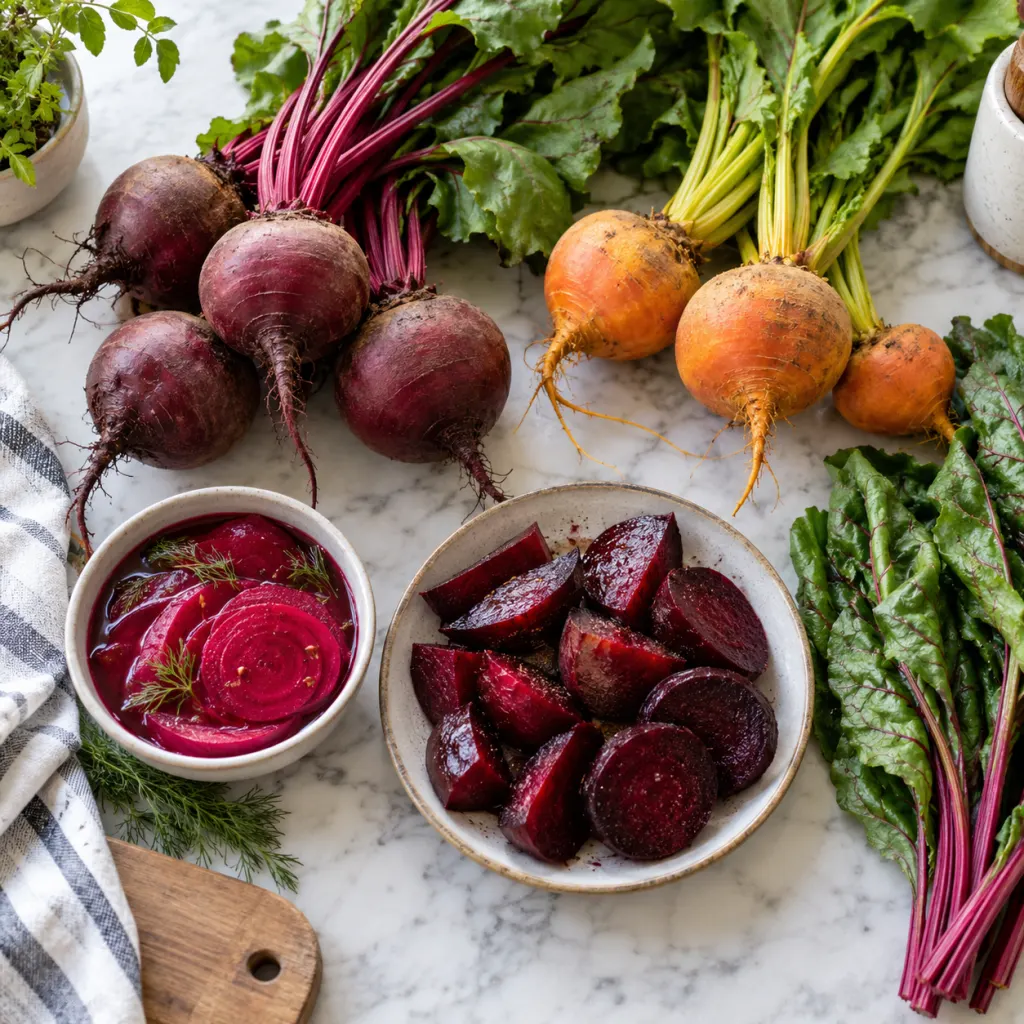
Beets and fermented beets can be a genuinely useful addition to everyday meals: they bring fiber, folate, potassium, natural nitrates, and colorful betalain pigments, while fermentation adds tang and can preserve produce when done safely. The evidence is strongest for beets as part of a broader pattern rich in vegetables, not as a single food that delivers guaranteed results. If you like their earthy sweetness, the best approach is to treat roasted, steamed, grated, juiced, or fermented beets as one flexible vegetable among many.
What Beets Bring to the Plate
Beets are the edible root of Beta vulgaris, the same broad plant species family that also gives us beet greens and chard. In the kitchen, the root is sweet, earthy, dense, and vividly colored; the greens are more leafy and mineral-tasting. That matters because the health value of beets is not tied to one magic compound. It comes from the package: plant fiber, water, minerals, folate, natural sugars, nitrates, and pigments all arrive together in a food that can be served raw, cooked, chilled, or fermented.
Public-health guidance consistently points people toward eating more vegetables and fruits because they provide vitamins, minerals, fiber, water, and other plant substances that help make meals more nutrient-dense. The CDC notes that vegetables and fruits can help meals feel satisfying and that whole vegetables bring fiber in a way juices often do not (CDC). For beets, that means a bowl of roasted wedges or grated raw beet in a salad gives a different food experience than a small glass of beet juice: juice can concentrate nitrate, but the whole root keeps more of the vegetable structure.
The Main Nutrients Are Familiar, Not Exotic
The ordinary nutrients in beets deserve as much attention as the trendier ones. Folate, a B vitamin naturally present in many foods, is used in one-carbon transfers involved in DNA and RNA synthesis and amino-acid metabolism, according to the NIH Office of Dietary Supplements (NIH ODS folate fact sheet). Potassium is another important mineral in vegetable-rich eating patterns, and the NIH describes it as a nutrient many people in the United States do not get enough of from food (NIH ODS potassium fact sheet). Beets are not the only source of either nutrient, but they are an easy way to add both alongside color and texture.
Fiber is also central. CDC healthy-eating guidance describes fruits, vegetables, whole grains, legumes, nuts, and seeds as good sources of fiber and encourages people to increase fiber through everyday foods rather than relying on a single item (CDC healthy eating tips). Beets fit especially well when paired with other high-fiber foods: lentils, chickpeas, barley, farro, cabbage, apples, citrus, nuts, or seeds. A beet salad with beans and herbs is more nutritionally complete than beets alone, and it is usually more satisfying.
Why the Red Color Matters
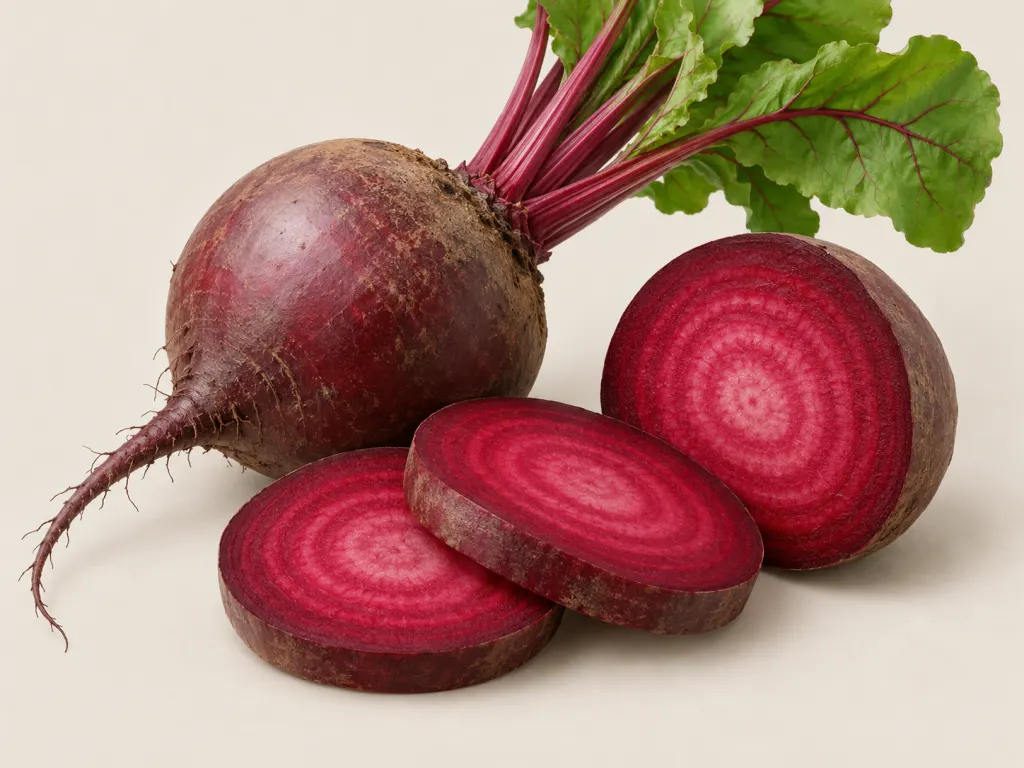
The deep red, purple, and golden shades in beets come largely from betalains, a group of water-soluble pigments. A review hosted by the National Library of Medicine describes betalains as pigments that include red-violet betacyanins and yellow-orange betaxanthins, with red beetroot as a well-known edible source (PMC review on betalains). In practical terms, the color is a clue that beets contain plant compounds beyond basic vitamins and minerals. It is not proof that a beet dish will produce a specific personal health outcome, but it does make beets one of the more visually distinctive vegetables on the plate.
Nitrates Are the Best-Studied Beet Compound
Beets are naturally rich in dietary nitrate, which the body can process through the nitrate-nitrite-nitric oxide pathway. Research interest in beetroot juice is partly about that pathway and partly about how concentrated juice differs from whole beets. A systematic review of randomized trials on beetroot juice found promising but variable results, with differences depending on the people studied and the design of each trial (PMC systematic review). The sensible takeaway is measured: beetroot juice is a studied food, but it should not be framed as a guaranteed shortcut. Whole beets, greens, and other vegetables remain the steadier everyday habit.
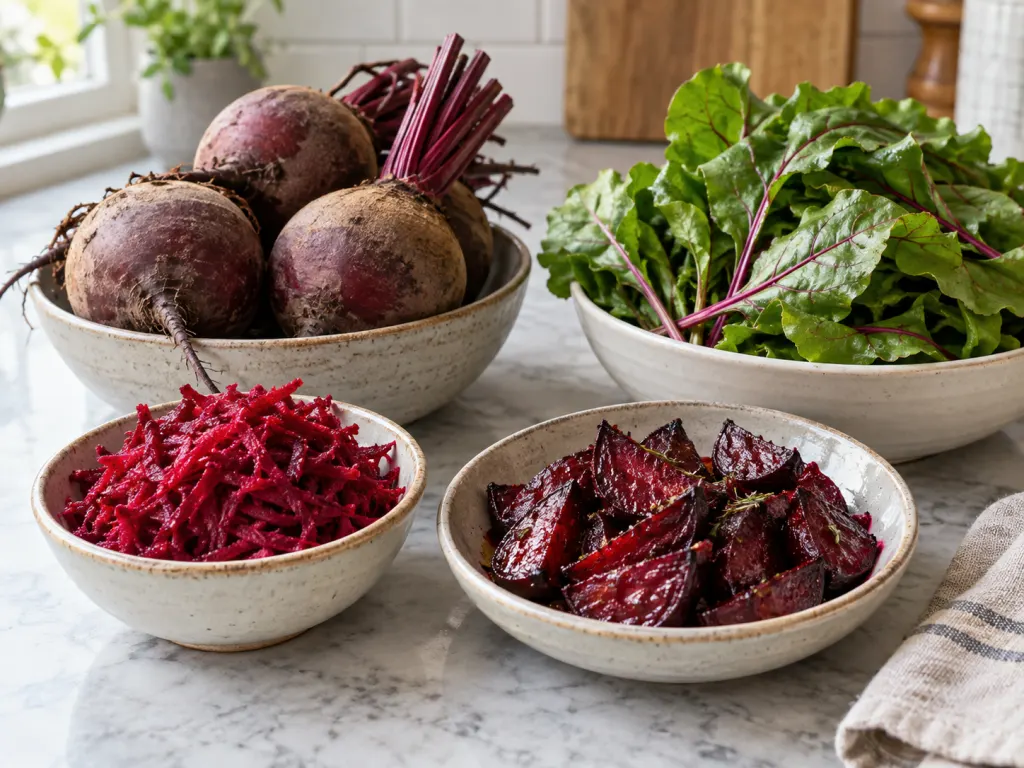
Preparation changes the experience. Roasting concentrates sweetness and softens the earthy edge. Steaming keeps the flavor cleaner and makes the root easy to slice. Grating raw beet gives crunch and color, especially with lemon, apple, or yogurt. Juicing makes a stronger-tasting drink and removes much of the fiber. Fermenting turns beets tart and savory. None of these forms is automatically best; the better choice is the one that helps you eat vegetables regularly while keeping the meal balanced.
Fermented Beets Add Tang, Not Certainty
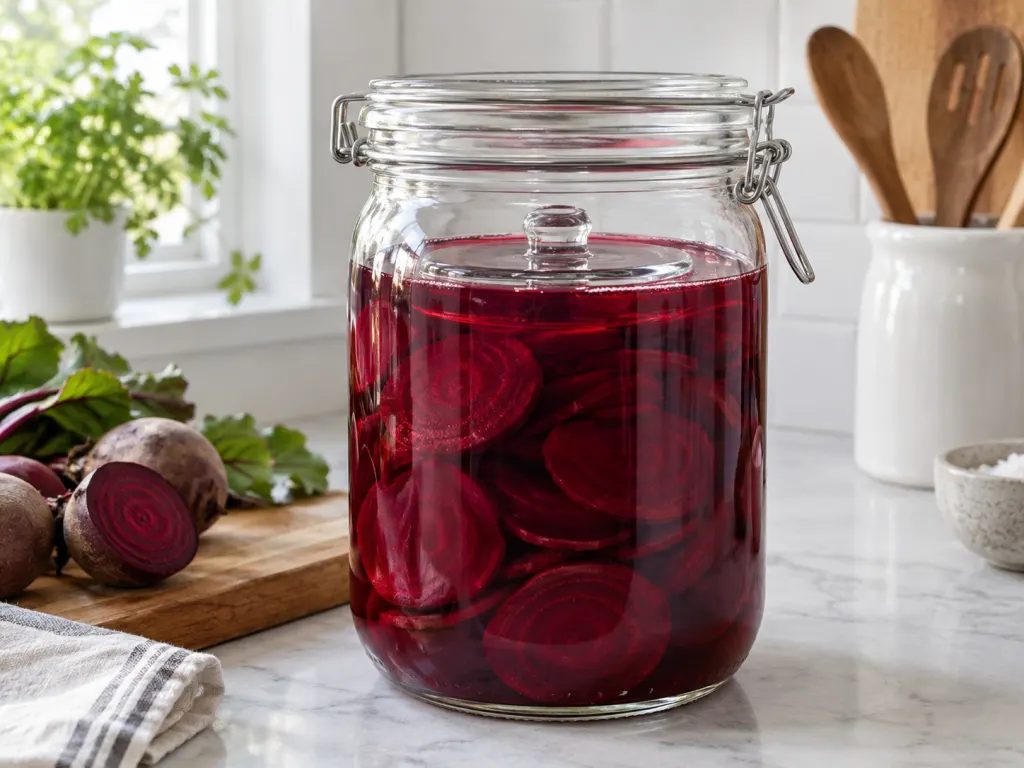
Fermented beets are usually made through lactic acid fermentation, the same broad preservation process used for foods such as sauerkraut and some vegetable pickles. University of Minnesota Extension explains that lactic acid fermentation uses naturally occurring bacteria to turn carbohydrates into acid, lowering the pH of the food (University of Minnesota Extension). With beets, that process changes flavor first: earthy sweetness becomes brighter, saltier, and more complex. If the product is not heat-processed after fermentation, it may contain live microorganisms, but the exact mix varies by ingredients, temperature, salt level, and storage.
Food Safety Is the Practical Difference
Fermentation is simple, but it is not casual. The University of Minnesota guidance emphasizes fresh produce, enough brine to keep vegetables submerged, a low-oxygen environment, appropriate salt, temperature control, and pH monitoring for safety. For most wet-brined vegetables, it describes a brine made with 1 to 3 tablespoons of salt per quart of water, a preferred temperature range of 68 to 72 degrees Fahrenheit, and a target pH of 4.60 or lower when bubbling has stopped (University of Minnesota Extension). Those details matter more than whether the jar looks rustic or homemade.
For home cooks, the safest mindset is to use a research-based fermentation method and avoid improvising with low salt, warm storage, or exposed vegetables. A useful checklist looks like this:
- Start with fresh, clean beets and clean equipment.
- Use canning or pickling salt when a tested method calls for it.
- Keep beet pieces fully under brine throughout fermentation.
- Use a food-safe glass, ceramic, or food-grade plastic container.
- Ferment in the recommended temperature range, away from direct light.
- Move finished fermented beets to the refrigerator once the acidity and bubbling indicate completion.
- Discard a batch that smells unpleasant, feels slimy, or shows concerning surface growth.
How to Eat More Beets Without Overdoing It
The easiest way to enjoy beets is to use small, flavorful portions. Add grated raw beet to slaws; fold roasted cubes into grain bowls; blend cooked beet with chickpeas for a pink dip; slice fermented beets beside eggs, potatoes, beans, or fish; or toss beet greens into soups and skillet meals. Acid helps balance the root's sweetness, so citrus, vinegar, yogurt, mustard, and fermented beet brine all work well. Herbs such as dill, parsley, cilantro, mint, and chives keep the flavor fresh.
It also helps to rotate colors. Beets are excellent, but they do not replace leafy greens, orange vegetables, cruciferous vegetables, beans, or fruit. The CDC's broader advice is to aim for variety and nutrient-dense foods across the plate (CDC). In real meals, that might mean beets with cabbage one day, carrots and lentils another day, and greens the next. Variety keeps the habit enjoyable and spreads nutrient intake across many foods.
Who Should Be Thoughtful With Beets
Some people notice red or pink color in urine or stool after eating beets. That can be surprising, but it is a known food-color effect for many beet eaters. Beets also contain oxalates, and Mayo Clinic lists beets among oxalate-rich foods that some people may be advised to limit in specific situations (Mayo Clinic). The practical point is not to fear beets; it is to match food choices to your own situation when a clinician has given you individualized nutrition guidance.
Bottom Line
Beets are a worthwhile vegetable because they are colorful, flexible, and nutrient-dense. Fermented beets are a worthwhile variation because they add acidity, crunch, and preservation value when prepared with safe methods. The most evidence-aligned way to use both is simple: eat them as part of varied meals, keep portions enjoyable, respect fermentation safety, and avoid treating any single food as a personal health guarantee.
Wrap-Up
Beets offer fiber, folate, potassium, natural nitrates, and betalain pigments in a versatile vegetable. Fermented beets add tart flavor and a preservation method that depends on salt, acidity, temperature, and full brine coverage. Enjoy them as part of a varied eating pattern, and use individualized professional guidance for personal health decisions.
Frequently Asked Questions
- → Are fermented beets better than cooked beets?
They are different, not automatically better. Cooked beets are sweet and tender, while fermented beets are tart, salty, and usually eaten in smaller portions. Fermentation changes flavor and acidity; it does not turn beets into a guaranteed health food.
- → Do beets lose all their value when cooked?
No. Cooking changes texture and can affect some delicate compounds, but cooked beets still contribute vegetable variety, fiber, minerals, and color. Steaming and roasting are both practical choices, especially when they help you eat vegetables more often.
- → Is beet juice the same as eating whole beets?
No. Beet juice can be more concentrated in certain soluble compounds, including nitrate, but it does not provide the same intact fiber and chewing satisfaction as whole beets. Many people do best using juice occasionally and whole beets in meals.
- → How should fermented beets be stored?
After fermentation is complete, keep fermented beets refrigerated in clean containers with the vegetables covered by brine. Cold storage slows fermentation and helps preserve quality. Discard any batch with unpleasant odor, slimy texture, or concerning growth.
- → Why do beets sometimes change urine or stool color?
The red-purple pigments in beets can pass through the body and temporarily tint urine or stool in some people. The effect can be startling because the color is vivid, but it is tied to the beet pigments themselves.
References
This content was developed and refined using reliable sources.
- https://www.cdc.gov/healthy-weight-growth/healthy-eating/fruits-vegetables.html
- https://www.cdc.gov/nutrition/features/healthy-eating-tips.html
- https://ods.od.nih.gov/factsheets/Folate-HealthProfessional
- https://ods.od.nih.gov/factsheets/Potassium-HealthProfessional
- https://pmc.ncbi.nlm.nih.gov/articles/PMC8123435
- https://pmc.ncbi.nlm.nih.gov/articles/PMC6316347
- https://extension.umn.edu/es/node/172346
- https://www.mayoclinic.org/diseases-conditions/kidney-stones/symptoms-causes/syc-20355755