 Save
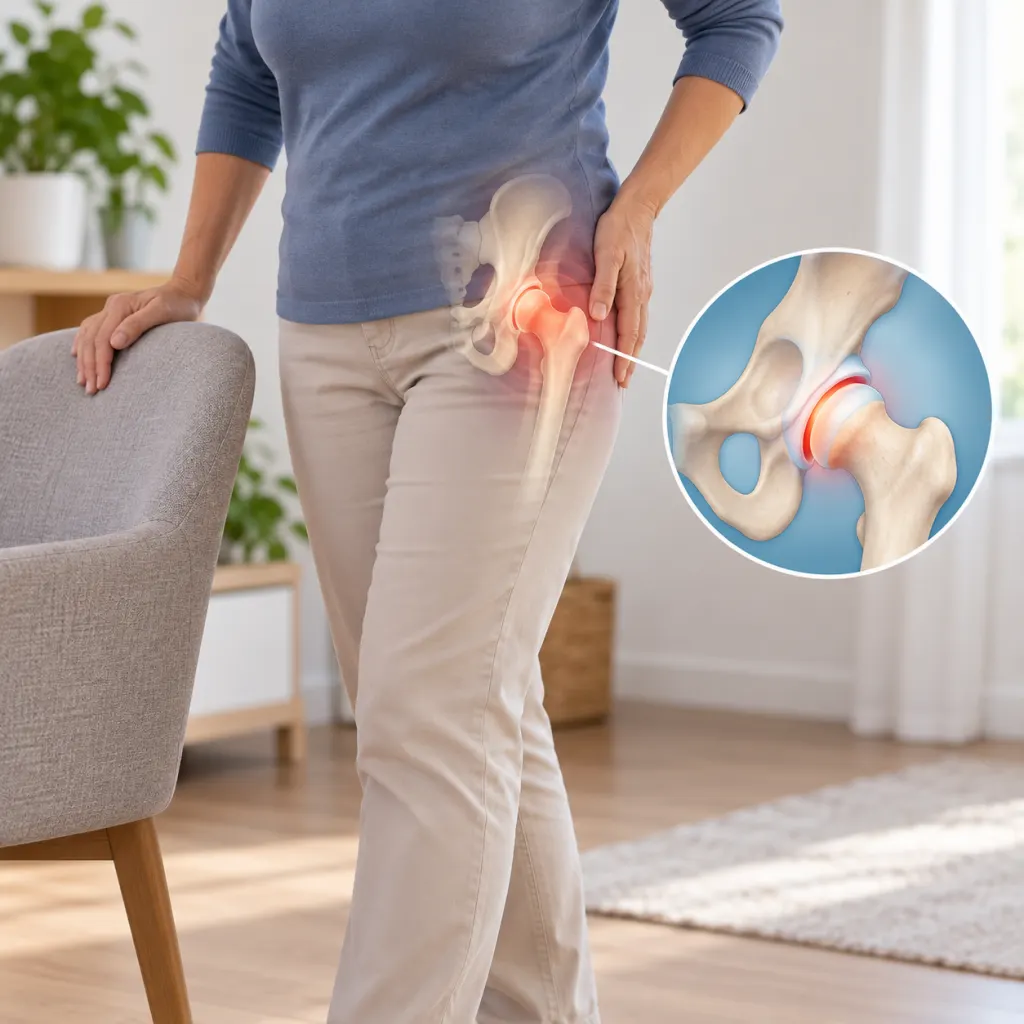
If your hip hurts, the most useful first answer is this: do not assume the pain is “just age” or “just a pulled muscle,” especially if it follows a fall, changes how you walk, or limits daily movement. Hip pain can come from the ball-and-socket joint itself, the muscles and tendons around it, a bursa, nearby nerves, or even the lower back. The location often gives clues. Mayo Clinic notes that pain inside the hip or groin often suggests the hip joint, while outer hip, upper thigh, or outer buttock pain is often linked with surrounding soft tissues, and some hip-area pain is referred from the lower back Mayo Clinic.
Why Hip Pain Can Be Hard to Pin Down
The hip is built for stability and motion. MedlinePlus describes it as the place where the thigh bone meets the pelvis, with the rounded end of the femur fitting into a socket in the pelvis MedlinePlus. That structure lets the leg move forward, back, sideways, and in rotation, but it also means many tissues work together: bone, cartilage, tendons, ligaments, muscles, bursae, and nerves. When one part becomes irritated or injured, the feeling may not stay neatly in one spot.
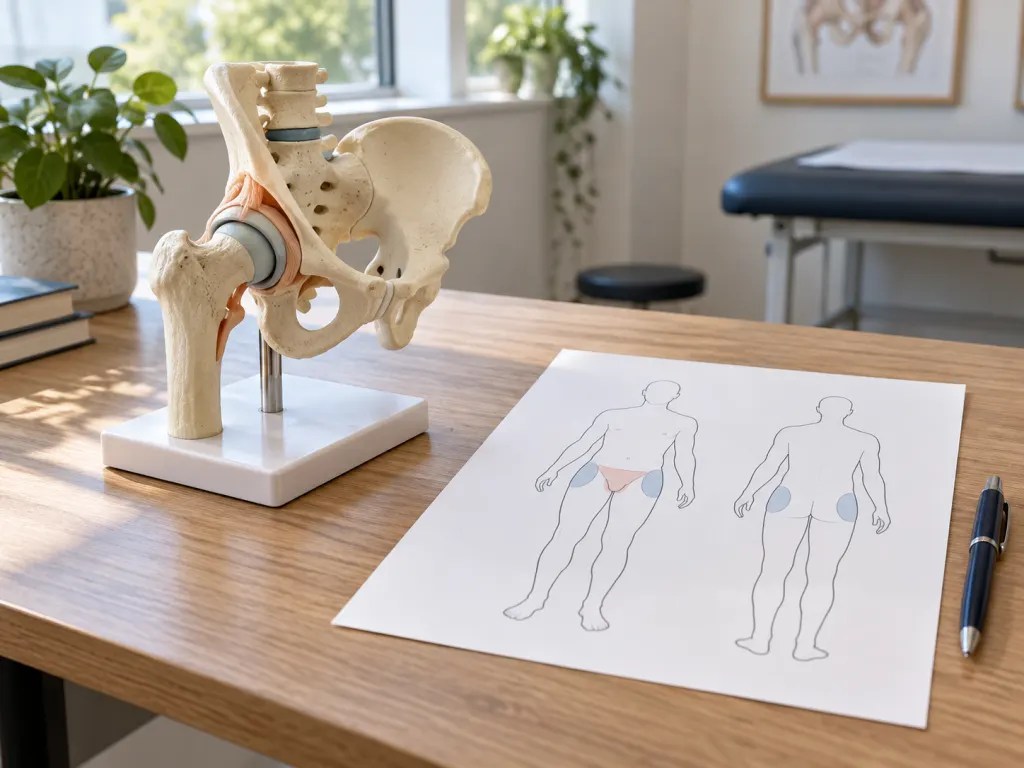
This is why two people can both say “my hip hurts” and mean very different things. One may point to the groin, another to the outside of the thigh, another to the buttock, and another to the knee. MedlinePlus notes that hip pain can be felt in the groin, thigh, or knee, and that pain in the hip area may sometimes reflect a back problem rather than the hip itself MedlinePlus Medical Encyclopedia. A good self-check starts with the map of the pain, not with a guess at the cause.
Common Patterns That Offer Clues
Location, timing, and triggers are often more useful than the word “ache” by itself. Pain that is deepest in the groin or front of the thigh may fit more with the hip joint. Pain on the outside of the hip, especially when lying on that side or climbing stairs, may fit more with nearby soft tissues. Pain that travels from the lower back through the buttock or down the leg may point away from the hip joint and toward the spine or a nerve pathway. These are clues, not a final answer.
Several broad categories are worth knowing because they explain many everyday hip-pain stories:
- Joint changes: Osteoarthritis can affect the hips and may cause pain, stiffness, swelling, and reduced range of motion. NIAMS notes that hip osteoarthritis pain may be felt in the hip joint, groin, inner thigh, buttocks, or sometimes the knee NIAMS.
- Soft-tissue irritation: Tendons, muscles, and bursae around the hip can become painful after overuse, pressure, a sudden change in activity, or a fall.
- Injury: Strains, bursitis, dislocations, and fractures are among hip injuries listed by MedlinePlus, and falls are especially important in older adults MedlinePlus.
- Referred pain: A lower-back issue can create pain that feels as if it belongs to the hip, thigh, or buttock.
When Movement Tells a Story
Notice what the hip does when you stand from a chair, climb stairs, turn in bed, step into a car, or walk across a room. Pain only during a new activity may fit with overload. Stiffness after sitting may suggest the joint or nearby tissues dislike staying in one position. Catching, locking, a sharp groin pinch, or a visible limp deserves more attention because it may reflect a mechanical limit rather than ordinary soreness.
Sports and repetitive activity can matter too. NIAMS explains that strains can involve muscles or tendons, bursitis involves small fluid-filled cushions between bone and moving tissues, and chronic sports injuries can come from repeating the same motion over and over NIAMS sports injuries. That does not mean only athletes get these issues. Gardening, prolonged standing, carrying heavy loads, sudden long walks, and a new fitness routine can all change the demand on the hip.

What to Track Before an Appointment
If the pain is not an emergency, a short written log can make a medical visit more useful. Track the exact location with one finger if possible: groin, outside hip, buttock, front thigh, side thigh, or knee. Note when it began, whether there was a fall or twist, what makes it worse, what makes it easier, whether sleep is affected, and whether walking has changed. Also note stiffness, swelling, fever, rash, numbness, weakness, or pain in other joints.
MedlinePlus says a provider evaluating hip pain may ask where the pain is, when and how it started, what worsens it, what has helped, whether you can walk and bear weight, and what other health issues are present MedlinePlus Medical Encyclopedia. Those questions are not small talk. They help separate joint pain from soft-tissue pain, injury from gradual change, and hip-origin pain from pain that may be arriving from another area.
Urgent Signs Should Not Wait
Some hip pain needs prompt medical attention. Mayo Clinic advises seeking medical care right away after a hip injury when the joint looks misshapen or out of place, the leg seems shorter, you cannot move the leg or hip, you cannot put weight on the affected leg, pain is intense, swelling is sudden, or fever, chills, or a skin-color change appears on the affected leg Mayo Clinic. MedlinePlus similarly flags serious falls or injuries, leg deformity, inability to move the hip or bear weight, worsening pain with trouble urinating or having a bowel movement, fever, rash, limping, or difficulty with stairs and gait MedlinePlus Medical Encyclopedia.
Falls deserve special respect in older adults because hip fractures can change independence. The CDC calls broken hips one of the most serious fall injuries and reports about 300,000 hip fracture-related hospitalizations each year from older adult falls in the United States CDC. A person may still be awake and talking after a fall, yet the inability to stand, new severe groin pain, a shortened-looking leg, or major bruising should be treated as a warning sign.

What You Can Do While Watching Mild Pain
For mild hip pain that is not linked with a major injury or urgent warning sign, the safest starting point is observation plus common-sense activity changes. Avoid the movement that clearly worsens it, reduce long periods of sitting or standing in one position, and avoid lying directly on the painful side if that increases discomfort. Comfortable, supportive shoes and a less jarring activity, such as walking on level ground instead of hills, may reduce irritation while you watch the pattern.
Be careful with the “push through it” instinct. Pain that repeatedly changes your stride can create a chain reaction through the knee, back, or opposite leg. Pain that is improving day by day after an obvious overuse episode is different from pain that is spreading, waking you at night, appearing with fever, or making stairs progressively harder. If you are unsure, a qualified clinician can help decide whether imaging, physical examination, or another evaluation step is appropriate.
Fall Risk and Home Clues Matter
Hip pain and fall risk can feed each other. A painful hip may make someone move less confidently, while a fall can cause a new hip injury. The CDC recommends asking a health professional to evaluate fall risk, using strength and balance exercises, keeping eyes checked, and making the home safer by removing trip hazards, adding grab bars near bathing areas and toilets, using railings on both sides of stairs, and improving lighting CDC. Those steps are especially relevant when hip pain appears in an older adult, someone with balance concerns, or anyone who has already fallen.
Home clues are practical, too. Does pain spike when stepping over a tub edge, rising from a low sofa, carrying laundry upstairs, or walking in the dark? Those details show where the hip is being challenged. They can also reveal simple safety priorities, such as raising a seat, clearing cords, using better lighting, or keeping frequently used items at waist height. These changes are not a substitute for evaluation when warning signs are present, but they can reduce avoidable strain and fall risk.
The Bottom Line
Hip pain may be minor and short-lived, but it is worth taking seriously because the hip area can reflect many different sources: the joint, nearby soft tissues, bone injury, nerve irritation, the lower back, or a fall-related problem. The most useful next step is to pair calm observation with clear boundaries. Map the pain, watch how it changes with movement, note walking or stair problems, and seek urgent care for the warning signs described above.
Wrap-Up
Hip pain is a signal to observe carefully, not a reason to panic. Groin pain often points more toward the hip joint; outer hip pain may involve tendons, muscles, or bursae; and buttock or leg-traveling pain can come from the back or nerves. A fall, inability to bear weight, deformity, sudden swelling, fever, chills, color change, or rapidly worsening function deserves prompt care. For milder pain, tracking location, timing, triggers, walking changes, and daily limits can make a professional evaluation clearer and more productive.
Frequently Asked Questions
- → Is hip pain always coming from the hip joint?
No. Hip-area pain can come from the joint, nearby muscles or tendons, bursae, nerves, or the lower back. Pain felt in the groin is more suggestive of the hip joint, while outer hip or buttock pain can involve surrounding tissues or referred pain. A clinician can help sort out the source.
- → When should hip pain be checked urgently?
Seek urgent care after an injury if you cannot bear weight, cannot move the leg or hip, the joint looks misshapen, the leg looks shorter, pain is intense, swelling is sudden, or fever, chills, or skin-color changes appear. Serious falls in older adults deserve particular caution.
- → What details should I write down before seeing a clinician?
Write down where the pain is, when it started, whether there was a fall or twist, what movements worsen it, what eases it, whether you limp, whether stairs are difficult, and whether you have stiffness, swelling, fever, rash, numbness, weakness, or pain in other joints.
- → Can hip osteoarthritis cause knee or thigh pain?
Yes. NIAMS notes that hip osteoarthritis pain may be felt in the hip joint, groin, inner thigh, buttocks, or sometimes the knee. That is one reason the exact pain map and movement pattern are important during evaluation.
- → Can a mild hip ache be watched at home?
Mild pain without a major injury or warning signs can often be observed briefly while avoiding movements that clearly worsen it. If it persists, worsens, changes walking, disturbs sleep, or comes with other concerning symptoms, arrange a professional evaluation.
References
This content was developed and refined using reliable sources.
- https://www.mayoclinic.org/symptoms/hip-pain/basics/causes/sym-20050684
- https://www.medlineplus.gov/ency/article/003179.htm
- https://medlineplus.gov/hipinjuriesanddisorders.html
- https://www.niams.nih.gov/health-topics/sports-injuries
- https://www.niams.nih.gov/health-topics/osteoarthritis
- https://www.cdc.gov/falls/prevention/index.html