 Save
Family recipes bring people together because they give people a shared task, a shared memory, and a shared table. The dish may be simple, but the act of making it often carries a story: who taught it, where it came from, why it appears at certain gatherings, and how each cook has changed it. That is why a casserole, bread, soup, cookie, sauce, or holiday dish can feel larger than its ingredients. It becomes a practical way to remember people, welcome newcomers, teach children, and keep a family conversation going.
Research and university foodways projects describe recipes as carriers of identity, storytelling, and intergenerational learning. In everyday terms, that means a family recipe is part instruction sheet, part keepsake, and part invitation: come into the kitchen, help with this, taste this, and remember where it came from.
A Recipe Is Often A Story In Disguise
A recipe looks practical on the surface. It lists ingredients, timing, and steps. But in family life, the written part is usually only the visible edge of a larger story. An Indiana University undergraduate research article on foodways and identity describes food as a marker of values, traditions, heritage, and communication, with family foodways passing along more than cooking instructions through shared narratives. That explains why people can feel attached to a recipe even when they do not make it exactly as written. The recipe points back to a person, a place, or a repeated scene: a crowded counter, a holiday morning, a parent correcting the seasoning, a grandparent measuring by sight.
That hidden story is one reason family dishes can gather people so quickly. Someone asks, "Is this the way Nana made it?" and suddenly the room is not only talking about food. They are talking about childhood, migration, thrift, celebration, work, absence, and affection. A dish becomes an opening for stories that might feel awkward if introduced directly. Instead of saying, "Tell me about our family," a younger person can ask, "Why do we use this pan?" or "Who wrote this card?" The answer often brings the family closer to its own past.
Shared Cooking Gives Everyone A Role
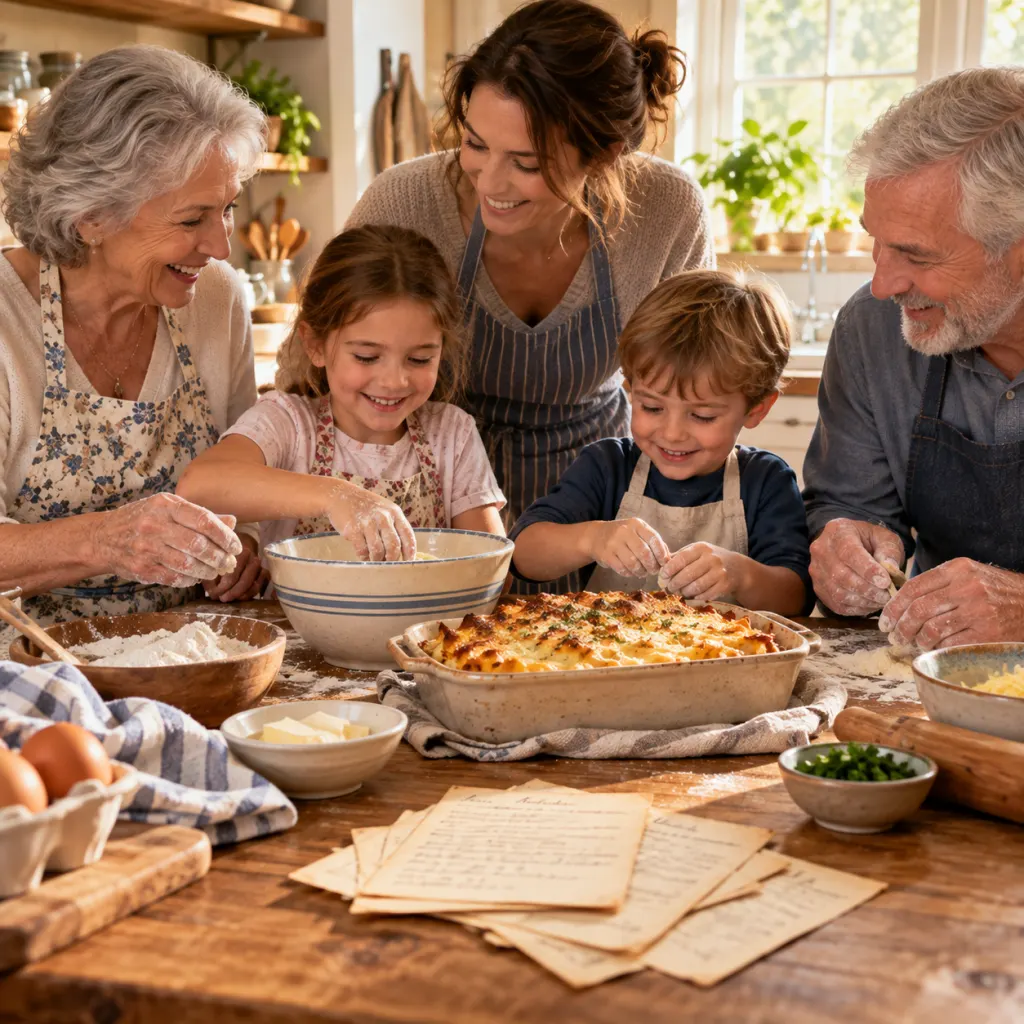
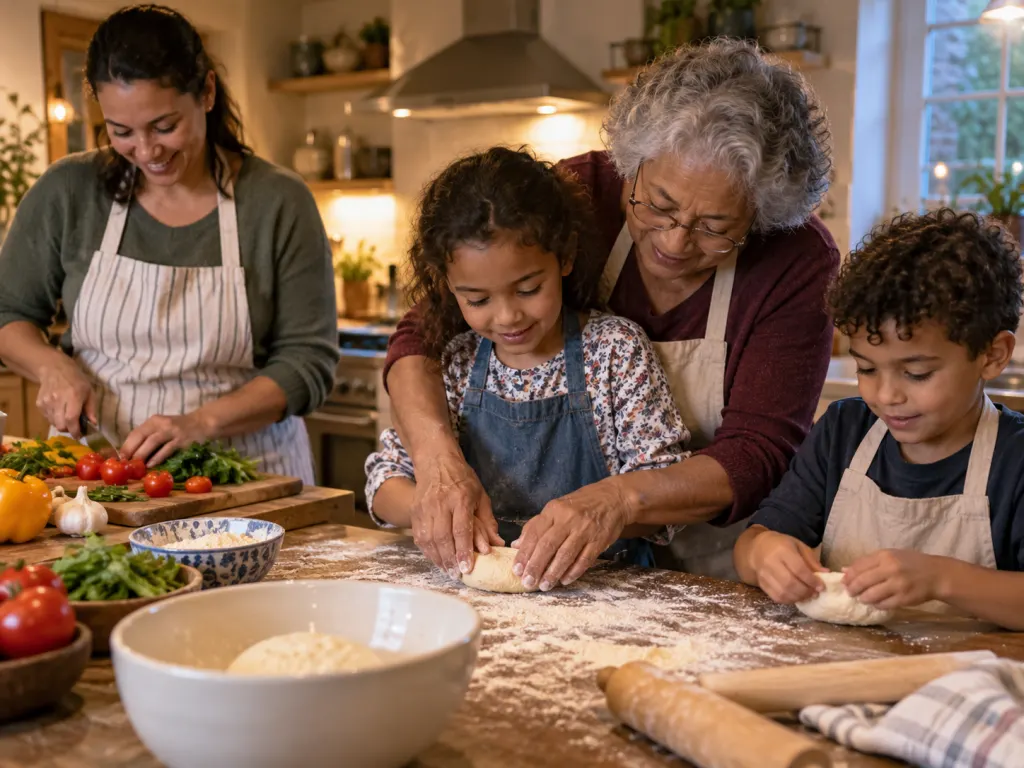
Family recipes also bring people together because they create jobs for many skill levels. One person chops, another reads the card, another stirs, another tastes, and someone else remembers the step that never made it onto paper. Oklahoma State University Extension notes that preparing handed-down recipes with younger generations can create memories, teach practical skills, and keep traditions active through hands-on kitchen time. The important part is not perfection. It is participation.
This is why recipes can include people who might not be confident cooks. A child can wash vegetables, set a table, press dough, or listen to the story behind the dish. A teenager can photograph the steps or compare versions from different relatives. An adult who lives far away can join by video call, send a scanned card, or make the dish in another kitchen at the same time. The recipe becomes a small project with a visible result, and that result is meant to be shared.
- For children: a family recipe can make family history concrete because they can touch, smell, mix, and taste it.
- For older relatives: teaching a dish can turn personal memory into something useful and welcomed.
- For new family members: learning a signature dish can be a gentle way to join a tradition without needing to know every story yet.
- For relatives who disagree: cooking can offer a neutral task when conversation needs a calmer starting point.
Repetition Turns A Dish Into A Tradition
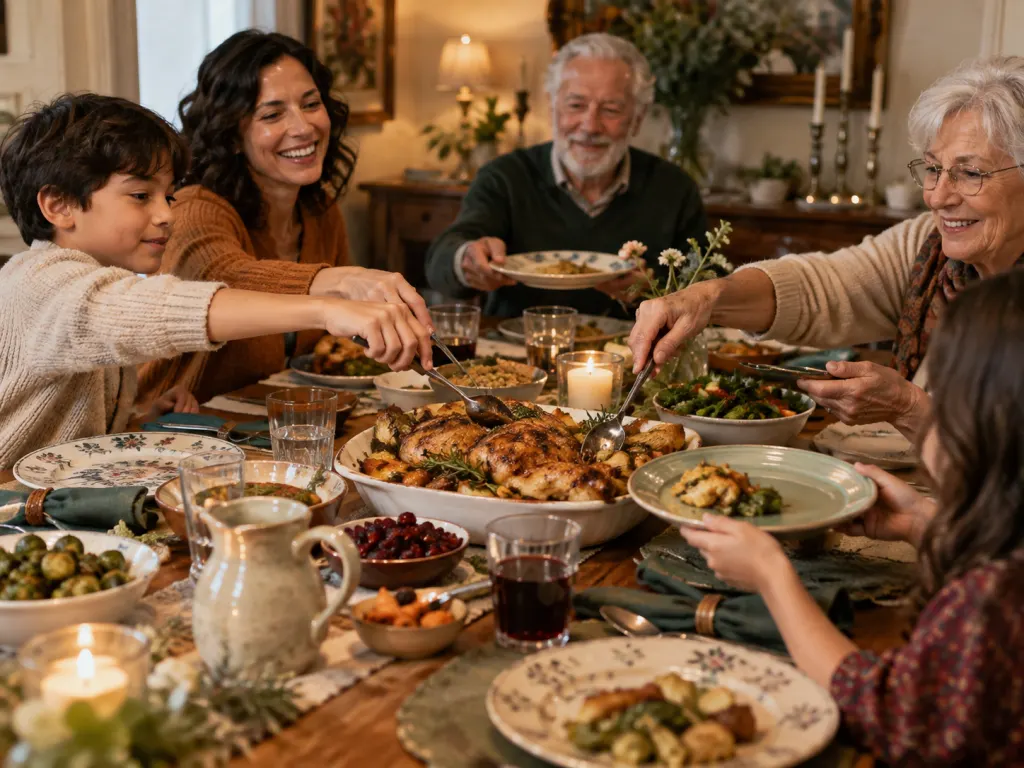
A family recipe becomes powerful through repetition. The first time a dish appears, it is just dinner. The tenth time, it may have a place in the family calendar. The fiftieth time, people may expect it before they see it. University of Nebraska-Lincoln Extension describes food traditions as activities that can bridge generations, whether the tradition is making a large batch for a gathering or sharing a special food over conversation across age groups. Repetition gives the recipe a rhythm people can return to.
That rhythm matters because families change. Children grow up. People move. Homes are sold. Holidays shift. A dish can offer continuity without pretending everything is the same. The table may have different chairs around it, but the smell of the same bread or sauce can make the room feel connected to earlier rooms. That does not mean every old recipe must be preserved exactly. Sometimes repetition means making the dish once a year. Sometimes it means keeping only the central flavor, shape, or method. The point is that people recognize the thread.
Recipes Carry Identity Without Needing A Speech
Many families express identity through food before they ever explain it. A dish can show where relatives came from, what ingredients were available, what celebrations mattered, and which skills were valued. A foodways essay in Indiana University's Digest explains that writing down recipes can do more than help another cook reproduce a dish; recipe collections can share stories, communicate identity, and reaffirm community ties through the recipe form itself. That is especially clear in family notebooks and community cookbooks, where a name beside a recipe can matter as much as the method.
This is also why family recipes can be emotional without being dramatic. The food may be humble: beans, rice, pie crust, greens, dumplings, pickles, noodles, biscuits, or a punch served only at reunions. But it carries the stamp of a household. The way a family seasons, folds, fries, ferments, bakes, serves, or saves leftovers can become a signature. People may not call it identity at the table. They simply say, "This tastes like ours."
The Best Family Recipes Leave Room For Change
One common worry is that changing a family recipe disrespects it. In practice, change is often how recipes survive. Families adjust for new kitchens, different budgets, missing ingredients, blended households, changing tastes, and relatives who live in different regions. The University of Illinois Chicago Latino Cultural Center's family recipe archive shows contributors connecting recipes with parents, grandparents, cultural memory, travel, holidays, and adaptation, often describing how a dish changed as people learned it or moved with it from one setting to another.
A living recipe can hold both respect and flexibility. The original card may stay in the box, but a newer version can sit beside it with notes: less sugar, different pan, vegetarian filling, gluten-free flour blend, smaller batch, added spice, or a shortcut that makes the dish possible on a busy weeknight. The old version remains the reference point. The new version keeps the tradition usable. That balance is often what lets younger cooks feel ownership rather than obligation.
Why The Recipe Card Matters
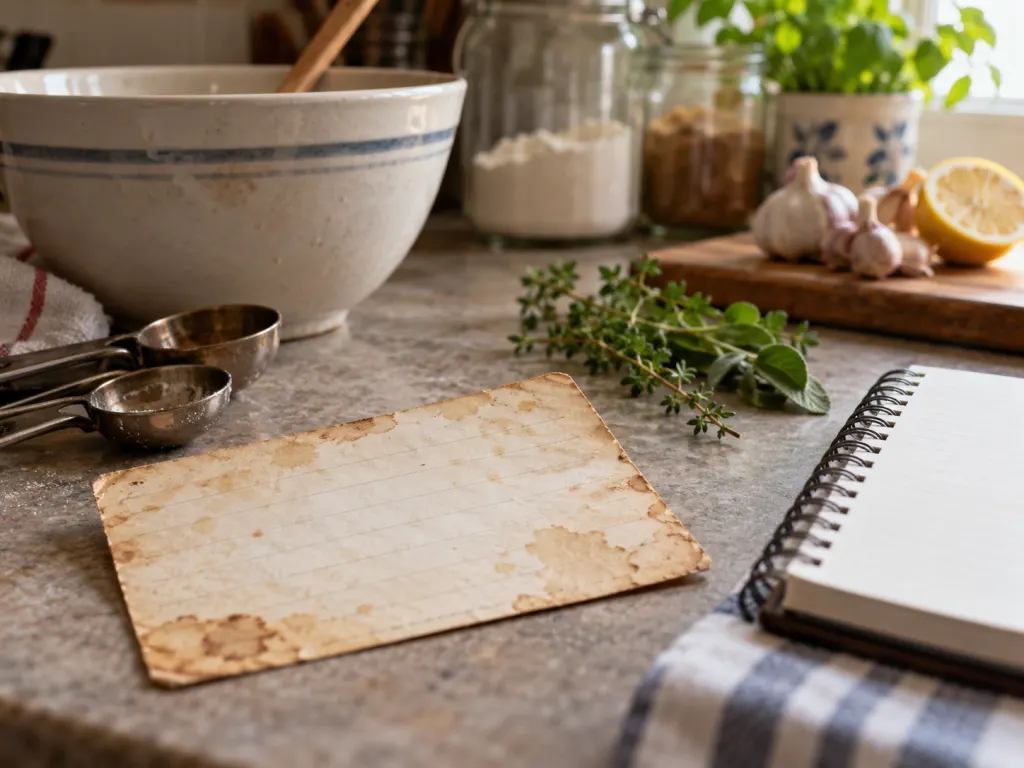
Objects help memory stick. A stained index card, a church cookbook, a spiral notebook, a recipe clipped from a package, or a typed page in a plastic sleeve can carry signs of use. A smudge may point to the ingredient that always spilled. A margin note may show the year someone doubled the batch. A handwriting style may bring back a voice. Even when the recipe is transferred to a phone, the original object often keeps its emotional force because it proves that someone cared enough to write the dish down.
That does not mean every family recipe needs to be archived like a museum piece. The most useful record is the one people can actually use. A clear digital copy, a photo of the original card, and a short note about the person behind it may matter more than a perfect transcription. If there are several versions, keep them together. Differences are not errors; they are evidence that different cooks made the recipe fit their own kitchens.
How To Keep Family Recipes Alive
The simplest way to preserve a family recipe is to cook it with someone else and ask questions while the work is happening. Written recipes often leave out the details experienced cooks take for granted: how thick the batter should look, what the sauce smells like when it is ready, how brown the crust should be, which pot works best, or what to do if the dough feels too sticky. Those details are easiest to learn in the kitchen, not after the person who knows them is no longer available to ask.
A useful family recipe record can include the practical method and the human context. Write down who made it, where they learned it, when it was served, and what family members remember about it. Add substitutions that have worked. Note the pan size and the serving dish. Photograph the finished food, but also photograph hands shaping dough, a pot on the stove, or the old recipe card next to the new copy. These details help future cooks understand that the recipe belongs to a chain of people, not just a folder of instructions.
When A Recipe Becomes A Welcome
Family recipes are not only about ancestry. They can also welcome people into the family as it exists now. A stepchild who learns the birthday cake, a spouse who brings a dish from another culture, a neighbor invited to the holiday table, or a friend who becomes the keeper of a cookie recipe all show that tradition can expand. The strongest family food cultures are generous enough to remember the past and make room for new hands.
This is why a beloved recipe can outlast the moment that created it. It gives people something to do together when words are not enough. It lets memory become action. It makes absence a little more speakable and belonging a little more visible. Most of all, it reminds people that family is not only something we inherit. It is also something we practice, sometimes one repeated dish at a time.
Wrap-Up
Family recipes bring people together because they combine memory, identity, teaching, and shared work. They help relatives tell stories, invite younger cooks into the kitchen, and keep a sense of continuity as families change. The goal is not to preserve every dish perfectly. The goal is to keep the conversation alive: who made this, why did it matter, how do we make it now, and who will carry it forward next?
Frequently Asked Questions
- → Why do family recipes feel more meaningful than ordinary recipes?
Family recipes often carry personal context. They may remind people of a specific cook, holiday, kitchen, or family story. The meaning comes from repetition and shared memory as much as from the ingredients.
- → Do family recipes have to stay exactly the same?
No. Many family recipes survive because cooks adapt them for new kitchens, tastes, schedules, and households. Keeping the original version is helpful, but recording thoughtful changes can make the tradition easier for the next generation to use.
- → How can I preserve a recipe if the older cook never measures anything?
Cook beside them if possible. Take notes on visual cues, pan sizes, timing, texture, and taste. Photograph the process and write down the cook's explanations. Later, test your notes and add details that make the recipe easier to repeat.
- → What should I include when writing down a family recipe?
Include ingredients, steps, timing, pan size, serving notes, the name of the person connected to the dish, when it was usually served, and any stories family members associate with it. If there are variations, keep those too.
- → Can new recipes become family recipes?
Yes. A family recipe does not have to be old. If a dish is repeated, loved, connected with people, and passed along, it can become part of the family's table over time.
References
This content was developed and refined using reliable sources.
- https://scholarworks.iu.edu/journals/index.php/iusburj/article/view/29390
- https://extension.okstate.edu/articles/2024/family_recipes
- https://food.unl.edu/free-resources/newsletters/food-fun-young-children/family-food-traditions
- https://scholarworks.iu.edu/journals/index.php/digest/article/view/33989
- https://latinocultural.uic.edu/archives/stories/family-recipes