 Save
The short answer: a Vaseline-style petroleum jelly blend may help dry skin look smoother for a while, but it should not be expected to erase wrinkles. Petroleum jelly is an occlusive ingredient, which means it helps skin hold onto moisture rather than adding water by itself. That can temporarily soften the look of fine lines, especially when dryness makes them stand out. For longer-term skin aging decisions, the strongest everyday basics are still sun protection, a moisturizer that suits your skin type, and realistic expectations about cosmetic products.
Why the viral idea sounds convincing
The appeal is easy to understand. Petroleum jelly is inexpensive, familiar, and often already in the bathroom cabinet. Fine lines can look deeper when the surface of the skin is dry, so a glossy occlusive layer can make the area appear smoother in the mirror. That visible softening, however, is mainly a moisture-and-light effect. The U.S. Food and Drug Administration explains that a product meant to make lines look less noticeable simply by moisturizing is generally making a cosmetic claim, while claims about changing the skin’s structure move into a different regulatory category: FDA wrinkle and anti-aging product guidance.
What changes in aging skin
Wrinkles are not caused by one missing kitchen ingredient. MedlinePlus, a service of the National Library of Medicine, describes several age-related changes: skin can become thinner, less plump, drier, and slower to recover, while sunlight is a major contributor to visible skin aging: MedlinePlus skin aging overview. Those changes involve the outer layer, the deeper support layer, pigment cells, oil production, and environmental exposure over time. A moisturizer can improve comfort and appearance, but it does not rewind all of those processes.

What petroleum jelly actually does
Petroleum jelly belongs to a group of ingredients often described as occlusives. Cleveland Clinic explains that occlusives form a coating on the skin and help it hold onto moisture it already has; examples include petroleum jelly, mineral oil, lanolin, and liquid paraffin: Cleveland Clinic on emollients. That is useful when skin feels tight or looks flaky. It is also why many people like applying a very thin layer over a simple moisturizer at night. The moisturizer supplies water-binding or softening ingredients; the petroleum jelly helps reduce moisture loss from the surface.
Why moisture can change the look of fine lines
Fine surface lines often become more visible when the skin is dehydrated at the surface. The American Academy of Dermatology notes that moisturizing traps water in the skin, which can help reduce the appearance of some fine lines: AAD wrinkle care guidance. This is a cosmetic improvement in appearance, not a structural reset. Think of it as smoothing a dry leaf enough for it to look less crisp, not turning it back into a new leaf.
Aloe vera and vitamin E deserve careful expectations
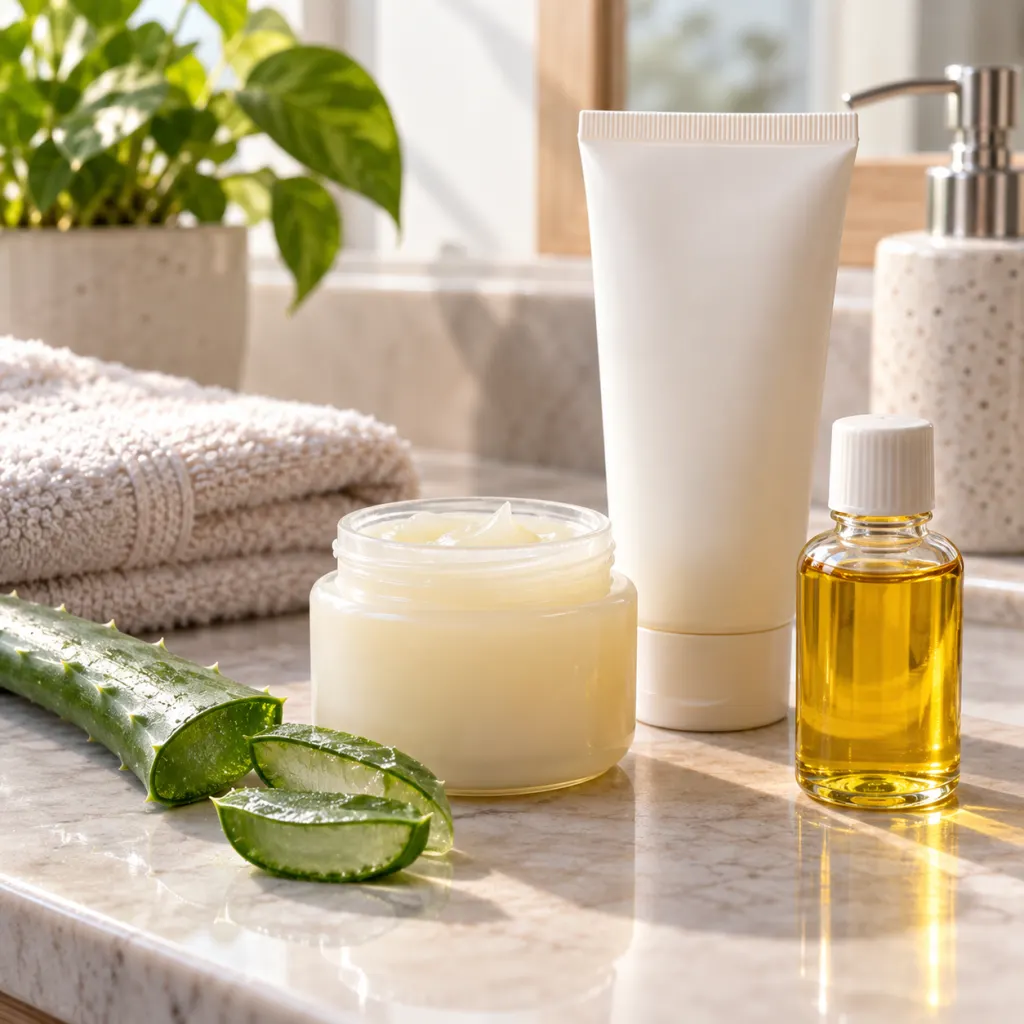
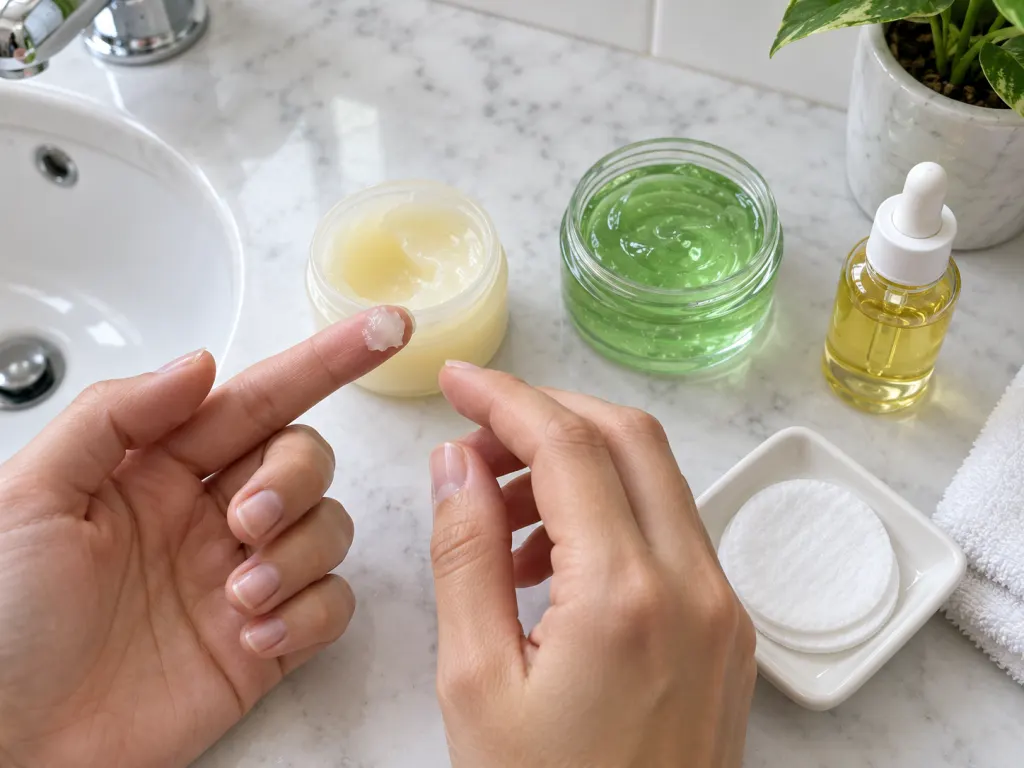
The common two-add-in version usually pairs petroleum jelly with aloe vera gel, vitamin E oil, or both. Vitamin E is a real antioxidant used in many cosmetic products, but a review available through PubMed Central notes that controlled clinical evidence for clear dermatology uses is limited and that topical vitamin E can rarely cause contact dermatitis: Vitamin E in dermatology review. Aloe vera gel may feel soothing for some people, but a homemade mixture is not the same as a tested commercial formula with stability, preservative, and contamination controls.
A cautious way to think about a simple blend
If you are curious, treat the mixture as a cosmetic moisture seal, not as a skin-changing project. The safer question is not “Will this erase lines?” but “Can my skin tolerate this without irritation, clogged pores, or discomfort?” A conservative approach would look like this:
- Use clean hands and a clean container if mixing products.
- Start with a tiny amount; a shiny, heavy layer is not automatically better.
- Try one new ingredient at a time so you can tell what caused a reaction.
- Keep it away from the eyes, lips, and broken or freshly irritated skin.
- Stop using it if the area stings, burns, itches, or develops a rash.
- Choose fragrance-free products when possible, especially if your skin is reactive.
Patch testing matters even with familiar ingredients
The American Academy of Dermatology recommends testing products, even those labeled hypoallergenic, by applying a small amount to the inner forearm twice daily for four to five days before using them on the face: AAD product testing advice. That advice is especially relevant for homemade blends because ingredient purity, storage, and mixing conditions vary. A product can be common and still disagree with your skin.
What to skip
Avoid adding lemon juice, baking soda, toothpaste, essential oils, perfume, strong exfoliating acids, or crushed tablets to a petroleum jelly base. These additions can create irritation and make the skin look rougher. Also avoid applying petroleum jelly over strong active products unless a clinician has told you how to layer them. Cleveland Clinic notes that when using prescription creams or active products, a person may need to apply those first and follow the clinician’s instructions before applying an emollient: Cleveland Clinic emollient guidance.
The bigger wrinkle conversation is sun exposure
For visible aging, petroleum jelly is a small supporting player. Sun exposure has a much larger role. MedlinePlus identifies sunlight as a major cause of skin aging, and AAD guidance puts sunscreen and moisturizer first when choosing anti-aging skin care products: MedlinePlus on skin aging and AAD on selecting anti-aging products. If a morning routine includes only a rich balm but no broad-spectrum sunscreen, it misses the habit most consistently recommended for photoaging.
How to choose a better everyday routine
A simple routine is often more useful than a crowded shelf. In the morning, a gentle cleanser or water rinse, moisturizer if needed, and broad-spectrum sunscreen are reasonable basics. At night, cleansing followed by a moisturizer can be enough for many people. If dryness is still obvious, a very thin layer of petroleum jelly over moisturizer can help seal it in. The AAD advises choosing products formulated for your skin type, looking for labels such as non-comedogenic when acne is a concern, and keeping expectations realistic because creams offer modest results: AAD product selection guidance.
When petroleum jelly may not be the best fit
Petroleum jelly can feel too heavy for oily or acne-prone skin. Cleveland Clinic notes that occlusive products such as oils and petroleum jelly may aggravate or cause acne breakouts in people prone to acne, and suggests looking for noncomedogenic or non-acnegenic products: Cleveland Clinic on emollient risks. It may also be uncomfortable in humid weather or under makeup. If the goal is daytime smoothing, a lighter moisturizer or sunscreen-moisturizer combination may feel more practical.
Storage and mixing are not small details
Commercial skin products are formulated with attention to stability, preservation, and packaging. A homemade blend of petroleum jelly, aloe gel, and vitamin E oil can separate, trap water-based gel in an oily base, or become less pleasant over time. Vitamin E forms can also be affected by air and light, and the PubMed Central review notes stability concerns in topical vitamin products: Vitamin E in dermatology review. If a mixture changes smell, color, or texture, discard it rather than trying to rescue it.
The realistic bottom line
Petroleum jelly can be useful as a moisture seal, especially at night and especially for dry areas. Aloe vera or vitamin E may make a blend feel more interesting, but they do not turn it into a dependable wrinkle solution. The most evidence-aligned interpretation is modest: moisturized skin often looks smoother, irritation makes aging signs look more noticeable, and sun-conscious daily habits matter more than a viral jar mixture. If you enjoy a simple petroleum jelly layer and your skin tolerates it, keep it thin, clean, and secondary to the basics.
Wrap-Up
A petroleum jelly mixture can help dry skin feel softer and may temporarily reduce the look of fine lines by holding moisture at the surface. It should not be framed as a way to erase wrinkles. For mature skin, the stronger routine is boring in the best way: moisturize, use sunscreen consistently, choose products matched to your skin type, test new products first, and keep homemade blends simple enough that you can spot irritation quickly.
Frequently Asked Questions
- → Can petroleum jelly make wrinkles disappear?
No. Petroleum jelly can help skin hold moisture, which may temporarily make fine lines look softer. It does not remove wrinkles or change all of the deeper factors involved in skin aging.
- → Is it better to mix petroleum jelly with aloe vera or vitamin E?
Not necessarily. Aloe vera and vitamin E are common cosmetic ingredients, but a homemade blend is not the same as a tested formula. If you try either one, introduce only one new ingredient at a time and patch test first.
- → Should petroleum jelly go on before or after moisturizer?
For dry skin, it usually makes more sense after moisturizer. The moisturizer supplies water-binding and softening ingredients, while the petroleum jelly helps seal moisture at the surface.
- → Can I use petroleum jelly around my eyes?
The eye area is delicate, and heavy products can migrate. Use only a tiny amount on the surrounding skin, keep it out of the eyes, and stop if you notice stinging, itching, redness, or bumps.
- → What matters more than a homemade wrinkle mixture?
Daily sun protection, a moisturizer suited to your skin type, gentle cleansing, and realistic expectations matter more. Dermatology guidance consistently places sunscreen and moisturizer at the center of everyday care for visible aging.
References
This content was developed and refined using reliable sources.
- https://www.medlineplus.gov/skinaging.html
- https://www.aad.org/public/everyday-care/skin-care-secrets/anti-aging/wrinkle-remedies
- https://www.aad.org/public/everyday-care/skin-care-secrets/anti-aging/selecting-anti-aging-products
- https://my.clevelandclinic.org/health/treatments/23305-emollients
- https://www.fda.gov/cosmetics/cosmetic-products/wrinkle-treatments-and-other-anti-aging-products
- https://pmc.ncbi.nlm.nih.gov/articles/PMC4976416