 Save
Sarcopenia means a measurable decline in muscle strength, muscle mass, and physical function. The main causes are aging-related changes in muscle biology, too little muscle-challenging activity, inadequate overall nutrition or protein intake, unplanned weight loss, chronic conditions, and recovery periods after illness or inactivity. The most useful response is not a single product or shortcut. It is a steady plan: build strength safely, keep moving, eat enough nutrient-dense food, check balance and walking ability, and ask a qualified health professional to look for other causes when changes are new or limiting.
What Sarcopenia Means
Sarcopenia is more than looking less muscular. The European Working Group on Sarcopenia in Older People describes it as a muscle disorder in which low muscle strength is the primary sign, low muscle quantity or quality helps confirm the diagnosis, and poor physical performance suggests greater severity according to its 2019 consensus paper. Cleveland Clinic similarly explains sarcopenia as progressive loss of muscle mass, strength, and physical performance that can make walking, chair rising, and stair climbing harder in its medically reviewed overview.
The distinction matters because body size alone can be misleading. A person may lose power and speed even if their weight seems stable. Another person may lose weight quickly and lose muscle along with fat. A third may stay active in daily chores but still avoid the stronger efforts that tell muscles to adapt. For that reason, a useful article about sarcopenia needs to focus on what the muscles can do: grip, stand, climb, carry, recover, and help the body stay steady.

Why Sarcopenia Happens
Aging is part of the picture, but it is not the whole story. The National Institute on Aging notes that muscle mass and strength usually peak in early adulthood and then decline gradually, with a faster drop later in life for many people in its strength training review. Muscle fibers change, recovery can be slower, and the body may respond less strongly to the same activity or meal than it did years earlier. These changes are real, but they vary widely from person to person.
Inactivity is one of the most important modifiable contributors. Muscles are living tissue; they adapt to the work they are asked to do. Long stretches of sitting, avoiding stairs, reducing walking distance, or stopping resistance work after an injury can send the body a simple message: less strength is needed. Illness, hospital stays, pain, fear of falling, social isolation, and lack of safe places to move can all shrink the daily movement menu. This is why the practical response must fit a real life, not an ideal schedule.
Signs Worth Noticing
Early sarcopenia can be subtle. The signs often appear first as small changes in routine tasks rather than a dramatic event. A person may use both hands to push out of a chair, choose an elevator for one flight, stop carrying laundry upstairs, walk more slowly through a parking lot, or feel less steady when turning. Cleveland Clinic lists symptoms such as muscle weakness, loss of stamina, trouble climbing stairs, poor balance, falls, and decreased muscle size in its sarcopenia summary.
Useful warning signs include:
- Needing arm support to rise from a dining chair.
- Walking more slowly than usual or tiring before reaching familiar destinations.
- Having trouble opening jars, carrying groceries, or lifting household objects that used to feel manageable.
- Avoiding steps, curbs, or uneven ground because of weakness or unsteadiness.
- Having repeated slips, trips, or near-falls.
- Noticing unplanned weight loss, lower appetite, or smaller portions over time.
These signs do not prove sarcopenia by themselves. They can overlap with balance problems, nerve conditions, joint issues, anemia, low mood, poor sleep, nutrition problems, and many other situations. They are still worth taking seriously because strength and mobility are practical measures of independence. Readers looking specifically at leg weakness may also find the related guide How to Recognize Common Causes of Weak Legs in Seniors useful as a companion topic.

How Clinicians Check Strength and Function
A clinical visit may begin with a discussion of daily function: strength, walking assistance, rising from a chair, climbing stairs, and falls. The EWGSOP2 paper describes the SARC-F questionnaire as a practical screening tool that asks about those same everyday limits in its assessment pathway. A clinician may also check grip strength, repeated chair stands, usual walking speed, or a timed up-and-go test. These are simple, practical tests because sarcopenia is about function as well as tissue.
More specialized assessment may include body composition tools such as DXA or bioelectrical impedance, depending on the setting and the reason for evaluation. The point is not to chase a perfect number at home. It is to identify whether low strength is present, whether muscle quantity appears low, and whether walking or balance performance suggests a higher level of concern. New weakness, repeated falls, major fatigue, rapid weight change, or loss of independence deserves professional attention, especially when it changes quickly.
The Exercise Pattern That Supports Muscle
The most consistent practical answer is progressive, appropriate strength work. CDC guidance for adults 65 and older recommends weekly aerobic activity, muscle-strengthening activities on at least two days, and balance activities in its older adult activity overview. The same CDC topic page explains that muscle-strengthening can include weights, resistance bands, body-weight exercises, gardening, and some yoga postures, with activities chosen for the person's abilities in its activity examples.
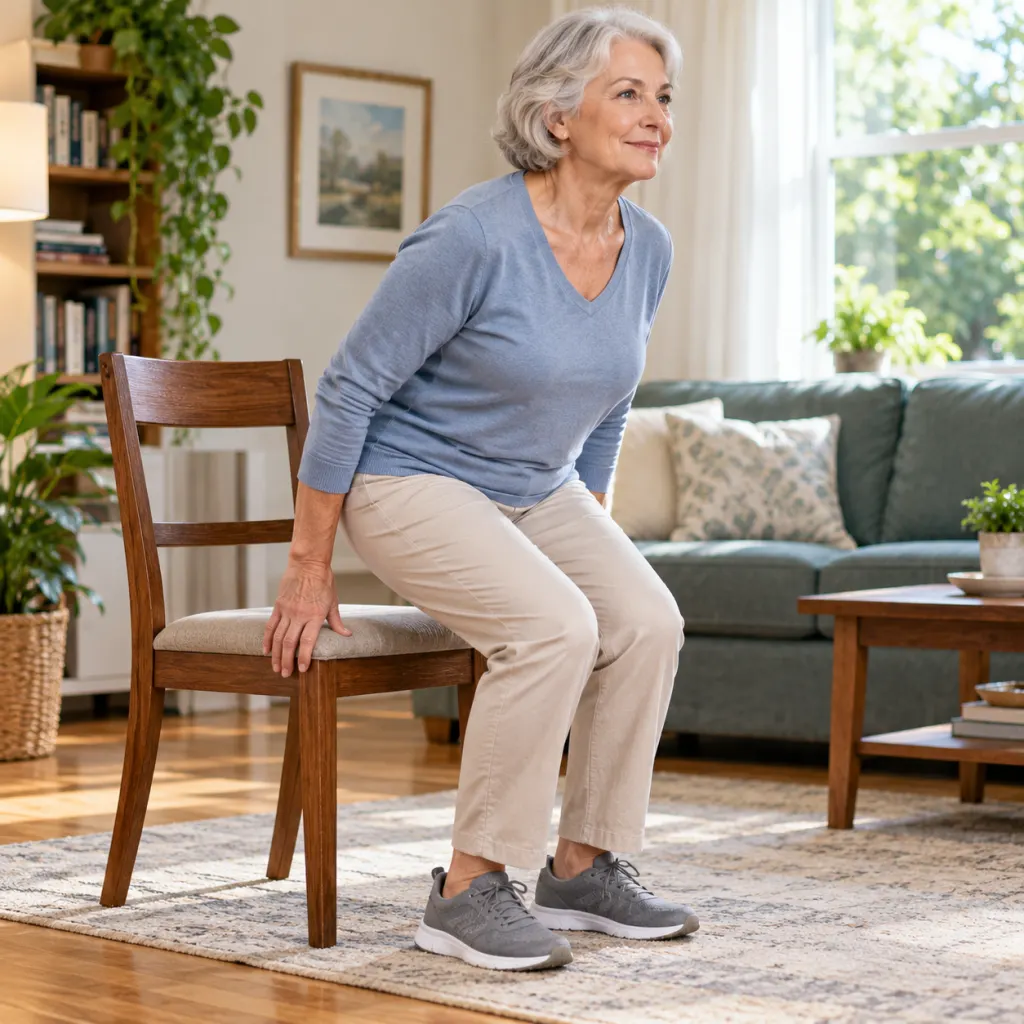
For sarcopenia, strength work should feel purposeful but not reckless. Good starting points may include sit-to-stand practice, wall push-ups, step-ups on a stable low step, heel raises at a counter, resistance-band rows, light carries, or supervised gym machines. The common thread is that major muscle groups work against resistance. As ability improves, the challenge can slowly increase by adding repetitions, resistance, range of motion, or another session. People who have major pain, chest symptoms, dizziness, recent surgery, neurological symptoms, or a history of falls should get individualized guidance before changing activity levels.

Food Matters Because Muscle Needs Building Blocks
Muscle cannot respond well to training if overall food intake is too low. MedlinePlus explains that older adults may need fewer calories than younger adults while still needing enough nutrients, and that some older adults need more protein in its nutrition overview. It also lists nutrient-dense choices such as fruits and vegetables, whole grains, lower-fat dairy or fortified alternatives, seafood, lean meats, poultry, eggs, beans, nuts, and seeds.
A practical muscle-supportive plate does not need to be complicated. Aim to include a protein-rich food at meals, add colorful plant foods, include whole grains or starchy vegetables for energy, and use fluids regularly. For someone with a small appetite, spreading food across meals and snacks may be easier than relying on one large dinner. For someone who avoids meat, beans, lentils, tofu, tempeh, eggs, dairy, fortified soy beverages, nuts, and seeds can help build variety. Personal needs differ, especially with kidney conditions, swallowing problems, diabetes, digestive issues, dental problems, or recent weight loss, so tailored advice matters.
Recovery, Sleep, and Daily Routines Count Too
The body builds strength between sessions, not only during them. Poor sleep, not eating enough, long sedentary stretches, and repeated overdoing can all interfere with a steady plan. A sustainable routine may pair short daily movement with two or more focused strength sessions each week. Examples include walking after breakfast, practicing sit-to-stands before lunch, using a resistance band near a favorite chair, or doing balance practice at a kitchen counter. The best plan is the one a person can repeat safely.
Balance deserves its own attention. Sarcopenia can affect steadiness, and fear of falling can reduce movement further. CDC guidance includes balance activities for older adults alongside aerobic and muscle-strengthening work in its weekly recommendations. Standing heel-to-toe near a counter, practicing controlled turns, and working with a physical therapist after a fall can be more useful than simply telling someone to walk more. If nighttime symptoms are part of the picture, the related article Nighttime Leg Cramps: What They Can Mean covers a different but sometimes overlapping concern.
What a Sensible First Month Can Look Like
A first month is about building consistency and information. Week one might focus on observing: how many times can you rise from a chair without using your hands, how far can you walk comfortably, which groceries feel heavy, and which activities feel less steady? Week two might add two brief strength sessions, each with a few simple movements. Week three can add balance practice and a little more walking or cycling. Week four is a good time to review what felt easier, what caused discomfort, and what questions should go to a clinician or physical therapist.
Keep the plan modest enough to repeat. For many people, the winning pattern is not an exhausting workout. It is a repeatable cycle: challenge the muscles, eat enough, recover, and return. Track function rather than perfection. Can you rise from a chair with better control? Carry a bag with less strain? Walk at a steadier pace? Garden longer without needing as many breaks? These are meaningful outcomes because sarcopenia affects daily life first.
When to Ask for Help Promptly
Do not dismiss a rapid change as normal aging. Seek medical guidance if weakness comes on suddenly, follows a fall, appears with shortness of breath or chest discomfort, causes repeated falls, comes with unexplained weight loss, or makes basic tasks such as bathing, dressing, cooking, or walking across a room difficult. Sarcopenia can coexist with other conditions, and a professional assessment can separate muscle loss from problems that need different care.
It is also wise to ask for help when confidence has disappeared. Fear of movement can become its own trap: less movement leads to less strength, which leads to more fear. A physical therapist, occupational therapist, dietitian, or primary care clinician can help adapt the plan to the person's home, preferences, conditions, and goals. The aim is practical ability: getting up, moving safely, carrying useful things, and staying engaged in ordinary life.
Wrap-Up
Sarcopenia is common with aging, but it is not simply a cosmetic change or an unavoidable loss of independence. It is best understood through strength, muscle quantity, and physical performance. The major causes often overlap: age-related muscle changes, inactivity, inadequate nutrition, weight loss, illness, and recovery after reduced movement. The most useful response is steady and personal: strength work that is appropriate for ability, balance practice, regular aerobic movement, enough nutrient-dense food, attention to recovery, and professional guidance when symptoms are new, fast-moving, or limiting. Progress may be gradual, but small functional gains can matter a great deal in daily life.
Frequently Asked Questions
- → Is sarcopenia the same as ordinary aging?
No. Some loss of muscle strength with age is common, but sarcopenia refers to a level of low strength, reduced muscle quantity or quality, and reduced physical performance that affects function. It is worth discussing when daily tasks become harder or falls become more likely.
- → Can someone have sarcopenia even if their weight has not changed?
Yes. Weight can stay stable while body composition and strength change. That is why chair rising, walking speed, grip strength, balance, and daily function can be more informative than the scale alone.
- → What kind of exercise is most relevant?
Strength-focused activity is central because muscles need resistance to adapt. Walking, cycling, swimming, and other aerobic activity still matter, but they are best paired with muscle-strengthening and balance activities chosen for the person's ability and safety.
- → Does food make a difference for sarcopenia?
Food matters because muscle needs enough energy and protein-rich foods, along with vitamins, minerals, fluids, and overall variety. Older adults with low appetite, swallowing trouble, kidney conditions, diabetes, or unplanned weight loss should ask a qualified professional for individualized nutrition advice.
- → When should I talk to a clinician about possible sarcopenia?
Ask for medical guidance if weakness is new, worsening, linked with falls, paired with unexplained weight loss, or making routine tasks difficult. A clinician can check for sarcopenia and for other causes of weakness or low stamina.
References
This content was developed and refined using reliable sources.
- https://academic.oup.com/ageing/article/48/1/16/5126243
- https://my.clevelandclinic.org/health/diseases/23167-sarcopenia
- https://www.nia.nih.gov/news/how-can-strength-training-build-healthier-bodies-we-age
- https://www.cdc.gov/physical-activity-basics/guidelines/older-adults.html
- https://www.cdc.gov/physical-activity-basics/adding-older-adults/what-counts.html
- https://medlineplus.gov/nutritionforolderadults.html