 Save
The short answer: a small ribbon on a suitcase is not usually a security violation, but it is not the best way to identify checked luggage. The concern is practical, not dramatic. Loose ribbons, scarves, straps, hooks, or old barcode labels can make a bag harder to handle, scan, or route cleanly through an airport system. A better plan is to keep the bag exterior simple, remove old airline tags, and use a secure identification tag with your current contact details.
The Real Issue Is Not the Color, It Is the Loose Attachment
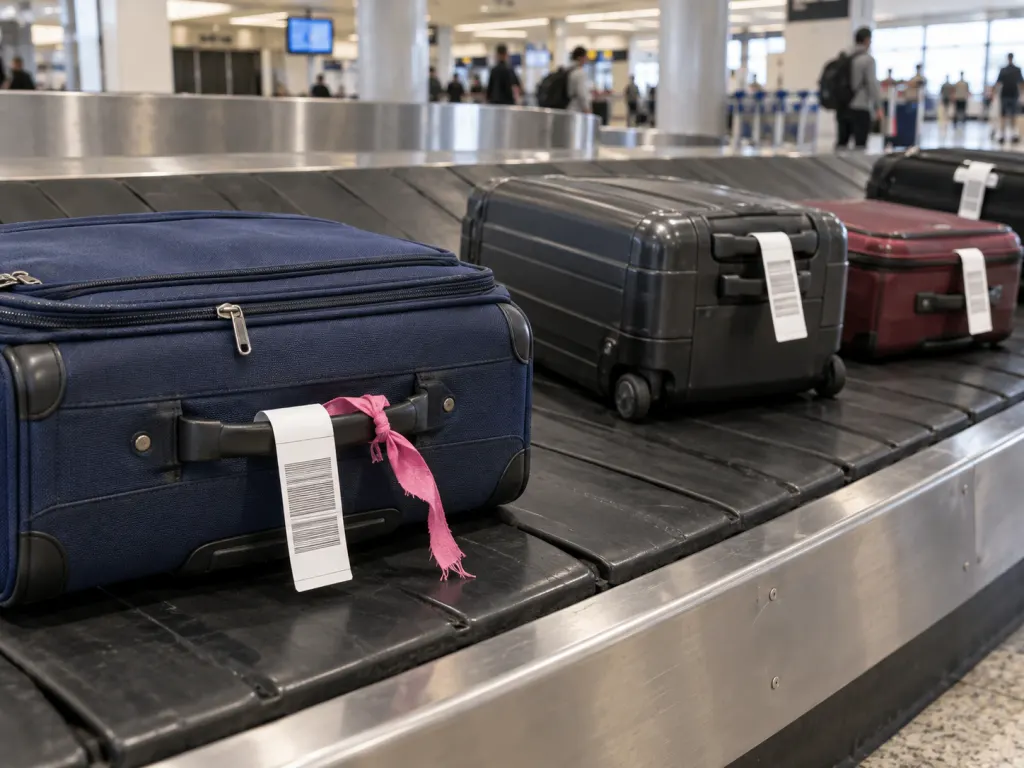
The viral warning about ribbons has been repeated as if airports have suddenly prohibited colorful luggage markers. That overstates the point. What travelers should take from it is narrower and more useful: checked bags move through conveyor belts, carts, scanners, loading areas, and cargo spaces. Anything dangling from the handle has a chance to snag, tear away, hide part of a tag, or make the bag awkward for handlers.
The U.S. Department of Transportation advises travelers to remove straps and hooks from checked garment bags because they can get caught in baggage processing machinery. It also explains that airlines attach destination tags and issue claim checks for checked bags, including barcode labels used to identify the bag at the destination. Those two facts make the ribbon question easier to understand: the official routing information should be clear, and the bag should not have loose parts that create handling problems. See the DOT baggage guidance at transportation.gov/lost-delayed-or-damaged-baggage.
How a Checked Bag Gets Matched to Your Trip
When you check a bag, the airline applies a destination tag showing where the bag is supposed to go. Travelers also receive a claim check or bag identification record. DOT guidance tells passengers to make sure they receive one for every checked bag and to keep it until the bag is returned. The same guidance says previous trip tags should be removed because they may cause a bag to go astray. That is a much stronger, better-documented concern than the idea that color alone creates trouble.
In plain terms, your suitcase should present one current travel story. The airline tag should be fresh, attached correctly, and easy for airline systems and staff to read. If the bag is covered in old barcode stickers, paper loops from earlier flights, loose decorative ties, or dangling straps, it creates visual and physical clutter around the part of the bag that matters most. The issue is not that a ribbon is mysterious or dangerous. It is that a checked bag benefits from being boring on the outside and clearly labeled where it counts.
Better Ways to Make Your Bag Easy to Spot
You still need to recognize your own bag at the carousel. Many suitcases look nearly identical, and DOT notes that travelers should check the name tag or bag tag number after pulling a bag from the carousel. The goal is to make your bag recognizable without adding a flimsy object that can fall off or catch on equipment. These options work better than a loose ribbon:
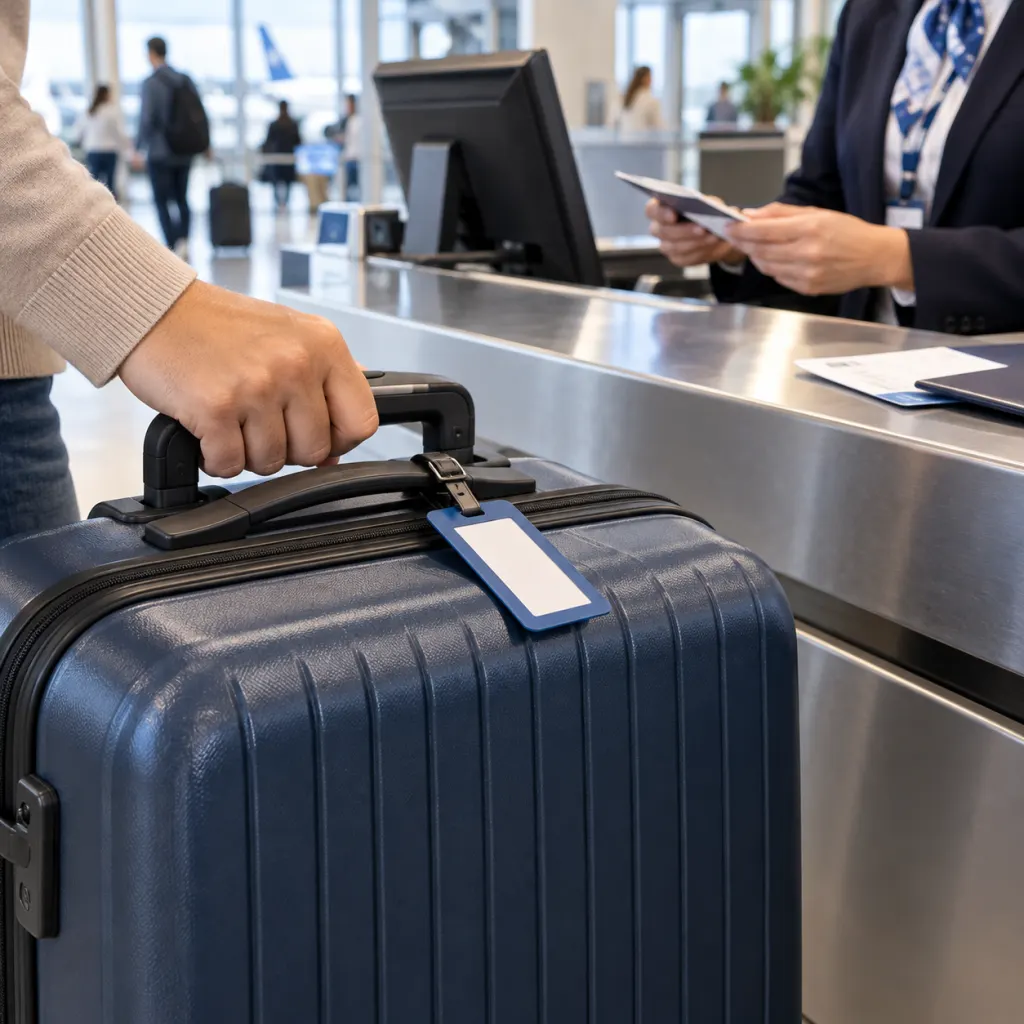
- Use a sturdy luggage tag. Put your name, phone number, and email address on the tag, and consider placing the same information inside the bag.
- Choose a distinctive suitcase surface. A color, texture, molded shell pattern, or small permanent mark can help you identify it without dangling fabric.
- Use a fitted cover if your airline permits it. It should fit tightly and leave the airline baggage tag visible.
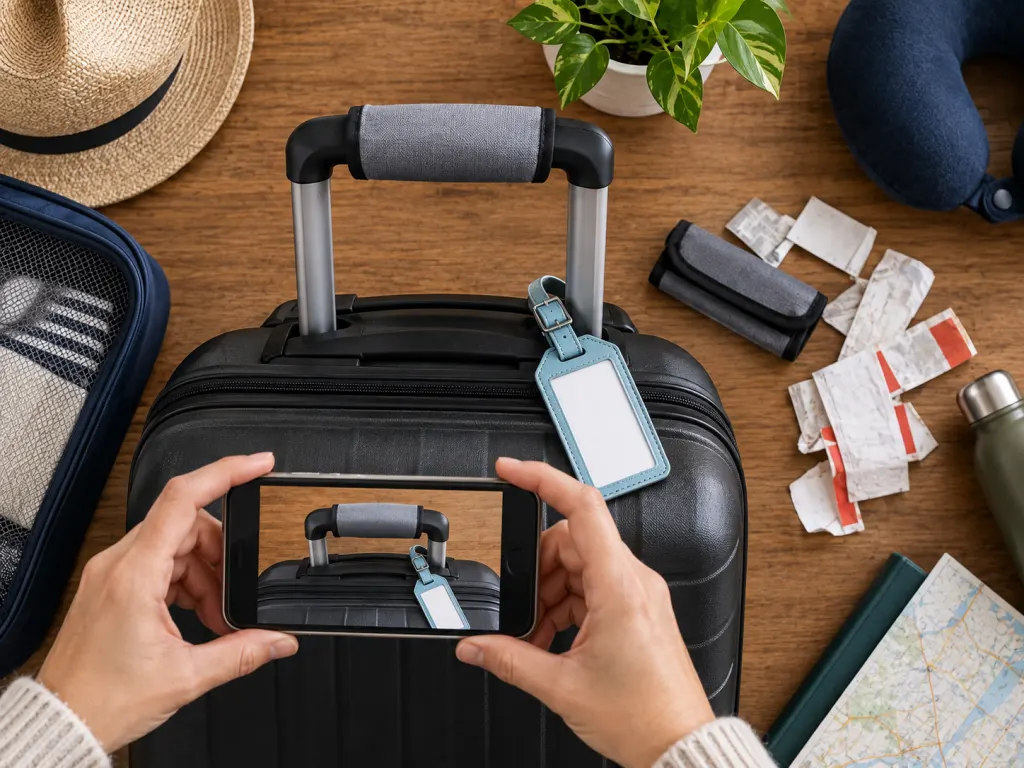
- Take a quick photo before check-in. A current photo can help describe the bag if it is delayed or damaged.
- Keep the handle area clean. The handle is often where airline tags, personal tags, and handling contact all compete for space.
What to Remove Before You Leave for the Airport
A five-minute luggage cleanup can prevent a lot of confusion. Remove old airline tags, old barcode stickers when they can be peeled away cleanly, cruise or hotel transfer labels from past trips, torn decorative ties, and any straps that are not required to close the bag. DOT's Plane Talk baggage tips specifically say to verify that the agent attaches a destination tag to each checked bag, check the three-letter airport code, and remove tags from previous trips to avoid confusion. That guidance is available at transportation.gov/airconsumer/plane-talk-tips-avoiding-baggage-issues.
If you like using a visual marker, keep it flat, short, and secure. A sewn-in handle wrap that does not dangle is usually a better idea than a long bow. A bright tag with a covered information flap is better than a scarf tied in a knot. A distinctive luggage strap can be useful only if it is approved by your airline, tight around the bag, and not likely to trail behind it.
Do Not Let Decoration Cover Practical Identification
The personal luggage tag is not just decoration. DOT recommends labeling checked baggage with a name, phone number, and email address because proper labeling can help an airline contact you and return a delayed bag. Some travelers prefer to keep a full home address off the outside tag for privacy and place more complete information inside the suitcase. The exact choice is personal, but the principle is steady: the airline needs a way to connect the bag to you if the routing label is damaged or separated.
There is also a balance between standing out and creating clutter. A bag covered in ribbons, stickers, novelty tags, and straps may be memorable to you, but it can be less clear to someone trying to identify the current tag quickly. A clean bag with one strong visual cue is easier to work with. For example, a navy suitcase with a bright orange hard tag and a current photo on your phone is more reliable than a black suitcase with three old tags and a ribbon that may not survive the trip.

Trackers, Batteries, and Other Packing Details Matter Too
Many travelers now use luggage trackers, smart bags, or powered bag tags. These can be useful, but they have their own rules. The Federal Aviation Administration says baggage equipped with lithium batteries must generally be carried as carry-on baggage unless the batteries are removed, and it gives separate limits for checked baggage with lithium batteries. It also says baggage location tracking devices powered by lithium batteries are portable electronic devices and travelers should check with the airline before traveling with them. The FAA guidance is at faa.gov/hazmat/packsafe/baggage-with-lithium-batteries.
That does not mean trackers are a bad idea. It means the useful question is not only, "Can I find my suitcase?" It is also, "Is everything attached to or packed inside this bag allowed for this flight?" The FAA's broader PackSafe page reminds passengers that many everyday items can be regulated as dangerous goods when transported by air, and that some items are restricted in carry-on baggage, checked baggage, or both. See faa.gov/hazmat/packsafe.
Food Souvenirs Can Create Separate Delays
The ribbon story is often bundled online with claims about unusual foods causing inspection delays. The better way to think about food is simple: rules depend on the item, the route, and the destination. For passengers entering the United States, USDA APHIS says travelers must declare agricultural or wildlife products to U.S. Customs and Border Protection officials, and inspectors decide whether the products meet entry requirements. APHIS also recommends keeping receipts and original packaging as proof of origin. That guidance is available at aphis.usda.gov/traveling-with-ag-products.
If you are bringing coffee, tea, spices, packaged sweets, plant materials, meat products, dairy products, seeds, or souvenirs made from natural materials, check the rules before packing. Do not rely on what was allowed on a previous trip, because routes and destinations matter. When in doubt, declare the item and be prepared for inspection. The same practical theme applies here as with ribbons: a smoother trip usually comes from fewer surprises, clearer labeling, and less last-minute explanation.
If Your Bag Is Delayed or Damaged, Act Before Leaving the Airport
Even careful packing cannot eliminate every baggage problem. DOT says passengers should file a baggage claim with the airline as soon as possible when a checked bag does not arrive, and should stay in communication with the airline during the search. It also says that if a bag arrives open, unlocked, or visibly damaged, travelers should check the contents right away and report the problem to the airline before leaving the airport. Keeping your claim check matters because it helps connect your report to the bag the airline accepted.
For prevention, the simplest routine is the most durable: arrive before the airline's checked-bag deadline, remove old tags, keep valuables and first-day essentials in your carry-on, label the bag clearly, and photograph it before it disappears behind the check-in counter. A ribbon may feel reassuring, but a clean routing tag, a proper claim check, and a secure personal tag do more real work.
Wrap-Up
The luggage ribbon warning is best understood as practical baggage advice, not a new universal ban. Loose ribbons can be less reliable than travelers think, especially if they dangle near handles and tags. Use a sturdy luggage tag, remove old airline labels, avoid trailing straps or hooks, and keep current routing information easy to see. The cleanest suitcase is often the easiest one for an airline to move, scan, identify, and return.
Frequently Asked Questions
- → Are ribbons banned on checked luggage?
There is no broad rule that makes a simple ribbon automatically banned. The practical concern is that loose or dangling items can snag, fall off, cover important tags, or add clutter around the handle area. A secure luggage tag or fitted identifier is a better choice.
- → What is the safest way to identify my suitcase?
Use a sturdy personal luggage tag with current contact information, place backup contact information inside the bag, and choose one distinctive visual cue such as a color, texture, handle wrap, or fitted cover. Keep the airline tag easy to see.
- → Should I remove old airline barcode stickers?
Yes, remove old airline tags and stickers when you can do so without damaging the bag. DOT guidance says previous trip tags should be removed because they may cause confusion, and travelers should verify that the current destination tag is attached.
- → Can I use a luggage tracker instead of a ribbon?
A tracker can help you see where a bag may be, but it does not replace proper airline tagging or a personal luggage tag. If the tracker uses a lithium battery, check FAA guidance and your airline's rules before packing it in checked baggage.
- → What should I do if my checked bag does not arrive?
Report the missing bag to the airline before leaving the airport and keep your claim information. DOT says airlines are responsible for locating checked bags that do not arrive, and passengers should file a baggage claim as soon as possible.