 Save
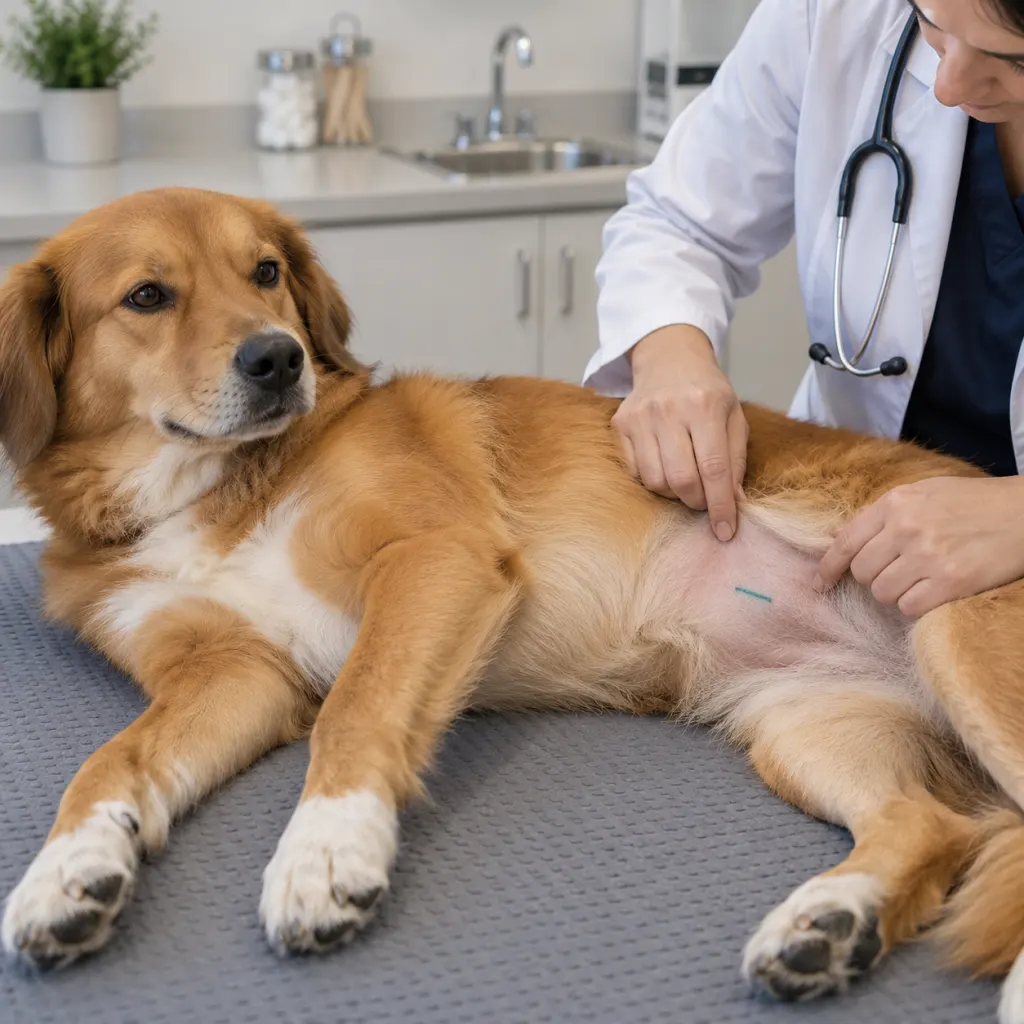
A blue line tattoo on a dog usually means the dog has already been spayed or neutered. The mark is commonly a short colored line on the abdomen, placed while the dog is already under veterinary care for the procedure. Some tattoos can also be identification marks, but a simple belly line is most often a sterilization indicator, not a badge, decoration, or secret public code.
The short answer
If you notice a small blue or greenish-blue line on a dog’s belly, the most likely explanation is that it marks the dog as already sterilized. The University of Florida Shelter Medicine Program explains that shelter veterinarians use simple linear tattoos to identify dogs and cats that have been spayed or neutered, especially when a pet’s history is uncertain or paperwork has not followed the animal University of Florida Shelter Medicine Program.
Why veterinarians use a short colored line
The practical reason is simple: records can be lost, owners can change, and shelter dogs may arrive with little history. A small tattoo gives a permanent visual clue that a dog has already had a spay or neuter procedure. The University of Florida article notes that sterilization indicator tattoos are meant to reduce uncertainty and help avoid unnecessary repeat exploratory procedures when a dog is later examined by a shelter or clinic University of Florida Shelter Medicine Program.

Why the mark may look blue instead of green
Many veterinary references describe the recommended mark as green, but real-life tattoos do not always look identical. Ink shade, skin tone, coat color, lighting, camera filters, healing, and age can make a green tattoo appear blue, teal, gray-green, or dark blue. What matters more than the exact color is the full pattern: a short, simple line on the abdomen of a dog with a likely spay or neuter history usually points toward a sterilization marker.
Where the tattoo is usually found
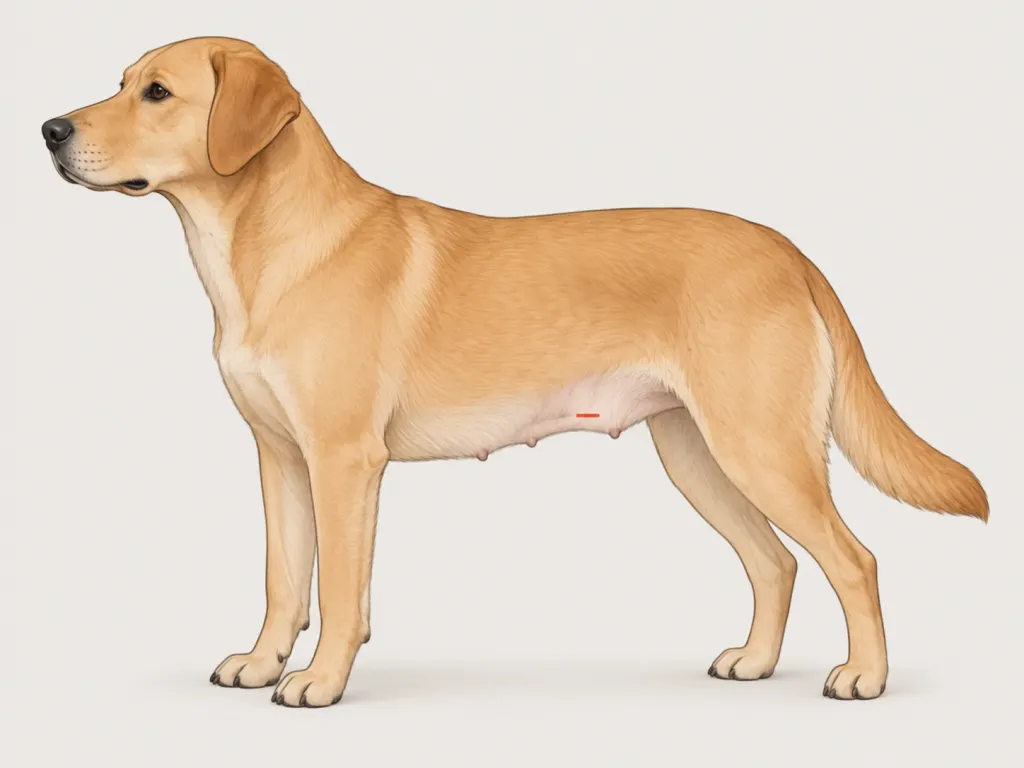
These tattoos are typically placed where a veterinarian or shelter worker would look while checking sterilization status. On many female dogs, that means the lower abdomen near the area where a spay incision would be expected. On male dogs, placement can vary, but a small line on the abdomen is still a common format. The University of Florida source describes the modern recommendation as a small line rather than a large symbol, which helps explain why owners sometimes notice only a modest streak after the surrounding hair is parted University of Florida Shelter Medicine Program.
It is not proof by itself
A tattoo is useful, but it should not be treated as the only record. A line may be hard to see, may be confused with an old mark, or may have been placed by a clinic with a different local convention. Veterinary records, adoption papers, and microchip registration remain important because they connect the visible mark to a specific dog and a specific history. USDA APHIS guidance for regulated dog facilities emphasizes that dog medical records should include identification and routine care information, which is the kind of record trail owners should try to preserve USDA APHIS.
How this differs from an ID tattoo
A sterilization line is not the same as an identification tattoo. An ID tattoo usually contains letters, numbers, or another unique mark that can be connected to paperwork. A short belly line generally communicates one narrow fact: the dog appears to have been spayed or neutered. Government travel and import rules show why this distinction matters. USDA APHIS lists a dog’s identifying information as details such as name, microchip, or tattoo when applicable on certain import certificates USDA APHIS. GOV.UK also explains that older pet travel rules may recognize a clearly legible tattooed identification number in specific circumstances, which is different from a plain surgical-status line GOV.UK.
- Short plain line on the belly: often a sterilization indicator.
- Letters or numbers: may be an identification tattoo connected to a registry or travel document.
- Microchip number in records: the main identifier for many current travel and ownership documents.
- Unclear mark: ask a veterinarian or shelter to help interpret it.

Why microchips still matter
A line tattoo can answer one question, but it cannot replace a readable microchip or complete records. CDC dog import guidance says dogs entering or returning to the United States must meet requirements that can include a microchip, and the microchip must be detectable with a universal scanner when required CDC. For everyday pet ownership, a microchip can help connect a lost dog to contact information if the registration is kept current. The tattoo and the microchip do different jobs: one may suggest sterilization status, while the other helps identify the animal.
What to do if you find the mark on your dog
Start by looking calmly at the context. Is the mark a small line on the abdomen? Did the dog come from a shelter, rescue, municipal program, or low-cost spay/neuter clinic? Do the adoption records mention spay or neuter status? If the answer to several of those questions is yes, the tattoo probably reflects sterilization. Still, the cleanest next step is to ask your veterinarian to note the mark during the dog’s regular visit and compare it with any available records.
A useful owner checklist
Use the tattoo as a reason to organize the dog’s file, not as a reason to guess. Keep adoption paperwork, vaccine records, microchip registration, and past clinic invoices together. If the dog has changed homes, ask the prior owner or rescue for any surgical documents. If the dog was imported, review the certificate documents because official paperwork may record the animal’s identifying information, including microchip or tattoo details when relevant USDA APHIS.
Does it mean the dog was a police or service dog?
Not from the line alone. Viral posts sometimes attach symbolic meanings to a blue mark, but a small belly line has a much more ordinary veterinary explanation. Service dogs, working dogs, and pets may all have their own records, handlers, and identification systems. A short colored line on the abdomen should not be read as proof of law-enforcement work, military service, or service-dog status unless reliable records confirm that history.
Why the mark helps shelters and future owners
Shelter medicine often involves making decisions with incomplete histories. The University of Florida source reports that awareness and use of sterilization indicator tattoos has been inconsistent, even though the mark is intended to make later decisions easier University of Florida Shelter Medicine Program. A visible line can help a future veterinarian or shelter worker pause and check records before assuming the dog is intact. That can save time, reduce confusion, and make the dog’s history easier to reconstruct.
Spay and neuter decisions are individual
The tattoo explains something that may already have happened; it does not tell owners when every dog should be sterilized. The University of Illinois College of Veterinary Medicine describes spay and neuter procedures as common in dogs, while also explaining that timing can depend on breed, size, circumstances, and a veterinarian’s assessment University of Illinois College of Veterinary Medicine. If you have a puppy or an intact adult dog, the tattoo article is not a substitute for that conversation.
When to ask for help interpreting a tattoo
Ask a veterinarian or the adoption organization if the mark is unusual, raised, irritated-looking, made of letters or numbers, or located somewhere other than the abdomen. Also ask if the dog’s behavior or body changes make the records seem inconsistent. The goal is not to make a diagnosis from a photo. The goal is to match the visible clue with records and a professional examination so the dog’s file is accurate going forward.
The bottom line
A blue line tattoo on a dog is usually a practical veterinary mark showing that the dog has been spayed or neutered. It may look blue even when the intended ink color was green. It is not a universal symbol for police work, service-dog status, or a special rank. The most responsible interpretation is: check the location, compare it with records, scan the microchip if needed, and ask a veterinarian to confirm what the mark means for that individual dog.
Wrap-Up
A small blue or greenish line tattoo on a dog’s abdomen is most often a sterilization indicator placed after spay or neuter care. Identification tattoos are different because they usually contain numbers or letters tied to documents. Treat the mark as a helpful clue, then confirm it with veterinary records, adoption paperwork, and microchip information.
Frequently Asked Questions
- → Is a blue line tattoo on a dog always a spay or neuter tattoo?
No. It is often a spay or neuter indicator when it is a short line on the abdomen, but it should still be confirmed with records or a veterinarian. Tattoos with letters or numbers may be identification marks instead.
- → Why would a veterinarian tattoo a dog after spay or neuter care?
The tattoo gives a permanent visual clue that the dog has already been sterilized. That can help shelters, rescues, and later clinics avoid confusion when records are missing or incomplete.
- → Can the tattoo look blue if sources say the standard mark is green?
Yes. Ink shade, skin tone, hair growth, age, and lighting can make a green line look blue or teal. The location and shape of the mark are often more useful clues than the exact color in a photo.
- → Does a blue line tattoo mean the dog was a police dog?
Not by itself. A small colored line on the belly is usually interpreted first as a veterinary sterilization marker. Do not assume a service, police, or military history unless reliable records confirm it.
- → Should I rely on the tattoo instead of a microchip?
No. The tattoo and microchip serve different purposes. A line tattoo may suggest sterilization status, while a microchip helps identify the dog when scanned and matched to current registration information.
References
This content was developed and refined using reliable sources.
- https://sheltermedicine.vetmed.ufl.edu/2019/10/15/tattoo-study
- https://vetmed.illinois.edu/pet-health-columns/sorting-science-spay-neuter-surgeries
- https://www.cdc.gov/importation/dogs/faqs.html
- https://www.gov.uk/taking-your-pet-abroad/microchip
- https://www.aphis.usda.gov/live-animal-import/commercial-dog-import
- https://www.aphis.usda.gov/animal-welfare/attending-veterinarians/veterinary-care-new-rule