 Save
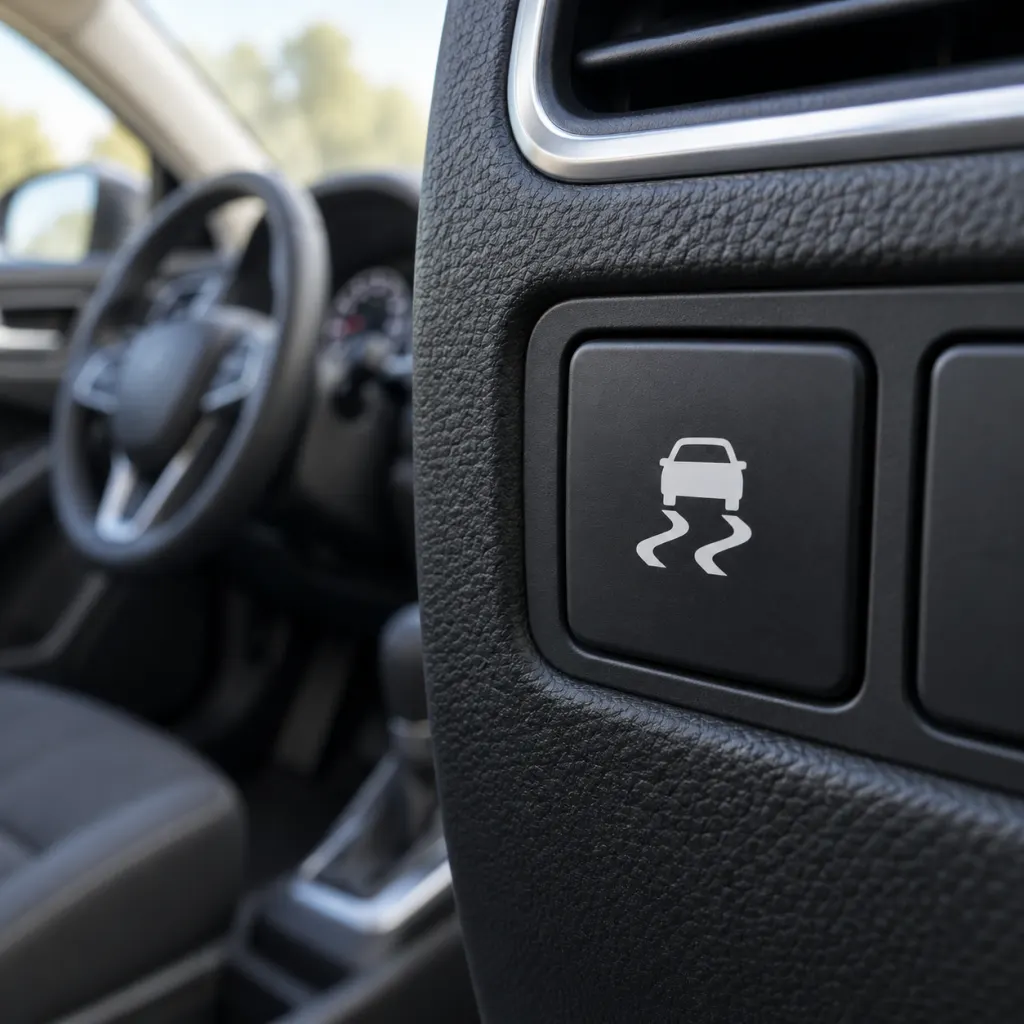
The hidden car safety feature many drivers overlook is the traction control or electronic stability control button, usually marked by a car with wavy lines underneath. In normal driving, the best move is simple: leave it on. Electronic stability control can automatically brake individual wheels and sometimes reduce engine power when the vehicle begins to skid or rotate away from the driver’s intended path, a function described in federal safety material from the U.S. Department of Transportation and NHTSA here. The button exists because a few low-speed stuck-vehicle situations are different from normal driving.
The symbol is easy to miss, but the system is important
Most drivers learn the obvious controls first: headlights, turn signals, wipers, defroster, hazard lights. The traction control or electronic stability control symbol is less intuitive. Depending on the vehicle, it may appear as a skidding car icon, the words “TCS,” “ESC,” “ESP,” “VDC,” “DSC,” or a menu setting rather than a physical button. The names vary, but the idea is similar: the vehicle uses sensors and computer-controlled braking to help manage wheel slip or loss of directional control.
Electronic stability control, often shortened to ESC, is the broader crash-avoidance system. Traction control is closely related, but it focuses more on wheel spin during acceleration. Many vehicles package these features together, so one button may change more than one layer of assistance. That is why the owner’s manual matters. In one car, a brief press may reduce traction control only; in another, a longer press may reduce stability control; in a third, the system may reset automatically the next time the vehicle starts.
What electronic stability control actually does
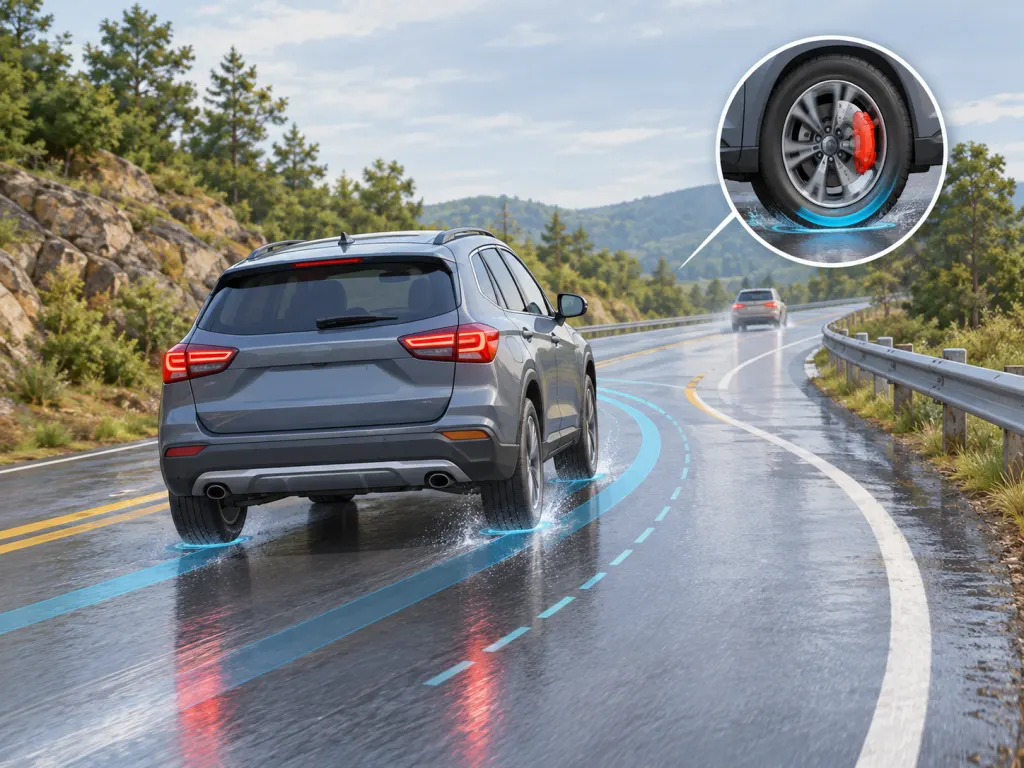
ESC does not drive the car for you. NHTSA’s driver assistance guidance emphasizes that vehicle features are assistive and that the driver remains responsible for steering, braking, and accelerating according to the agency. ESC works in the background when the vehicle’s path no longer matches what the steering input suggests. If the rear of the car starts to come around, or if the front pushes wide in a turn, the system can apply braking to selected wheels for short moments. Some systems can also reduce engine power.
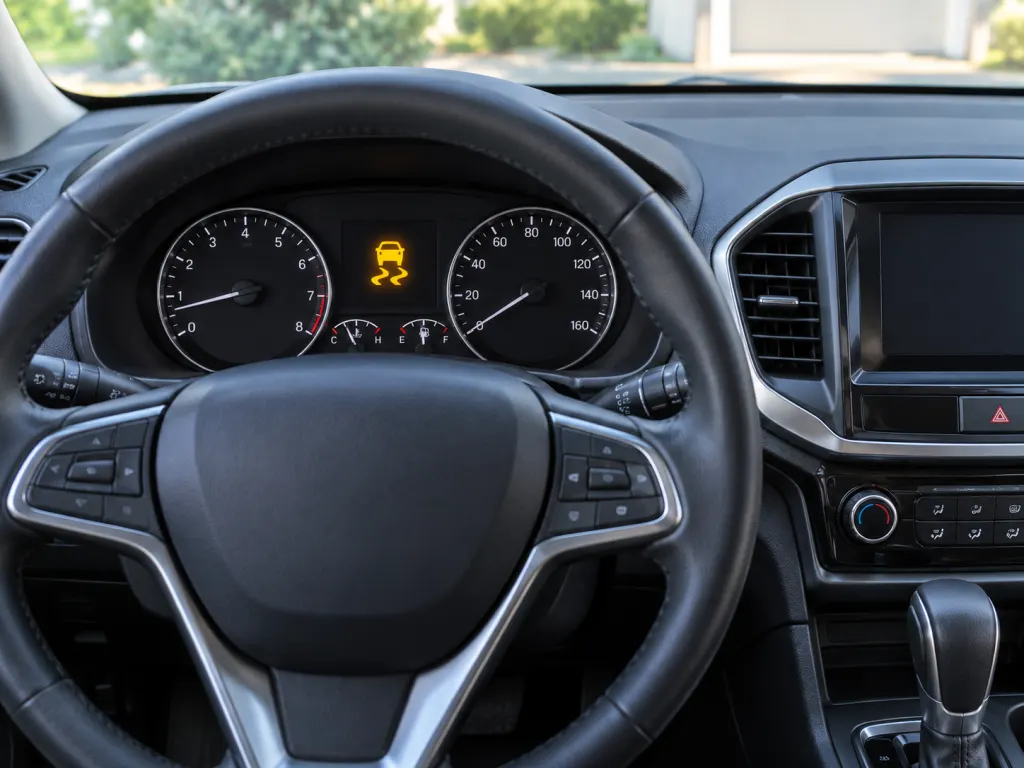
That targeted braking is the part many people never notice. The driver may only see the dashboard symbol flash during a slick turn, a fast lane change, or a patch of loose gravel. A flashing light often means the system is intervening, not that the driver has broken something. A light that stays on, a warning message, or a switch that does not work as expected deserves attention because official inspection guidance in the United Kingdom treats ESC malfunction lamps, damaged components, and a damaged or nonfunctioning ESC switch as significant inspection defects in its MOT manual.
The reason ESC matters is that loss-of-control crashes can escalate quickly. When the U.S. Department of Transportation issued the federal rule requiring ESC on many light vehicles, it described ESC as using automatic computer-controlled braking of individual wheels to assist the driver in critical situations such as spinout or plowing wide in the rule summary. That same rule required installation on 100 percent of covered light vehicles by model year 2012, with limited exceptions.
Why the feature should normally stay on
For ordinary road use, ESC and traction control should usually remain on because their value often appears in the moment a driver has the least spare attention. A wet freeway ramp, an evasive steering input, a shaded icy curve, or a patch of gravel near an intersection can all create a mismatch between the driver’s intended path and the vehicle’s actual movement. ESC cannot change physics, create grip that the tires do not have, or make high speed safe in poor conditions. What it can do is respond faster and more selectively than a person can with one brake pedal.
Federal rulemaking credited ESC with large expected reductions in single-vehicle crashes and rollover crashes once the technology became widespread in the Department of Transportation summary. Those estimates should not be read as a promise about any individual drive, road, or vehicle. They do explain why regulators treated the technology as more than a convenience feature. ESC is part of the modern safety baseline, much like anti-lock braking and tire pressure monitoring became familiar after earlier generations of vehicles did not always have them.
There is also a behavior lesson here. Transport Canada’s survey summary found that many drivers remained unaware of ESC, and it warned that some drivers may over-rely on the technology by driving faster or more aggressively in poor conditions according to its public and driver surveys. That is the wrong lesson to take from the button. ESC is a backup layer, not permission to ignore weather, speed, visibility, tire condition, or following distance.
When the Off switch may make sense
The off switch exists because a stuck vehicle may need controlled wheel spin. In deep snow, mud, sand, or loose gravel, traction control can reduce power just when the driver is trying to rock the vehicle free. NHTSA’s final rule discussion acknowledged winter situations such as snow chains and trying to begin moving in deep snow as reasons a temporary disable control could be useful in its ESC rule document. Transport Canada gives similar winter guidance: if the ESC comes on, slow down and drive more cautiously; if you get stuck, turn ESC off in its winter driving advice.
That does not mean “off” is better in bad weather. It means “off” can help for a short, low-speed recovery maneuver when the vehicle is already stuck and the manual permits it. Once free, the usual practice is to turn the system back on or allow the vehicle to reset it. If the button behaves differently than expected, stop experimenting and check the manual. Automakers use different press durations, menu paths, indicator lights, and reset rules.
- Leave the system on for normal pavement, rain, curves, freeway driving, and daily commuting.
- Consider turning it off only for a stuck-vehicle attempt in deep snow, mud, sand, or similar loose material.
- Turn it back on after the vehicle is moving normally again.
- If the warning light stays on or an ESC malfunction message appears, schedule service rather than ignoring it.
- Do not use the button as a substitute for slowing down, increasing following distance, or using proper tires.

What the warning light is trying to tell you
A traction or stability light can mean several things, so context matters. A brief flash while driving on a slick surface often means the system is active. A steady light may mean the system has been switched off, the vehicle is in a mode that changes ESC behavior, or a fault has been detected. Some four-wheel-drive or off-road modes may also change stability-control behavior because the drivetrain setting conflicts with normal ESC operation.
NHTSA’s final ESC rule material explains that an actual ESC Off control must use the specified symbol or the text “ESC Off,” and it also discusses cases where another control, such as a low-range four-wheel-drive selector, may place ESC in a different mode as a side effect in the rule document. In practical terms, a driver should avoid guessing from the icon alone. The same-looking light may be an activity indicator, an off indicator, or a malfunction warning depending on timing, color, and message text.
The tires still do the road work
ESC is only as useful as the grip available at the tire contact patches. NHTSA’s tire guidance says tread provides the gripping action that helps prevent slipping and sliding, especially on wet or icy roads, and it recommends replacing tires when tread is worn down to 2/32 of an inch in its TireWise material. It also recommends monthly cold tire pressure checks and notes that proper tire pressure affects safety, durability, and fuel consumption.
This is why a driver can have ESC and still slide. A worn tire, underinflated tire, mismatched tire, overloaded vehicle, or inappropriate seasonal tire can leave the system with too little traction to work with. Winter tires, for example, are designed for cold, snowy, or icy conditions. Transport Canada recommends winter tires on all wheels for those conditions because rubber compound and tread design affect traction in its winter driving guidance. The button helps manage available grip; it does not manufacture it.
How to check your own vehicle without guessing
The fastest way to understand your car is to look up the exact symbol in the owner’s manual, either in the printed booklet or the manufacturer’s official digital manual. Search for terms such as “traction control,” “stability control,” “ESC,” “TCS,” “vehicle stability,” and “dashboard warning lights.” Pay attention to three details: what a flashing light means, what a steady light means, and whether the button resets after restarting the vehicle.
Then test only the harmless part while parked: locate the button or menu, read the dashboard message, and turn it back to the normal setting before driving. Do not test loss of traction on public roads. If your vehicle has drive modes, note whether snow, sand, mud, sport, or off-road settings change the stability-control message. Some modes soften intervention without fully turning ESC off; others may reduce traction control first and leave stability control active.
The simple rule drivers can remember
Use the button as a temporary tool, not a driving style. Leave traction control and stability control on for normal driving. If you are stuck in deep snow, mud, or sand, read the manual, turn the system off only as needed to rock or free the vehicle, and turn it back on once you are moving again. If the light stays on unexpectedly, treat it as a service question.
The larger lesson is not that every driver needs to become a vehicle engineer. It is that one small dashboard symbol can represent a major safety system. Knowing what it does helps you avoid two common mistakes: switching it off casually because it seems mysterious, or trusting it so much that you drive too fast for the road. The best driver uses the feature as designed, keeps the tires in good condition, and slows down when the conditions ask for it.
Wrap-Up
The car-with-wavy-lines button usually controls traction control, electronic stability control, or a related stability mode. For everyday driving, keep it on. The off function is mainly for unusual stuck-vehicle situations where limited wheel spin may help, such as deep snow, mud, or sand. A flashing light often means the system is helping; a steady warning or malfunction message should be checked against the owner’s manual and, when needed, by a qualified service technician.
Frequently Asked Questions
- → Is traction control the same as electronic stability control?
They are related but not identical. Traction control mainly manages wheel spin during acceleration. Electronic stability control is broader and helps when the vehicle’s direction does not match the driver’s intended path. Many vehicles combine the controls, so the owner’s manual is the best source for your exact model.
- → Should I turn traction control off in rain?
No. For normal rain driving, leave traction control and stability control on. The better response is to slow down, increase following distance, avoid sudden steering or braking, and make sure your tires have proper tread and pressure.
- → Why does the stability-control light flash while I am driving?
A brief flash often means the system is active and trying to help manage wheel slip or vehicle direction. If the light stays on, appears with a warning message, or does not match what your manual describes, treat it as a possible service issue.
- → When is it useful to turn the system off?
The main everyday reason is when the vehicle is stuck in deep snow, mud, sand, or similar loose material and the manual allows temporary disablement. The goal is to allow limited wheel spin to help free the vehicle. Turn the system back on when normal driving resumes.
- → Can ESC make worn tires safe?
No. ESC can only work with the grip available. Worn, underinflated, overloaded, or seasonally inappropriate tires reduce the traction the system can use. Regular tire pressure and tread checks remain important.
References
This content was developed and refined using reliable sources.
- https://www.nhtsa.gov/vehicle-safety/driver-assistance-technologies
- https://www.transportation.gov/regulations/federal-register-documents/07-1649
- https://www.nhtsa.gov/es/document/final-rule-federal-motor-vehicle-safety-standards-electronic-stability-control-systems-0
- https://www.gov.uk/guidance/mot-inspection-manual-for-private-passenger-and-light-commercial-vehicles/7-other-equipment
- https://tc.canada.ca/en/road-transportation/stay-safe-when-driving/winter-driving/driving-safely-winter
- https://tc.canada.ca/en/esc-electronic-stability-control-public-driver-surveys
- https://www.nhtsa.gov/vehicle-safety/tires