 Save
Your sleeping position may reveal something practical about your comfort: where your body wants support, which joints dislike pressure, whether breathing feels easier in one posture, and whether late-night heartburn changes when you lie on one side. It does not reveal a hidden personality type, and it is not a medical test. The useful question is simple: do you sleep well, wake rested, and feel reasonably comfortable in the morning? If the answer is yes, there is usually no need to force a new posture just because a rule online says one side is best.
Sleep itself matters for daily function and wellbeing. The CDC notes that adults generally need at least seven hours of sleep and that quality sleep is uninterrupted and refreshing, not only a certain number of hours https://www.cdc.gov/sleep/about/index.html. Position is only one piece of that larger picture, alongside your pillow, mattress, schedule, evening habits, and any health issues that make lying down uncomfortable.
Comfort Is the Better Clue Than the Label
Many people describe themselves as side sleepers, back sleepers, or stomach sleepers, but real nights are more fluid than those labels suggest. You may start on your side, roll onto your back, curl up when cold, or prop yourself higher after a heavy meal. That movement is normal. The goal is not to freeze your body into one ideal shape; it is to notice patterns that repeat often enough to matter.
A comfortable sleep position usually does three things. It lets your muscles relax without pulling your neck or lower back into a strained angle. It spreads pressure so your shoulder, hip, knee, or jaw is not carrying too much load. It also supports calm breathing and a sleep environment that does not repeatedly wake you. Johns Hopkins Medicine explains that for young and healthy people, sleep position may matter less, but it can become more relevant as pain, reflux, snoring, or other concerns appear https://www.hopkinsmedicine.org/health/wellness-and-prevention/choosing-the-best-sleep-position.
Side Sleeping Often Means the Body Wants Pressure Relief and Security
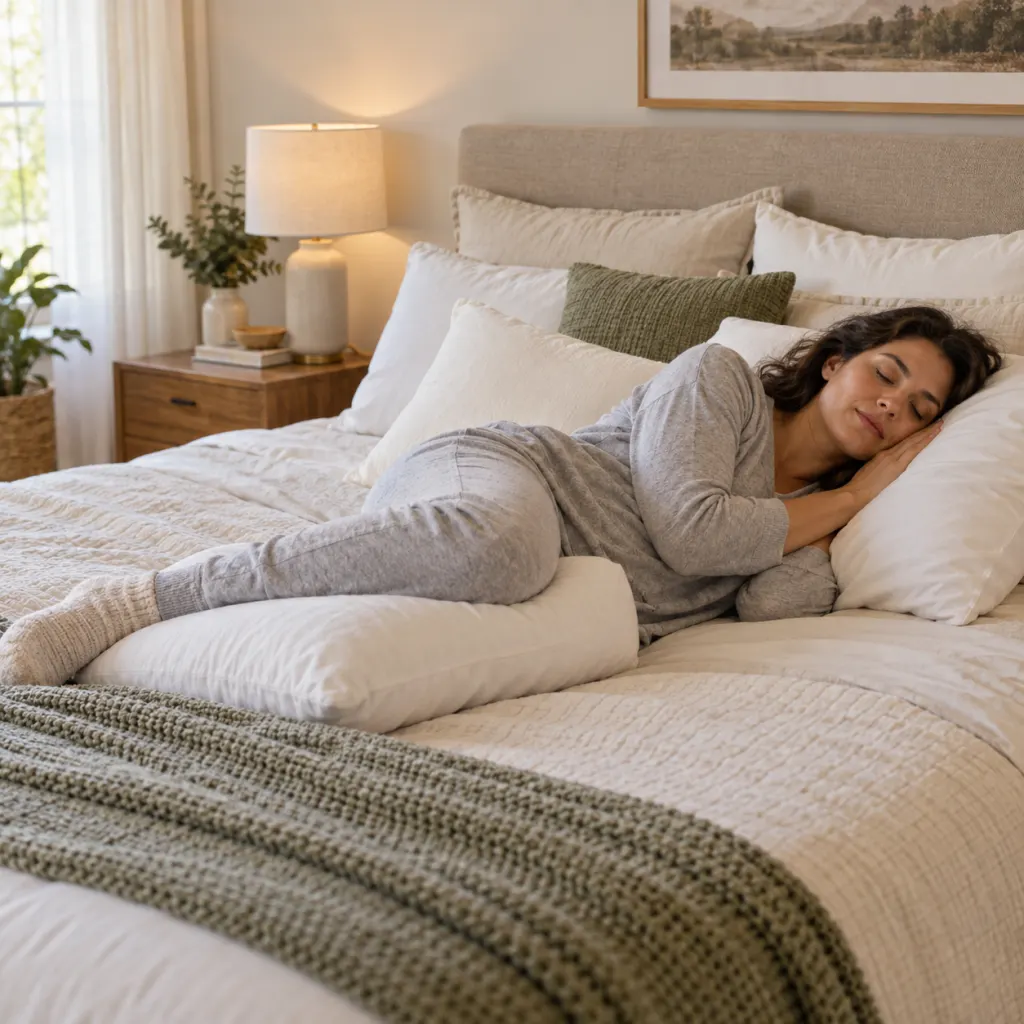
Side sleeping is common because it feels stable, cozy, and easy to customize. A small bend at the hips and knees can make the body feel held without lying flat. A pillow between the knees can reduce the feeling of the top leg pulling the pelvis forward. A pillow that fills the space between the ear and shoulder can keep the neck from tipping sharply toward the mattress.
The comfort tradeoff is pressure. A side sleeper places more weight through one shoulder and hip than a back sleeper does. If you wake with one-sided shoulder soreness, a tingling arm, a stiff jaw, or a sore outer hip, the position may still be basically right, but the support may be wrong. A softer comfort layer, a slightly thicker pillow, or a different arm position can sometimes matter more than changing sides entirely.
Left Side and Right Side Are Not Morally Different
Online sleep advice often turns left versus right into a dramatic choice. For most comfortable adults, either side can be reasonable. Cleveland Clinic’s sleep guidance says that if a person is comfortable in bed, waking refreshed, and not snoring heavily, there may be no need to change position https://health.clevelandclinic.org/best-sleeping-position. That is a helpful antidote to rigid rules.
There are situations where side choice may be noticeable. Mayo Clinic lists left-side starting position and raising the head of the bed among lifestyle measures that may help people who regularly have nighttime reflux discomfort https://www.mayoclinic.org/diseases-conditions/gerd/diagnosis-treatment/drc-20361959?p=1. A PubMed-indexed study using sleep-position monitoring and esophageal pH and impedance monitoring also found shorter nocturnal acid exposure time in the left-side position compared with right-side and back positions among patients referred for reflux monitoring https://pubmed.ncbi.nlm.nih.gov/34928874/. That does not mean everyone must sleep on the left. It means people who notice reflux after lying down may have a specific comfort clue worth discussing with a qualified professional.
Back Sleeping May Signal a Need for Symmetry
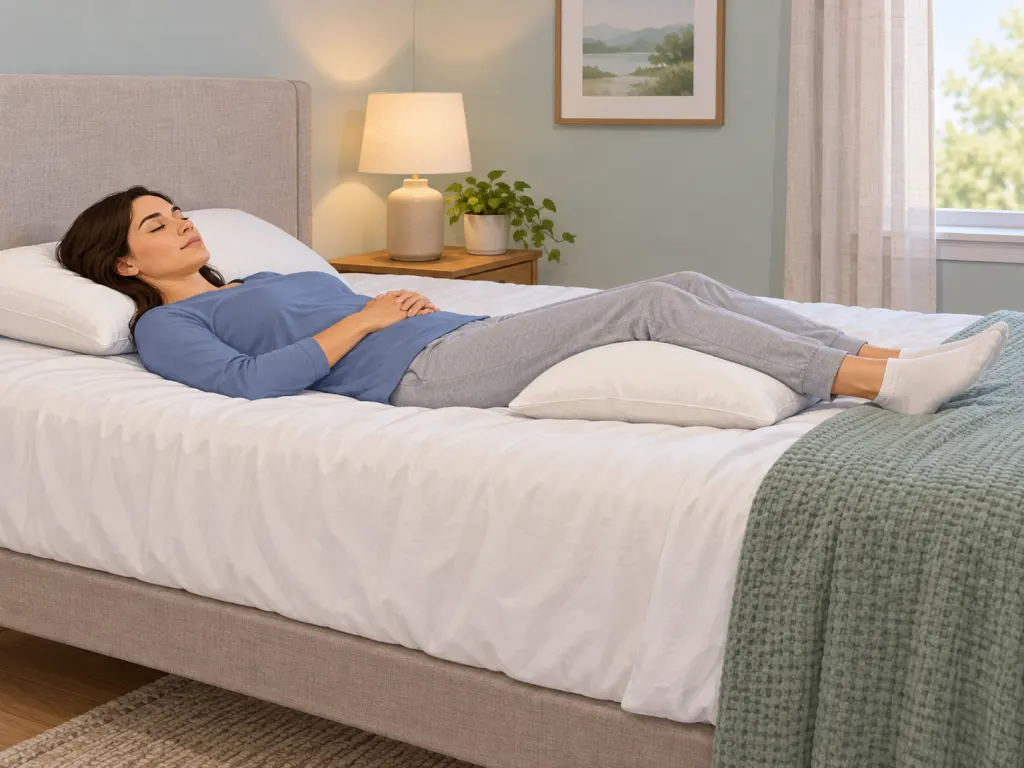
Back sleeping can feel best when the body wants even support. The spine is not automatically perfect in this position, but back sleeping can make it easier to keep the head, shoulders, hips, and knees arranged symmetrically. Some people with neck or lower-back discomfort prefer this because one side is not compressed all night.
The pillow details matter. A very high pillow can push the chin toward the chest. A very flat pillow can let the head drop back. Cleveland Clinic’s neck-pain guidance recommends keeping the head and neck aligned with the rest of the body when sleeping on the back or side, and notes that a pillow under the knees may reduce lower-back pressure for back sleepers https://my.clevelandclinic.org/health/symptoms/21179-neck-pain. In ordinary terms, the position should feel like your body is resting on the bed, not bracing against it.
Back Sleeping Can Be Less Comfortable for Some Breathing Patterns
Back sleeping is not ideal for everyone. Some people notice heavier snoring, a dry mouth, or more restless sleep when lying face up. MedlinePlus explains that sleep apnea can involve breathing that stops or becomes very shallow during sleep, and that obstructive sleep apnea happens when the airway collapses or becomes blocked; loud snoring can occur, though not everyone who snores has sleep apnea https://www.medlineplus.gov/sleepapnea.html. Another MedlinePlus medical encyclopedia page notes that sleeping on the back can also contribute to the airway becoming narrowed or blocked in obstructive sleep apnea https://www.medlineplus.gov/ency/article/000811.htm.
This is where comfort and health overlap. If side sleeping helps you feel more settled and your bed partner notices less snoring, that is useful information. If snoring is loud, interrupted by pauses, followed by gasping, or paired with strong daytime sleepiness, the issue deserves a healthcare conversation rather than a pillow experiment alone.
Stomach Sleeping Often Reveals a Search for Firm Contact
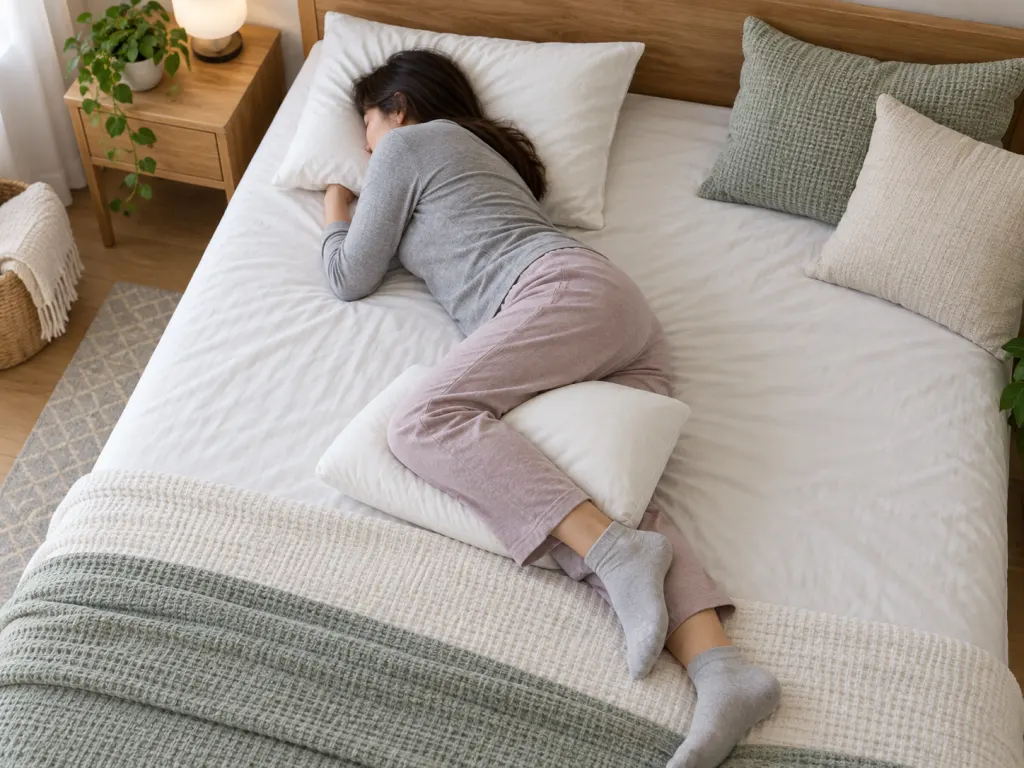
Stomach sleepers often like the feeling of the mattress against the front of the body. It can feel grounded and familiar. The drawback is that the neck usually has to rotate to one side for breathing, and the lower back may arch if the mattress sags or the pillow is tall. Over hours, that can leave some people waking with neck stiffness, shoulder tightness, or lower-back discomfort.
If stomach sleeping is the only way you relax, a lower pillow or no head pillow may reduce neck angle. A thin pillow under the lower abdomen or pelvis may help some people feel less sway in the lower back. If the position repeatedly leaves you sore, try a half-side position with a long pillow in front of the body. That keeps some of the familiar front-body support while reducing the sharp neck rotation that full stomach sleeping often requires.
A Simple Comfort Audit for Tonight
You do not need a complicated system to learn from your sleep position. For one week, notice what is happening when you fall asleep and what you feel in the first ten minutes after waking. The first minutes of the morning often reveal more than memory from the middle of the night.
- Neck: Does your head feel tipped, twisted, or unsupported?
- Shoulders: Is one shoulder sore, compressed, or numb?
- Lower back: Do you wake with stiffness that eases after moving?
- Hips and knees: Does one side feel pinched or pulled?
- Breathing: Do you wake with dry mouth, gasping, or reports of loud snoring?
- Reflux comfort: Is lying down soon after eating linked with burning or sourness?
- Restfulness: Do you feel refreshed, or do you feel tired despite enough hours?
The pattern matters more than one odd morning. A single stiff neck may come from stress, travel, a new workout, or sleeping unusually deeply in one posture. Repeated discomfort is a better reason to adjust your setup.

Small Adjustments Usually Beat Dramatic Changes
Forcing yourself into an unfamiliar position can make sleep feel like a task. Start with small changes. If you sleep on your side, try a pillow between the knees and bring the top arm forward onto a pillow instead of letting it hang. If you sleep on your back, try a pillow under the knees and check whether your neck pillow supports without pushing your head forward. If reflux discomfort is part of the pattern, avoid lying down soon after a large meal and consider whether left-side starting position or upper-body elevation feels better, using Mayo Clinic’s guidance as a conversation point with your clinician.
The bedroom matters too. CDC sleep guidance includes consistent bed and wake times, a quiet and relaxing room, a cool temperature, avoiding large meals and alcohol before bed, and turning off electronic devices before bedtime https://www.cdc.gov/sleep/about/index.html. Position can help comfort, but it cannot carry the whole night by itself.
When Position Is a Signal to Ask for Help
Most sleep-position discomfort is ordinary and adjustable. Still, some signs should not be brushed aside as simply sleeping wrong. Ask a qualified health professional about persistent pain, repeated numbness or tingling, frequent waking with shortness of breath, loud snoring with pauses or gasping, reflux discomfort that keeps returning, or daytime sleepiness that affects driving, work, school, or caregiving. The National Heart, Lung, and Blood Institute explains that sleep supports healthy brain function and physical health, and that not getting enough quality sleep can affect attention, reaction time, learning, and daily functioning https://www.nhlbi.nih.gov/health/sleep/why-sleep-important.
Seek urgent help for chest pain, severe trouble breathing, sudden weakness, loss of bladder or bowel control, or severe pain after an injury. Those situations are not comfort puzzles. They need prompt professional attention.
What Your Position May Be Telling You
If you always curl onto one side, your body may be asking for warmth, joint support, or easier breathing. If you prefer your back, you may like even pressure and spinal symmetry. If you choose your stomach, you may be seeking firm contact and a grounded feeling, even if your neck dislikes the twist. None of these patterns makes one position superior for everyone.
The most useful answer is personal and practical: choose the position that lets you breathe comfortably, relax your muscles, avoid repeated pressure points, and wake feeling restored. Then adjust the pillow, mattress, meal timing, and room habits around that position. Good sleep is not about obeying a universal posture rule. It is about building a night your body can settle into, again and again.
Wrap-Up
Your sleeping position may reveal where your body needs support, not who you are as a person. Side sleeping can be comfortable and adaptable, but may create shoulder or hip pressure. Back sleeping can feel symmetrical, but may worsen snoring for some people. Stomach sleeping can feel secure, but often twists the neck. Use morning comfort, breathing, and restfulness as your guide, and bring persistent or concerning patterns to a qualified health professional.
Frequently Asked Questions
- → Is there one best sleeping position for every adult?
No. The most useful position is usually the one that lets you sleep steadily, breathe comfortably, and wake without repeated pain or numbness. Health needs, mattress firmness, pillow height, reflux comfort, and snoring patterns can all change what feels best.
- → What does it mean if I always sleep on my side?
It may simply mean side sleeping feels stable and relaxing. It can also suggest that your body likes pressure relief at the back, a curled posture, or easier breathing. If one shoulder or hip hurts each morning, try improving support before assuming the position itself is wrong.
- → Can changing pillows help more than changing position?
Often, yes. A pillow that keeps the neck aligned can make side or back sleeping much more comfortable. Side sleepers may also benefit from support between the knees, while back sleepers may feel less lower-back pressure with support under the knees.
- → Should I sleep on my left side for reflux comfort?
Some people with nighttime reflux discomfort find the left side or upper-body elevation more comfortable, and several medical sources discuss that pattern. It is not a universal rule for everyone. If reflux keeps returning or disrupts sleep, discuss the pattern with a qualified health professional.
- → When should sleep-position discomfort be checked?
Ask a qualified health professional about pain that persists, repeated numbness or tingling, loud snoring with pauses or gasping, frequent waking short of breath, reflux that keeps disturbing sleep, or daytime sleepiness that affects normal activities.
References
This content was developed and refined using reliable sources.
- https://www.cdc.gov/sleep/about/index.html
- https://www.nhlbi.nih.gov/health/sleep/why-sleep-important
- https://www.hopkinsmedicine.org/health/wellness-and-prevention/choosing-the-best-sleep-position
- https://health.clevelandclinic.org/best-sleeping-position
- https://my.clevelandclinic.org/health/symptoms/21179-neck-pain
- https://www.mayoclinic.org/diseases-conditions/gerd/diagnosis-treatment/drc-20361959?p=1
- https://pubmed.ncbi.nlm.nih.gov/34928874
- https://www.medlineplus.gov/sleepapnea.html
- https://www.medlineplus.gov/ency/article/000811.htm