 Save
If your legs suddenly swell, hurt, change color, feel cold or numb, develop a spreading red area, or grow sores that do not heal, do not brush it off as ordinary tiredness. Many leg changes are harmless and temporary, but some are clues to circulation problems, nerve injury, skin infection, blood clots, or broader illness. The safest approach is to notice what changed, compare both legs, watch for symptoms that involve breathing or the chest, and contact a qualified health professional when symptoms are new, one-sided, worsening, or hard to explain.
This article turns a dramatic question into a practical checklist. It does not diagnose you from a symptom, and it does not mean every ache is serious. It explains seven leg symptoms that deserve attention, why they can matter, and what details are useful to write down before you call a clinician.
A Quick Checklist Before You Decide It Is Just Fatigue
Leg symptoms become more meaningful when they are new, persistent, one-sided, linked with a wound, or paired with symptoms elsewhere in the body. Foot, ankle, and leg swelling can happen after standing, heat, long travel, injury, or certain medicines, but MedlinePlus also notes that swollen legs can be associated with problems such as blood clots, infections, venous insufficiency, heart failure, kidney failure, or liver failure https://www.medlineplus.gov/ency/article/003104.htm. The pattern matters: both ankles mildly puffy after a long day is a different story from one calf that becomes painful, warm, and larger than the other.

1. New or Worsening Swelling in the Feet, Ankles, or Legs
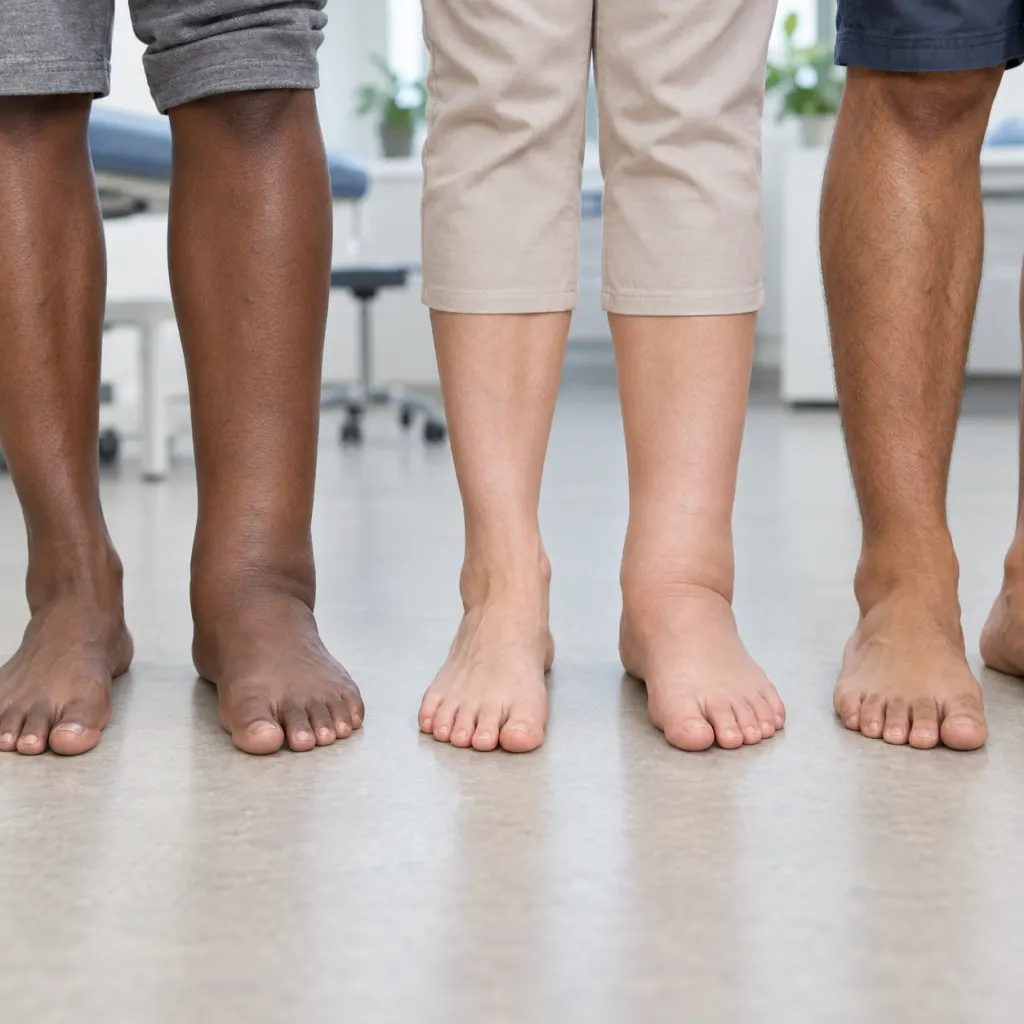
Swelling happens when fluid collects in tissues. It may leave sock marks, make shoes feel tight, or create a dent that slowly fills in after gentle pressure. MedlinePlus explains that edema often shows up in the feet, ankles, and legs, and that gravity makes it more noticeable in the lower body https://www.medlineplus.gov/ency/article/003104.htm. Occasional mild swelling after standing in warm weather may improve with rest, movement, or leg elevation, but new swelling deserves more attention when it is persistent, rapidly worsening, painful, or connected with fever, warmth, redness, shortness of breath, chest discomfort, kidney disease, heart disease, liver disease, pregnancy, or a recent surgery.
It is also worth noting whether swelling affects one leg or both. Both-leg swelling can happen with fluid balance problems, venous disease, some medicines, or systemic conditions. One-leg swelling raises different concerns, including injury, infection, or a clot. Because the causes overlap, the useful question is not “What does this prove?” but “Is this new enough or strong enough that a clinician should help sort it out?”
2. One-Sided Swelling, Warmth, Redness, or Tenderness
A leg that becomes swollen, warm, red, and tender on one side needs timely medical advice because those features can occur with deep vein thrombosis, cellulitis, injury, or other problems. MedlinePlus describes deep vein thrombosis as a clot in a deep vein that most often affects one side of the body and can cause redness, warmth, swelling, and pain or tenderness in the affected limb https://www.medlineplus.gov/ency/article/000156.htm. A clot can become dangerous if part of it travels to the lungs, especially if shortness of breath, chest pain, coughing blood, fainting, or severe symptoms develop.
Cellulitis can look similar at first because it also causes redness, warmth, swelling, tenderness, and sometimes fever. MedlinePlus describes cellulitis as a bacterial skin infection that may begin after a break in the skin and can spread if it is not treated https://www.medlineplus.gov/ency/article/000855.htm. A spreading red area, fever, red streaks, increasing pain, or a wound with drainage should not be watched casually for days. Prompt care helps a clinician decide whether testing, antibiotics, imaging, or another step is needed.
3. Leg Pain, Aching, or Cramping That Appears With Walking
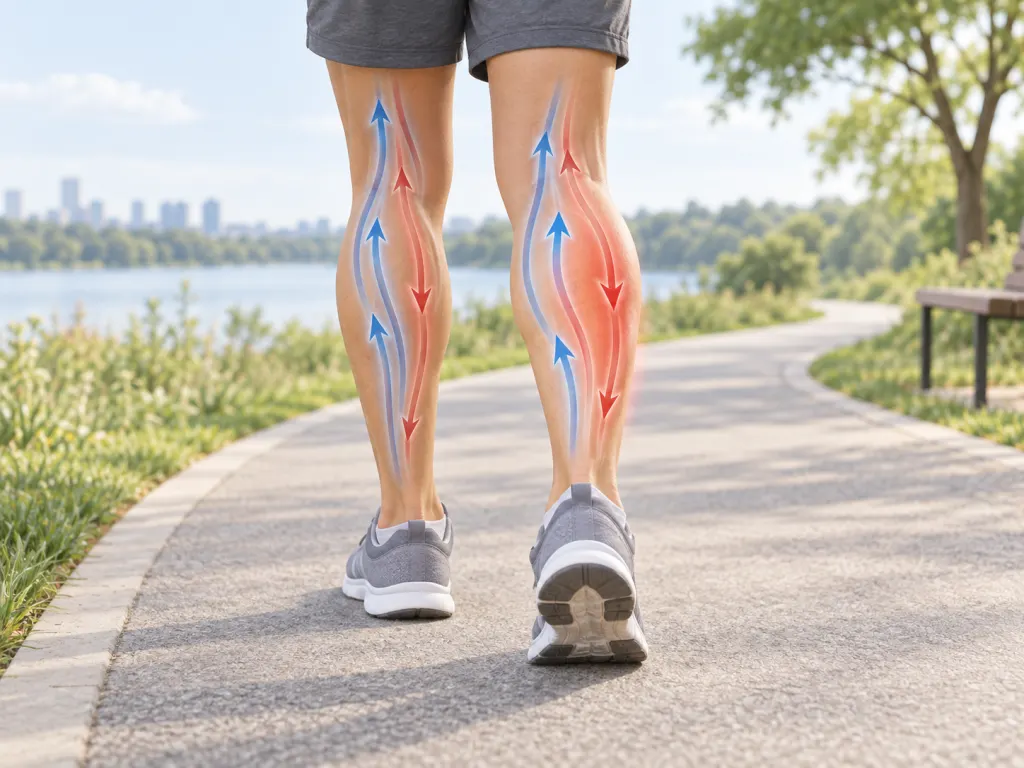
Leg pain that reliably starts when you walk or climb stairs and improves after rest can be a circulation clue. The National Heart, Lung, and Blood Institute describes intermittent claudication as pain, aching, heaviness, or cramping in the legs that comes with walking or stair climbing and goes away after rest; it is a common symptom of peripheral artery disease, or PAD https://www.nhlbi.nih.gov/health/peripheral-artery-disease/symptoms. PAD can also cause leg weakness, numbness, coldness in one foot, pale or bluish color, poor nail growth, reduced hair growth, and slow-healing sores.
Not all walking-related pain is PAD. Arthritis, muscle strain, back problems, and nerve compression can also make legs hurt. NHLBI notes that clinicians use history, exam findings, pulse checks, and tests such as the ankle-brachial index to help diagnose PAD and distinguish it from other causes of leg pain https://www.nhlbi.nih.gov/health/peripheral-artery-disease/diagnosis. The detail to track is the pattern: how far you can walk before symptoms begin, whether rest helps, where the discomfort sits, and whether the same distance is becoming harder over time.
4. A Cold, Pale, Blue, or Painful Foot, Especially on One Side
A sudden change in temperature or color in one foot can be more urgent than ordinary soreness. NHLBI advises urgent medical help for acute limb ischemia symptoms such as not being able to feel or move the foot, pain or pins-and-needles feelings while resting, or one foot becoming paler or colder than the other https://www.nhlbi.nih.gov/health/peripheral-artery-disease/living-with. This kind of change may reflect a sudden drop in blood flow, which is a time-sensitive problem.
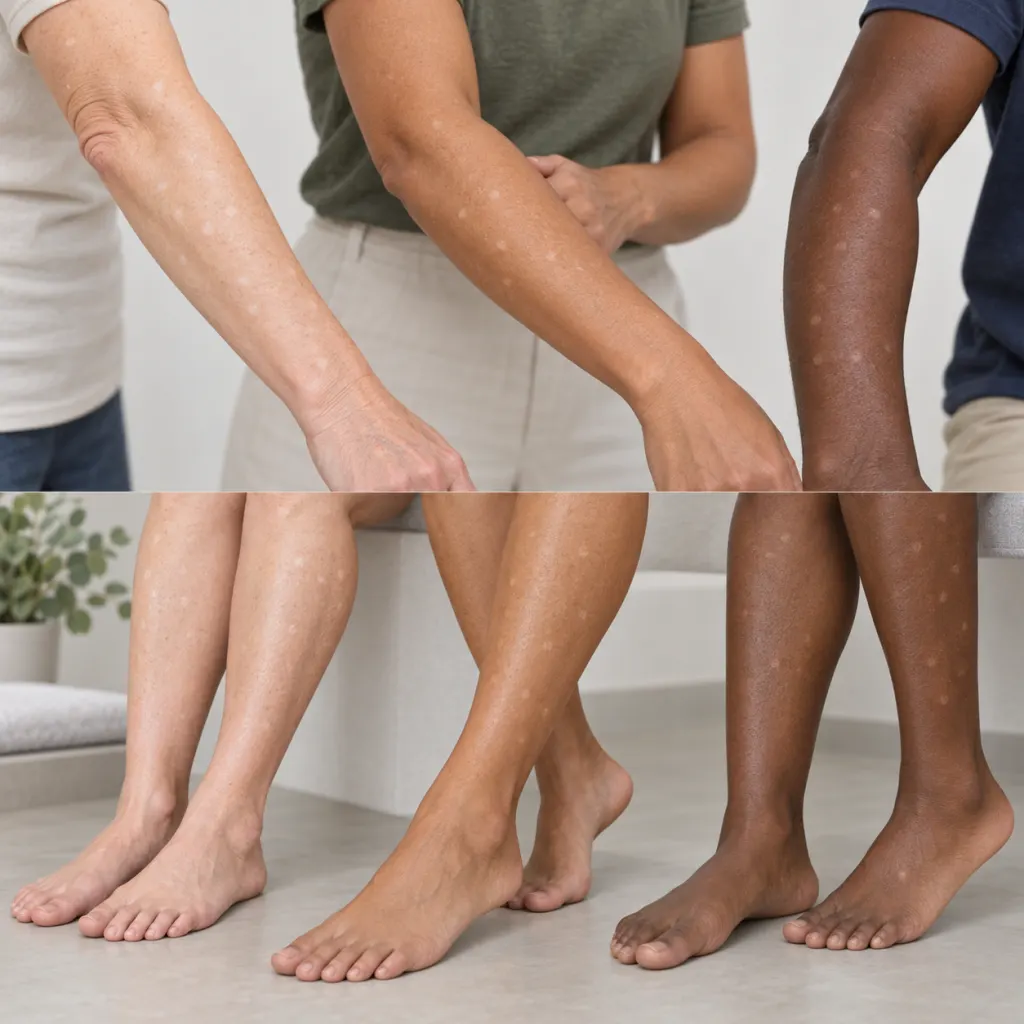
Slow color changes also matter. A foot or lower leg that gradually looks pale, bluish, shiny, darker, or unusually cool may point to circulation problems, venous disease, or skin changes related to long-term swelling. These observations are especially important for people with diabetes, smoking history, PAD, kidney disease, prior blood clots, or wounds. A photo taken in consistent lighting can help you compare changes over time, but it should not delay care when symptoms are sudden or severe.
5. Numbness, Tingling, Burning, Weakness, or Balance Trouble
Numbness and tingling in the feet or legs can come from pressure on a nerve, spine problems, circulation issues, vitamin problems, diabetes-related nerve damage, infections, or other causes. MedlinePlus explains that peripheral neuropathy may cause tingling, burning, deep pain, loss of feeling, weakness, balance problems, and difficulty noticing injury or temperature changes in the feet https://www.medlineplus.gov/ency/article/000593.htm. NIDDK notes that diabetic neuropathy can affect the feet and legs and may cause pain or numbness in the feet https://www.niddk.nih.gov/health-information/diabetes/overview/preventing-problems/nerve-damage-diabetic-neuropathies.
Call for urgent help if numbness or weakness is sudden, one-sided, linked with facial drooping or speech trouble, or comes with sudden trouble walking. For slower symptoms, schedule care if tingling, burning, or numbness persists, spreads, affects balance, or makes it hard to feel injuries. People who cannot reliably feel their feet need extra caution because small blisters, cuts, burns, or pressure spots may go unnoticed until they become larger problems.
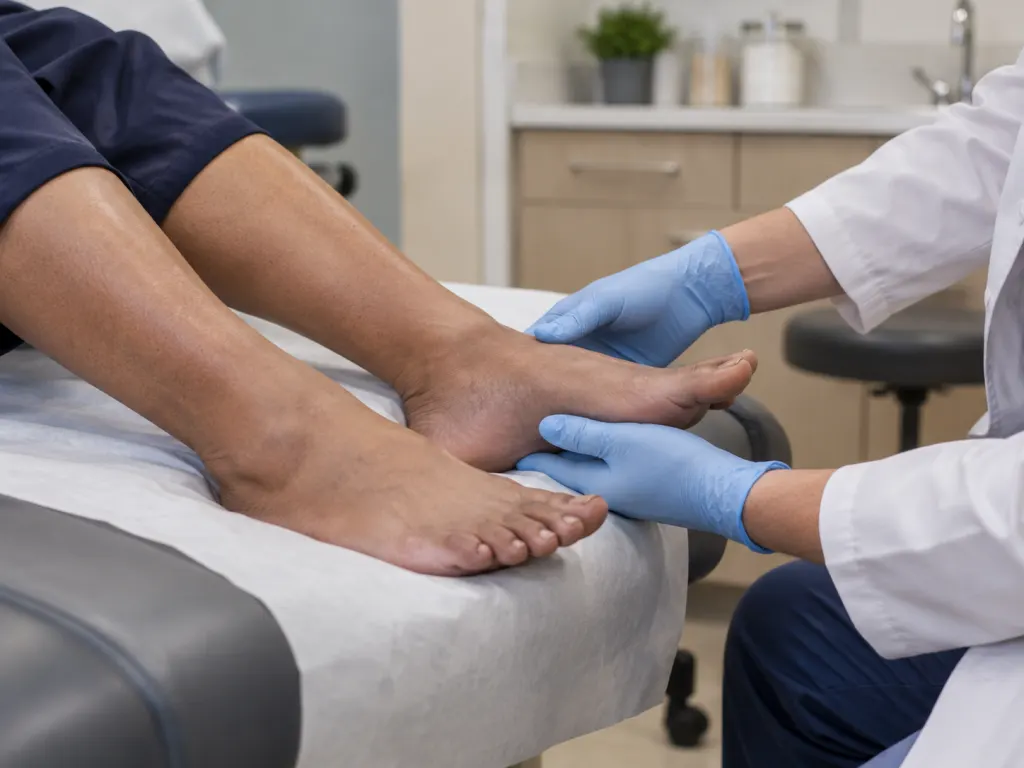
6. Bulging Veins, Heavy Legs, Itching, or Skin Changes Around the Ankles
Visible veins are common, and many varicose veins do not cause major trouble. Still, they deserve attention when they come with heaviness, aching, swelling, itching, skin color changes, dry or cracked skin, or sores. MedlinePlus describes varicose veins as swollen, twisted veins under the skin, often in the legs, and notes that poor flow through the veins can be associated with leg swelling, pain after sitting or standing, skin color changes, irritated scaly skin, and sores that do not heal easily https://www.medlineplus.gov/ency/article/001109.htm.
The practical concern is skin health as much as appearance. Long-standing swelling and vein problems can make ankle skin fragile, itchy, discolored, or slow to heal. Scratching can open the skin, and open skin can invite infection. If a sore appears near the ankle or lower leg, if the skin becomes warm and tender, or if a wound is not closing as expected, ask for medical care rather than repeatedly covering it and hoping it will settle.
7. Leg Swelling Alongside Yellowing Skin, Abdominal Swelling, Easy Bruising, or Dark Urine
Leg swelling is sometimes part of a broader body-fluid or organ-related pattern. MedlinePlus lists liver disease symptoms that can include swelling of the abdomen and legs, easy bruising, changes in stool or urine color, and jaundice, which is yellowing of the skin and eyes https://www.medlineplus.gov/liverdiseases.html. MedlinePlus also explains that jaundice can occur when bilirubin builds up and may appear with dark urine, pale or clay-colored stools, and itching https://www.medlineplus.gov/ency/article/000210.htm.
This does not mean leg swelling automatically points to liver disease. Heart, kidney, vein, lymph, medicine-related, hormonal, injury-related, and infection-related causes can also be involved. The reason to mention the broader signs is that they change the level of concern. Leg swelling plus yellow eyes, a swollen abdomen, confusion, black or bloody stools, shortness of breath, chest pain, fever, or sudden worsening should be treated as more than a local leg issue.
What to Write Down Before You Call a Clinician
A short symptom log can make a medical visit more useful. Include facts that help separate circulation, nerve, skin, joint, and systemic causes. Keep it simple:
- When the symptom started and whether it came on suddenly or gradually.
- Whether one leg or both legs are affected.
- Whether swelling improves with elevation or worsens by evening.
- Whether pain appears with walking, at rest, at night, or after sitting.
- Any color, temperature, skin, nail, hair, wound, or vein changes.
- Any fever, chest pain, shortness of breath, dizziness, yellowing skin or eyes, dark urine, pale stools, or new trouble walking.
- Recent long travel, surgery, injury, infection, pregnancy, new medicine, or long periods of sitting.
Bring photos if the symptom comes and goes. If you measure swelling, measure both legs at the same spot and time of day. Avoid pressing hard on painful skin, and do not massage a swollen painful calf when a clot is a concern.
What Evaluation May Involve
A clinician may start with a physical exam, comparing both legs for swelling, tenderness, color, warmth, pulses, wounds, skin texture, and sensation. Depending on the pattern, testing may include blood work, urine tests, imaging, ultrasound of leg veins, circulation testing such as ankle-brachial index, or evaluation for heart, kidney, liver, nerve, or skin conditions. MedlinePlus notes that leg swelling evaluation may include blood tests, x-ray, Doppler ultrasound, ECG, and urinalysis depending on the situation https://www.medlineplus.gov/ency/article/003104.htm.
While waiting for non-urgent care, it is reasonable to avoid prolonged stillness, choose comfortable shoes, protect the skin from cuts, and note changes. But do not start compression, intense exercise, heat, massage, or over-the-counter products for a painful swollen leg without medical guidance if the cause is unclear. The right next step depends on what is driving the symptom.
Wrap-Up
Leg symptoms are worth taking seriously when they are new, one-sided, worsening, unexplained, or paired with fever, chest symptoms, shortness of breath, sudden weakness, skin wounds, or broader changes such as yellowing skin or abdominal swelling. Swelling, redness, warmth, walking-related pain, a cold or pale foot, numbness, visible vein changes, and slow-healing sores each have more than one possible cause. The goal is not to self-diagnose, but to recognize patterns that deserve medical attention. Track what changed, compare both legs, keep notes, and seek urgent help for sudden severe symptoms.
Frequently Asked Questions
- → When is leg swelling an emergency?
Seek emergency help for leg swelling with chest pain, shortness of breath, fainting, sudden severe symptoms, or sudden one-sided weakness or trouble walking. New swelling in only one leg, especially with warmth, redness, or pain, should be discussed with a clinician promptly.
- → Can leg pain while walking be a circulation problem?
Yes, it can be. Pain, aching, heaviness, or cramping that starts with walking or stairs and improves after rest can occur with peripheral artery disease. Other causes are also possible, so a clinician may ask about the pattern, check pulses, and consider circulation testing.
- → Are varicose veins always dangerous?
No. Many varicose veins are not dangerous, but they deserve medical attention if they are painful, swollen, itchy, associated with skin color changes, or linked with sores that do not heal. Those details can suggest poorer vein flow or skin complications.
- → Why do numb feet or legs matter?
Numbness can make it harder to feel cuts, blisters, heat, cold, or pressure. Persistent tingling, burning, weakness, balance trouble, or loss of feeling should be evaluated, especially for people with diabetes or known circulation problems.
- → Should I use compression socks for swollen legs?
Compression can help some vein-related swelling, but it is not right for every situation. Ask a qualified health professional first if swelling is new, painful, one-sided, linked with a wound, or accompanied by color or temperature changes.
References
This content was developed and refined using reliable sources.
- https://www.medlineplus.gov/ency/article/003104.htm
- https://www.medlineplus.gov/ency/article/000156.htm
- https://www.cdc.gov/stroke/signs-symptoms/index.html
- https://www.nhlbi.nih.gov/health/peripheral-artery-disease/symptoms
- https://www.nhlbi.nih.gov/health/peripheral-artery-disease/diagnosis
- https://www.nhlbi.nih.gov/health/peripheral-artery-disease/living-with
- https://www.medlineplus.gov/ency/article/001109.htm
- https://www.medlineplus.gov/ency/article/000593.htm
- https://www.niddk.nih.gov/health-information/diabetes/overview/preventing-problems/nerve-damage-diabetic-neuropathies
- https://www.medlineplus.gov/ency/article/000855.htm
- https://www.medlineplus.gov/liverdiseases.html
- https://www.medlineplus.gov/ency/article/000210.htm