 Save
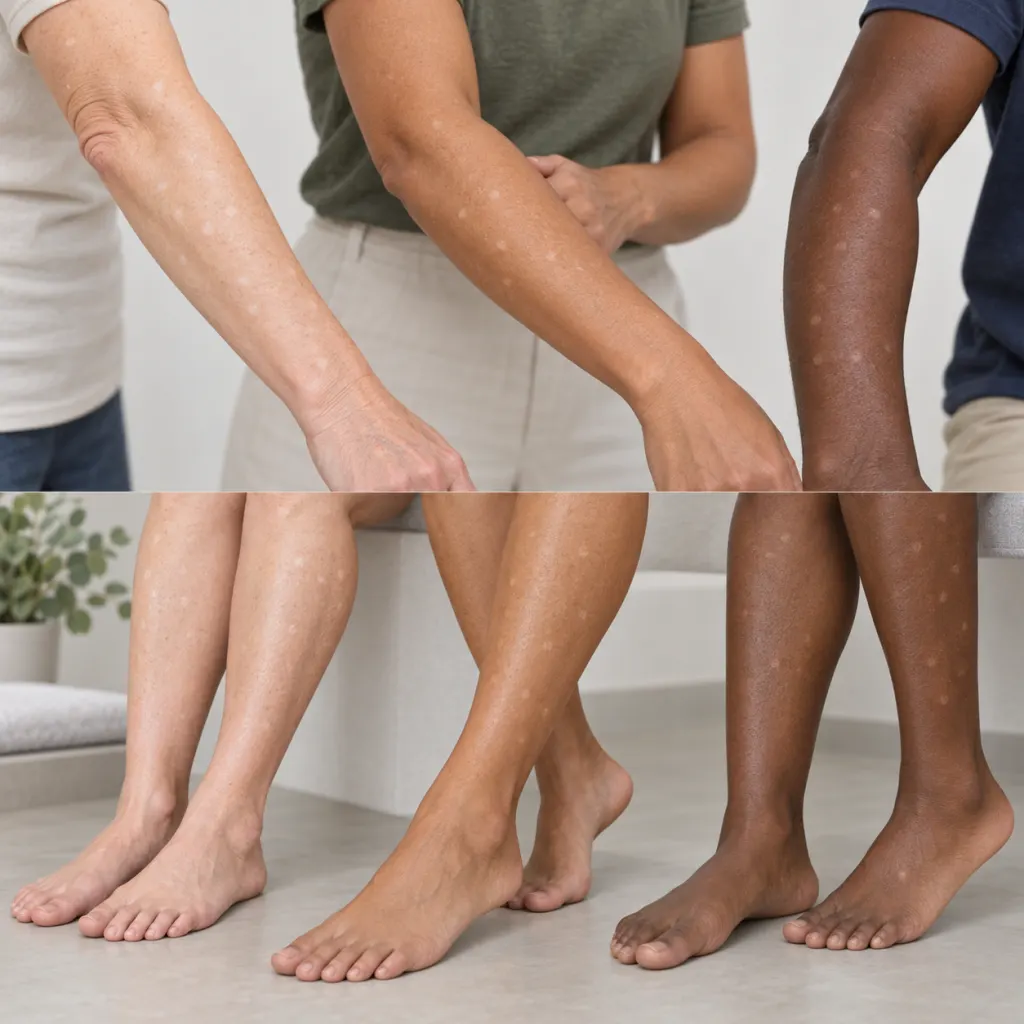
Small white spots on the arms or legs are often areas where the skin has less visible pigment. One common explanation, especially on sun-exposed forearms and shins, is idiopathic guttate hypomelanosis, often shortened to IGH. Cleveland Clinic describes IGH as small, light-colored skin spots that are benign and commonly appear on forearms and shins, while a PubMed-indexed review describes the usual pattern as multiple small round or oval pale macules on sun-exposed areas such as forearms and the fronts of the lower legs. Those details can be reassuring, but they do not make every white spot the same. Texture, itch, scale, spread, color pattern, and a person’s medical history all matter. This guide explains the common pattern, the main look-alikes, and the practical next steps that help you decide when observation is reasonable and when a professional skin exam is the better choice.
The Common Pattern: Tiny Pale Spots on Sun-Exposed Skin
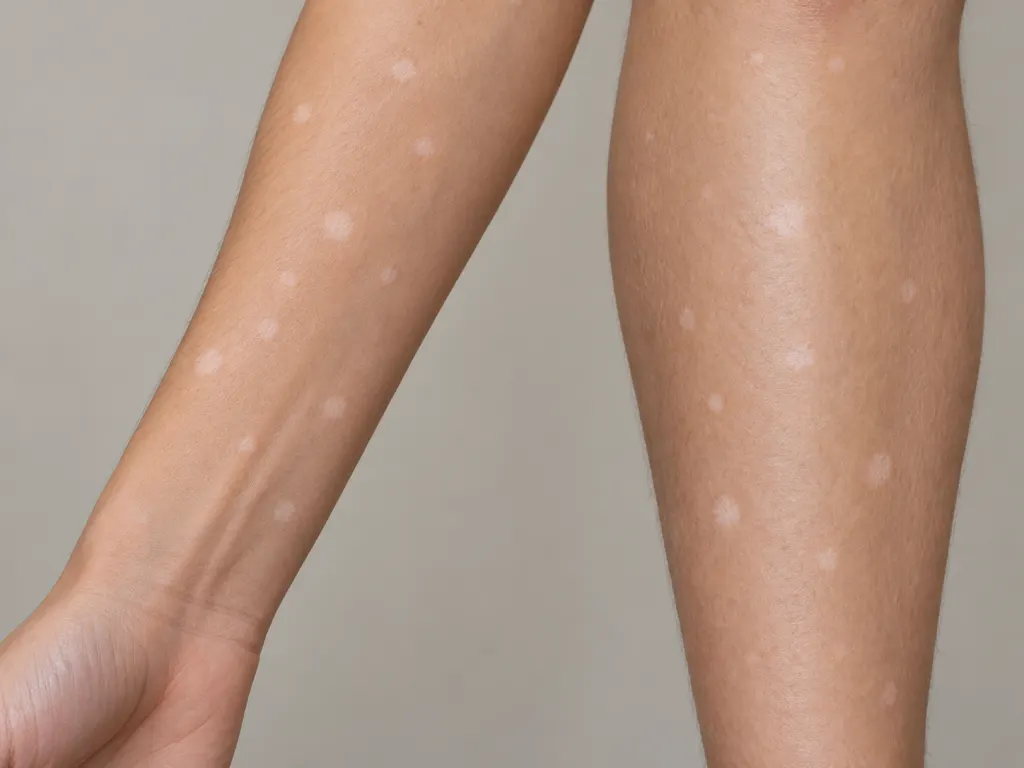
Idiopathic guttate hypomelanosis is a long name for a common visual pattern: small, pale or white flat spots scattered on areas that have had years of sun exposure. The word guttate refers to a drop-like shape, and hypomelanosis means there is less melanin, the pigment that helps give skin its color. According to Cleveland Clinic, IGH spots are usually not itchy or painful, are most often smooth, and commonly appear on the forearms and shins. They can be lighter than nearby skin or fully white, and they may stand out more after surrounding skin tans.
Why the Spots Can Become More Noticeable With Age
IGH is associated with mature skin, cumulative ultraviolet exposure, and other factors that are still being studied. A review indexed in PubMed notes that IGH usually affects people over 40 and that the likelihood increases with age, although younger adults can notice similar marks too. The exact reason the spots appear is not fully settled. Aging, ultraviolet exposure, small skin trauma, genetic tendency, and local pigment changes have all been discussed in the medical literature. The key point for readers is that IGH is a descriptive skin finding, not proof that the skin is in danger. Still, a first-time change deserves careful observation because other conditions can also reduce or remove visible pigment.
How IGH Usually Looks and Feels
Typical IGH spots are small, flat macules rather than raised bumps. They are often round or oval, scattered rather than arranged in one large patch, and usually feel like the surrounding skin. Many are only a few millimeters across, though size can vary. Cleveland Clinic notes that most IGH spots are smooth, while some can rarely be thickened or scaly. They often stay about the same size over time, though a person may notice more spots as years pass. IGH does not usually cause soreness, crusting, drainage, warmth, or ongoing itch. If those features are present, it is better to think more broadly and ask a clinician to identify the cause.
Other Conditions Can Look Similar
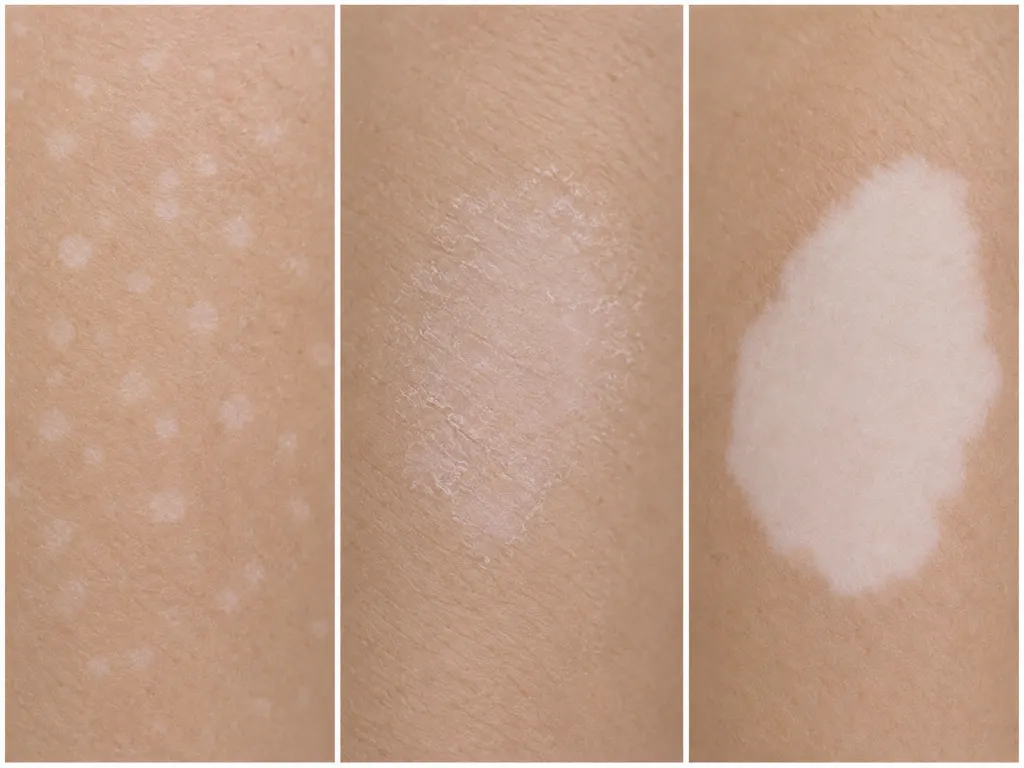
White or lighter spots are not one single condition. The American Academy of Dermatology explains that tinea versicolor can cause lighter or darker spots that may be dry, scaly, itchy, more visible after tanning, and more active in warm or humid weather. Vitiligo is another possibility. The National Institute of Arthritis and Musculoskeletal and Skin Diseases describes vitiligo as a long-lasting autoimmune disorder in which melanocytes, the cells that make pigment, are attacked and destroyed, leading to milky-white patches that may appear on the hands, feet, arms, face, hair-bearing areas, and mucous membranes. Past inflammation, a healed scrape, a burn, or a skin procedure can also leave an area lighter than nearby skin.
What to Notice Before You Decide What to Do
A quick, gentle check can help you decide whether the spots fit the quiet IGH pattern or need a closer look. Use bright, steady light and avoid scraping or picking at the area. Notice whether the marks are flat or raised, smooth or scaly, isolated or spreading, and whether they appear only on sun-exposed skin or also on the face, hands, mouth area, genitals, scalp, or nails. MedlinePlus advises regular skin checks for new markings and changes in color, size, shape, or texture, and says to contact a provider for new or unusual spots, changing marks, or sores that do not heal.
- More consistent with IGH: tiny flat pale spots, mostly forearms or shins, no itch or pain, stable over time.
- Worth professional review: spots that spread quickly, join into larger patches, itch, scale, hurt, bleed, crust, change border or color, or look unlike your other skin marks.
- Helpful details to write down: when you first noticed the spots, whether they followed a rash or injury, whether the area tans differently, and whether anyone in your family has pigment changes.
How to Track Spots Without Irritating Your Skin
Photographs are often more useful than memory. Take one clear photo in natural or consistent indoor light, then note the date and body location. If the marks are tiny, include a familiar size reference such as a clean ruler placed beside, not on top of, the area. Repeat under similar lighting every few months or sooner if something changes. This record can help you explain the timeline during a medical visit. Tracking is not a substitute for an exam when a spot is changing or uncomfortable, but it can prevent unnecessary worry about marks that have stayed the same.
Sun Protection Helps Reduce Contrast
Sun protection will not erase established IGH spots, but it can make the contrast less dramatic because surrounding skin may tan less. It also supports overall skin health. The American Academy of Dermatology recommends shade, sun-protective clothing, and sunscreen on exposed skin, including broad-spectrum, water-resistant sunscreen with SPF 30 or higher. For arms and legs, practical choices include lightweight long sleeves, pants when comfortable, UPF-labeled clothing, and reapplying sunscreen according to the product label when outdoors for a while. People with white patches from vitiligo should be especially careful because pigment-light skin can burn more easily.

Why Harsh Home Methods Are a Bad Trade
It can be tempting to scrub, exfoliate aggressively, use acidic kitchen products, or try to sand away the spots. That approach can irritate the skin and may make color differences more noticeable for some people. Cleveland Clinic notes that online natural-product claims for IGH have not been shown in scientific studies to work. A gentler routine is usually wiser while you are deciding whether to seek a professional opinion: mild cleanser, moisturizer if the skin is dry, and sun protection when the area is exposed. Avoid picking at the spots or using caustic mixtures on them.
When a Skin Exam Is the Better Choice
Make an appointment with a qualified clinician if the spots are new and spreading, if the pattern is not limited to sun-exposed areas, if the surface is scaly or inflamed, or if there is itching, pain, bleeding, crusting, or a sore that does not heal. A clinician may be able to identify the pattern by looking closely at the skin, and a dermatologist may use magnification or special lighting when the answer is not obvious. NIAMS notes that vitiligo can involve skin, hair, and mucous membranes, so white patches in those locations deserve professional attention rather than guessing at home.
What a Clinician May Be Trying to Sort Out
The clinical question is usually not simply, “Is this white?” It is, “What process made this area lighter?” IGH is one possibility when the spots are small, smooth, stable, and on sun-exposed arms or legs. Tinea versicolor becomes more plausible when the skin is dry, scaly, itchy, and patchy, especially in warm, humid seasons. Vitiligo becomes more plausible when white patches are larger, sharply visible, symmetric, spreading, or involve hair or mucous membranes. Post-inflammatory color change becomes more plausible when the lighter area follows eczema, a scrape, a burn, or another visible skin event. These distinctions matter because the right next step depends on the cause.
If the Appearance Bothers You
Many people ask about IGH because the spots are visible, not because they hurt. That concern is valid. Skin changes can affect confidence, especially on arms and legs in warm weather. For confirmed IGH, clinicians may discuss appearance-focused options, but results vary and procedures can carry irritation, color change, or scarring risk. For that reason, it is sensible to begin with identification of the cause, gentle skin care, and realistic expectations. Camouflage cosmetics or self-tanning products may temporarily reduce contrast for some people, but patch testing a small area first is prudent, especially on sensitive skin.
The Bottom Line
Tiny, smooth white spots on sun-exposed forearms or shins are often consistent with idiopathic guttate hypomelanosis, a common benign pigment-light pattern. The safest practical response is not panic and not harsh scrubbing. Look closely, document changes, protect exposed skin from excess sun, and ask a clinician when the pattern is new, changing, spreading, symptomatic, or simply worrying you. A professional exam is especially useful when the spots are scaly, itchy, painful, bleeding, changing shape or color, appearing in less typical areas, or affecting your confidence.
Wrap-Up
Small white spots on the arms or legs are most often discussed because they are visible and unexpected. IGH is a common explanation for tiny, flat, pale spots on sun-exposed forearms and shins, especially as people get older. Other causes, including tinea versicolor, vitiligo, and lighter skin left after inflammation or injury, can look similar at first glance. The practical next step is to observe the pattern carefully, avoid harsh home methods, use sensible sun protection, and seek professional care for new, changing, spreading, scaly, itchy, painful, bleeding, or unusual spots.
Frequently Asked Questions
- → Are tiny white spots on my arms or legs usually IGH?
They can be, especially if they are small, flat, smooth, painless, and scattered on sun-exposed forearms or shins. IGH is common and benign, but you cannot confirm the cause from appearance alone. A clinician can help if the spots are new, changing, spreading, scaly, itchy, painful, or concerning.
- → Can tinea versicolor cause white spots on the body?
Yes. The American Academy of Dermatology says tinea versicolor can cause lighter or darker spots that may be dry, scaly, itchy, and more noticeable after tanning. It often looks more patchy than classic IGH and may fluctuate with warm or humid weather.
- → How is vitiligo different from tiny sun-related white spots?
Vitiligo often causes more distinct white patches and may involve the hands, feet, face, hair, or mucous membranes. NIAMS describes it as an autoimmune disorder involving pigment-producing cells. Because vitiligo and other conditions can resemble simpler pigment changes, a dermatologist can provide the clearest answer.
- → Should I scrub or exfoliate the spots?
No. Harsh scrubbing, picking, acidic mixtures, or abrasive exfoliation can irritate skin and may make color differences more noticeable. Use gentle skin care while you observe the spots or arrange a professional exam.
- → When should I make an appointment about white spots?
Make an appointment if the spots are new or unusual, growing, spreading, changing color or border, scaly, itchy, painful, bleeding, crusting, or linked with a sore that does not heal. It is also reasonable to ask for help if the appearance is affecting your confidence.
References
This content was developed and refined using reliable sources.
- https://my.clevelandclinic.org/health/diseases/idiopathic-guttate-hypomelanosis
- https://pubmed.ncbi.nlm.nih.gov/27206417
- https://medlineplus.gov/ency/patientinstructions/000711.htm
- https://www.aad.org/public/diseases/a-z/tinea-versicolor-symptoms
- https://www.niams.nih.gov/health-topics/vitiligo
- https://www.aad.org/public/everyday-care/sun-protection/shade-clothing-sunscreen/practice-safe-sun