 Save
The short answer: automatic emergency braking is becoming a required safety feature, but the 2026 date is mainly an EU milestone, not a worldwide rule for every car already on the road. From 7 July 2026, newly registered passenger cars and vans across the European Union are covered by more advanced safety requirements, including advanced emergency braking that detects pedestrians and cyclists. In the United States, the National Highway Traffic Safety Administration has finalized a separate rule requiring automatic emergency braking and pedestrian automatic emergency braking on new passenger cars and light trucks by September 2029. That means drivers should read any 2026 claim with two questions in mind: which country or market is being discussed, and does the rule apply to new vehicles, new models, or existing used cars?
The rule is real, but the deadline is not the same everywhere
Automatic emergency braking, often shortened to AEB, is a driver-assistance system that uses sensors to detect a possible forward collision and applies braking automatically when the driver has not responded enough or fast enough. In policy language, Europe often uses the term advanced emergency braking system, or AEBS. The basic idea is simple: the vehicle watches the space ahead and can add braking in a crash-imminent situation. The legal details are less simple because vehicle rules are set by market, vehicle category, and compliance phase.
For the EU, the 2026 date comes from the staged rollout of the General Safety Regulation. The European Commission says many safety systems have already been mandatory for newly registered cars and vans since 2024, and that from 7 July 2026 those vehicles face additional requirements, including advanced emergency braking that detects pedestrians and cyclists. The Commission's vehicle safety page also explains that the General Safety Regulation introduced mandatory advanced driver assistance systems and that cars and vans are covered by features such as automated braking. The underlying EU framework is Regulation (EU) 2019/2144, which treats passenger cars and light commercial vehicles as categories M1 and N1.
- EU 2024 phase: many new vehicles already had to include a package of driver-assistance and safety systems.
- EU 2026 phase: newly registered passenger cars and vans move into additional requirements, including AEB detection for pedestrians and cyclists.
- U.S. rule: NHTSA's light-vehicle AEB standard has a September 2029 compliance date, not a 2026 one.
- Used vehicles: these rules generally do not mean every older car must be retrofitted with new sensors.

What automatic emergency braking is designed to do
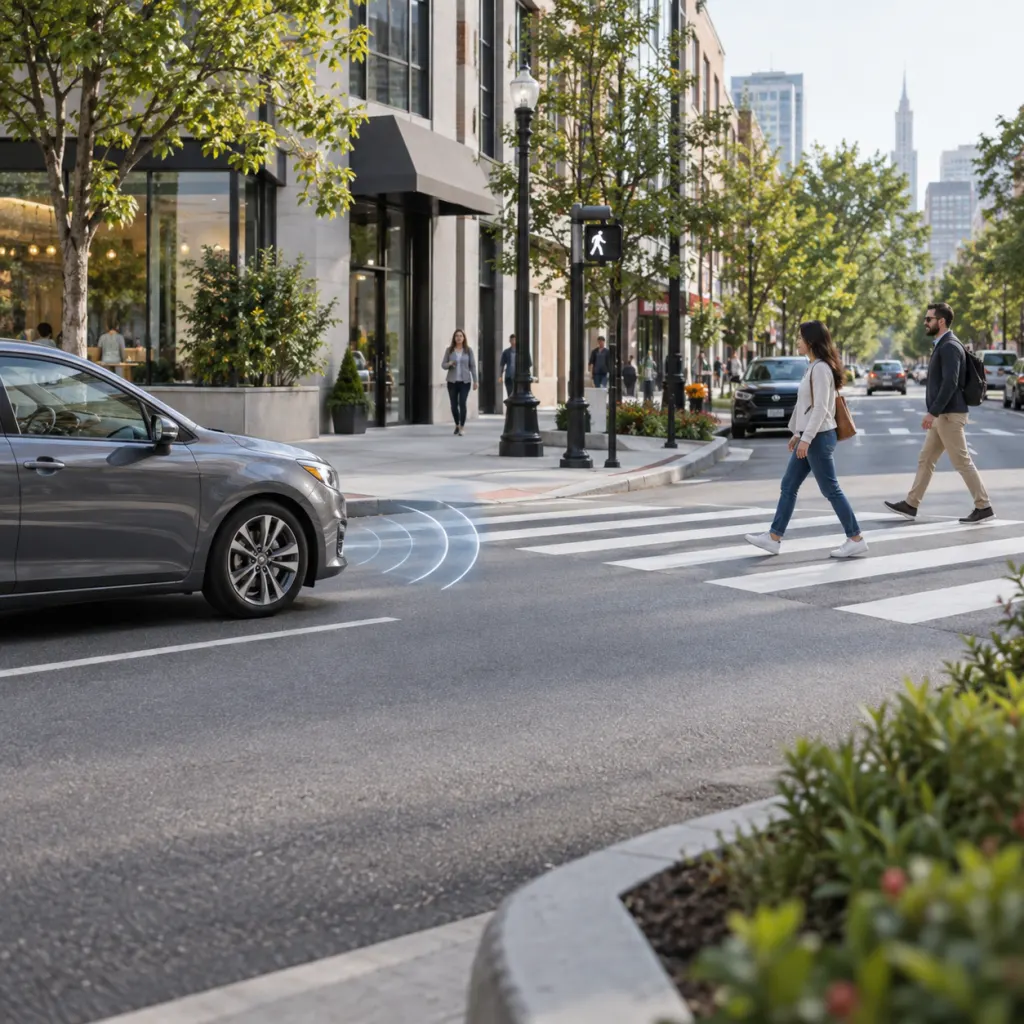
AEB is meant to assist in the short window when a forward crash risk is developing. NHTSA describes AEB as a system that uses sensor technologies and vehicle subsystems to detect a crash-imminent situation, automatically apply the brakes if the driver has not done so, or add braking force if the driver's braking is insufficient. In U.S. rulemaking, the final standard covers both lead-vehicle AEB and pedestrian AEB, so the system must respond not only to a vehicle ahead but also to a pedestrian in specified test conditions.
That does not make the car self-driving. AEB is a safety backstop, not a substitute for attention, speed control, safe following distance, clear visibility, or road judgment. The driver still steers, chooses the speed, watches for people outside the vehicle, and manages road conditions. AEB can be limited by weather, glare, dirt or snow on sensors, unusual road geometry, maintenance problems, or situations outside the required test scenarios. The most practical way to understand it is as one layer of protection within a broader road-safety system.
How the EU 2026 phase fits into the wider safety package
The European Commission's 2026 communication lists several added requirements for new passenger cars and vans: advanced emergency braking that detects pedestrians and cyclists, advanced driver distraction warning, better forward vision, new tests for worn tyres, and expanded safety glass area designed to protect vulnerable road users. These are part of a broader shift from passive safety, such as crash protection after impact, toward systems intended to help avoid or reduce some crashes before impact happens.
EU Regulation 2019/2144 sets out the larger legal structure. It requires advanced vehicle systems across motor vehicle categories, including intelligent speed assistance, driver drowsiness and attention warning, advanced driver distraction warning, reversing detection, emergency stop signal, event data recorder, and other technologies. For passenger cars and light commercial vehicles, Article 7 specifies advanced emergency braking in two phases: first for obstacles and moving vehicles ahead, then expanded to include pedestrians and cyclists ahead of the vehicle.

How the U.S. rule differs from the 2026 EU deadline
For U.S. readers, the most important correction is timing. NHTSA's final rule for light vehicles is Federal Motor Vehicle Safety Standard No. 127. The agency says the rule will make automatic emergency braking, including pedestrian AEB, standard on all passenger cars and light trucks by September 2029. NHTSA also says the standard applies to nearly all U.S. light vehicles with a gross vehicle weight rating of 10,000 pounds or less. So a claim that all cars must add AEB by 2026 is not an accurate summary of the current U.S. federal requirement.
The U.S. standard is also performance-focused. NHTSA says new vehicles covered by the standard must be able to stop and avoid contact with a lead vehicle up to 62 miles per hour, detect pedestrians in both daylight and darkness, apply automatic braking up to 90 miles per hour when a collision with a lead vehicle is imminent, and apply braking up to 45 miles per hour when a pedestrian is detected. Those figures describe regulated test expectations; they should not be read as an invitation to rely on the system at high speed or in poor conditions.
Why a 2026 headline can mislead car shoppers
The phrase "cars must add automatic emergency braking by 2026" sounds as if every driver must install new equipment soon. That is not how these safety mandates normally work. Vehicle regulations usually bind manufacturers, importers, and sellers of new vehicles in a market. They do not usually require owners of older vehicles to retrofit a complex sensor-and-braking package after purchase. AEB depends on calibrated cameras, radar or other sensors, braking control software, warning logic, dashboard alerts, diagnostic systems, and vehicle-specific validation. It is not like adding a phone mount or replacing a headlight bulb.
For shoppers, the practical question is whether a specific new vehicle already has AEB, what type of AEB it has, and whether pedestrian or cyclist detection is included. Two cars can both advertise automatic emergency braking while offering different operating ranges, warnings, nighttime performance, and object-detection capability. Regulations set a floor for new-vehicle compliance in a market, but equipment labels, trim levels, software versions, and testing results still matter when comparing models.
What to check before buying or leasing a vehicle
If you are shopping for a vehicle in 2026, start with the exact market where the car will be registered. A European listing may be shaped by EU rules, while a U.S. listing is shaped by NHTSA's 2029 standard and current manufacturer offerings. Then look beyond the phrase AEB. Ask whether the system includes pedestrian AEB, cyclist detection, nighttime pedestrian detection, forward collision warning, and whether the feature is standard on the trim you are considering. Some manufacturers have offered AEB widely before deadlines, while others may use market-specific packages.
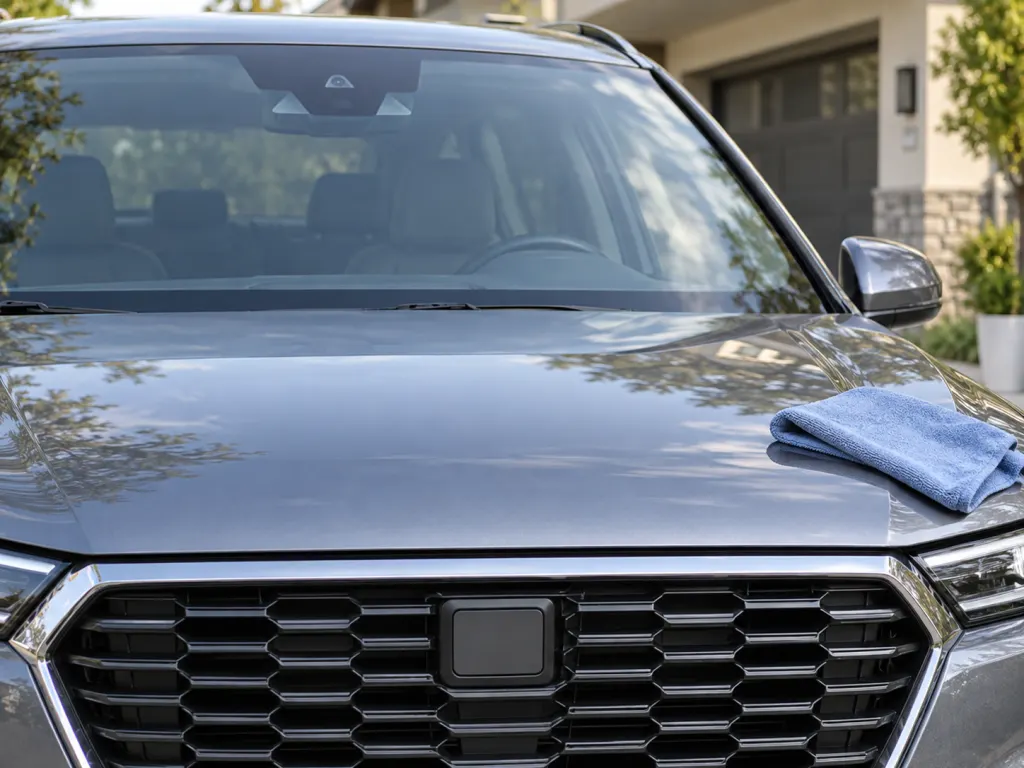
It is also worth reading the owner's manual before relying on any driver-assistance feature. Manuals usually explain when sensors may be blocked, when warnings may be delayed or absent, how to clean sensor areas, whether the system can be switched off, and how dashboard alerts appear. If a used car has had body work, windshield replacement, sensor damage, or suspension changes, ask whether required calibration was completed. A safety feature is only useful when it is present, active, maintained, and understood.
What AEB does not solve by itself
AEB can reduce risk in certain forward-collision scenarios, but it cannot make road travel risk-free. It may not detect every pedestrian, cyclist, animal, stopped vehicle, or unusual object. It may behave differently on curves, steep roads, construction zones, icy surfaces, or in heavy rain, fog, glare, or snow. It does not replace safe following distance, speed choice, sober driving, rested driving, or basic maintenance such as tyres and brakes. The technology is best understood as an added layer that can help in some moments, not as permission to pay less attention.
That limitation is why regulators often package AEB with other measures. The EU rules combine braking technology with distraction warning, speed assistance, reversing detection, and other systems. The U.S. rule was created under a broader federal road-safety strategy that treats safer vehicles as one layer alongside safer roads, safer speeds, safer people, and post-crash response. In both systems, the theme is layered protection rather than a single device carrying the whole burden.
The bottom line for 2026
The 2026 AEB story is mainly an EU story about new passenger cars and vans, especially pedestrian and cyclist detection. It is not a universal rule that every existing car must be modified by 2026. In the United States, the major federal AEB rule has a later September 2029 date for new passenger cars and light trucks. For drivers, the most useful move is not memorizing a headline; it is checking the vehicle, the market, the feature details, and the owner's manual before assuming what a car can do.
Wrap-Up
Automatic emergency braking is moving from optional feature to required safety equipment in major markets, but the calendar depends on where the vehicle is sold. The EU's 7 July 2026 phase applies to newly registered passenger cars and vans and includes advanced emergency braking that detects pedestrians and cyclists. The U.S. requirement finalized by NHTSA points to September 2029 for new passenger cars and light trucks. Drivers should treat AEB as helpful backup technology, not automated driving, and should confirm the exact feature set on any vehicle they buy or lease.
Frequently Asked Questions
- → Does the 2026 rule mean my current car must be retrofitted with automatic emergency braking?
Generally, no. These requirements are aimed at new vehicles entering the market or being newly registered, depending on the jurisdiction and phase. Retrofitting older cars with AEB is usually not practical because the system depends on integrated sensors, braking controls, software, warnings, diagnostics, and calibration.
- → Is the 2026 automatic emergency braking deadline a U.S. rule?
No. The major U.S. federal rule finalized by NHTSA requires automatic emergency braking and pedestrian automatic emergency braking on new passenger cars and light trucks by September 2029. The 2026 date is associated with the EU's staged vehicle-safety requirements for newly registered passenger cars and vans.
- → What is the difference between AEB and pedestrian AEB?
AEB commonly refers to automatic braking for a forward crash risk, often involving a vehicle ahead. Pedestrian AEB is a related capability that detects pedestrians in specified conditions and can apply braking when a collision risk is detected. Some rules and vehicle labels distinguish these capabilities because they involve different test scenarios and detection challenges.
- → Can automatic emergency braking be switched off?
It depends on the vehicle and the applicable rules. EU Regulation 2019/2144 says advanced emergency braking and emergency lane-keeping systems must return to normal operation when the vehicle is activated, and that drivers must be able to override such systems. Owners should check the manual for the exact controls and warnings in their vehicle.
- → Should I still care about AEB if I already drive carefully?
Yes, but with realistic expectations. Careful driving remains the main layer of safety. AEB can add a backup in some forward-collision situations, especially when reaction time is short, but it has limits and may not respond in every road, weather, lighting, or sensor condition.
References
This content was developed and refined using reliable sources.
- https://www.nhtsa.gov/press-releases/nhtsa-fmvss-127-automatic-emergency-braking-reduce-crashes
- https://www.transportation.gov/regulations/federal-register-documents/2024-09054
- https://single-market-economy.ec.europa.eu/sectors/automotive-industry/vehicle-safety-and-automatedconnected-vehicles_en
- https://commission.europa.eu/news-and-media/news/safer-cars-safer-roads-new-rules-take-effect-2026-07-08_en
- https://eur-lex.europa.eu/eli/reg/2019/2144/2024-07-07
- https://eur-lex.europa.eu/legal-content/EN/ALL/?uri=CELEX%3A42024X2497