 Save
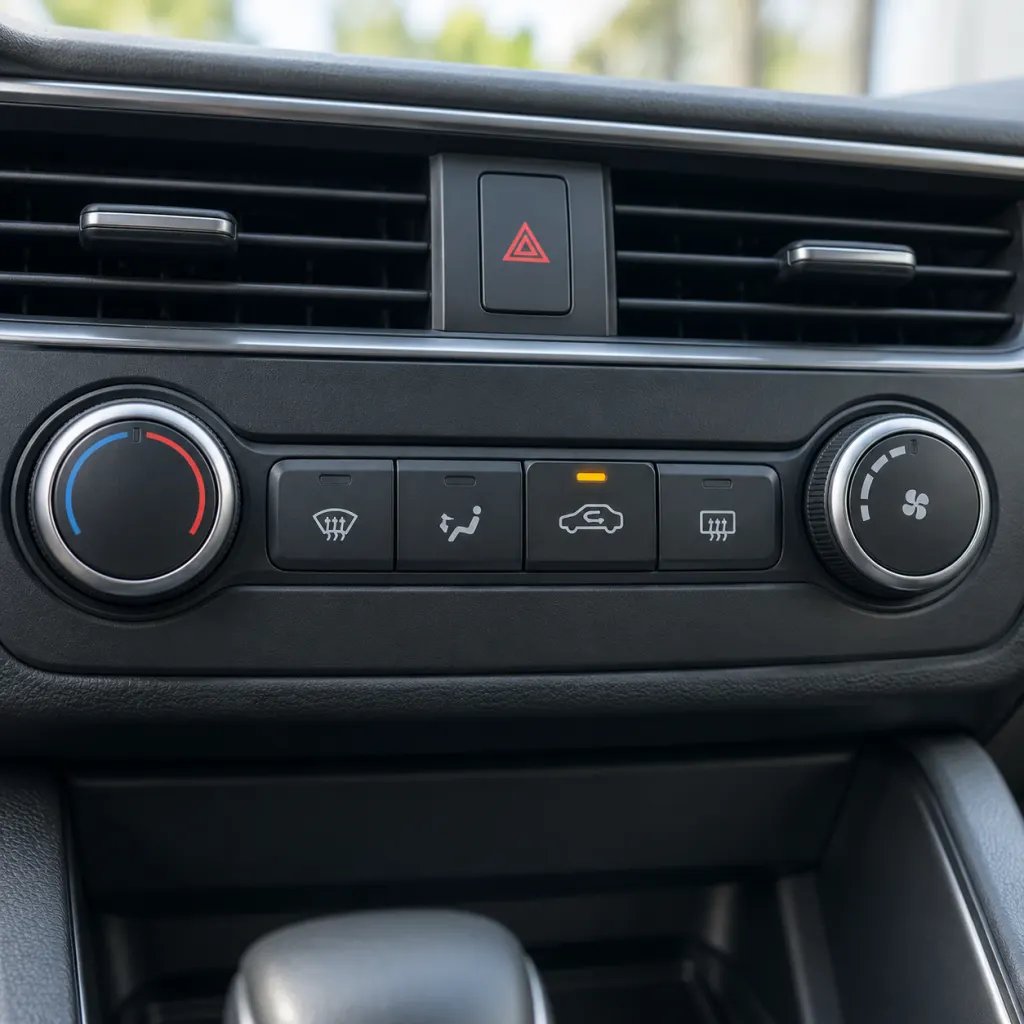
The air recirculation button matters because it changes what your car breathes: instead of constantly pulling outside air through the vents, it reuses air already inside the cabin. That can make air conditioning work faster, reduce some smoke, dust, and traffic particles from entering, and make a short stretch behind a diesel truck or through a tunnel more comfortable. But it is not a set-it-and-forget-it button. Used too long, recirculation can trap moisture, stale air, and exhaled carbon dioxide, which is why many cars override it during defogging or blend in outside air automatically. The best habit is simple: use recirculation for short, specific reasons, then return to fresh air when the outside air is acceptable or when windows begin to fog.
What the button actually changes
On most dashboards, the symbol looks like a small car with a curved arrow inside it. Pressing it moves a door in the heating, ventilation, and air-conditioning system so the fan mostly pulls from the passenger compartment instead of the outside intake near the base of the windshield. The exact design varies by vehicle, and some automatic climate systems blend outside and inside air without making the change obvious to the driver. Still, the practical idea is the same: fresh-air mode favors exchange with the outdoors, while recirculation favors reusing cabin air.
When recirculation earns its place
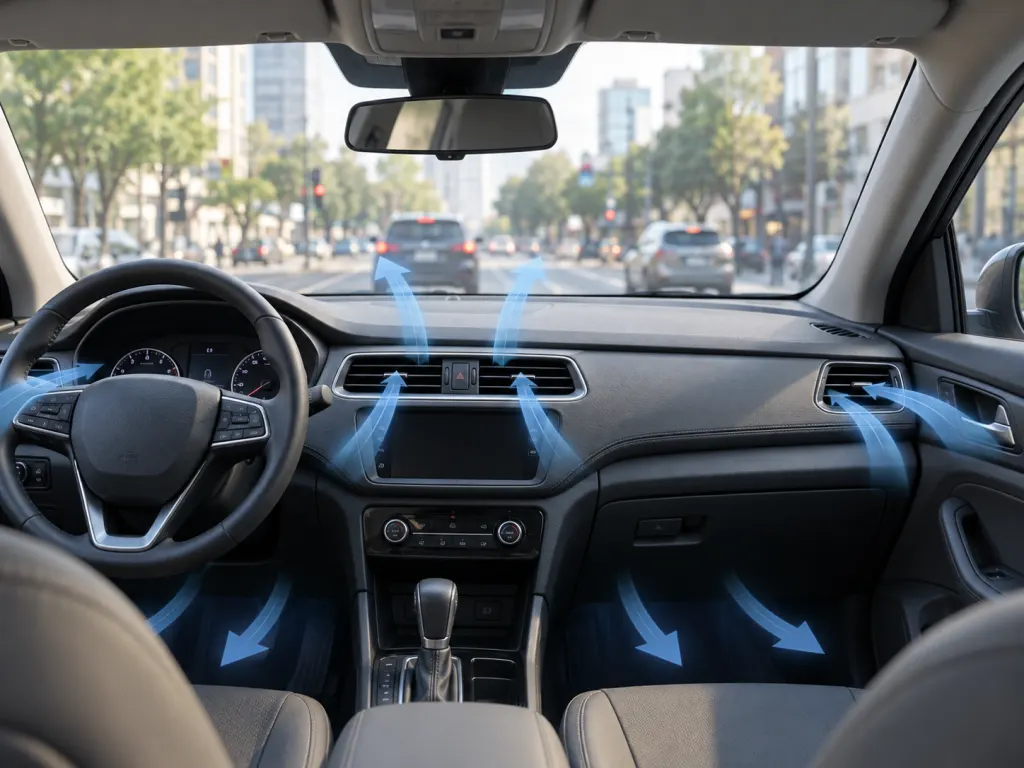
Recirculation is most useful when the air outside is briefly worse than the air inside, or when the climate system is working hard to cool a hot cabin. Public-health guidance for wildfire smoke says people can reduce smoke inside a vehicle by keeping windows and vents closed and, when available, using air conditioning in recirculate mode https://nepis.epa.gov/Exe/ZyPURL.cgi?Dockey=P1013AQQ.txt. On-road testing summarized by EPA's HERO database also found that a ventilation system using recirculation with a cabin filter gave the strongest reduction in particle concentration during freeway driving https://hero.epa.gov/reference/2335990/.
Good moments to press the button include:
- Hot starts after parking: first vent the hottest trapped air for a short time, then use recirculation with the air conditioner to cool already-cooled cabin air.
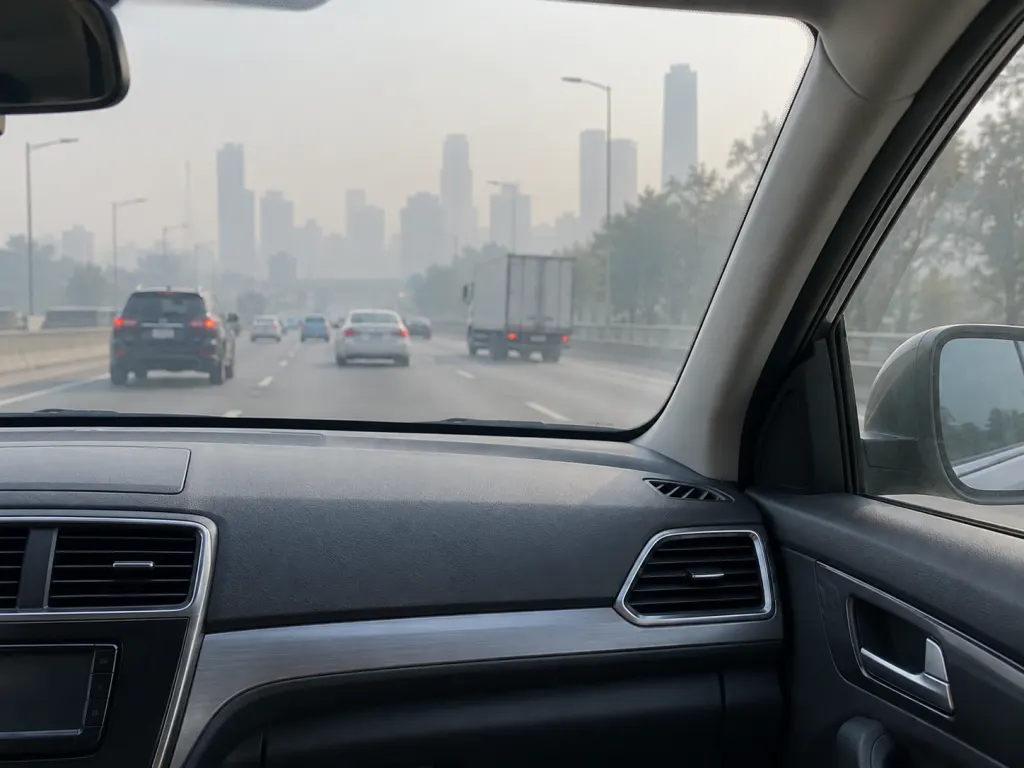
- Tunnels, heavy traffic, and diesel exhaust: use it before or as you enter the smelly or smoky patch, then switch back once clear.
- Wildfire smoke or heavy dust: keep windows closed, use recirculation, and follow local air-quality instructions if travel can be delayed.
- Strong outdoor odors: recirculation can reduce the amount drawn in, although it will not make the cabin airtight.
- Short comfort boost: on a very hot day, it can help the air from the vents feel cooler sooner.
For hot weather, think of the button as the second step, not the first. The U.S. Department of Energy recommends opening windows briefly before using air conditioning so the hottest trapped air can escape and the system has less work to do https://www.energy.gov/articles/tips-your-tank-summer-driving-season. After that purge, recirculation makes more sense because the system is no longer trying to chill air that may be far hotter than the outdoors.
The trade-off: cleaner incoming air can mean stale cabin air
The same closed-loop effect that helps block outdoor particles also limits the supply of fresh air. A 2017 vehicle-cabin study summarized by EPA's HERO database found that full recirculation reduced particles but allowed carbon dioxide to rise; partial recirculation lowered carbon dioxide while still keeping particle levels reduced https://hero.epa.gov/reference/3872626/. That is why recirculation is best treated as a mode you cycle in and out of, especially on long drives with several passengers.
You do not need a sensor to use common sense. If the cabin feels stuffy, if passengers complain that the air feels heavy, if the windows begin to mist, or if you have been in recirculation for a long stretch after the original outside-air problem has passed, switch to fresh air for a while. Some newer vehicles do this automatically with humidity, fog, or carbon dioxide sensing, but the driver still needs to understand what the system is trying to balance.
Fogged glass is a visibility problem, not just an annoyance
Recirculation can make window fogging worse because people add moisture to the cabin when they breathe, and wet shoes, coats, umbrellas, and floor mats add more. Defogging usually needs dry air, airflow across the glass, and enough fresh-air exchange to move moisture out. Federal vehicle air-conditioning efficiency rules even describe recirculation defaults as having exceptions when dehumidification is needed for visibility, such as defogger mode https://www.law.cornell.edu/cfr/text/40/86.1868-12. NHTSA also reminds drivers preparing for winter weather to make sure defrosters and wipers work https://www.nhtsa.gov/winter-driving-tips.

Cabin filters matter more when recirculation is used well
A cabin air filter is not a magic shield, but it is part of the system. When air recirculates, it repeatedly passes through the HVAC path, so a clean, correctly installed filter can help reduce some particles. The amount depends on filter design, airflow, fan speed, vehicle age, leakage paths, and whether the outside source is particles, gases, odors, or moisture. A clogged filter can also reduce airflow, making cooling, heating, and defogging less effective. Replace it on the schedule in your owner's manual, and check sooner if you drive in dust, smoke seasons, pollen-heavy areas, or stop-and-go traffic every day.
What recirculation cannot do
Recirculation does not seal the vehicle from the world. Air still leaks through body vents and small gaps, and many pollutants are gases that ordinary cabin filters do not remove well. It also does not make idling in a closed or semi-closed space safe. The CDC says carbon monoxide is odorless and colorless, and that a small exhaust leak can allow carbon monoxide to build up inside a car or truck https://www.cdc.gov/carbon-monoxide/about/index.html. If there is any concern about exhaust entering the cabin, the answer is not to rely on a dashboard button; the safer path is to get out of the exposure, ventilate, and have the vehicle inspected.
Be especially cautious with a vehicle running in or near a garage, a tailpipe blocked by snow or debris, a damaged exhaust system, or a tailgate left open while the engine is running. NHTSA's winter driving advice also warns drivers not to run a vehicle for long periods with the windows up or in an enclosed space and to keep the exhaust pipe clear of snow https://www.nhtsa.gov/winter-driving-tips. If suspected exhaust exposure is paired with headache, dizziness, weakness, upset stomach, vomiting, chest pain, confusion, faintness, or unusual sleepiness, leave the vehicle, get to fresh air, and contact emergency services.
A simple habit for everyday driving
The easiest routine is to match the setting to the situation. Start in fresh air or auto mode for ordinary driving. If the car has been baking in the sun, open windows briefly, begin cooling, then use recirculation once the hottest air is gone. Press recirculation before a tunnel, smoke plume, dusty road, or heavy exhaust pocket. Switch back after the exposure passes, during long drives, when passengers are in the back seat, or whenever glass begins to mist. If your automatic climate system changes the setting on its own, let it manage defogging and air blending unless you have a clear reason to override it.
Wrap-Up
The recirculation button is small, but it affects comfort, visibility, and what enters the cabin. Use it deliberately: after a brief hot-air purge on summer days, in short stretches of smoky or dusty air, and around obvious traffic fumes. Avoid leaving it on continuously during long drives, when windows fog, or when the cabin feels stale. Keep the cabin filter maintained, trust defogger mode when visibility matters, and never treat recirculation as protection from a vehicle exhaust problem. A good driver uses the button as a temporary tool, then returns the car to fresh air when conditions allow.
Frequently Asked Questions
- → Should I leave recirculation on all the time in summer?
No. It is often useful after the hottest cabin air has been vented, because the air conditioner can keep cooling air that is already cooler than the outdoors. On a longer drive, switch back to fresh air at intervals or let automatic climate control manage the blend, especially if the cabin feels stale or windows begin to mist.
- → Does recirculation help with wildfire smoke?
It can help reduce the amount of smoky outside air drawn into the vehicle when windows and vents are closed, especially if the cabin filter is in good condition. It does not make the car airtight, and travel during heavy smoke should still follow local public-health and emergency guidance.
- → Why does my car turn recirculation off when I use defrost?
Many vehicles switch to fresh air or a blended mode during defrost because clearing glass usually requires removing moisture from the cabin. Visibility is more important than keeping the cabin in a closed loop, so the system may override the button to help dry the windshield.
- → Can recirculation stop exhaust fumes completely?
No. It can reduce how much outside air is pulled through the vents for a short time, but it cannot seal the vehicle or fix an exhaust leak. If exhaust odor or suspected carbon monoxide exposure is an issue, leave the area, ventilate safely, and have the vehicle inspected by a qualified mechanic.
- → Does the cabin air filter still matter if I use recirculation?
Yes. Recirculated air still moves through the climate system, and the filter can reduce some particles. Replace it according to the owner's manual, or sooner if airflow drops, odors linger, or the vehicle is often used in dusty, smoky, or heavy-traffic conditions.
References
This content was developed and refined using reliable sources.
- https://www.cdc.gov/carbon-monoxide/about/index.html
- https://nepis.epa.gov/Exe/ZyPURL.cgi?Dockey=P1013AQQ.txt
- https://hero.epa.gov/reference/3872626
- https://hero.epa.gov/reference/2335990
- https://www.energy.gov/articles/tips-your-tank-summer-driving-season
- https://www.law.cornell.edu/cfr/text/40/86.1868-12
- https://www.nhtsa.gov/winter-driving-tips