 Save
Baking soda is a low-cost pantry staple, and its wide availability makes it a frequent starting point when people look for home solutions to dark spots on the face. The direct answer from current dermatological evidence is that applying baking soda to facial skin raises the surface pH well above the healthy acidic range, disrupting the protective acid mantle that maintains the skin barrier. This article explains the science behind skin pH, what dermatology shows about baking soda's topical effects, the photosensitivity risk associated with combining it with lemon juice, and what evidence-based ingredients dermatologists recommend for fading dark spots. This is general information; specific skin concerns call for evaluation by a qualified dermatologist.
What Are Dark Spots and What Causes Them?
Dark spots on the skin, clinically called hyperpigmentation, develop when melanin, the pigment that gives skin its color, accumulates unevenly in certain areas. According to the Cleveland Clinic, hyperpigmentation is common across all skin tones, and the discoloration forms when damaged or inflamed skin cells trigger excess melanin production that clusters in localized patches. Several distinct types have different underlying causes:
- Post-inflammatory hyperpigmentation (PIH): Dark marks left after acne breakouts, eczema flares, wounds, or any episode of skin inflammation
- Solar lentigines: Flat brown spots linked to cumulative sun exposure, often called age spots or sun spots
- Melasma: Larger patches of discoloration frequently triggered by hormonal shifts including pregnancy and certain medications
- Medication-related discoloration: Some drugs increase melanin production as a side effect
- Nutritional deficiencies: Low levels of B12 or folic acid can contribute to uneven skin tone
The American Academy of Dermatology (AAD) notes that healing from acne, eczema, psoriasis, and wounds are among the most common triggers for dark marks, and that people with deeper skin tones are particularly susceptible to post-inflammatory hyperpigmentation because inflammation more readily stimulates melanin production in their skin.
Regardless of the underlying cause, ultraviolet (UV) light exposure consistently worsens hyperpigmentation. UV radiation stimulates melanin production, deepening existing dark spots and making new ones more likely to develop. This is why sun protection is considered the most foundational step in any approach to fading discoloration, and why understanding photosensitivity is directly relevant to evaluating any ingredient applied to the face.
The Skin's Acid Mantle and Why pH Matters
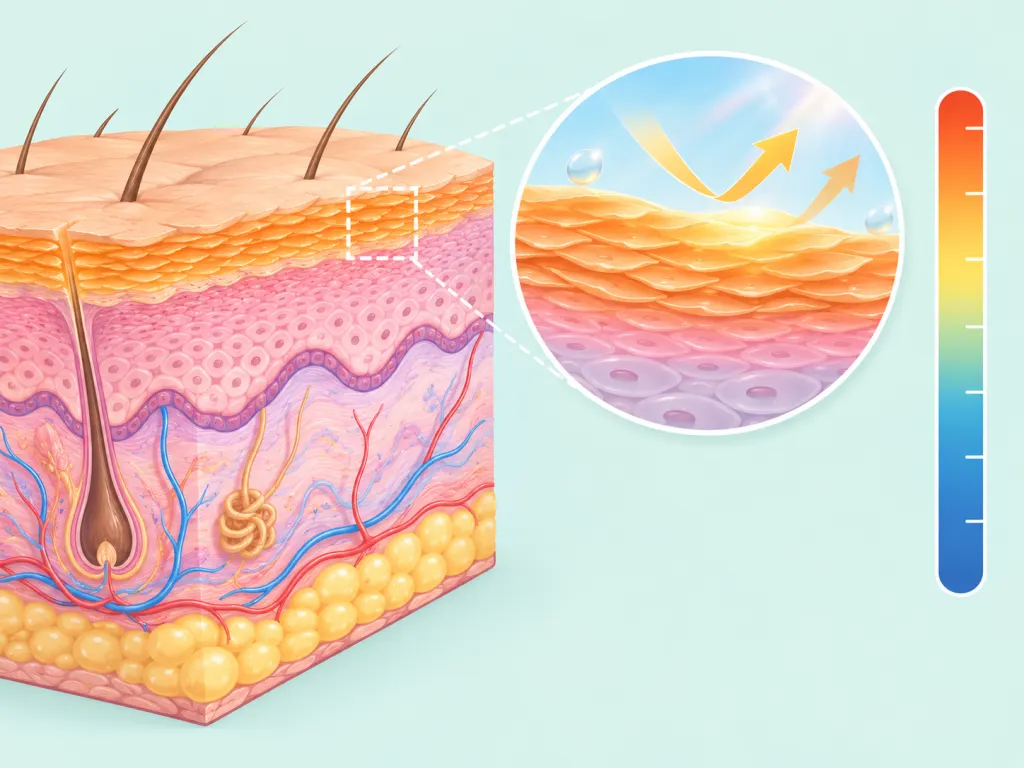
Healthy skin maintains a mildly acidic surface, with a pH typically between 4.5 and 5.5. This acidic environment is known as the acid mantle of the stratum corneum, the outermost layer of skin. A 2023 peer-reviewed review of skin barrier function and immunologic properties, published in PMC, describes the acid mantle as a protective mechanism recognized in the scientific literature since the 1920s. The acidity is critical for the activity of two key regulatory enzymes, beta-glucocerebrosidase and acidic sphingomyelinase, which produce ceramides, the lipid molecules that hold skin cells together and form the moisture barrier. These enzymes function optimally at around pH 5.0; when surface pH rises above that range, ceramide synthesis declines and barrier integrity weakens.
The PMC review identifies several consequences when skin pH becomes more alkaline. Serine proteases, enzymes that degrade structural proteins, become more active at higher pH, reducing the cohesion of the stratum corneum and accelerating moisture loss. Pathogenic bacteria such as Staphylococcus aureus, which thrive near neutral pH, can colonize more readily when the acidic defense is compromised. Inflammatory signaling increases through protease-activated receptor pathways, which can worsen or prolong discoloration in skin already prone to post-inflammatory hyperpigmentation. Maintaining skin acidity is a functional requirement, not a cosmetic preference, and disrupting it has measurable downstream effects on barrier performance.
Baking Soda's Chemistry and Known Dermatological Uses
Baking soda (sodium bicarbonate) has an alkaline pH of approximately 8.3 in aqueous solution. When applied to the skin's surface, it raises local pH substantially above the healthy acidic range. Moving from pH 5.0 to pH 8.3 represents roughly a 2,000-fold change in hydrogen ion concentration, a shift large enough to meaningfully impair the pH-sensitive enzyme systems described above. A peer-reviewed review of bathing practices in dermatology, published in PMC, also notes that bicarbonate in solution can convert over time into sodium carbonate, which carries its own irritation potential, making formulation stability a relevant clinical consideration.
The same dermatology review notes that dilute baking soda baths, targeting water at approximately pH 7.9, are used in supervised clinical settings for specific scaling conditions including ichthyosis, palmoplantar keratodermas, psoriasis, and Reiter's syndrome. These are therapeutic protocols applied to body skin, time-limited, and conducted under medical guidance. The review also identifies a key contraindication: baking soda baths are not appropriate when the acid mantle of the stratum corneum is needed for healing, as is the case with many forms of eczema. This supervised, diluted, body-skin context differs substantially from applying a concentrated paste directly to the thinner skin of the face without clinical oversight, the concentration, exposure duration, skin type, and purpose are all different.
The Photosensitivity Risk of Citrus Combinations
Home remedy formulations frequently pair baking soda with lemon juice. This combination introduces a separate and well-documented risk. Lemon juice, like other citrus fruits, contains furocoumarins, naturally occurring plant compounds that sensitize the skin to ultraviolet A (UVA) radiation. Cleveland Clinic explains that when furocoumarins from citrus contact the skin and the skin is then exposed to sunlight, a phototoxic reaction called phytophotodermatitis can follow. The condition develops within 24 to 48 hours of exposure and can range from tingling and redness to painful blistering in unusual patterns; after the inflammation resolves, persistent brown discoloration may remain for months.
A study published in PMC examining citrus-induced phytophotodermatitis found that the condition can also present without an initial inflammatory phase, with only delayed brown pigmented patches appearing, making the connection to citrus exposure easy to overlook. The study describes furocoumarins as being photoactivated by UVA light, binding to nucleic acids, inhibiting DNA synthesis, and causing direct cell membrane damage. This means that applying lemon juice to the face with the intention of reducing dark spots can, if UV exposure occurs before the citrus residue is completely removed, generate new discoloration rather than improve existing marks.

What Dermatologists Recommend for Fading Dark Spots
The AAD and Cleveland Clinic both identify evidence-based topical ingredients for addressing hyperpigmentation. The AAD's guidance on fading dark spots in darker skin tones recommends the following over-the-counter active ingredients:
- Azelaic acid: Reduces melanin synthesis and has anti-inflammatory properties; frequently recommended for post-inflammatory marks and often suitable for sensitive skin
- Glycolic acid: An alpha-hydroxy acid that promotes cell turnover, gradually shedding pigmented surface cells
- Kojic acid: Inhibits tyrosinase, the enzyme responsible for melanin production
- Vitamin C: An antioxidant that interferes with melanin synthesis and provides some photoprotective support against oxidative stress
- Retinoids (retinol, tretinoin, adapalene gel, tazarotene): Accelerate skin cell renewal and can gradually fade post-inflammatory marks; prescription-strength retinoids require a clinician's recommendation in many regions
The AAD also emphasizes that tinted sunscreen with iron oxide is foundational, not an optional step. Iron oxide filters visible light, which can also stimulate melanin production in people with deeper skin tones, offering protection beyond what untinted sunscreen alone provides.
For persistent or deeper hyperpigmentation, Cleveland Clinic notes that stronger options are available through a dermatologist. Prescription-strength hydroquinone, a topical melanin inhibitor, is an established clinical option. Tretinoin, higher-concentration azelaic acid, and combination formulations can address deeper pigmentation. In-office procedures including chemical peels, laser skin resurfacing, cryotherapy, and pigmented lesion laser treatment are used for cases that do not respond adequately to topical agents. Cleveland Clinic notes that hyperpigmentation is a persistent condition and that all treatments require months of consistent application before results become visible. For melasma in particular, its hormonal driver means that certain treatments can worsen it if the type is not correctly identified beforehand, another reason professional evaluation is a useful first step before beginning any regimen.
Building a Safe Daily Skincare Approach
Regardless of which specific ingredients are used, consistent daily habits form the practical foundation of skin care where dark spots are concerned. Dermatological guidance from both the AAD and Cleveland Clinic points to several key principles:
Sun protection every day. Broad-spectrum sunscreen with SPF 30 or higher is the single most impactful step for preventing existing dark spots from deepening and for allowing topical ingredients to work. The AAD recommends reapplying every two hours when outdoors and after swimming or sweating, and pairing sunscreen with a wide-brimmed hat for additional coverage.
Gentle cleansing. Using products formulated for facial skin and avoiding harsh abrasives or strongly alkaline substances helps preserve the acid mantle. Skin irritation from rough treatment can itself trigger post-inflammatory hyperpigmentation, making gentleness both a comfort measure and a prevention strategy.
Treating underlying inflammatory conditions. When dark spots follow acne, eczema, or psoriasis, addressing the underlying inflammatory condition reduces the rate of new marks forming. The AAD notes that controlling the source of skin inflammation is part of the longer-term approach to managing hyperpigmentation.
Patient, consistent use of topical ingredients. Ingredients such as vitamin C, azelaic acid, glycolic acid, kojic acid, and retinoids work through gradual cellular mechanisms. Results appear over weeks to months of regular use, not days, and intensive or overly frequent application does not accelerate the process and may cause additional irritation.
Awareness of photosensitizing ingredients. Retinoids, certain exfoliating acids, and any citrus-derived ingredients increase UV sensitivity. Using them in the evening, rinsing thoroughly in the morning, and applying sunscreen consistently are standard precautions that apply to professional formulations as well as any home preparation.
When to Consult a Dermatologist
Some situations call for professional evaluation before beginning any topical approach. Cleveland Clinic suggests consulting a dermatologist when dark spots change in size, shape, or color over time; when they appear alongside other unusual skin changes; when over-the-counter products have not produced visible improvement after several months of consistent use; or when hyperpigmentation is extensive or significantly affects daily life. A dermatologist can distinguish between benign hyperpigmentation and changes that warrant closer clinical attention, correctly identify the type and depth of discoloration, and recommend a plan tailored to the individual rather than a one-size approach. For melasma, professional guidance is particularly valuable given its hormonal complexity and the variable responses different people have to the same treatment options.
Wrap-Up
Dark spots (hyperpigmentation) develop from excess melanin accumulation triggered by sun exposure, skin inflammation, hormonal changes, and other factors. Baking soda is alkaline at approximately pH 8.3 and disrupts the skin's protective acid mantle when applied topically, impairing the ceramide-producing enzymes and barrier cohesion that depend on a surface pH of 4.5-5.5. While sodium bicarbonate baths have supervised clinical applications for specific scaling conditions, direct facial application is a different context with distinct risks. Combining baking soda with lemon juice introduces a photosensitivity hazard: furocoumarins in citrus are photoactivated by UVA radiation and can cause phytophotodermatitis, producing the discoloration the application may aim to address. Dermatologists recommend evidence-based topical ingredients such as azelaic acid, glycolic acid, kojic acid, vitamin C, and retinoids, always paired with daily broad-spectrum sunscreen. For persistent, extensive, or changing hyperpigmentation, a qualified dermatologist can identify the type and recommend appropriate care.
Frequently Asked Questions
- → Can baking soda be safely applied to facial skin for dark spots?
Baking soda has a pH of approximately 8.3, well above the healthy skin surface pH of 4.5-5.5. Applying it to the face raises local pH and disrupts the acid mantle, impairing enzymes that produce ceramides and maintain barrier integrity. A dermatology review notes it as contraindicated for skin conditions where preserving the acid mantle is necessary, such as many forms of eczema. Consulting a qualified dermatologist before applying high-pH substances to facial skin is advisable, particularly for sensitive or inflamed skin.
- → Why is lemon juice a photosensitivity risk when applied to the face?
Lemon juice contains furocoumarins, plant compounds that become reactive when present on skin exposed to UVA radiation, causing a phototoxic reaction called phytophotodermatitis. Cleveland Clinic explains that this reaction can produce redness, painful blistering, and persistent dark discoloration lasting months. A PMC study found the reaction can also appear as delayed pigmentation without prior visible inflammation. Applying lemon juice to the face and going outdoors without thorough rinsing and sun protection can generate new hyperpigmentation rather than reduce existing marks.
- → What ingredients do dermatologists recommend for fading dark spots?
The AAD identifies azelaic acid, glycolic acid, kojic acid, vitamin C, and retinoids (retinol, tretinoin, adapalene) as topical ingredients with scientific support for hyperpigmentation. They work by inhibiting melanin synthesis, accelerating cell turnover, or providing antioxidant support. Results develop over weeks to months of consistent use. For deeper or persistent hyperpigmentation, prescription-strength formulations or in-office procedures such as chemical peels or laser treatment may be recommended by a dermatologist.
- → How important is sunscreen when addressing dark spots?
Sunscreen is foundational, not optional. UV exposure stimulates melanin production, deepening existing spots and promoting new ones. The AAD recommends broad-spectrum SPF 30 or higher applied daily and reapplied every two hours outdoors. Tinted sunscreen with iron oxide is additionally beneficial because iron oxide filters visible light, which can also drive melanin production in people with deeper skin tones. Without consistent sun protection, topical ingredients for hyperpigmentation are significantly less effective.
- → How long does it take for dark spots to fade with topical treatments?
Results depend on the type, depth, and cause of hyperpigmentation, as well as consistent use of relevant ingredients and sun protection. Cleveland Clinic notes that improvement generally becomes visible over months rather than days or weeks. Post-inflammatory marks from minor skin events tend to respond faster than deeper conditions such as melasma, which has a hormonal component. A dermatologist can provide more specific guidance after evaluating the individual's skin and the nature of the discoloration.
- → Who should be especially cautious about home remedies for dark spots?
People with sensitive skin, active inflammatory conditions such as eczema, rosacea, or acne, and those with deeper skin tones, which are more prone to post-inflammatory marks from irritation, should exercise particular caution. Ingredients that disrupt skin pH, cause abrasion, or increase UV sensitivity carry a meaningful risk of worsening discoloration in these groups. A qualified dermatologist can assess individual skin type and recommend lower-risk, better-evidenced options suited to the specific situation.
References
This content was developed and refined using reliable sources.
- https://pmc.ncbi.nlm.nih.gov/articles/PMC10506818
- https://my.clevelandclinic.org/health/diseases/21885-hyperpigmentation
- https://www.aad.org/public/everyday-care/skin-care-secrets/routine/fade-dark-spots
- https://health.clevelandclinic.org/margarita-burn
- https://pmc.ncbi.nlm.nih.gov/articles/PMC5762480
- https://pmc.ncbi.nlm.nih.gov/articles/PMC10706187