 Save
The short answer is this: your birth-year digit can be used as a symbolic mirror, but it does not scientifically determine your karma, character, future, or destiny. If you were born in 1987, for example, your digit is 7; if you were born in 2000, your digit is 0. The meaning comes from a modern style of numerological interpretation, not from a verified rule of nature. Read it the way you might read a poem, a proverb, or a journal prompt: not as proof, but as an invitation to notice patterns.
That distinction matters because both karma and numbers have deep cultural histories. Academic overviews of Buddhist thought describe karma as part of a wider set of teachings about action, consequence, and rebirth in Indian traditions, while the Stanford Encyclopedia of Philosophy notes that Pythagorean traditions gave numbers an unusually important role in explaining order and proportion. A birth-year digit reading borrows from that broad symbolic atmosphere, but it should stay modest: useful for reflection, not for labeling a life.
First, Find Your Birth-Year Digit
To find your birth-year digit, look only at the last number in the year you were born. A person born in 1974 uses 4. A person born in 1999 uses 9. A person born in 2010 uses 0. Nothing else needs to be calculated for this particular reading. That simplicity is part of why the idea spreads easily online: it is quick, shareable, and personal enough to feel interesting.
But the simplicity is also the reason to keep the claim light. The last digit of a year groups people into ten repeating categories. Everyone born in 1965, 1975, 1985, 1995, 2005, and 2015 receives the same digit. That does not make the exercise meaningless, but it does mean the digit cannot capture the full complexity of a person. Use it as a starting point for reflection, then let lived experience do the finer work.
What Karma Means in This Article
In casual speech, karma is often treated like instant payback. In many Indian religious and philosophical settings, the idea is more layered. The Stanford Encyclopedia of Philosophy explains that Buddhist traditions connect karma with action, consequence, rebirth, and questions about continuity across lives. This article uses karma in a lighter cultural sense: the recurring lessons, tendencies, and choices a person might want to examine.
That means a digit should not be used to blame someone for hardship or to claim secret knowledge about why events happen. A kinder interpretation asks, "What kind of pattern might this symbol help me notice?" The value is not in declaring that the universe assigned you one unchangeable script. The value is in pausing long enough to ask whether a theme feels familiar and what you want to do with it.
Why Number Readings Can Feel So Personal
Number readings often feel personal because they use broad language that many people can recognize in themselves. Education research collected by ERIC describes the Barnum effect as the tendency to accept general feedback as uniquely descriptive when it is framed personally; in one teaching demonstration, students accepted feedback even though it came from a false personality inventory ERIC record. This does not mean every reader is careless. It means human beings naturally look for resonance.
That is why the best way to read your digit is with active questions, not passive belief. Instead of asking, "Is this my destiny?" ask, "Where might this apply, where does it clearly not apply, and what would a wiser version of this theme look like?" A useful reading should expand your sense of choice. If it makes you feel boxed in, superior, doomed, or dependent on an outside interpreter, it has stopped being useful.
Digit 0: The Karma of Cycles
Zero can symbolize openness, endings, beginnings, and the space before a decision takes shape. If your birth-year digit is 0, the reflective theme is learning how to close one cycle cleanly before rushing into the next. This may show up as an ability to reset after change, but also as a tendency to wait too long in uncertainty. The question for 0 is: what needs to be completed so that something honest can begin?
Digit 1: The Karma of Initiative
One is often read as the symbol of the first step. If your digit is 1, your theme is initiative: choosing, beginning, and taking responsibility for direction. The bright side is courage. The shadow side is forcing every situation to revolve around your own plan. The lesson is not to become smaller; it is to make your confidence generous. Ask where leadership is needed and where listening would make your leadership cleaner.
Digit 2: The Karma of Partnership
Two points toward relationship, cooperation, contrast, and balance. If your digit is 2, your symbolic lesson may involve learning how to stay connected without disappearing into other people’s expectations. This digit can suggest diplomacy and sensitivity, but it can also reveal over-adaptation. The useful question is: where do I confuse peace with silence? Two asks for steadiness, not surrender.
Digit 3: The Karma of Expression
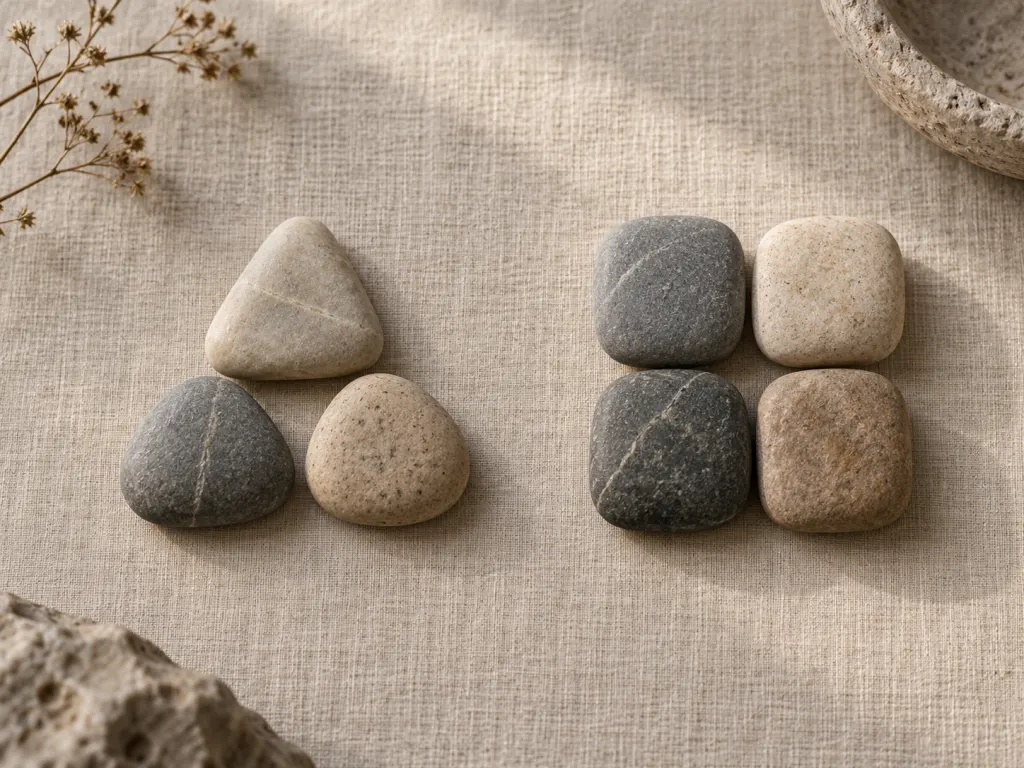
Three is a lively digit for language, imagination, humor, and creative movement. If your digit is 3, your reflection centers on expression: saying what is real, shaping ideas, and letting joy become more than a performance. The gift is brightness. The challenge is scattering energy across too many unfinished sparks. Ask which message, project, or conversation deserves your full attention instead of another quick distraction.
Digit 4: The Karma of Structure
Four belongs to the builder. It suggests foundations, craft, repetition, reliability, and the slow satisfaction of doing something well. If your digit is 4, your theme may be learning the difference between discipline and rigidity. Structure can protect what matters, but it can also become a cage when every outcome must be controlled. The practical question is: what routine supports freedom rather than squeezing it out?
- Use the digit as a mirror: notice where the theme already appears in choices and relationships.
- Reject the parts that do not fit: a symbolic reading should not override direct experience.
- Look for the mature version: every digit has a gift and a distortion.
- Turn insight into one action: reflection is strongest when it changes a real habit, conversation, or decision.
Digit 5: The Karma of Change
Five is associated here with movement, curiosity, variety, and the urge to experience life directly. If your digit is 5, your symbolic lesson may involve freedom with follow-through. You may recognize a pull toward new places, new ideas, or new versions of yourself. The challenge is not change itself; change can be clarifying. The challenge is using change to avoid commitment. Ask what kind of freedom becomes stronger when it keeps a promise.
Digit 6: The Karma of Responsibility
Six points toward devotion, repair, home, service, and the bonds people choose to tend. If your digit is 6, your reflection may involve responsibility: what you carry, why you carry it, and whether care is being shared fairly. The generous side of 6 is loyalty. The heavy side is taking over so completely that others never learn their own strength. The question is: where can love become more balanced and less burdened?

Digit 7: The Karma of Inquiry
Seven is the digit of the seeker in this reading. It suggests study, solitude, pattern recognition, and a desire to understand what sits beneath the surface. If your digit is 7, your theme may involve trust in careful perception without withdrawing from ordinary life. The gift is depth. The challenge is turning doubt into a permanent hiding place. Ask what you already know, what you still need to learn, and where action is waiting for enough clarity, not perfect certainty.
Digit 8: The Karma of Stewardship
Eight is often linked with power, resources, ambition, and visible results. In a karmic reflection, it asks how you handle influence. If your digit is 8, your lesson may involve building something substantial without letting achievement become your only measure of worth. The mature form of 8 is stewardship: using authority, money, status, or skill in ways that create stability beyond the self. Ask what you are managing and whether it reflects your deeper values.
Digit 9: The Karma of Completion
Nine carries the feeling of a closing chapter. It is associated here with perspective, release, compassion, and the wisdom that comes after a full cycle. If your digit is 9, your reflection may involve letting go of roles, stories, or old loyalties that once mattered but no longer fit. The gift is breadth. The challenge is staying attached to endings because they feel meaningful. Ask what can be honored without being carried forever.
How to Read Your Digit Without Getting Boxed In
A good symbolic reading should leave room for contradiction. You may be a 4 who dislikes routine, a 5 who craves stability, or an 8 who avoids leadership. That does not make the reading wrong or right by itself. It gives you a question to test against reality. Sometimes the digit describes a strength. Sometimes it describes a tension. Sometimes it describes nothing at all, and that answer is allowed.
The most respectful approach is to treat numerology as culture, language, and imagination. The Stanford Encyclopedia of Philosophy shows that number-centered thinking has a long philosophical history, but modern personal readings are a separate popular practice. Enjoy the symbolism while keeping your agency intact. The digit can begin a conversation; it should not end one.
A Simple Journaling Practice for Your Digit
If you want to make the reading practical, write your digit at the top of a page and answer three questions. First, where does this theme feel accurate in my life right now? Second, where does it feel incomplete or misleading? Third, what is one small choice that would express the most mature version of this digit? Keep the answers specific. "I need more balance" is vague; "I will answer that difficult message tomorrow morning instead of avoiding it" is usable.
You can also compare digits within a family or friend group as a conversation game. Keep the tone playful and generous. Avoid using someone’s digit as a label, warning, excuse, or accusation. Symbolic systems are most interesting when they help people speak more honestly about values and choices. They become less interesting when they turn into boxes with decorative labels.
Wrap-Up
Your birth-year digit can be a gentle tool for self-reflection, especially if you treat it as symbolic language rather than a factual verdict. Zero asks about cycles, 1 about initiative, 2 about partnership, 3 about expression, 4 about structure, 5 about change, 6 about responsibility, 7 about inquiry, 8 about stewardship, and 9 about completion. The real question is not whether a digit controls your karma. It is whether the theme helps you notice a pattern and choose your next action with more honesty.
Frequently Asked Questions
- → Does the last digit of my birth year really determine my karma?
No. There is no reliable evidence that the last digit of a birth year determines a person’s karma, character, or future. This kind of reading works best as a symbolic reflection tool, not as a factual rule.
- → Why do birth-year digit readings feel accurate?
They often use broad themes, such as change, responsibility, or expression, that many people can recognize in their own lives. That can make the reading feel personal even when it applies widely.
- → Is this the same as a full numerology chart?
No. A full numerology chart usually uses more calculations, such as the whole birth date or name. A birth-year digit reading is much simpler and should be treated as a light, focused prompt.
- → What should I do if my digit meaning does not fit me?
Let it go, or use the mismatch as information. A symbolic reading is not an obligation. If a theme does not fit your actual experience, your experience matters more than the reading.
- → Can two people with the same digit have completely different lives?
Yes. The digit repeats every ten years, so many people share it. Culture, choices, relationships, circumstances, and timing shape a life far more richly than one number can describe.