 Save
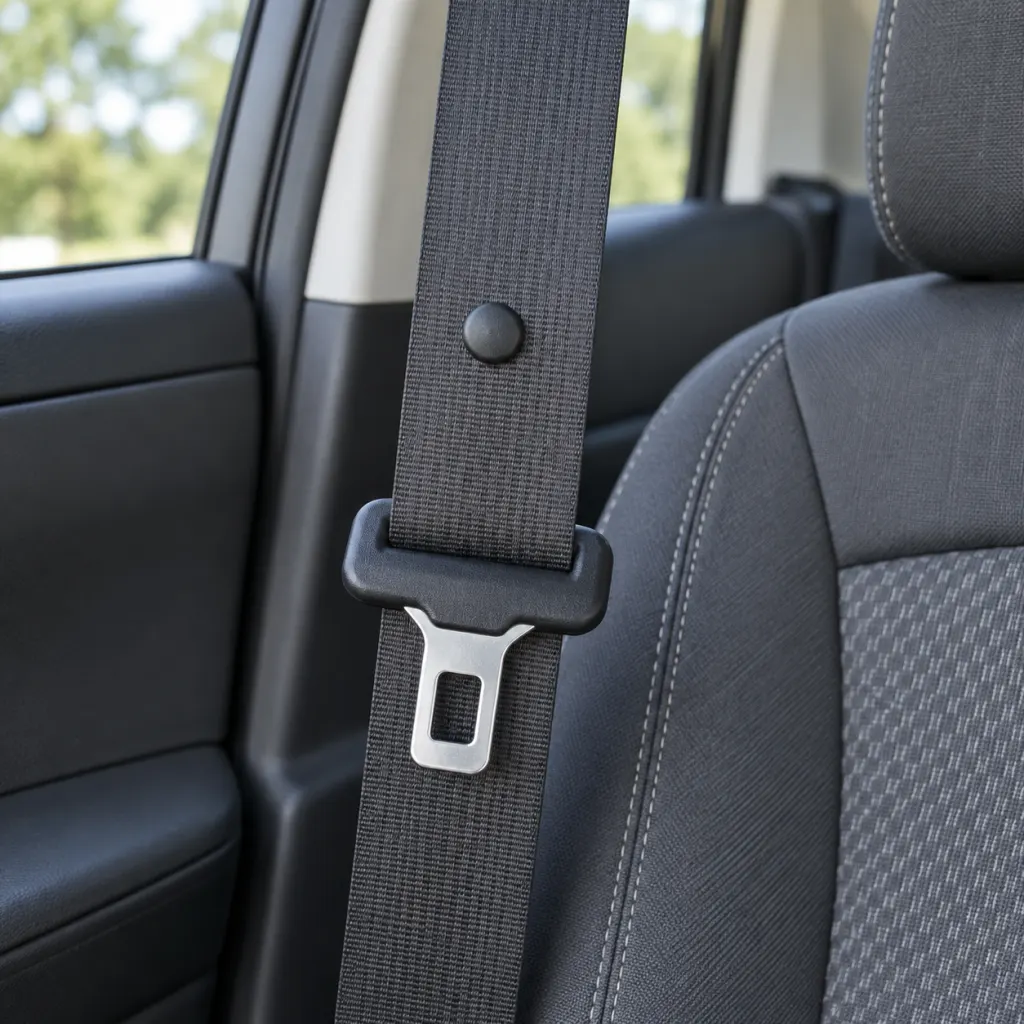
The small button on a seat belt is a stop button: it keeps the metal latch plate from sliding down the belt webbing when the belt is not in use. That is why the part you click into the buckle is usually waiting near your shoulder or hip instead of falling into the seat gap. It is a small convenience feature, but it supports a bigger goal: making the belt quick to find, easy to position, and more likely to be used every trip.
It is also easy to overstate what the button does. It is not the crash-locking mechanism. It is not the seat belt warning switch. It is not a decorative factory plug. Modern belt systems are regulated assemblies made from webbing, buckles, fasteners, retractors, and hardware; federal rules define a seat belt assembly as the webbing and related parts designed to secure a person in a motor vehicle under 49 CFR 571.209. The little button is best understood as a positioning aid on that larger system.
The Direct Answer: It Stops the Latch Plate From Sliding Away
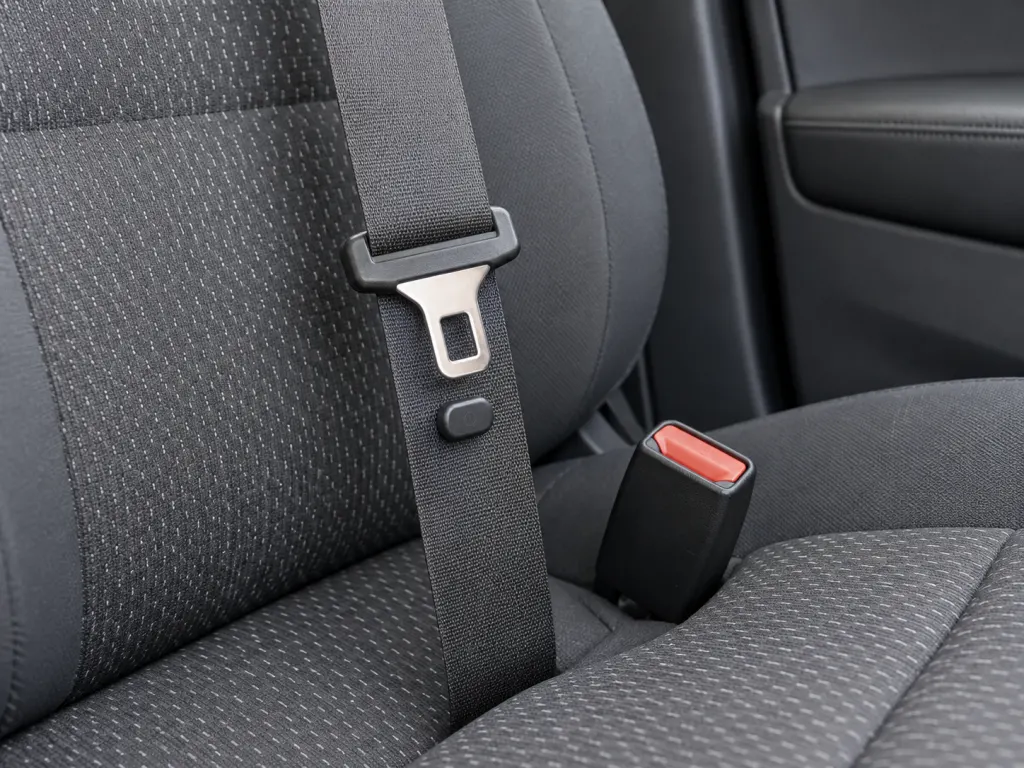
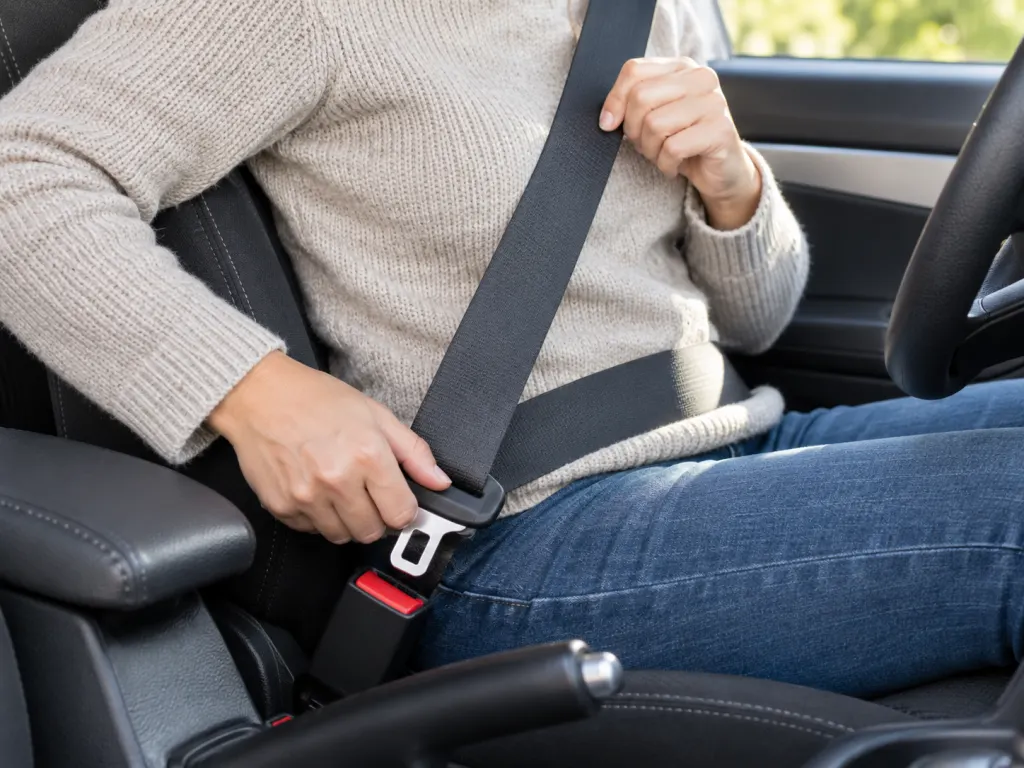
On most three-point seat belts, the metal piece you grasp is the latch plate, sometimes casually called the tongue. It slides along the webbing so the belt can fit different body sizes and seating positions. When you unbuckle, gravity and the retractor can pull the webbing back toward its stored position. Without a stop button, the latch plate can keep sliding downward until it rests near the lower anchor, between the seat and the door, or beside the floor trim.
The button interrupts that slide. It gives the latch plate a small physical stop, so the latch plate parks in a predictable place. That makes the first motion of buckling up simpler: reach, pull, click. In a well-kept vehicle, you may never notice the button precisely because it is doing its job quietly.
What the Button Is Not
The stop button is often confused with more complex parts of the seat belt system. The crash-locking action usually comes from the retractor, not from the plastic button. The audible click comes from the latch plate entering the buckle. The warning light and chime come from vehicle sensing and reminder systems, not from the button on the webbing. NHTSA explains that seat belt warning systems use visual and audible alerts, and newer federal requirements expand those reminders for additional seating positions in new vehicles under finalized reminder rules.
So if your seat belt warning light stays on, if the belt will not retract, or if the belt locks unexpectedly, the stop button is probably not the cause. Those concerns point to other parts of the restraint system and deserve a proper inspection.
Why Such a Small Part Matters in Daily Use
Good safety design often removes friction from the routine. A seat belt is most useful when people use it consistently, and consistency depends partly on small details that make the habit easy. NHTSA's seat belt guidance stresses buckling up on every trip and notes that proper use helps keep occupants secure inside the vehicle during a crash according to its seat belt safety page. The stop button cannot make that decision for you, but it helps keep the hardware where you can find it without searching.
Think about a quick errand, a rideshare pickup, or a back seat passenger who is unfamiliar with the vehicle. If the latch plate has fallen behind the seat or twisted low on the pillar, the first moment becomes a hunt. A correctly placed stop button makes the belt feel more obvious and less annoying. That matters because small annoyances are one reason people delay or skip routine safety steps.
A Useful Way to Identify the Parts
If you look at a typical front seat belt, you can separate the visible pieces into a few plain-language parts:
- Webbing: the strong woven belt material. Federal rules describe webbing as a narrow woven fabric with continuous filling yarns and finished selvages in Standard No. 209.
- Latch plate: the metal tongue that slides on the webbing and clicks into the buckle.
- Buckle: the receiving part, usually mounted beside the seat, that locks around the latch plate.
- Retractor: the spring-loaded mechanism that stores extra webbing and locks under certain conditions.
- Stop button: the small button on the webbing that keeps the latch plate from sliding too far down when the belt is unfastened.
Once you know those names, the button's purpose becomes less mysterious. It is not an electronic part. It is a physical stop in a system designed around fit, access, and controlled movement.
Why It Is Usually Made of Plastic
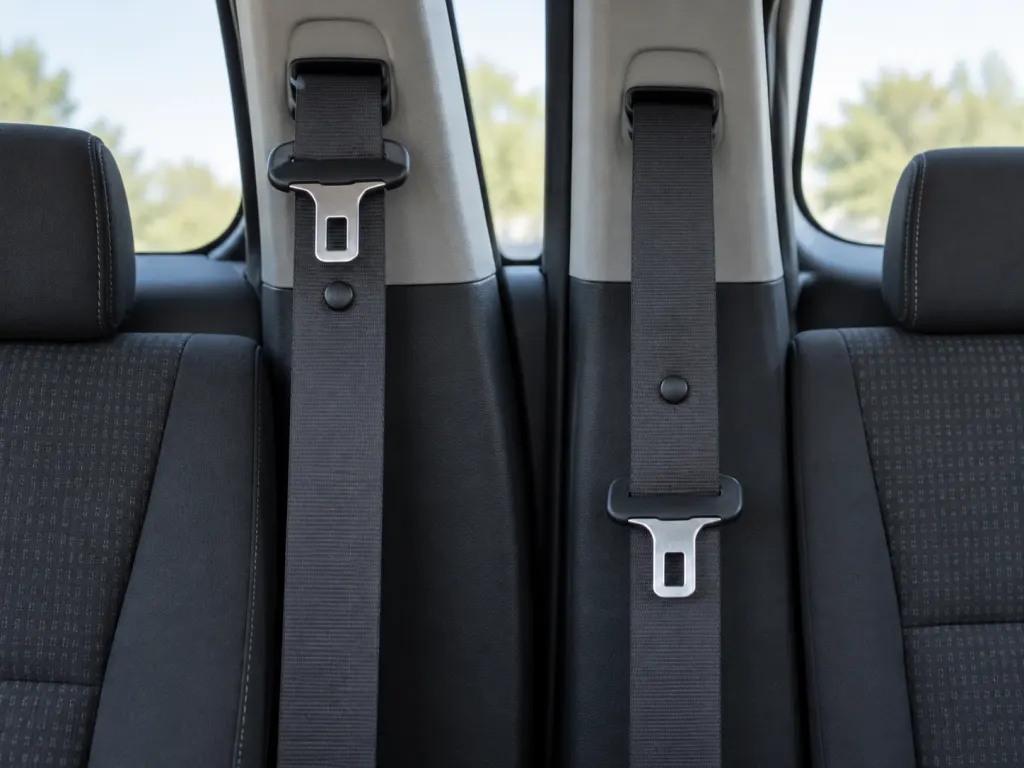
Most seat belt stop buttons are small, rounded, and plastic because the job is modest: stop the latch plate during normal storage, not carry crash forces. A hard metal piece in that position could snag clothing, scratch trim, or create sharp contact points. Federal seat belt assembly rules also pay attention to hardware surfaces, requiring parts that contact normal-use clothing or webbing to be free of burrs and sharp edges under the seat belt assembly standard.
The exact shape varies. Some are round. Some are slightly oval or rectangular. Some belts have more than one small stop or stitched feature depending on the seating position and vehicle design. The common idea is the same: keep a sliding piece from ending up somewhere awkward.
What If the Button Is Missing or Broken?
A missing stop button does not automatically mean the belt cannot latch, but it does mean the belt is no longer storing the latch plate as designed. You may notice the latch plate sliding to the lower anchor, dropping between the seat and door, twisting more often, or becoming harder to grab. Those are usability problems, and usability matters because a belt that is difficult to reach is easier to ignore.
Do not replace the button with a random screw, rivet, clamp, safety pin, zip tie, or adhesive blob. Household fixes can introduce sharp edges, weaken webbing, interfere with retraction, or create a snag. If the belt webbing already has a clean original hole where the button was installed, a vehicle-specific replacement kit may exist, but the right repair depends on the vehicle and seat position. If the webbing is cut, frayed, melted, heavily stained with chemicals, slow to retract, or has been loaded in a serious crash, the question is larger than the stop button.
How to Check the Belt Without Taking It Apart
You can do a simple visual and functional check without tools. This is not a substitute for a qualified inspection, but it can help you decide whether the issue is merely the missing stop button or something more serious.
- Pull the belt out slowly and let it retract. It should move smoothly without folding into a tight twist.
- Look along the webbing for cuts, hard creases, fuzzy edges, burns, or areas that look thinner than the rest.
- Click the latch plate into the buckle and press the release. It should latch and release cleanly.
- Check that the belt lies flat across the body when worn, with the lap portion low across the hips and the shoulder portion crossing the center of the chest.
- Confirm that the latch plate is not resting so low that passengers must dig beside the seat to find it.
NHTSA's public guidance emphasizes correct positioning, including keeping the lap belt across the hips and the shoulder belt across the middle of the chest, away from the neck in its seat belt tips. If the belt cannot be worn flat and correctly, address that first.
How the Button Fits Into the Bigger Seat Belt System
The stop button is small because it has a narrow assignment. The larger seat belt system has to manage fit, strength, adjustment, access, and reminders. Federal rules require many passenger seating positions to have Type 2 seat belt assemblies, meaning a combination of pelvic and upper torso restraints, and Standard No. 209 sets requirements for webbing, hardware, buckles, release, adjustment, and workmanship in the federal seat belt assembly rule. Standard No. 208 addresses occupant crash protection and includes requirements connected to seat belt equipment and warning systems in 49 CFR 571.208.
That context is useful because it keeps the button in proportion. It is not a magic safety device by itself. It is one of the small details that help the main system remain accessible and usable. A driver might ignore the button for years, but a missing one is suddenly obvious when the latch plate keeps sliding down out of reach.
The Habit Angle: Convenience Supports Consistency
Public safety agencies focus on seat belt use because the evidence is strong. CDC summarizes that seat belts reduce serious crash-related injuries and deaths by about half for adults and older children who are big enough for proper belt fit in its seat belt facts. NHTSA reports a national seat belt use rate of 91.3% in 2025 and estimates that seat belts saved 14,955 lives in 2017 on its Buckle Up America page.
Those numbers are about belt use, not about the stop button specifically. Still, the button belongs to the same design philosophy: reduce the little barriers that make the correct action feel inconvenient. The easiest belt to use is the one that is visible, untwisted, reachable, and ready to pull across the body in one motion.
When a Stop Button Problem Deserves Professional Attention
If the button is simply missing but the belt otherwise looks and works normally, ask a dealer service department, qualified repair shop, or vehicle maker's parts source about the correct replacement procedure for your model. If the belt has visible damage, has been altered, retracts poorly, will not latch, releases unpredictably, or was involved in a major crash event, do not treat the stop button as the whole problem. The restraint system should be evaluated according to the vehicle maker's service information.
This is especially important because seat belts are not decorative trim. They are regulated safety equipment. A repair that looks tidy can still be wrong if it pierces the webbing in the wrong place, creates a rough edge, changes how the latch plate slides, or prevents the belt from retracting as designed.
Bottom Line
The small button on a seat belt is a humble positioning part. It keeps the latch plate from sliding down the webbing when the belt is unfastened, which keeps the belt easier to grab the next time someone gets in. It does not lock the belt in a crash, replace the buckle, operate the warning chime, or change how the belt should be worn.
If yours is intact, there is nothing special to do beyond keeping the belt clean, flat, and easy to use. If it is missing, avoid improvised fixes and look for the correct service approach. The button may be tiny, but it is there because a well-designed safety system pays attention to what happens before the click, not only after it.
Wrap-Up
The small button on a seat belt is best understood as a stop button for the latch plate. It keeps the metal tongue from sliding down the webbing when the belt is not being used, so buckling up is faster and less frustrating. The button is not a sensor, lock, pretensioner, or reminder switch. If it breaks or disappears, the belt may still latch, but the latch plate can drop into an awkward place. Use the correct replacement guidance for the vehicle and inspect the belt for broader problems before assuming the button is the only issue.
Frequently Asked Questions
- → Is the small button on a seat belt called a stop button?
Yes. It is commonly described as a stop button, retainer button, or web stop. Its practical job is to stop the latch plate from sliding too far down the webbing when the belt is not fastened.
- → Does the button lock the seat belt during a crash?
No. The button only helps position the latch plate during storage. Locking behavior comes from other parts of the belt system, especially the retractor and related vehicle design.
- → Can I drive if the seat belt button is missing?
The belt may still latch, but the missing button can make the latch plate harder to reach or more likely to twist. Inspect the belt for visible damage and arrange the correct repair if the latch plate no longer stays in a usable position.
- → Can I replace the button with a screw or clip?
No. Improvised hardware can damage the webbing, create sharp edges, or interfere with belt movement. Use vehicle-specific service guidance or ask a qualified repair professional.
- → Why does the latch plate slide on the belt at all?
It slides so the belt can fit different occupants and seating positions. The stop button limits that movement only when the belt is unfastened and stored, so the latch plate remains easier to find.
References
This content was developed and refined using reliable sources.
- https://www.nhtsa.gov/vehicle-safety/seat-belts
- https://www.cdc.gov/seat-belts/facts/index.html
- https://www.ecfr.gov/current/title-49/subtitle-B/chapter-V/part-571/subpart-B/section-571.209
- https://www.ecfr.gov/current/title-49/subtitle-B/chapter-V/part-571/subpart-B/section-571.208
- https://www.nhtsa.gov/press-releases/nhtsa-finalizes-seat-belt-reminder-rule-increase-seat-belt-use-improve-occupant