 Save
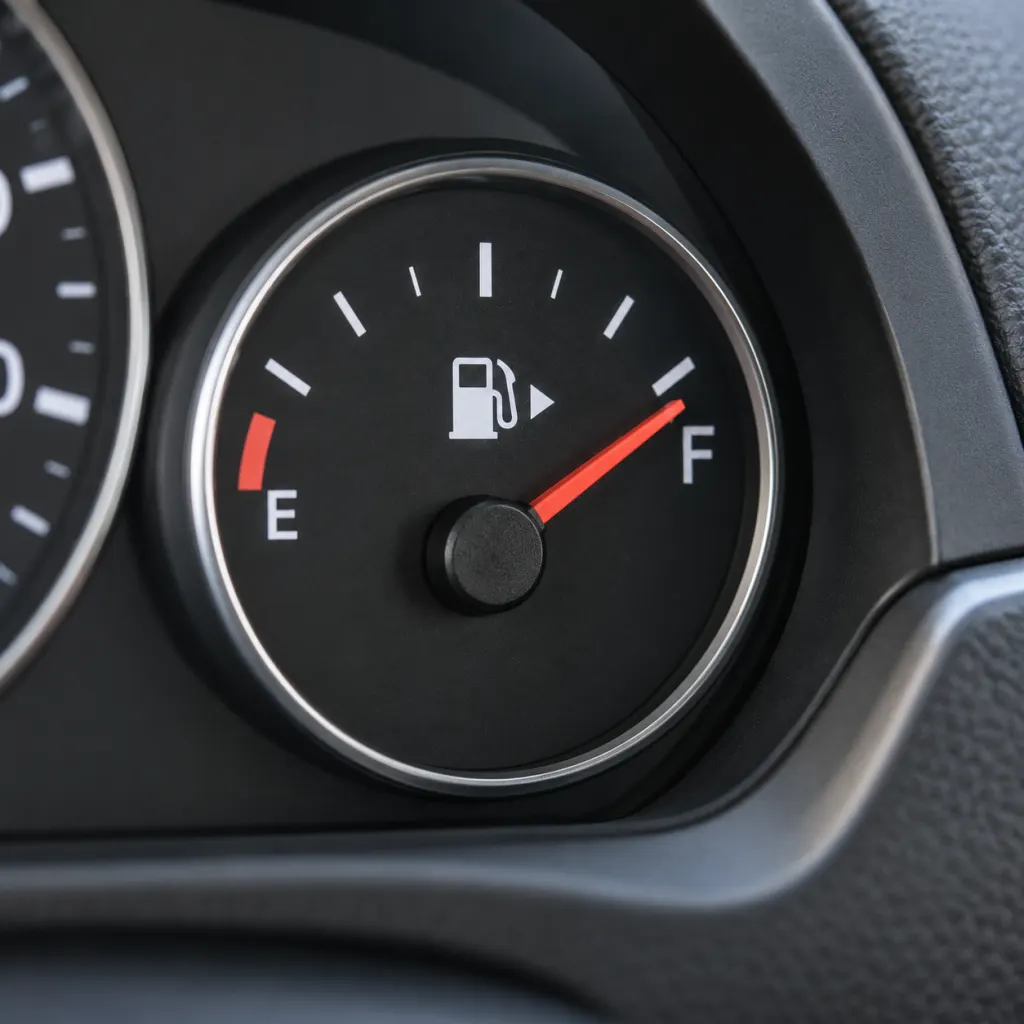
The arrow next to the fuel gauge tells you which side of the vehicle has the fuel filler door. Read it from the driver’s seat: a left-pointing arrow means the filler door is on the car’s left side, and a right-pointing arrow means it is on the car’s right side. It is most useful in rental cars, borrowed cars, new purchases, and family vehicles you do not drive every day. The arrow is small, but it can save an awkward loop around the pump.
The Simple Meaning of the Fuel Gauge Arrow
Most drivers notice the fuel gauge only when the needle drops low, but the little triangle beside the fuel pump icon has a separate job. It does not measure fuel level. It does not mean the tank is open. It does not tell you which grade of gasoline to buy. Its practical message is: place this side of the car nearest the pump.
The easiest way to use it is to imagine yourself sitting in the driver’s seat and looking forward. If the arrow points left on the dashboard, the filler door is on the vehicle’s left side. If it points right, the filler door is on the vehicle’s right side. In the United States, that often maps to driver side or passenger side, but left and right are the clearer terms because seating layouts and market designs vary.
Why the Arrow Is Near the Fuel Pump Icon
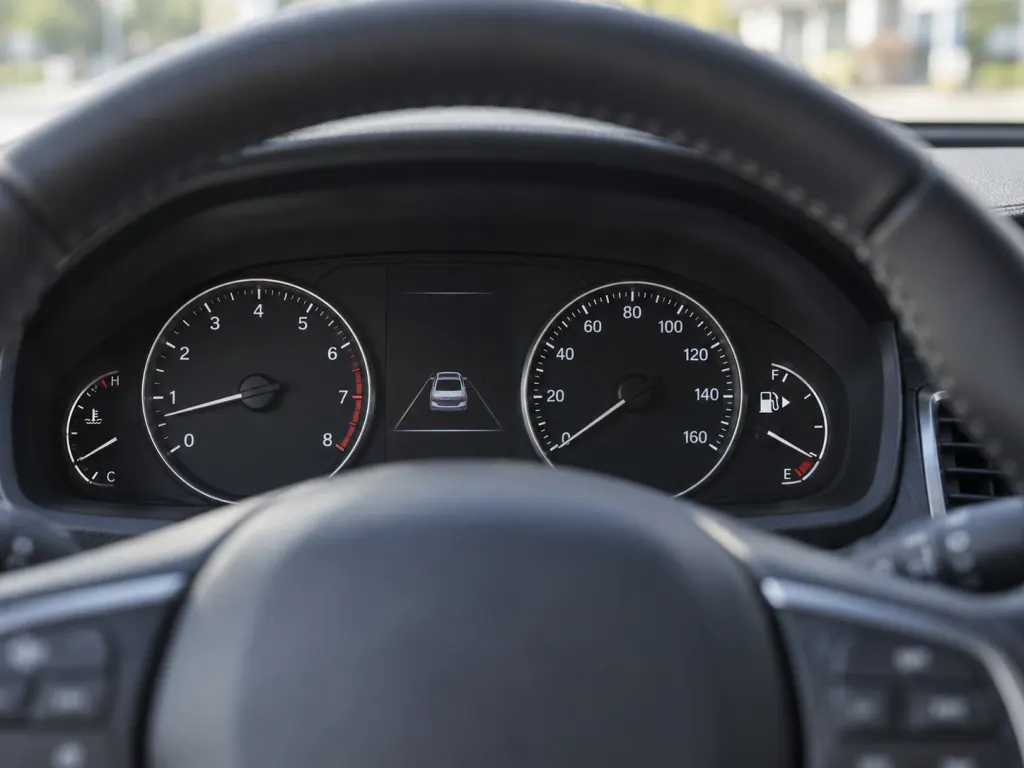
The fuel pump icon identifies the fuel gauge area, and the arrow adds a location clue right where a driver is already looking. U.S. Federal Motor Vehicle Safety Standard No. 101 covers the location, identification, color, and illumination of certain vehicle controls and displays, including the fuel gauge, with the stated purpose of making controls and indicators easier to recognize while reducing mistakes and attention diversion from driving. The same standard allows supplementary symbols at the manufacturer’s discretion when used with specified symbols or words, which helps explain why the arrow can appear as an added cue beside the familiar pump icon. 49 CFR 571.101
That distinction matters because the fuel gauge itself is regulated as a vehicle display, while the filler-side arrow is a convenience cue chosen by manufacturers. A National Highway Traffic Safety Administration interpretation discussing Standard No. 101 describes the fuel symbol as a picture of a gasoline pump and treats the fuel gauge as a display for vehicles using combustible fuel. NHTSA interpretation 6992 The arrow sits in that same visual neighborhood so the driver can connect the direction cue with refueling rather than with another system.
What It Does Not Tell You
The arrow is easy to overread because it appears beside a familiar warning area. Keep its meaning narrow. It points to the filler door side only. It does not show how much fuel remains, whether the cap is tightened, whether the fuel door is locked, or whether the vehicle uses regular gasoline, premium gasoline, diesel, ethanol blend, or another fuel. Those details come from the vehicle’s labels, fuel door sticker, cap label, owner information, or instrument messages.
- It is not the low-fuel warning. The low-fuel symbol or message is about remaining fuel; the arrow is about vehicle side.
- It is not a fuel-type label. Do not use the arrow to choose gasoline, diesel, or charging equipment.
- It is not a cap-open warning. Some vehicles show a separate message when the fuel cap or filler system needs attention.
- It is not a tank-location diagram. The actual tank may be positioned differently under the vehicle; the arrow is about the outside filler access point.

How to Read It in an Unfamiliar Vehicle
In a car you know well, the arrow fades into the background. In a rental or borrowed vehicle, it becomes surprisingly useful. Before turning into the station, glance at the gauge cluster and find the small pump icon. The arrow may be a tiny triangle beside it, above it, or incorporated into the graphic. Once you know the direction, choose a pump lane that lets the hose reach the filler door without stretching across the trunk or crossing a walking path.
If you are already stopped at the wrong side, do not try to make the hose work if it will be tight, twisted, or routed awkwardly around the vehicle. It is usually faster and neater to pull around again. The arrow’s whole purpose is to remove that guesswork the next time. Make it part of the same quick scan you already do for fuel level and range.
Why Some Cars Put the Filler Door on Different Sides
There is no single universal side for every fuel filler door. Vehicle packaging, exhaust routing, body structure, market preferences, platform sharing, and model history can all influence where designers place the filler. That is why one family car may fill on the left, a compact crossover on the right, and a rental sedan somewhere different from the car you drive at home. The dashboard arrow solves the driver-facing part of that inconsistency without requiring every vehicle to be built the same way.
It also helps households with multiple cars. If two vehicles park in the same driveway but refuel from opposite sides, memory can play tricks on you. The arrow is more reliable than guessing based on brand, size, or where the pump icon appears in the cluster. Treat it as the final answer unless your specific vehicle’s display is unusual or has been modified.
What If There Is No Arrow?
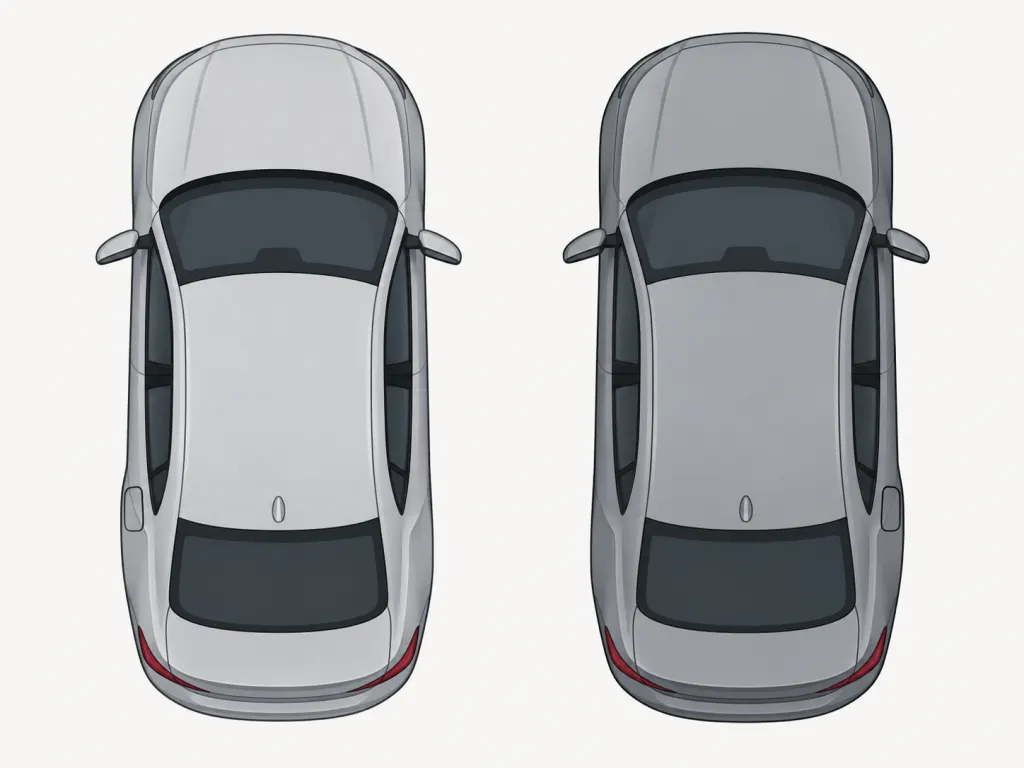
Some older vehicles, specialty vehicles, and simplified instrument clusters may not show a filler-side arrow. In that case, do not rely too heavily on the side of the pump hose drawn on the icon. People often repeat that as a shortcut, but it is not dependable enough across models to treat as a rule. If there is no arrow, check the filler door from outside before you pull fully into a pump lane, or make a mental note the first time you use the vehicle.
Digital clusters can also change how the clue appears. In some vehicles, the fuel level may be shown in a center display rather than as a traditional round gauge. The arrow may still be there, but smaller, flatter, or visible only on a specific screen. If you cannot find it, look for the fuel range screen, the fuel pump icon, or the vehicle-status display. The direction marker is usually placed close to those elements when it is provided.
How It Relates to Electric and Hybrid Vehicles
The fuel gauge arrow belongs to vehicles with a fuel filler door. Battery-electric vehicles do not use a gasoline filler, so their displays usually focus on charge level, remaining range, and charging-port information rather than a gasoline pump symbol. NHTSA’s interpretation of Standard No. 101 noted that a gauge for electric power reserve is not a traditional fuel gauge for combustible fuel, which is why electric vehicles may use more suitable battery or charging symbols instead. NHTSA interpretation 6992
Plug-in hybrids can be more confusing because they may have both a fuel filler door and a charge port, sometimes on opposite sides. In that situation, the small arrow by the fuel pump icon should be read as the fuel filler side, not necessarily the charging-port side. Charging-port location may be shown elsewhere, labeled separately, or learned from the vehicle’s exterior layout.
A Small Detail That Prevents a Common Annoyance
The arrow is one of those features that feels obvious only after someone points it out. It is useful because the decision it supports happens quickly: you enter a gas station, scan the available pump lanes, and choose where to stop. A tiny directional marker in the cluster turns that choice from a guess into a quick read. It is not glamorous technology, but it is good everyday design.
For regular driving, the best habit is simple: when fuel is getting low, glance at both the gauge level and the arrow. The gauge tells you whether you need fuel; the arrow tells you how to approach the pump. Separating those two pieces of information keeps the dashboard cue useful and prevents the common mistake of treating every symbol near the fuel gauge as a warning.
Wrap-Up
The arrow next to the fuel gauge is a directional cue for the fuel filler door. Left means the filler door is on the vehicle’s left side; right means it is on the vehicle’s right side. It is separate from the low-fuel warning and does not identify fuel type, cap status, or remaining driving range. In unfamiliar cars, checking the arrow before choosing a pump lane is the simplest way to stop on the correct side.
Frequently Asked Questions
- → Does the arrow next to the fuel gauge point to the gas cap side?
Yes. The small arrow or triangle beside the fuel pump icon points to the side of the vehicle where the fuel filler door is located. Read it from the driver’s seat: left arrow means left side, right arrow means right side.
- → Is the fuel gauge arrow a warning light?
No. The arrow itself is not a warning. It is a location cue. A separate low-fuel light, chime, range estimate, or message may appear when the vehicle is running low on fuel.
- → What if my car does not have a fuel gauge arrow?
Some vehicles do not show one. If there is no clear arrow, check the filler door from outside before pulling fully into the pump lane, especially in a rental, borrowed vehicle, or older car.
- → Does the side of the pump hose icon always show the filler side?
Do not depend on that as a universal rule. The dedicated arrow is the reliable cue when present. If there is no arrow, the safest practical answer is to check the vehicle itself.
- → Does the arrow tell me which fuel grade to use?
No. The arrow only shows the filler door side. Fuel type and grade information should come from the vehicle’s fuel door label, cap label, instrument messages, or official vehicle information.