 Save
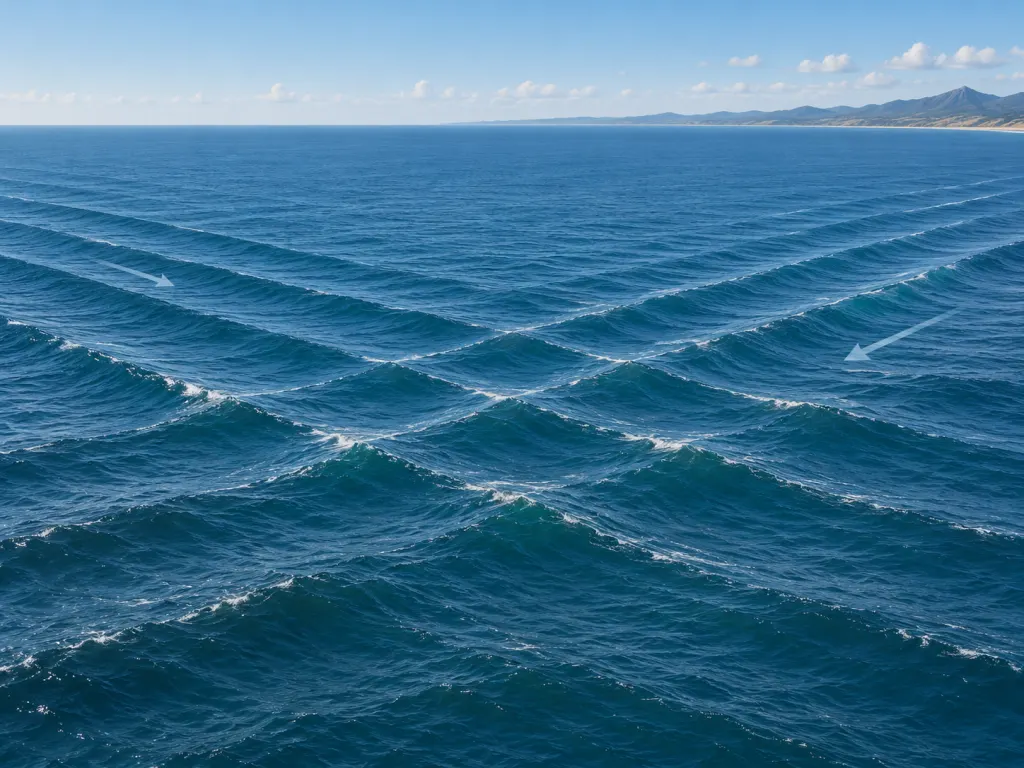
If you see square waves in the ocean, the safest immediate move is simple: get out of the water calmly, stay on dry sand or a protected viewpoint, and wait for guidance from lifeguards or local beach authorities. The pattern is often described as a cross sea, where different wave trains meet from different directions. It can be beautiful from above, but at swimmer level it may mean choppy, hard-to-read water with shifting wave energy, stronger currents, and a greater chance of being knocked off balance. It is not a photo opportunity worth wading into.
Square waves are not magic, and they are not always a separate disaster by themselves. They are a visible clue that the sea state is complicated. The Australian Bureau of Meteorology explains that separate swell wave trains can cross paths when waves generated by different weather systems reach the same location, creating higher peaks where wave crests intersect and lower troughs where troughs meet https://www.bom.gov.au/resources/learn-and-explore/marine-knowledge-centre/waves-and-swell. For a beachgoer, the practical meaning is this: stop, reassess, and do not assume the water is safe because the sky is bright or the pattern looks orderly.
What Square Waves Usually Mean
The phrase square waves is a popular description, not the usual wording used in marine forecasts. It refers to a grid or diamond pattern on the sea surface, as if one set of waves is running across another. In ocean terms, that points to crossing wave systems: one swell or wind-wave train may be arriving from one direction while another arrives from a different direction. The Bureau of Meteorology describes wind waves as waves generated by local wind and swell as waves that have traveled away from the weather system that created them; more than one swell can exist at the same time, moving in different directions https://www.bom.gov.au/resources/learn-and-explore/marine-knowledge-centre/waves-and-swell.
That crossing matters because a wave forecast is not just about height. Sea state also includes wavelength, period, and direction. The World Meteorological Organization's Global Climate Observing System describes sea state in terms of wave and swell characteristics, including directional wave energy flux, and notes its importance for marine safety, marine transport, and structures https://gcos.wmo.int/site/global-climate-observing-system-gcos/essential-climate-variables/sea-state. In plain language, waves arriving from more than one direction can make the surface less predictable than a neat line of surf rolling toward shore.
What To Do Right Away
When the water has a checkerboard look, avoid trying to test it with your feet. Move out of the surf zone, call children and companions back from shallow water, and choose a viewpoint well above the wash of waves. If lifeguards are present, ask what they are seeing that day. If the beach is unguarded and the pattern is obvious, skip swimming until conditions change. The National Weather Service advises beachgoers to check local beach conditions before entering the water, talk to lifeguards, and remember that good weather does not automatically mean safe water https://www.weather.gov/safety/ripcurrent.
Use this quick decision list before anyone goes back in:
- Do not enter the water while the square pattern is visible or while waves are crossing at strong angles.
- Move away from piers, jetties, inlets, rocks, and sandbar gaps, where currents can be stronger or harder to see.
- Check posted flags and local forecasts, especially surf, swell, tide, and wind direction.
- Ask a lifeguard whether swimming, surfing, or paddling is appropriate for that specific beach.
- Keep flotation nearby if you are supervising others near the water, but do not attempt an untrained rescue.
Why The Pattern Can Be Risky For Swimmers
Square waves do not have to be enormous to be a problem. A swimmer deals with the water at body level, where overlapping waves can push from the side, lift unexpectedly, and make footing unreliable. Smaller waves can still be hazardous when they arrive close together, from competing directions, or during a tide stage that strengthens currents. The Bureau of Meteorology warns that large waves and swells can be hazardous, but smaller sea and swell waves can also create unsafe conditions if they catch people off guard; it also notes that distant swells can arrive even when local weather looks calm https://www.bom.gov.au/weather-and-climate/specialised-forecasts-and-observations/coasts-and-oceans/marine-weather-safety/marine-weather-hazards-and-warnings.

Square Waves Are Not The Same As Rip Currents
A common mistake is to say that every square-wave pattern is a rip current. That is too simple. A cross sea describes crossing wave systems on the surface. A rip current is a narrow current that flows away from shore through the surf zone. The two can both be part of a hazardous beach day, but one does not prove the other. NOAA's National Ocean Service defines a rip current as a localized current flowing away from the shoreline and notes that it often forms near breaks in sandbars and near structures such as jetties and piers https://oceanservice.noaa.gov/education/tutorial_currents/03coastal3.html?source=APP.
That distinction matters because the safest response is based on what you are experiencing. If you are standing on shore and see square waves, stay out. If you are already in the water and feel yourself being carried away from shore, respond as you would to a rip current: stay calm, avoid fighting straight back against the current, float if needed, signal for help, and move sideways with the shoreline when you can. National Weather Service guidance for rip currents emphasizes relaxing, floating to conserve energy, swimming parallel to shore if able, and yelling or waving for help if you cannot reach shore https://www.weather.gov/ohx/ripcurrents.
How Forecasts Help You Decide Before You Arrive
The best time to make a beach safety decision is before towels are on the sand. Look for local surf-zone forecasts, beach hazard statements, marine warnings, tide times, wind direction, wave height, wave period, and swell direction. A single number for wave height is not the whole story. The Met Office explains that significant wave height represents the average height of the highest third of waves and that individual waves can be up to double that value https://weather.metoffice.gov.uk/guides/coast-and-sea/beach-and-tide-times. It also explains that offshore, onshore, and cross-shore winds can change what conditions feel like in the water.
For a family beach day, a calm-looking morning can be misleading if a long-period swell is arriving, the tide is changing, or winds are forecast to strengthen. For paddlers and small craft, crossing waves can be even more troublesome because the boat or board may be lifted from more than one direction. If the forecast mentions hazardous surf, strong rip current risk, rough seas, or confused seas, choose a protected beach, a lifeguarded swimming area, or a non-water activity. The ocean does not need to look dramatic to deserve respect.

What If Someone Is Already In Trouble?
If you see someone struggling in crossing waves or a suspected rip current, the safest help is organized help. Get a lifeguard immediately. If there is no lifeguard, call the local emergency number, such as 911 in the United States, and keep sight of the person. Shout simple instructions to float and stay calm if they can hear you. Throw something that floats if it is available. Do not form a human chain or swim out without training and flotation; the National Weather Service warns that would-be rescuers can become victims themselves and advises calling for help and throwing flotation instead https://www.weather.gov/ohx/ripcurrents.
When It Is Safe To Go Back In
There is no universal waiting time, because beach conditions depend on local wind, swell, tide, bottom shape, and weather systems. A square pattern may fade quickly, or the same crossing swell may keep the surf confused for hours. The safer standard is not the clock; it is current local guidance. Return to the water only when lifeguards, posted flags, and forecasts support it, and only within your ability. Stay near supervised swimming areas, keep children within arm's reach in the shallows, and leave again if the water becomes choppy, pulls strongly, or starts to form a crossing pattern.
The Bottom Line
Square waves are a signal to pause, not a challenge to enter the water. They usually point to crossing wave systems, and crossing wave systems can make swimming, wading, paddling, and small-craft use harder to judge. Enjoy the pattern from a safe place, check the forecast, listen to lifeguards, and keep your plans flexible. A beach day can still be beautiful from shore.
Wrap-Up
Square waves in the ocean are most often a visible sign of crossing wave trains, sometimes called a cross sea. Because crossing waves can make the surface unpredictable and may appear alongside stronger currents or changing surf conditions, the safest response is to leave the water, keep others out, check local warnings, and ask a lifeguard before returning. Do not assume sunny weather means safe swimming, and do not attempt an untrained rescue if someone is in trouble.
Frequently Asked Questions
- → Are square waves always dangerous?
They are best treated as a warning sign. The pattern suggests crossing wave systems, which can make the water more confused and difficult to judge. Even if the waves are not huge, stay out until local conditions are clearly safe.
- → Can I photograph square waves from the beach?
Yes, if you stay well back from the wash of the waves and avoid rocks, piers, jetties, and slippery edges. The safest view is from dry sand, a dune access point, a promenade, or another protected viewpoint.
- → Do square waves mean there is a rip current?
Not always. Square waves usually describe crossing wave trains on the surface, while a rip current is a narrow current moving away from shore. Both can be hazardous, so the practical response is similar: stay out, ask a lifeguard, and respect posted warnings.
- → What should I do if I am already swimming when I notice them?
Leave the water calmly if you can. If you feel pulled away from shore, do not fight directly against the current. Float, signal for help, and move sideways with the shoreline when possible before returning at an angle.
- → Can square waves happen on a sunny day?
Yes. Swell can travel from distant weather systems, so local sunshine does not guarantee simple or safe surf. Always check beach forecasts, flags, tides, and lifeguard advice before entering the water.
References
This content was developed and refined using reliable sources.
- https://www.bom.gov.au/resources/learn-and-explore/marine-knowledge-centre/waves-and-swell
- https://www.bom.gov.au/weather-and-climate/specialised-forecasts-and-observations/coasts-and-oceans/marine-weather-safety/marine-weather-hazards-and-warnings
- https://gcos.wmo.int/site/global-climate-observing-system-gcos/essential-climate-variables/sea-state
- https://www.weather.gov/safety/ripcurrent
- https://oceanservice.noaa.gov/education/tutorial_currents/03coastal3.html?source=APP
- https://www.weather.gov/ohx/ripcurrents
- https://weather.metoffice.gov.uk/guides/coast-and-sea/beach-and-tide-times