 Save
The short answer: claims that one oil can meaningfully address gout, anxiety, cigarette cravings, and alcohol urges reach far beyond the evidence. Black pepper essential oil has been studied only in a narrow way for cigarette craving during a brief research session, and that finding should not be stretched into a general health promise. Gout itself is a form of inflammatory arthritis involving urate crystal buildup in joints, according to the National Institute of Arthritis and Musculoskeletal and Skin Diseases, and it deserves proper evaluation when symptoms appear https://www.niams.nih.gov/health-topics/gout. This article explains what the oil is, what the research can reasonably support, and how to read social-media claims without turning a kitchen-adjacent ingredient into a personal care plan.
Start With The Claim, Then Narrow It
Viral posts about essential oils often bundle several different body systems into one confident-sounding message. That is the first reason to slow down. Gout, anxiety, nicotine craving, and alcohol urges are not the same problem. They have different causes, different risks, and different kinds of support. A single aroma may feel pleasant or memorable, but a pleasant sensation is not the same as evidence that an oil changes the course of a joint condition, a mental health pattern, or a substance-use habit.
A useful way to evaluate the claim is to ask three questions. First, what exact product is being discussed: culinary black pepper, black pepper essential oil, a diluted fragrance blend, or a supplement? Second, what exact outcome is being claimed: comfort, mood, craving intensity, joint swelling, lab values, or long-term function? Third, what kind of evidence is being offered: a personal story, a short trial, a laboratory study, or a clinical guideline? Those distinctions matter because the strongest claim in a social caption is often not the same claim that has actually been studied.

What Black Pepper Essential Oil Is
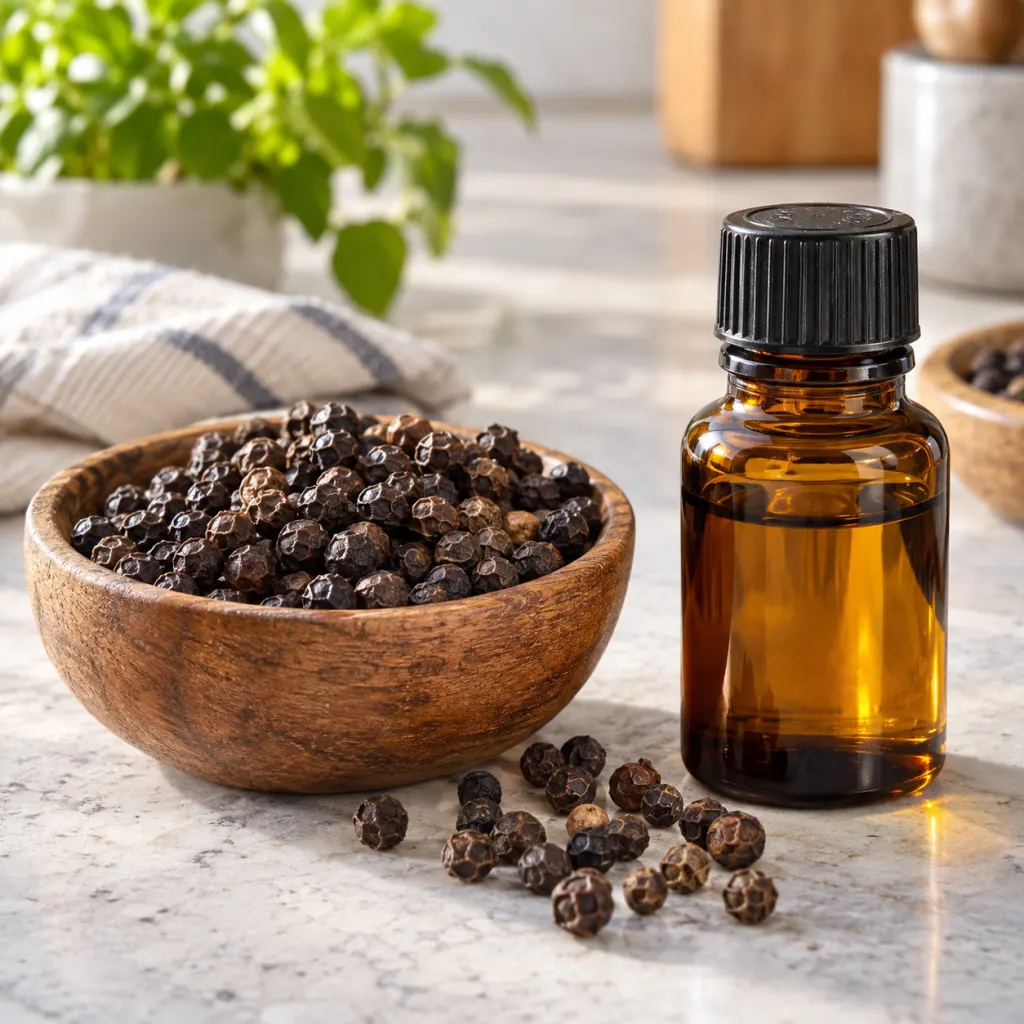
Black pepper essential oil is a concentrated aromatic extract associated with Piper nigrum, the same plant that gives familiar black peppercorns their spicy scent. In everyday aromatherapy, essential oils are commonly inhaled or applied to skin only after dilution. The National Center for Complementary and Integrative Health describes aromatherapy as the use of plant essential oils as a complementary health approach and notes that essential oils are most often used by inhaling them or applying a diluted form to the skin https://www.nccih.nih.gov/health/aromatherapy.
That definition keeps the discussion grounded. Essential oil is not the same as sprinkling pepper into soup. It is more concentrated, used differently, and marketed with a wider set of claims. The NCCIH page also makes a broader point that is important here: for many aromatherapy uses, rigorous research is limited. That does not mean every person who likes a scent is mistaken about enjoying it. It means readers should separate a subjective experience, such as finding an aroma focusing or comforting, from a claim that the oil changes a health condition in a predictable way.
What Gout Evidence Actually Centers On
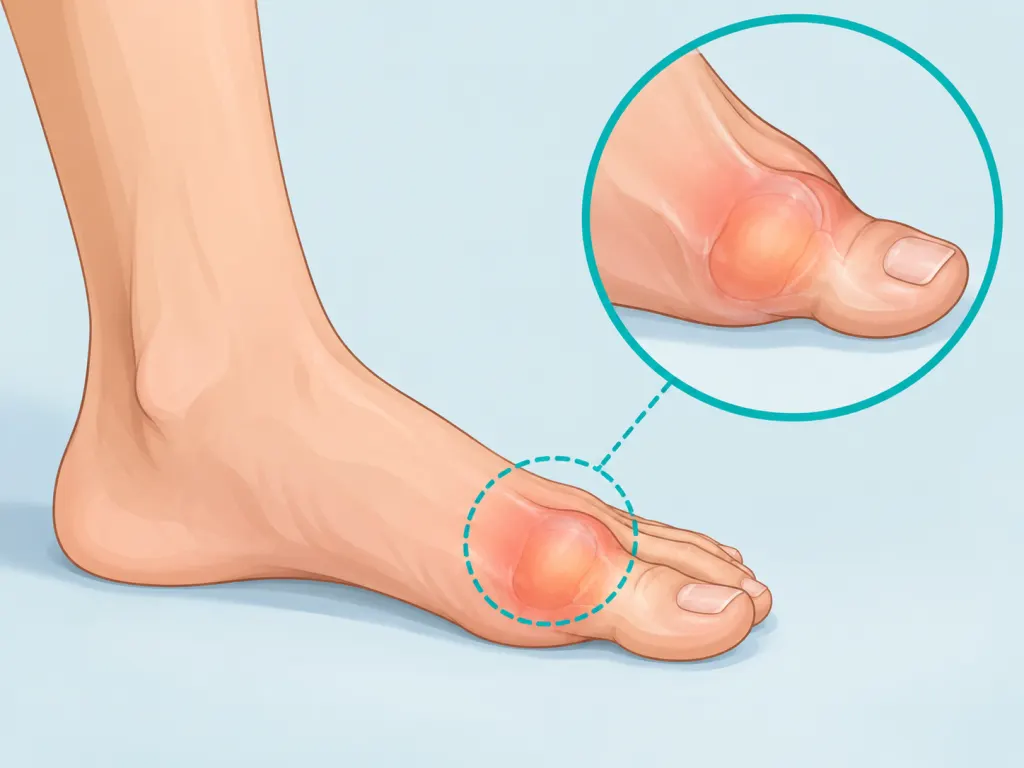
Gout is not defined by an oil deficiency or a missing aroma. NIAMS explains that gout flares can involve sudden pain and swelling, often beginning in the big toe or another lower-limb joint, and that the condition develops when urate builds up over time and forms needle-shaped crystals in or around a joint https://www.niams.nih.gov/health-topics/gout. MedlinePlus describes similar features: gout usually affects one joint at a time, often with intense pain, swelling, redness, and warmth https://www.medlineplus.gov/gout.html.
That mechanism matters because it sets a high bar for any claim about an essential oil. A scent may change how a person perceives a room, a massage, or a relaxation routine, but the sources reviewed here do not show that black pepper essential oil changes the core process of gout. NIAMS says gout evaluation may include medical history, joint examination, urate testing, joint-fluid analysis, ultrasound, or special CT imaging when appropriate https://www.niams.nih.gov/health-topics/gout/diagnosis-treatment-and-steps-to-take. Those steps are much more specific than a generalized wellness caption.
Readers should be especially cautious when a post uses several unrelated benefits as if they prove each other. A claim about cigarette craving does not establish a gout claim. A personal story about joint comfort does not establish an anxiety claim. A pleasant smell does not establish an alcohol-urge claim. Better questions include:
- Was the exact oil studied, or just the plant in another form?
- Was the study done in people, and how many participated?
- Was the outcome measured over minutes, weeks, or years?
- Did the study compare the product with a control condition?
- Does a public-health or medical authority recommend the same conclusion?
The Cigarette Craving Study Is Real But Narrow
The most relevant human study found in this review is a 1994 PubMed-indexed clinical trial of black pepper essential oil vapor and cigarette craving. In that study, 48 cigarette smokers attended a three-hour session after overnight smoking deprivation. Participants were assigned to black pepper vapor, mint or menthol vapor, or an empty cartridge. The abstract reports lower cigarette craving in the black pepper group compared with the other two conditions during that short session https://pubmed.ncbi.nlm.nih.gov/8033760/.
That is interesting, but it is not a green light to inflate the claim. The study was brief, involved a small number of adults, and measured a specific short-term experience under research conditions. It did not prove that black pepper essential oil produces long-term quitting success, works for every smoker, or applies to alcohol urges. MedlinePlus describes cigarette cravings as strong, distracting urges that are often strongest soon after quitting, and it recommends practical planning, avoiding triggers when possible, keeping hands and mouth busy, relaxation practice, and physical activity as ways people may manage them https://medlineplus.gov/ency/patientinstructions/000854.htm.
Alcohol Urges Need Different Evidence
Alcohol urges are often discussed online as if they are interchangeable with cigarette cravings, but they require separate evidence. The National Institute on Alcohol Abuse and Alcoholism describes alcohol urges as thoughts, physical sensations, or emotions that tempt someone to drink, and it presents a recognize-avoid-cope approach that can be used with counseling or therapy https://rethinkingdrinking.niaaa.nih.gov/tools/worksheets-more/how-stop-alcohol-cravings. The source also advises seeking professional support if urges are very difficult or progress stalls.
In the sources reviewed for this article, black pepper essential oil evidence for cigarette craving did not translate into solid evidence for alcohol urges. That distinction is not a technicality; it is the whole point of careful reading. Alcohol patterns can involve withdrawal risk, social triggers, emotional stress, and safety concerns that deserve evidence-based support. If someone finds that a scent helps them pause for a moment, that pause may be personally useful, but it should be understood as a coping cue rather than a stand-alone plan.
Anxiety Claims Also Need Careful Language
Anxiety is another area where social posts often move too quickly. NIMH explains that occasional anxiety is a normal part of life, while anxiety disorders involve more than temporary worry and can interfere with daily activities https://www.nimh.nih.gov/health/topics/anxiety-disorders. The black pepper study noted changes in some short-term anxiety-related symptoms among smokers during a controlled session, but that is not the same as evidence for anxiety disorders in general. Aroma can be part of a calming routine for some people, but it should not be presented as a broad answer to persistent fear, panic, or distress.

How To Read An Essential-Oil Health Post
A practical reader does not have to reject every complementary practice to reject exaggerated claims. The better approach is to keep the claim proportional. If the post says an oil helped someone relax before bed, that is a personal report. If it says an oil changes gout, cigarette craving, alcohol urges, and anxiety all at once, that is a multi-part health claim that needs high-quality evidence for each part. Look for named studies, clear outcomes, and reputable sources. Be wary when a post moves from a tiny study to sweeping promises, or from a pleasant sensory experience to a body-wide explanation.
Also notice the sales pattern. Posts that ask readers to continue to another page, promise a hidden formula, or present a dramatic list of benefits may be optimized for attention rather than clarity. A reliable article should be willing to say what is known, what is uncertain, and where personal care belongs. It should not use the existence of one small study as permission to imply that an essential oil belongs at the center of decisions about joints, mood, smoking, or drinking.
When Symptoms Deserve Prompt Attention
If a joint becomes suddenly very painful, swollen, warm, or red, especially with fever or an inability to use the joint normally, it is safer to seek timely medical evaluation than to experiment with a scented product. Some conditions can resemble gout, and NIAMS notes that clinicians may use examination and testing to distinguish gout from other causes of joint symptoms https://www.niams.nih.gov/health-topics/gout/diagnosis-treatment-and-steps-to-take. The same principle applies to severe anxiety, escalating alcohol urges, or smoking withdrawal that feels unmanageable: the next step should be trusted support, not a stronger claim about an oil.
The Bottom Line For Home Readers
Black pepper essential oil is best understood as a concentrated aromatic product with limited, specific research behind one short-term cigarette-craving study. It is not well supported as a broad answer for gout, anxiety, or alcohol urges. For gout, the evidence base centers on proper evaluation, risk factors, and clinician-guided care. For cigarette cravings and alcohol urges, public-health sources emphasize planning, trigger awareness, coping skills, and support when needed. The safest conclusion is modest: enjoy an aroma if it fits your routine and is used appropriately, but do not let a viral claim outrun the evidence.
Wrap-Up
Black pepper essential oil has a spicy aroma and one notable small study related to short-term cigarette craving, but the wider claims commonly attached to it are much less secure. Gout involves joint inflammation linked with urate crystal buildup and should be approached through qualified evaluation. Alcohol urges and anxiety also deserve their own evidence-based support. A careful reader can appreciate an aroma without treating social-media claims as health guidance.
Frequently Asked Questions
- → Is black pepper essential oil the same as black pepper used in cooking?
No. Ground black pepper is a culinary spice used in food, while black pepper essential oil is a concentrated aromatic extract used mainly for scent-based routines. Evidence about one form should not automatically be applied to the other.
- → What does the research say about black pepper oil and cigarette cravings?
A small 1994 clinical trial reported lower cigarette craving during a three-hour session using black pepper essential oil vapor. That finding is narrow: it does not prove broad, long-term results or apply automatically to every person trying to quit smoking.
- → Should a gout flare be handled with an essential oil?
Gout-like symptoms deserve proper evaluation, especially when a joint is suddenly painful, swollen, warm, or red. Authoritative gout sources focus on diagnosis, risk factors, and clinician-guided care, not essential oil as a primary strategy.
- → Is there good evidence for black pepper oil and alcohol urges?
The sources reviewed here did not show comparable clinical evidence for alcohol urges. NIAAA recommends practical steps such as recognizing triggers, avoiding tempting situations when possible, coping with urges, and seeking professional support when urges are difficult.
- → How can I tell whether an essential-oil post is overstating the evidence?
Be cautious when one product is claimed to affect many unrelated issues, when no exact study is named, or when a small short-term result is turned into a broad promise. Strong health claims need specific human evidence from reliable sources.
References
This content was developed and refined using reliable sources.
- https://www.niams.nih.gov/health-topics/gout
- https://www.niams.nih.gov/health-topics/gout/diagnosis-treatment-and-steps-to-take
- https://www.nccih.nih.gov/health/aromatherapy
- https://pubmed.ncbi.nlm.nih.gov/8033760
- https://medlineplus.gov/ency/patientinstructions/000854.htm
- https://rethinkingdrinking.niaaa.nih.gov/tools/worksheets-more/how-stop-alcohol-cravings
- https://www.nimh.nih.gov/health/topics/anxiety-disorders
- https://www.medlineplus.gov/gout.html